Reading view

Sotheby's big T. rex auction raises concerns hype and wealth are upending science

Forget the sale of the century. The auction house Sotheby’s has geared up for the sale of the epoch. On July 14 it opened live bidding on assorted fossils, but the pièce de résistance is lot 20, a rare 67-million-year-old Tyrannosaurus rex skeleton.

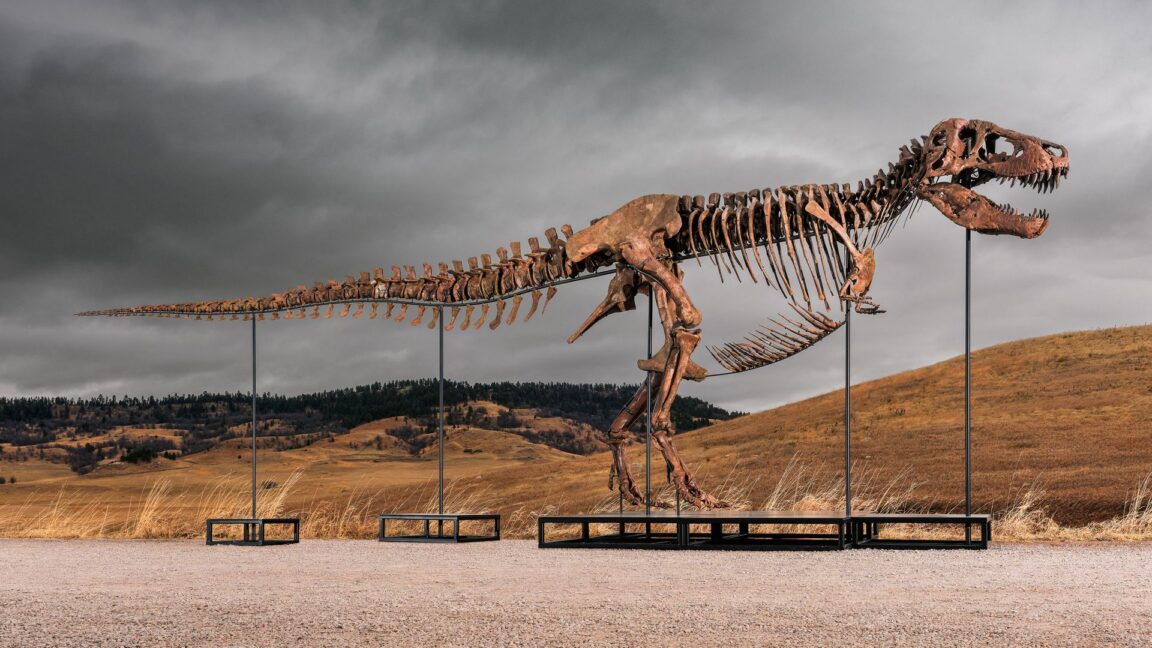
The specimen—dubbed Gus—is billed as one of the largest, most complete T. rexes ever found. Gus is expected to fetch up to $30 million and will go to the highest bidder, whether public museum or private collector. The latter have played an increasingly prominent role in buying fossils, with auction houses, according to paleontologists, contributing to the trend by building hype. But when private collectors swoop in and buy fossils at auction as luxury assets, those pieces of history are effectively lost to science.

By nearly all accounts, Gus is a big deal. In its description, Sotheby’s boasts that the specimen, which was discovered on a ranch in South Dakota, comprises “an incredible 183 fossil bone elements” making it “approximately 61% complete by bone count.” The fossil remains have been mounted in a custom steel armature along with replicas of the missing bones. The result is a reconstructed skeleton posed as if in hot pursuit, its mouth full of dagger teeth ready to tear into prey.
Read full article

Comments

© Courtesy of Matthew Sherman/Sotheby's

  •  

Is an air-conditioning revolution coming to Europe?

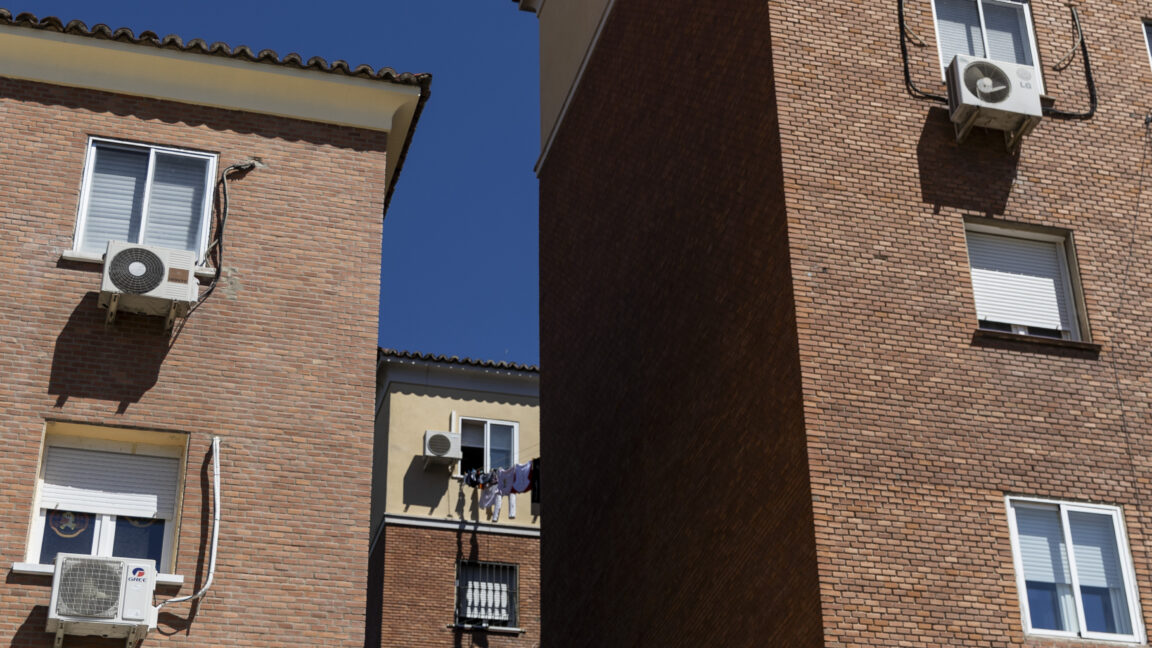
If you're reading this while the blinds are drawn against yet another heat wave and wondering whether it’s finally time to buy an air conditioner, you're far from alone. At the end of June, as temperatures climbed well above 40° Celsius across Europe, shoppers in France literally forced their way into stores to snatch up portable fans and ACs before they sold out. Such scenes are likely to become more common. As the planet warms, the demand for cooling is rising worldwide. The International Energy Agency (IEA) predicts two-thirds of households could own an AC by 2050.

Politicians are, of course, turning ACs into a weapon in their broader culture wars. Far-right figure Marine Le Pen pledged to roll out air-conditioning across France if her party comes to power, while the British Conservatives vowed to overturn net-zero rules that restrict AC installation in new builds. On the left, the argument runs that air-conditioning would mainly benefit the rich and not those who need it most. It would also lock Europe into the same high-energy cooling spiral seen in the US and Asia. To date, only around 20 percent of Europeans have AC at home (and a mere 4 percent in the UK), compared with roughly 90 percent in the US, where electricity is considerably cheaper.

In Europe, air-conditioning is no longer just about comfort. It helps adults stay productive through extreme heat, and children concentrate in poorly ventilated schools. It helps people nod off when the air is still stiflingly warm long after sunset. It can even save lives. One research group estimated that air-conditioning prevented nearly 200,000 premature deaths among people over 65 in 2019 alone.

Read full article

Comments

© Pablo Blazquez Dominguez/Getty Images

  •  

Inside the Luddite festival harnessing Gen Z’s rage against Big Tech

On a Sunday evening in the middle of Tompkins Square Park in New York City’s East Village, hundreds of people gather in front of a giant papier-mâché face of a woman wearing a crown. She’s the backdrop of a play, her body made up of curtains that look like a dress but serve a dual purpose, allowing actors to scurry on and offstage.

I’m here to watch a performance called “Luddite Recreations,” which is a history of the Luddite movement—a group of artisans and textile workers who resisted the adoption of machines during the early years of the Industrial Revolution in England and whose resistance to being displaced from their work was met with violence by the British monarchy.

It’s one of the opening events of the Summer of Ludd, a weeklong series of talks and activities like how to flirt and date offline, mending, and learning to fight against data centers, all focused on getting people off their phones and into community.

Read full article

Comments

© Rapeepong Puttakumwong via Getty Images

  •  
❌