❌

Reading view

Russian spacecraft maneuvers in "extreme proximity" to satellite used by Ukraine

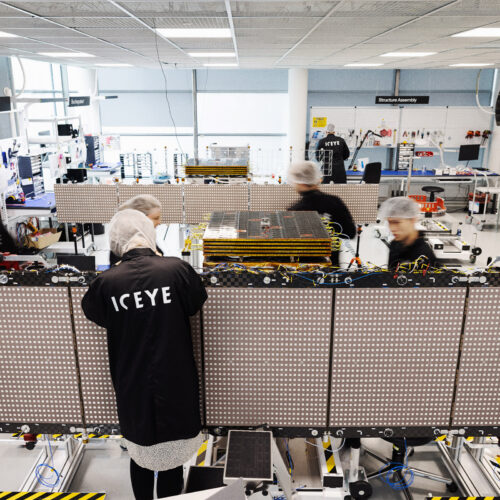
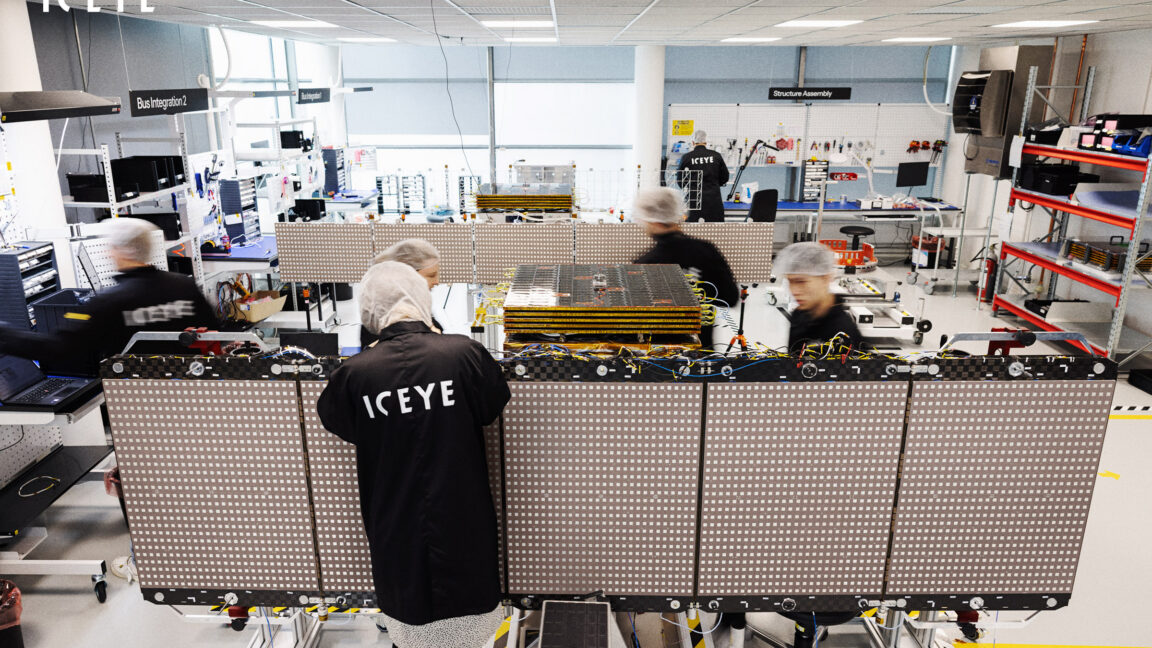
A Russian military satellite maneuvered in "extreme proximity" of a commercial Earth-imaging satellite in recent days in the first known example an unsanctioned rendezvous in low-Earth orbit, according to the orbital intelligence company LeoLabs.

The Russian spacecraft, Kosmos 2612, "conducted a deliberate series of maneuvers toward ICEYE-X36, a US-operated commercial imaging satellite," LeoLabs said. "Kosmos 2612 closed from hundreds of kilometers away to extreme proximity to ICEYE-X36. It then maneuvered around ICEYE-X36, remained nearby for an extended period, and then began moving away."

US military officials and independent analysts have tracked Kosmos 2612 since its April launch on a Soyuz rocket from a spaceport in northern Russia. Within weeks, it became apparent that at least four of the six satellites from that launch were stalking ICEYE-X36 after they adjusted orbits to line up with the orbit of the ICEYE spacecraft.
Read full article

Comments

© ICEYE

  •  

Accused OpenAI spy had folder called “Saudi Gov Docs,” FBI says

On Monday, a court granted the US government's request to deny release of a former OpenAI engineer accused of bugging a top-secret conference room to steal the frontier lab’s secrets.

In a court filing Sunday, US attorney Craig Missakian argued that Abdulrahman Alfozan must continue to be detained while the US makes its case that Alfozan brazenly spied on OpenAI, either for his own personal business gain or to benefit the Kingdom of Saudi Arabia.

Evidence showed that Alfozan had been chatting with a member of the KSA royal family on WhatsApp, while pursuing opportunities to permanently move back to Saudi Arabia during the country's biggest AI push yet, the government argued. Shortly before his arrest, the FBI found he accessed a folder called "Saudi Gov Docs" on his iPhone, where he also allegedly stored photos of a second bug he planted in the offices.

Read full article

Comments

© BRENDAN SMIALOWSKI / Contributor | AFP

  •  

Batteries help reduce emissions, but how do we reduce their emissions?

The first order of business for the energy transition is electrifying applications like vehicles and heating and making sure that the electricity that powers them is made using renewables. But once the dominant slices of the emissions pie have shrunk, other categories with less potential to reduce emissions become important.

A new study led by Haiwei Zhou at the University of Melbourne focused on the emissions associated with making lithium-ion batteries, which many parts of the energy transition rely on. Those emissions aren’t zero, so as we use more and more batteries, that number will grow. Right now, the researchers estimate that these emissions only account for 0.18 percent of annual greenhouse gas releases, but they could increase by a factor of 10 or more by 2050.

Avoiding production

There are a number of ways to reduce the emissions required to make a battery. Some elements used in various lithium-ion battery chemistries are more energy-intensive to mine and refine than others. The battery manufacturing process involves many steps that could be made more energy-efficient. And then there’s recycling, which can put battery materials back into the loop while requiring much less energy than mining.

Read full article

Comments

© Oleg Nikishin

  •  

PSA: Patch your Plex media server before someone hacks it

Recently fixed vulnerabilities in the Plex Media Server are under active exploitation in attacks that, when successful, install malware, including cryptominers and residential proxy apps, a researcher said.

Plex fixed four vulnerabilities at the start of last month. Three weeks later, published CVE designations revealed five vulnerabilities, with one of them carrying a severity rating of 8.6 out of 10. A researcher last week revealed an exploit that chained four of them together to achieve remote code execution of the device running a vulnerable Plex version. The researcher named the chain "Plex2Shell."

Complex exploit chain

The new details allowed a separate researcher to create a honeypot that could track attempts in the wild to exploit the vulnerability chain. Within a day, the researcher began seeing active scanning of the simulated Plex server and eventually successful attempts to infect devices. So far, successful attacks are installing two payloads. One is a cryptominer, which uses the device to mine cryptocurrency and deposit it into a wallet controlled by the attacker. The other payload is residential proxy software, which allows people to anonymize their Internet activity (much of it illegal) by connecting to the infected box and then using it to send the user’s traffic to a final destination.

Read full article

Comments

© Plex

  •  

Startup taps underwater volcano as energy source in "proof point" test

The world’s first demonstration of a subsea geothermal power plant has taken place near an active underwater volcano almost a mile below the ocean surface. It generated less than 10 seconds of net-positive electricity but showed the technical feasibility of tapping another form of renewable energy underwater.

The three-week test deployment of the 3-ton prototype power plant took place at the Axial Seamount in the northeast Pacific Ocean in September. Endurance Energy, the Seattle-based startup behind the effort, aims to eventually commercialize subsea geothermal power for Pacific island nations and other customers looking for alternatives to importing expensive fossil fuels.

“The deep ocean gives us unlimited cold seawater for cooling, and its weight keeps the system and the well pressurized, so our plants can be compact,” said Andrew Redd, founder and CEO of Endurance Energy, in an email to Ars.

Read full article

Comments

© Endurance Energy

  •  

ReactOS reaches major milestone with NTFS install support

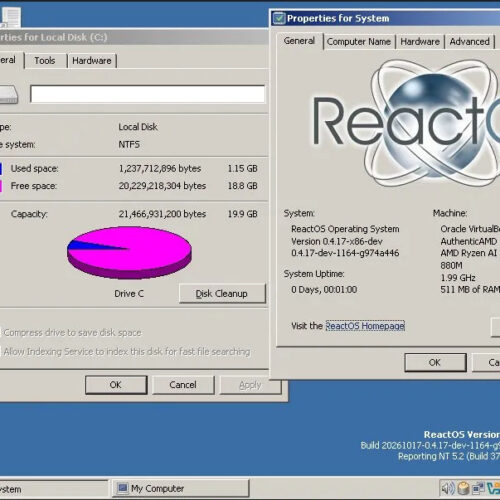
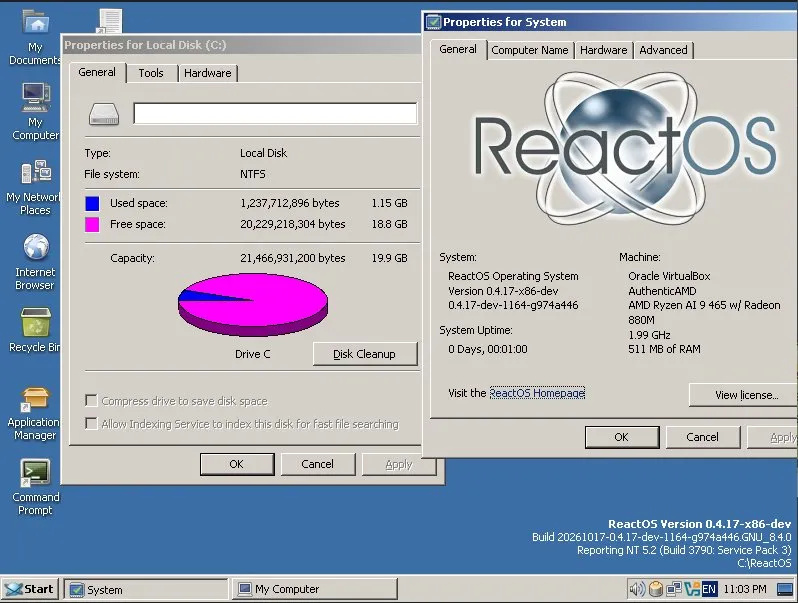
Open source Windows alternative ReactOS has reached a major milestone: The operating system can now be installed directly onto an NT Files System drive partition. As reported by Phoronix, the move to NTFS clears a long-standing hurdle for the project and brings it one step closer to finally reaching beta.

Prior to this latest announcement, ReactOS required users to keep a FAT32 partition for installations. A proprietary Microsoft-developed filesystem, NTFS can trace its roots back through the Windows NT family lineage starting in 1993 with Windows NT 3.1. The variant introduced with Windows XP in 2001 remains the standard used by most Windows systems today. With ReactOS's stated goal of reaching binary compatibility with Windows Server 2003, being confined to FAT32 partitions was a practical barrier to clear on the way to reproducing the Windows environment.

However, users looking to hop off the Windows train shouldn't be grabbing their bags just yet. ReactOS wrote that the new driver still "lacks caching (which causes inferior performance), journaling and security support." So while the new driver is here, even the most intrepid of OS tinkerers should tread carefully. The ReactOS team warned in its announcement on X that there are still "potentially undiscovered bugs."

Read full article

Comments

© ReactOS

  •  

AI game clones are making indie developers afraid to show their work

Since its earliest days, the video game industry has been built on developers creating clones of competing games, with varying levels of originality and varying levels of enforcement from game platforms. Now, though, AI coding tools are making that cloning process so efficient that many developers are getting extremely cautious about sharing their early work too widely.

Developer Alliance Arts highlighted this trend over the weekend, delaying the launch of a planned public demo for its demon-themed Russian Roulette drinking game Drunken Goddess Reflex, which had been set to go live with today's launch of Steam Next Fest.

In a post on social media Friday evening, the Alliance Arts team wrote that, in addition to concerns about managing streaming restrictions, "we're concerned that the demo's content could be used to quickly imitate or replicate the game's presentation and gameplay with AI or other tools and that such works could be released before our launch."

Read full article

Comments

  •  

Florida DMV hacked after police dept insecurely stored login info

The Florida Department of Highway Safety and Motor Vehicles (FLHSMV) has begun notifying victims impacted by a recent data breach of driver’s license and motor vehicle data, but not everyone whose information was stolen will receive an alert.

In a notice posted Friday, FLHSMV confirmed that it took “immediate steps” after discovering that “a malicious actor accessed certain department records on September 4, 2026, using compromised credentials.” There’s “no evidence” that data has yet been misused, the department said, but law enforcement “determined the information potentially affected includes driver license and motor vehicle data, to include document images, and other personal information.”

FLHSMV is sending out letters to everyone affected, offering victims one year of credit monitoring from Sontiq, Inc. However, the state acknowledged that it may not have current contact information for many former Florida residents whose data was still being stored. Those potential victims can confirm if their data was stolen by emailing FLHSMV at customerinquiry@flhsmv.gov, officials said.

Read full article

Comments

© ablokhin | iStock Editorial / Getty Images Plus

  •  

Disney found a way to buy Character.AI without buying its lawsuits

This week, Character.AI declared bankruptcy. While some saw the fall of a chatbot platform as a harbinger for the industry, court filings indicate that the decision was actually a key part of a deal that has let Disney hire most of Character.AI’s staff—including its now former CEO Karandeep Anand—potentially acquire most of Character.AI’s technology, and avoid the beleaguered startup’s many legal liabilities and obligations.

In the past few years, Character.AI has faced multiple private lawsuits over the safety of its chatbots, as well as investigations from regulators around the world. In a declaration filed as part of the bankruptcy, Character.AI’s newly appointed CEO explained that the goal of the bankruptcy was to reach a “consensual resolution” with personal injury claimants and a group of states investigating the company, while maximizing the value of the company’s assets for shareholders.

The Disney deal seems to be structured so that whatever is left of Character.AI will retain responsibility for those legal battles, some of which are still ongoing.

Read full article

Comments

© Getty Images | NurPhoto

  •  

A Chinese rocket deorbited over Minnesota and left this in a farmer's cornfield

About a month ago, a Chinese rocket took off from a remote spaceport in the Gobi Desert, released 10 satellites into orbit, then reignited its engine and put itself on a trajectory to rain down debris over the American Midwest.

The rocket's flight on September 15 lasted between 75 and 80 minutes, and it came down without completing a full orbit of the Earth. Social media posts at the time showed streaks of fiery debris falling from the sky, heading north over Kansas toward Minnesota. The overnight spectacle was also visible on the western horizon from Wisconsin.

The exact time, location, and direction of the debris allowed experts to connect it to the launch of a Zhuque-2E rocket, a medium-lift vehicle built by a Chinese company called LandSpace. The rocket had launched from Dongfeng, a commercial launch zone co-located with the military-run Jiuquan Satellite Launch Center in northwestern China, less than two hours before.

Read full article

Comments

© Stevens County Sheriff's Office

  •  

Review: Lanterns is a truly unique twist on the superhero genre

The trailers for HBO's DC Universe series Lanterns teased a show that eschewed the usual superhero hijinks in favor of a gritty realism more in the vein of True Detective or Slow Horses. Personally, I liked the change. My verdict: Ignore the review bombing; it's wonderful. The season wrapped with an emotionally charged, almost elegiac finale that fully delivered on that initial promise. I've found the rebooted DC Universe films released thus far to be enjoyable but rather forgettable, even when the positives outweigh the negatives. But Lanterns is a shining beacon of what is possible when someone is allowed to get really creative within the genre.

(Spoilers below, but no major reveals.)

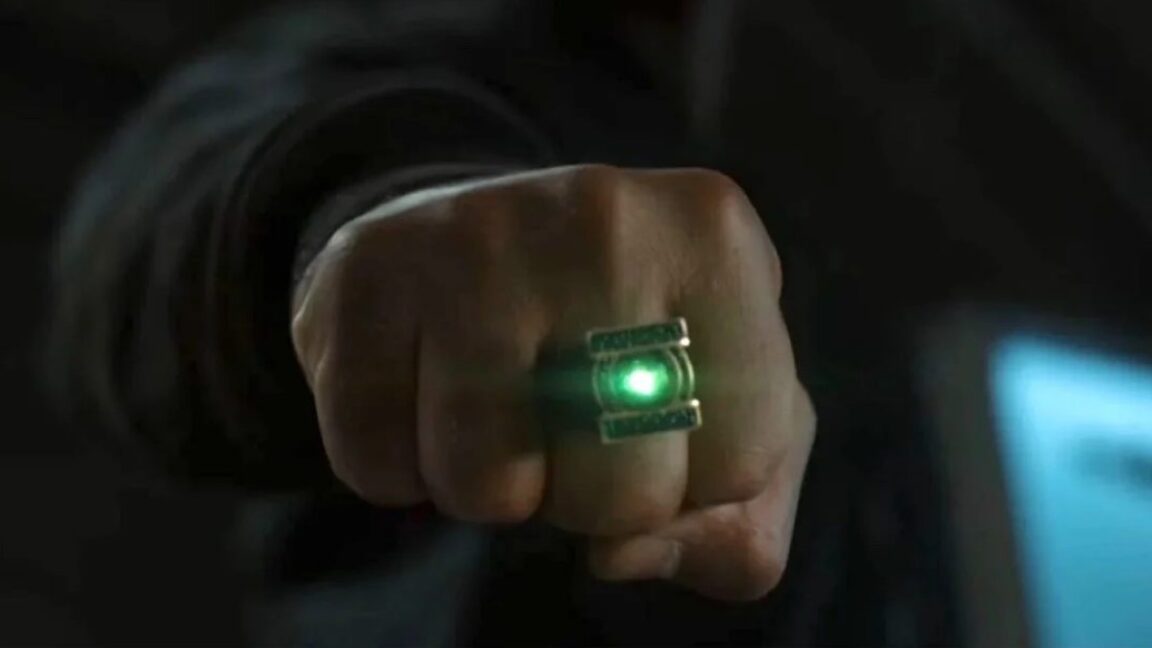
There are two primary storylines. The first takes place in 2016 with a mass shooting at a local football game in Rushville, Nebraska. Current Green Lantern Hal Jordan (Kyle Chandler) and his new trainee, John Stewart (Aaron Pierre), get involved in the investigation, to the annoyance of Sheriff Kerry Kane (Kelly Macdonald), who initially doesn't think the case has any extraterrestrial connection. She is soon proved wrong when the suspect (an alien) self-detonates. Hal's power ring controls the damage, but the mystery remains.

Read full article

Comments

© YouTube/HBO Max

  •  

DIY VR: How to build your own headset, and why you probably won't want to

Virtual reality is in a bit of a weird place right now. After a lot of unfulfilled promise in the 1990s, it came back strong with the 2016 release of the Oculus Rift. For a while, it looked like VR, AR, XR, the metaverse, or whatever you wanted to call it, was going to be huge. Mark Zuckerberg was certainly convinced, and even Apple got in on the hype with its Vision Pro.

But by then momentum for alternate realities of every acronym was already in steady decline, and it only dwindled from there. The rate of development of new headsets has slowed, with many companies (including Apple) scaling back or shelving their efforts. While new releases like the Steam Frame and Pimax Dream Air are still happening, many of the most interesting developments in the space these days are on the enthusiast front.

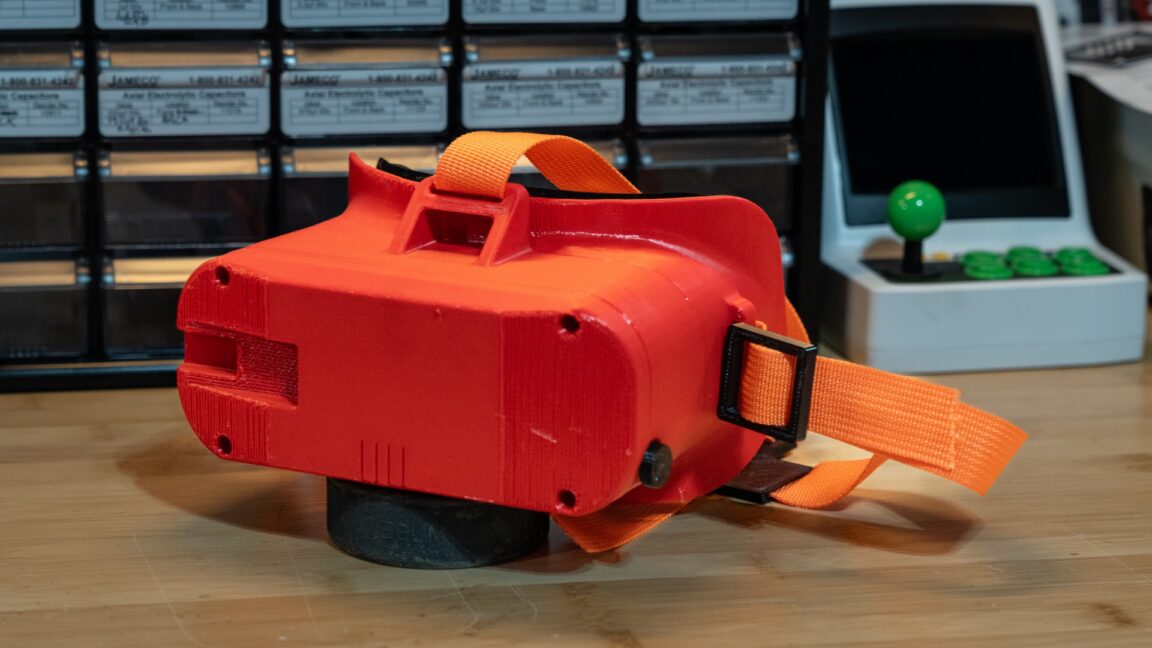
That's right, DIY VR is a thing, and with a couple hundred dollars in components, plus many hours of your time, you too can enter the immersive world of virtual reality while also experiencing the highs and lows of soldering, firmware flashing, and 3D printing. I rode that rollercoaster myself and learned why this is still a decidedly niche movement.

Read full article

Comments

© Tim Stevens

  •  

Stratospheric airship flew from US to Japan to test sky cell tower concept

Nearly 100 years after the dirigible Graf Zeppelin made the first nonstop airship journey across the Pacific Ocean, another airship has successfully completed a round-trip flight from New Mexico to Japan and back. But the significance of this modern feat was less about the journey's length and more about its purpose: demonstrating how a lighter-than-air platform can act as a cell phone tower in the sky.

The trans-Pacific flight that took place over a month between August and September 2026 was the most notable milestone yet for Sceye, a US aerospace company based near Albuquerque, New Mexico. Sceye has developed an uncrewed platform filled with helium for buoyancy and equipped with an electric-powered propeller for active propulsion, allowing it to resist most strong winds and keep hovering over the same location for long periods. The platform also uses top-mounted solar panels and onboard batteries to stay powered for stratospheric operations around the clock.

“We can stay over an area of operation, and we do that in the stratosphere right around 60,000 feet, so we're twice as high as air traffic and we're above the jet stream, and yet 30 times closer than low-Earth orbit satellites,” Mikkel Frandsen, founder and CEO of Sceye, told Ars. “We can fly through day and night until the sun comes up the next morning and recharges the batteries, at which point we're still at the same altitude and still over the same area of operation.”

Read full article

Comments

© Sceye

  •  
❌