Reading view

Patch for Windows Defender 0-day could allow attackers to fill hard disk

A patch Microsoft released on Wednesday to fix a zero-day vulnerability in its Defender security engine may cause Windows machines to write files large enough to completely consume available disk space, the researcher who discovered the flaw said.

RoguePlanet, tracked as CVE-2026-50656, came to public notice in June when NightmareEclipse, the pseudonymous name used by a researcher, disclosed it along with code for exploiting it. The vulnerability allows remote attackers to gain administrative control of Windows 10 and Windows 11 machines, even when real-time protection has been disabled. Over the past few months, the anonymous researcher has published a handful of other zero-days that have sent Microsoft scrambling to develop patches.

Writing files of unlimited size

Microsoft said Wednesday that it patched RoguePlanet with an update to the Microsoft Malware Protection Engine, which is used by the Defender antivirus app. The fix will automatically be downloaded and installed without users having to take any action. Wednesday’s update also includes “defense-in-depth updates to help improve security-related features.”

Read full article

Comments

© Photo Illustration by Igor Golovniov/SOPA Images/LightRocket via Getty Images

  •  

Allstate accuses Broadcom of auditing it because it quit VMware, CA

Allstate Insurance Company has accused Broadcom of haphazardly issuing audits against it because the insurance firm decided not to renew its contracts with VMware and CA Technologies.

The allegations were made in relation to a lawsuit that VMware filed against Allstate in December 2025, according to The Register. In the complaint, Broadcom alleges that Allstate failed to comply with license audits, which Broadcom claims its contract with Allstate requires.

In a June 12 filing, Allstate suggested that Broadcom issued the audits in response to Allstate deciding to end business with its companies. Allstate's statement reads:

Read full article

Comments

© Samuel Boivin/NurPhoto via Getty Images

  •  

Humanoid robots controlled by surgeons did world-first operation on live pigs

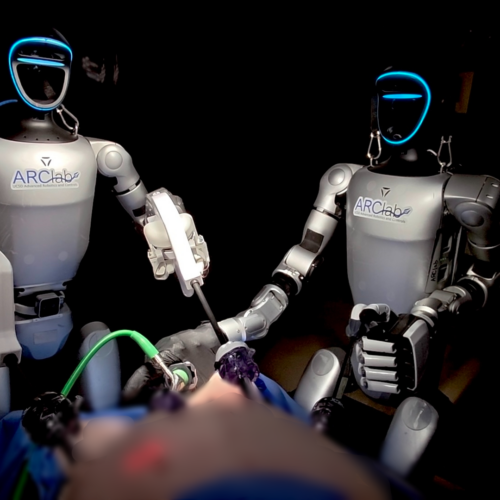
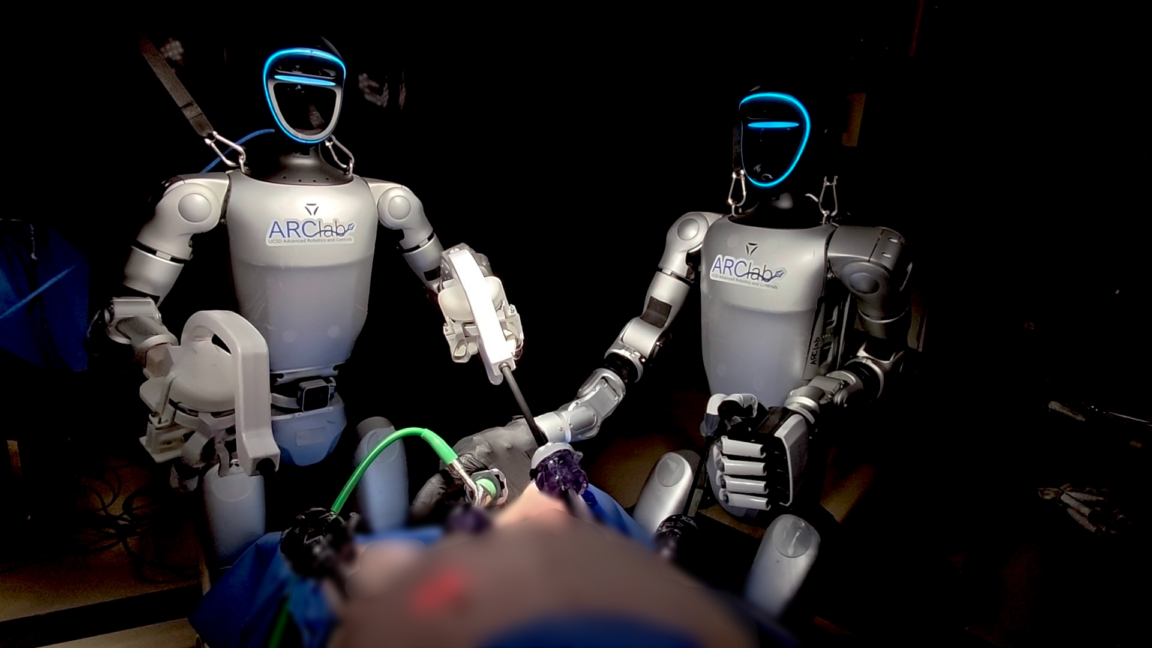
Humanoid robots have surgically removed the gallbladders from living animals in an unprecedented medical experiment—but not as autonomous machines capable of replacing human doctors. Instead, skilled human surgeons remotely controlled the robots’ movements in a new example of human-robot teamups.

The teleoperated humanoid robots completed two minimally invasive surgeries by removing gallbladders from live pigs during a preclinical trial that was published in the journal Nature. If this approach eventually proves clinically ready for human patients, surgeons could use such humanoid robots to remotely perform robotic-assisted surgical care in smaller hospitals and clinics that lack the resources to install specialized but expensive surgical robots.

“It's a fraction of the cost and it takes a fraction of the space in an operating room,” said Shanglei Liu, an assistant professor of surgery at the University of California San Diego School of Medicine, in an interview with UC San Diego Today. “So it’s easy to deploy, anywhere from rural areas, to the battlefield, and even to space.”

Read full article

Comments

© UC San Diego

  •  

Judge doesn't like Elon Musk settlement with SEC, but says court can't block it

A federal judge reluctantly approved a $1.5 million settlement between Elon Musk and the Trump administration despite raising numerous concerns about a deal that lets Musk get off lightly for a rule violation that allegedly harmed Twitter investors.

In an order approving the deal, US District Judge Sparkle Sooknanan said she "has significant misgivings about the settlement" between Musk and the Securities and Exchange Commission (SEC), and described "red flags" in the SEC's decision-making. This isn't surprising given that she previously questioned whether the deal is tainted by corruption. But there is a high legal bar for rejecting the settlement, and the circumstances do not meet "that high threshold," she wrote yesterday.

"That means that this Court must accept the Parties’ consent judgment," Sooknanan, a Biden appointee, wrote. "Whether the Executive Branch (through the SEC) has done enough to hold Mr. Musk to account for his alleged violation is, like many other issues, for our citizenry to decide at the ballot box."

Read full article

Comments

© Getty Images | Dimitrios Kambouris

  •  

OpenAI may have made a fatal misstep in copyright fight with news orgs

OpenAI is facing calls for "serious sanctions" after fighting to keep news organizations from snooping through millions of logs to find evidence of users skirting their paywalls by prompting ChatGPT to regurgitate their articles.

This evidence is considered among the most important to both sides, potentially either dooming OpenAI as an infringer or exonerating its chatbot technology as a transformative fair use of news sites' content.

In a sanctions motion Thursday, news organizations suing OpenAI—led by The New York Times—accused the AI firm of repeatedly lying for years to conceal evidence of infringement that could hobble OpenAI's defense.

Read full article

Comments

© Alona Horkova | iStock / Getty Images Plus

  •  

Surprised doctors find 10-inch worm in man's groin during elective surgery

When surgeons dug into a man's groin to repair a painless bulge, they made the unexpected discovery of a living, 10-inch-long (26 cm) worm snug in his abdomen. Adding to the oddity, the man told the surgeons that this had actually happened to him before, according to a case report in the New England Journal of Medicine.

The 71-year-old man had opted to have surgery to repair the bulge, which was an inguinal hernia. These types of protrusions are fairly common, particularly in older men, and occur when a small amount of abdominal contents, such as fat or a bit of intestines, slips through a gap or weak point in the muscles and tissues of the abdominal wall. This bodily leakage creates an external bulge that, in some cases, can be painful and uncomfortable. If the bulge's contents become stuck and pinched off, it can even create a life-threatening situation called a strangulated hernia. But, in other cases, the escaped innards are painless and loose and can be temporarily put back in place by simple, gentle massage.

Most people with inguinal hernias will need surgery at some point to patch up their weak abdominal wall. But, for older men with no pain or discomfort, doctors may suggest watchful waiting, delaying surgery until the need is clear. This was the case for the man. But he elected to repair the inguinal hernia, which was on his right side.

Read full article

Comments

© CDC |John H. Cross

  •  

Conspiracies and regrets abound in Dune: Part Three trailer

We haven't seen much footage to date for Denis Villeneuve’s Dune: Part Three, other than the broody and haunting extended teaser Warner Bros. dropped in March. But now we've got a shiny new trailer jam-packed with tantalizing hints of what to expect, and plenty of Easter eggs to delight avid book fans.

(Spoilers for first two films in the franchise below.)

As previously reported, in 2021’s Dune, we first met Frank Herbert’s iconic anti-hero, Paul Atreides (Timothée Chalamet). That film culminated in the brutal defeat of House Atreides by rival House Harkonnen, with Paul and his mother, Lady Jessica (Rebecca Ferguson), fleeing to the desert and taking refuge among the Fremen. Among them is Chani (Zendaya), whom Paul has been seeing in visions all along.

Read full article

Comments

© Warner Bros.

  •  

Ruf debuts new flat-eight engine at Goodwood

Ruf has come quite a long way from its roots as a tuner of Porsches. The German company (no doubt familiar to those of us in the PlayStation generation as Gran Turismo 2's workaround because someone else owned the video game rights to the real 911) has evolved past that stage and now builds cars of its own design. And today at the Goodwood Festival of Speed in England, it fired up a brand-new engine for the first time in public.

In fact, the German authorities have considered Ruf a distinct manufacturer (as opposed to a tuner) for some time—the BTR in 1983 was the first to carry a Ruf vehicle identification number rather than the one that Porsche originally stamped on the chassis. Then in 2007, it revealed the CTR3. The Porsche DNA was clear, but the CTR3 was mid-engined, unlike the rear-engined 911, and featured a frame chassis developed by Ruf together with Multimatic.

More recently, it has been building its own all-carbon monocoque chassis for cars like the SCR and Rodeo, which otherwise look like 964-era Porsche 911s. Those still use horizontally opposed six-cylinder engines, but for its next generation of cars, it seems Ruf wanted something a little different.

Read full article

Comments

© Ruf

  •  

Free Waymo rides in California? You can thank a regulatory quirk.

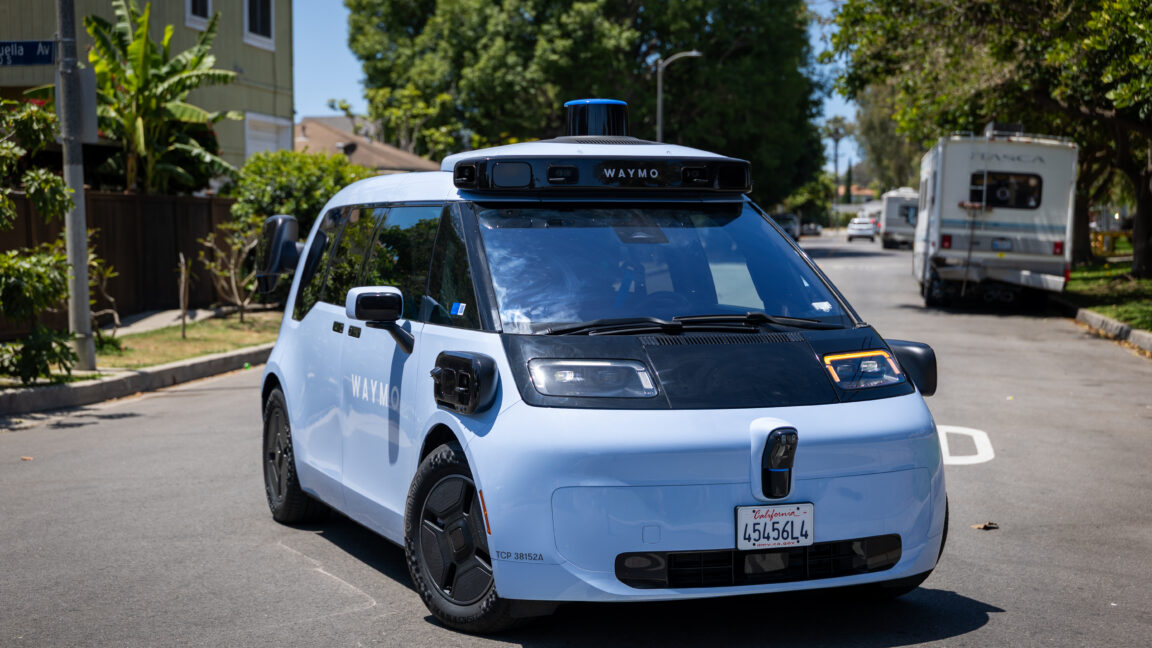
Robotaxi companies have thrived in California, where the good weather, enthusiasm for technology, and sophisticated labor force have supported their growth for nearly two decades. But a delayed decision from a state regulatory agency is now slowing Alphabet’s subsidiary Waymo, the US leader in driverless robotaxi service.

The holdup means that Waymo isn’t yet allowed to expand into parts of Northern and Southern California. And, in an upside for riders, Waymo still isn’t able to charge California passengers for rides in its new vehicle, a pale blue Chinese-made car it’s calling the Ojai, which started picking up riders last month.

If Waymo continues to operate these vehicles in its driverless ride-hail service, they could be gratis until the end of September and perhaps beyond. (The company continues to charge for rides in its Jaguar I-Pace robotaxis, which make up the majority of its fleet.)

Read full article

Comments

© Allen J. Schaben / Contributor

  •  

The newest entrant in the military’s launch competition isn't actually a launch company

This week the US Space Force brought two more companies into the pool of bidders eligible to compete for its launch contracts—Impulse Space and Relativity Space. For a rocket company, cracking into the lucrative US military launch market is both a sign of maturity, as well as an important source of revenue.

The inclusion of Relativity Space, which is making credible progress toward the launch of its heavy-lift Terran R rocket, is perhaps not a huge surprise. Under the leadership of former Google chief executive Eric Schmidt, the company has continued to work toward bringing the partly reusable rocket to the launch pad.

The addition of Impulse Space, however, was something of a surprise. The company specializes in building spacecraft for in-space operations, rather than launching from Earth.

Read full article

Comments

© Impulse Space

  •  

Payloads used to dictate the terms of launch. That's finally changing.

It wasn't easy to find anyone outside of SpaceX clamoring for a rocket like Starship just 10 years ago. Today, the space industry can't wait for Starship to finally deliver.

With a payload capacity of more than 100 metric tons (220,000 pounds) to low-Earth orbit, SpaceX's new rocket is changing the thinking of just about everyone in the space industry. With the unrealized but potentially game-changing benefits of refueling, Starship could carry the same amount of payload to higher orbits, the Moon, or Mars.

It's important to note that Starship is still very much in its experimental phase, far from proving Elon Musk's loftiest claims about what it can do. Still, NASA and the US military are considering novel ways to use Starship to fly to the Moon or transport cargo to far-flung war zones. Scientists are eager to use its enormous volume to launch giant space telescopes. Competitors are taking notice. China, the strongest strategic adversary America has ever faced, is looking for its own Starship. Now, some US satellite manufacturers are adapting for the substantial capacity of the world's most powerful rocket.

Read full article

Comments

© SpaceX

  •  

Suspecting AI cheating, Ivy League prof ordered an in-person final; scores fell 50%

Ivy League college students are, by definition, intelligent. They don't need to use generative AI to cheat on exams; they could just learn the material. But they also tend to be competitive, ambitious, and overscheduled, so AI can look like an easy shortcut that makes more time in their lives for things that can't be done by a chatbot. When the pressure is on, which approach do they choose?

A new scandal at Brown University reveals that huge numbers of these students are likely to cheat.

Record scores

A recent survey of Princeton students found that 29.9 percent admitted to cheating with AI on at least one exam or assignment. But the situation at Brown gives us a better sense of what this kind of cheating looks like in one particular class—and just how much it may be substituting for actual learning. And we know all this because the blind economics professor at the center of it all, Roberto Serrano, is not letting it go.

Read full article

Comments

© Getty Images

  •  

Lawsuit: Man used Grok to make 7K sex images of stepdaughter, then shot himself

One of the most horrific cases of allegedly Grok-generated child sex images was shared in a proposed class action lawsuit that was expanded Tuesday. Now, young girls not only accuse X and xAI of building toxic AI "nudify" tools but also of shielding child predators by obstructing police investigations into Grok-generated child sex abuse materials (CSAM).

In March, a girl’s stepfather took his own life after cops discovered that he had used Grok to create 7,000 sexually explicit images using one photo taken when his stepdaughter was 11 years old, the amended complaint alleged.

Grok allowed the man to generate extreme images depicting incest and rape without flagging any harmful behavior, the complaint said. Seemingly, xAI’s child safety system only intervened after the man input a prompt for “gang rape.” That request sent a CyberTip to the National Center for Missing and Exploited Children (NCMEC), which alerted law enforcement to the AI CSAM.

Read full article

Comments

© NurPhoto / Contributor | NurPhoto

  •  

Judge rejects Kalshi attempt to override New York state gambling laws

Kalshi lost an attempt to override New York's state gambling laws yesterday, with a federal judge rejecting the prediction market operator's request to prevent enforcement of the rules.

Kalshi is appealing the decision to a higher court. This is one of numerous cases in which judges must decide whether state laws are preempted by federal regulation of prediction markets.

New York Governor Kathy Hochul and Attorney General Letitia James issued a joint statement on the ruling today. “New York’s gambling laws are designed to protect consumers," they said. "Kalshi tried to ignore them. Yesterday, they lost in court. We will continue to hold all gambling platforms accountable to the law—and that includes prediction markets.”

Read full article

Comments

© Getty Images | Bloomberg

  •  

Google pays $250K for Linux vulnerability allowing guest VM escapes

A Linux vulnerability that allows untrusted virtual machines to gain root access to host machines is one of two high-severity flaws to surface this week in the open source operating system.

The vulnerability resides in KVM, which is, in essence, a virtual machine app included in the kernel of many Linux distributions. The vulnerability, tracked as CVE-2026-53359, allows guest virtual machines—such as those used in cloud platforms to isolate one user’s instance from the host OS and other user instances—to break out of that container.

Januscape: A threat to cloud platforms

The vulnerability affects KVM running on both AMD and Intel processors. It exploits bugs residing in the KVM guest-side, the portion of the VM that consists of only resources like the OS or drivers present in the guest VM, rather than resources present on the host machine. The threat went unnoticed in the Linux kernel for 16 years.

Read full article

Comments

© Getty Images

  •  

Aussie gov't tells volunteers to throw out thousands of functioning test routers

Last week, thousands of SamKnows routers were bricked after a government program ran its course.

In 2020, as part of a program conducted by the Australian Competition & Consumer Commission (ACCC), the Australian government's chief competition regulator, thousands of volunteers received routers to help test and report on the typical speed and performance of broadband plans in Australia. (More specifically, the Measuring Broadband Australia (MBA) program targeted fixed-line broadband services provided over the NBN, Australia's government-owned wholesale open-access broadband network, as well as services delivered over other access networks.)

According to the final report that the ACCC distributed, the routers are whiteboxes that were “supplied by SamKnows” and that “perform tests to measure internet performance using test servers maintained by SamKnows and hosted in Australia.”

Read full article

Comments

© Getty

  •  

TikTok users don't have as much agency over their FYPs as they think

TikTok's For You Page (FYP) is the default home screen for users of the video-sharing platform. It's a personalized, algorithmically driven content feed, but the approach differs from other social media in that TikTok's algorithm relies heavily on implicit signals—such as how long users watch particular videos—as well as explicit signals such as likes or follows. And generally, that algorithm does remarkably well at predicting which videos will interest particular users.

But some users have voiced concerns that TikTok's almighty algorithm doesn't seem to incorporate negative feedback very well. Even when they don't watch a suggested video or click the "not interested" feature, they keep seeing those videos on their FYP. Northeastern University computer scientists put those suspicions to the test. According to their recent paper, the engagement signals do have an effect, but only temporarily. Then the algorithm gradually relapses unless a user consistently gives the same feedback over and over again.

The research group specializes in "algorithm audits," co-author Piotr Sapiezynski told Ars, to better understand online platforms: "how they work, how they fail, when they fail, how they harm individuals and societies." In this case, he and his co-authors wanted to take a closer look at user agency after hearing multiple anecdotal reports from TikTok users that their negative feedback—responding to prompts by indicating they aren't interested or want to see less of a certain kind of video—doesn't seem to remove those posts from their FYP. "On the other hand, it's unclear why the platforms would offer it, if it doesn't work," said Sapiezynski.

Read full article

Comments

© Getty Images | Bloomberg

  •  

US seeks cheaper hunter-killer drones after Iran destroys $1B worth of Reapers

The US military has lost dozens of Reaper drones collectively worth more than $1 billion while carrying out surveillance and attack missions over Iran. Now the Pentagon is seeking large numbers of cheaper drones that can perform such missions despite the expectation that many will be lost in combat.

In a call for industry pitches, the Defense Innovation Unit’s notice described the US military’s current reliance on drones and crewed aircraft, each costing more than $30 million, as being “unsustainable against adversaries utilizing layered defenses enabled by increasingly low-cost antiaircraft capabilities.” It envisions deploying more “cost-effective” drones to “overwhelm enemy air defenses even while experiencing numerous [drone] losses.”

That is, in practice, what Ukraine’s military has been demonstrating with its long- and mid-range strike campaign against Russian supply lines, oil refineries, and various energy or industrial targets within Russia or occupied Ukraine. The Ukrainian campaign has been overwhelming Russia’s overstretched air defense capabilities by launching hundreds of relatively inexpensive drones and missiles on a daily basis to attack targets far behind the frontlines, while continuing to damage or destroy Russia’s most sophisticated air defense systems.

Read full article

Comments

  •  

Miami-based City Labs achieves a first for commercial nuclear power in space

The proliferation of nuclear power in space got a little more real Tuesday with the launch of a small satellite developed by a Florida-based company specializing in nuclear micro-power technology.

It's a long way from launching a bona fide nuclear reactor, a breakthrough that could help power a permanent Moon base and efficiently drive rockets throughout the Solar System. But you have to start somewhere.

The satellite from Miami-based City Labs is named BOHR, short for Betavoltaic Orbital High-Reliability, and it launched on a SpaceX rideshare mission Tuesday alongside 80 other payloads. SpaceX's Falcon 9 rocket released the BOHR satellite into an orbit between 350 and 400 miles (nearly 600 km) in altitude.

Read full article

Comments

© City Labs

  •  

Google updates Android Bench with new LLMs, but Gemini still lags behind

Code generation is emerging as one of the most popular applications for large language models (LLMs), but not all agents are equally good at all development tasks. Google created a benchmark earlier this year to evaluate how LLMs perform in Android app development, and Android Bench is getting a big update today. The leaderboard now includes a raft of new models, and Google has adopted a new framework that should be easier to use. Developers are invited to run their own tests and submit feedback that could shape the future of Android Bench.

While they are popular coding tools, LLMs don't get everything right. Separating the useful outputs from straight-up slop means choosing the right tool. Android Bench aims to demonstrate which AI agents do best on a suite of 100 Android development tasks. After launching Android Bench in March, Google has added metrics like cost and efficiency, as well as open-weight models.

To keep Android Bench relevant, Google is updating the test with eight new models, including all the latest heavy-hitters: Claude Fable 5, Claude Sonnet 5, Claude Opus 4.8, GLM 5.2, Kimi K2.7 Code, MiniMax M3, Qwen 3.7 Plus, and Qwen 3.7 Max.

Read full article

Comments

© Ryan Whitwam

  •  

Two teens learn the hard way not to do toy gun drive-bys from a Waymo

Two California teens have learned that Waymo's robotaxis can and will enforce their rider rules on misbehaving passengers. It probably seemed like a marvelous jape—ride around in the back of a robotaxi getting drunk and doing drive-bys, shooting stuff with gel beads. And perhaps it was, until that robotaxi and Waymo worked out what was going on. Waymo then stopped the car and alerted the San Mateo Police, who showed up and detained the troublemakers, according to a post on the department's Facebook page.

"After calling us and stopping the car, we were able to safely remove both subjects and determined they were shooting Orbeez from the car as they sipped on afternoon libations while being chauffeured around town in the driverless vehicle," the police wrote.

This isn't the first instance of a Waymo robotaxi snitching on misbehaving passengers. According to Reddit, last year two men in Los Angeles were reported to the police for drinking inside a robotaxi.

Read full article

Comments

© Aurich Lawson | Getty Images

  •  

Ocean rift zone saw spreading happen in a sudden burst

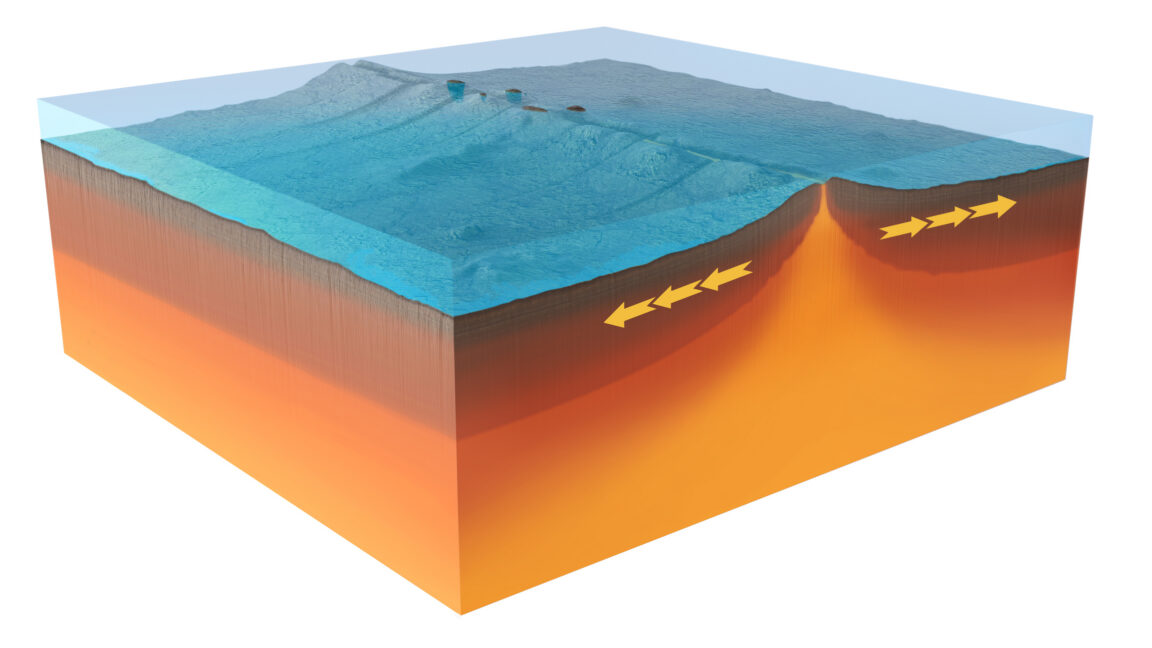
One of the central features of plate tectonics is the formation of new crust at mid-ocean ridges. Part of the spreading process that drives continents apart, it was arguably the discovery of these ridges that drove widespread acceptance of plate tectonics as a theory. Thanks to decades of exploration, we now have a good picture of what the crust that forms at the site of spreading looks like. But we still have an incomplete idea of how its features are actually produced.

In other words, we have a good idea of the outcome of the process, but not a detailed picture of the process itself.

That is starting to change. In 2024, a team of French scientists was able to remotely monitor a major event on the border between the Australian and Antarctic plates, only two months after they installed equipment on the ocean floor. Their data shows that most of the spreading occurred in a relatively short time window, and some key events happened without any obvious seismic activity.

Read full article

Comments

© MARK GARLICK/SCIENCE PHOTO LIBRARY

  •  

US rare earths flow to Asia as domestic demand is slow to emerge

US rare earths produced by Washington-backed companies are flowing to Japan and South Korea, as American demand has yet to materialize despite the Trump administration’s push to develop a national supply chain.

Rare earths products produced by MP Materials, Energy Fuels and Phoenix Tailings—which together have won billions of dollars in US government support—are being sold to companies in Asia, where the scale of magnet manufacturing remains larger than the nascent production in the US.

China’s lock on global supplies of rare earths and critical minerals has become a national security concern in the US and other Western nations, since Beijing started restricting access to them. The metals are crucial to 21st-century technology and are used in the manufacturing of everything from weapons guidance systems to electric vehicle batteries.

Read full article

Comments

© David McNew / Contributor

  •  

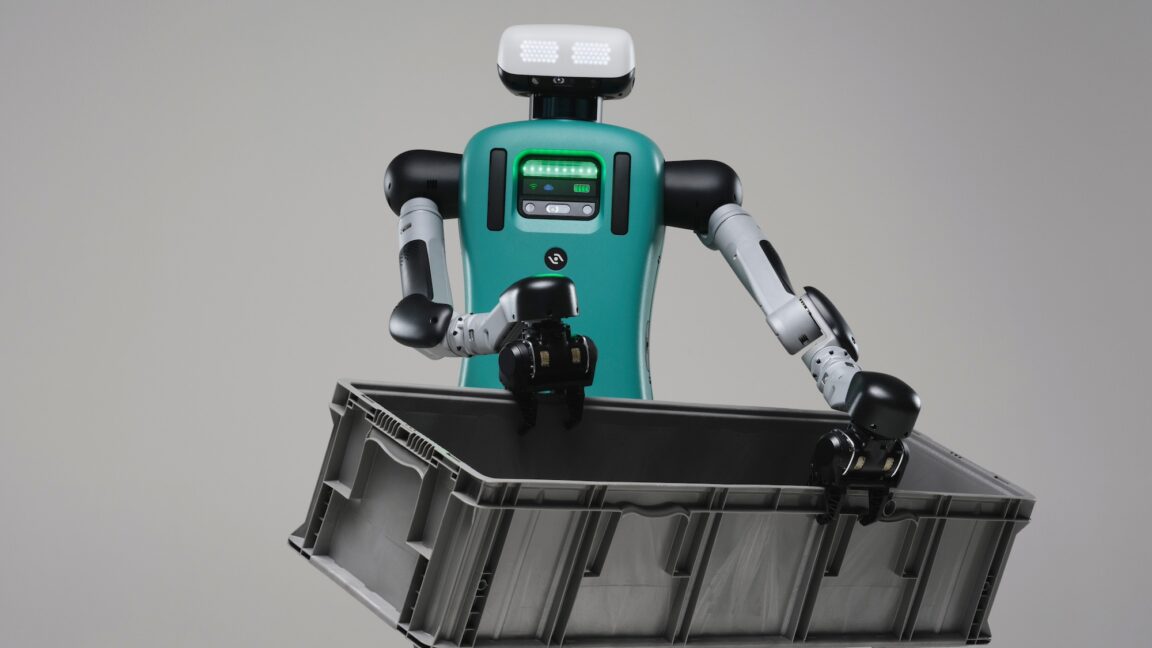
How AI could enable autonomous robot workers in workplaces—and maybe homes

In a world where self-driving robotaxis glide through major city streets without drivers behind the wheel and delivery drones autonomously fly through the skies to drop off orders at customers’ homes, the idea of general-purpose robots helping humans with various tasks in workplaces or even homes may not seem far-fetched.

But that future hinges on developing increasingly autonomous robots powered by modern artificial intelligence—an ambitious vision that has motivated many researchers to become startup founders while also attracting billions of dollars in investment.

“When I started maybe about 15 years ago, I led a project team that was focused on autonomy, but in that era, the goal of that team was to just get a robot to navigate from point A to point B,” said Matt Malchano, vice president of software at the robotics company Boston Dynamics based in Waltham, Massachusetts. “And now, when we think of autonomy, we think of this huge space of tasks and things that we can imagine a robot doing on its own.”

Read full article

Comments

© Agility Robotics

  •  

Blue Origin, for the first time, is expected to raise private capital

The rocket company founded by Jeff Bezos, Blue Origin, is raising private capital, the DealBook newsletter reported early Wednesday.

According to the publication, the company is raising $10 billion, leading to a valuation of $130 billion. Coatue Management, a big asset manager, is expected to lead with a $4 billion commitment. Another $4 billion is expected to come from large institutional investors. And Bezos will contribute an additional $2 billion.

Founded in 2000, Blue Origin is seeking to become a global leader in spaceflight, developing a line of super heavy lift rockets, lunar landers, and plans for two megaconstellations. It is seeking to compete in the same areas—launch, telecommunications, data centers from space—as SpaceX.

Read full article

Comments

© Matthew Staver/Bloomberg via Getty Images

  •  

Hackers can use 9 of the most popular AI tools to assemble massive botnets

In the brief history of AI security, the prompt injection has quickly become the top threat. Large language models are inherently unable to distinguish between legitimate instructions provided by users and malicious ones sneaked into emails, source code, and other third-party content the models are processing. This makes it trivial to surreptitiously inject malicious commands that the LLM readily follows.

With no way to enforce this crucial boundary between trusted and untrusted sources, AI engine developers are left to erect elaborate guardrails designed to mitigate the damage rather than solve the root cause.

To date, most prompt injections have fallen into a class known as push, in which each potential victim is targeted. For example, the adversary injects malicious instructions into an individual email or calendar invitation. Because the injection must then be sent (or pushed) to each specific target, the scale of the attack is limited, hampering mass exploits that hit the Internet at large.

Read full article

Comments

  •  

Michigan sees explosive outbreak of diarrheal parasite with over 700 cases

Cases of a diarrhea-causing intestinal parasite have exploded in Michigan over the last two weeks in an outbreak that still has no clear source.

As of July 6, the state has received reports of over 700 cases since June 22, along with 36 hospitalizations, the Michigan Department of Health and Human Services (MDHSS) told Ars Technica on Tuesday.

On June 30, the health department reported 170 cases, which rose to 572 on July 4.

Read full article

Comments

© CDC | Melanie Moser

  •  

Data centers’ energy demand threatens Trump’s “Made in America” plan

US manufacturers in many Rust Belt cities and towns are paying significantly higher electricity costs as growing energy demand from data centers strains the largest power grid operator in the United States. The resulting squeeze on profit margins for steelmakers and brick factories could further undermine President Donald Trump’s “Made in America” plan to revive US manufacturing, and it comes as Trump has simultaneously championed the tech companies behind the AI data center boom.

Factory electricity bills are generally rising faster than those for other business customers or residential customers, according to a Reuters analysis. It highlighted the example of the Belden Brick Company, a 141-year-old brick manufacturer in Ohio, whose electricity bills have soared from $1,600 to $12,000 per month due to a higher monthly capacity charge in the 13-state region served by the grid operator PJM Interconnection.

Meanwhile, the Steel Manufacturers Association warned that US steel companies concentrated in the Rust Belt region served by PJM Interconnection are paying tens of millions of dollars in higher power costs per year. Electricity accounts for 20 to 40 percent of the total production costs of making steel.

Read full article

Comments

  •  

Surprisingly large number of people may have marker for tick-linked meat allergy

In some parts of the US, up to 30 percent of people may carry the antibody behind a red meat allergy spurred by tick bites, far exceeding the estimated number of people who actually have the allergy, according a study published in Morbidity and Mortality Weekly Report.

The findings suggest far more Americans than previously thought may be at risk of the allergy, which can make having a hamburger for dinner a potentially life-threatening choice. The Centers for Disease Control and Prevention has previously estimated that only 0.14 percent of the US population (up to 450,000 people) has the allergy. But the study also highlights how little we understand about this unique disease—and the challenges of accurately diagnosing it.

The study surveyed blood donations for the disease's key antibody, which is in a class dubbed IgE and specifically attacks a double-sugar molecule called galactose-α-1,3-galactose, also known as alpha-gal. This disaccharide is found decorating the cells of nonprimate mammals, including cows and pigs, but it's also released in the saliva of ticks, particularly the lone star tick (Amblyomma americanum). People bitten by ticks can develop IgE antibodies against alpha-gal, which can sometimes trigger an allergic response to eating red meat as well as other animal products, such as dairy and gelatin.

Read full article

Comments

© Getty | CDC

  •  

SCOTUS lets Texas enforce app store law that Big Tech calls "censorship regime"

The Supreme Court yesterday decided not to intervene in challenges to a Texas app store law, allowing the state to enforce age-verification rules while a lawsuit continues.

A federal judge issued a preliminary injunction blocking the Texas App Store Accountability Act in December 2025, finding that it likely violates the First Amendment. US District Judge Robert Pitman's ruling prevented Texas from enforcing the law when it was scheduled to take effect on January 1, 2026.

But the US Court of Appeals for the 5th Circuit stayed the injunction on June 4, deciding that there is "no legitimate justification for enjoining enforcement of the entire Act." A lobby group representing Big Tech companies and an advocacy group for students then asked the Supreme Court to reinstate the injunction.

Read full article

Comments

© Getty Images | Joseph Sohm/Visions of America

  •  

Bethesda, id Software reportedly hit hard by Microsoft layoffs

In announcing plans for 3,200 layoffs across the Xbox division yesterday, CEO Asha Sharma focused on discussing cuts to the Xbox platform team and redundant layers of middle management. Now, though, word is filtering out about significant staffing cuts at remaining Microsoft-owned game developers including id Software and Bethesda.

Apogee and 3D Realms founder Scott Miller—who helped publish some of id's earliest gameswrote on social media yesterday of "insider reports" that a majority of id had been laid off, "including most (if not all) coders." And last night, veteran programmer Michael Maynard—whose credits at id Software date back to 2011's Ragewrote on LinkedIn that he was among the "roughly 50%" of the id team that was let go Monday.

Game Developer cites "multiple anonymous sources" in confirming those reports, saying the redundancies amount to about 90 employees at the Doom studio. The first DLC pack for last year's Doom: The Dark Ages launched earlier today.

Read full article

Comments

© id Software

  •  

Google's Pixel 11 launch event is set for August 12, with possible price increases

Google has announced its next Made By Google event, taking place on August 12 in New York City. Google's invite doesn't name names, but the imagery clearly shows a new Pixel phone that looks a whole lot like last year's phone. Some new rumors, however, suggest the updated phones will come with inflated price tags courtesy of the AI-driven component shortage.

The sleek lines of the phone in the teaser image are a dead ringer for Google's last few Pixel phones, and that matches some early rumors. Google's new phones will have similar shapes, with the Pro and Pro Fold models perhaps shaving off a little thickness. The most notable design change will probably be the rumored "Pixel Glow" lights, a rear-facing notification and status light.

Recent reports claim that Google is finally doing away with the base 128GB storage option for the smaller phones. In 2025, both the Pixel 10 and Pixel 10 Pro started at 128GB of storage, a bit lacking for a modern flagship device at a time when people don't upgrade as often. Google will reportedly move to 256GB as the base storage for both phones.

Read full article

Comments

© Google

  •  

The Weather Channel increases streaming subscription prices by up to $20

People who pay for a subscription to livestream The Weather Channel via its dedicated smart TV app are seeing a 66.7 percent price hike.

The TV app, available via Android TV, Fire TV, Roku, and Samsung TVs, used to cost $3 per month, or $30 per year. According to the Internet Archive’s Wayback Machine, those prices were valid as recently as April 2026. Now, a subscription to the streaming app is $5 per month, or $50 per year, as first reported today by Cord Cutters News.

In addition to livestreaming The Weather Channel’s broadcast network, The Weather Channel TV app also offers on-demand shows, local forecasts, maps, radars, and news. The app launched in May 2022, allowing people to access The Weather Channel’s reporting without a cable or satellite TV subscription.

Read full article

Comments

© Getty

  •  

The Nintendo Switch's days are numbered—but what is that number?

On Monday, Nintendo announced that it will stop selling the original Switch in Europe next February. That decision comes in response to European regulations that will soon require easily replaceable batteries in most consumer electronics. Rather than redesigning multiple original Switch models to comply with that regulation (as it is doing with the Switch 2), Nintendo has decided it will just stop selling the older console in the region.

Those new battery rules won't affect the availability of the Switch outside of Europe, of course. But the move got us wondering how much longer Nintendo might keep selling the 9-year-old Switch now that the Switch 2 is drawing the focus of both the company and the market.

An Ars analysis of Nintendo's recent history (as documented in its annual earnings releases) shows that sales for even the company's bestselling hardware tend to decline to zero after nine years on the market. But the data also shows the Switch being a relatively resilient market force that could sustain its commercial life well into its second decade on the market.

Read full article

Comments

© Getty Images | AFP

  •  

This race car is made from plant fibers, volcanoes, ... and seawater?

To varying degrees, each form of motorsport combines sport, entertainment, and technological development. As Ars has explored, there are valuable lessons that companies can learn from competition, particularly when the pressure is as intense as Formula 1. If you asked me last month, I would likely have said that when it comes to historic racing, it's almost all about the sport and entertainment, with precious little tech development.

But that was before I spoke with Matt Faulks, executive innovation director at Lola Cars, about the company's new run of T70s. The original T70 debuted in 1965, and Lola built more than 100, which in the latter half of the 1960s proved effective in short races like the Can-Am series as well as endurance events like Le Mans or Daytona. Latterly, T70s have proved popular among the historic racing crowd, and as Lola rebuilds itself after being saved in  2022, it's joining some of the other storied manufacturers by digging into its archive. Lola will have 16 new cars, configured either for historic racing complete with the necessary FIA homologation papers as the T70S, or as a UK road-legal version, the T70S GT.

But it's the use of materials that makes the new T70S particularly interesting.

Read full article

Comments

© Lola Cars

  •  

Facing US export controls, China's DeepSeek plans to make its own chips

DeepSeek, the Chinese startup developing large language models that are competitive with those from US companies like OpenAI and Anthropic, is planning to enter the silicon business, according to Reuters.

Citing three people familiar with the matter, Reuters writes that DeepSeek has been working on a move into silicon for about a year. It has been meeting with potential partners in the hardware and silicon space and has been hiring engineers for the project.

Read full article

Comments

© Getty Images

  •  

Dragonflies maneuver like fighter pilots

Credit: Samuel T. Fabian et al., 2026

Male dragonflies are known to engage in mid-air "dogfights" to defend their breeding territory, using different maneuvers than those they employ when hunting prey. A new paper published in the Journal of the Royal Society Interface concluded that relatively simple rules drive that behavior, namely that male dragonflies are trying to maintain a tactical position. This mirrors the tactics of human fighter pilots. The research could lead to the development of smarter drones capable of navigating with simple, vision-based guidance rather than complex computation.

Classic pursuits involving prey or mating rituals are asymmetric: there is a chaser and an evader, with each role requiring different maneuvers. In the case of male-on-male interactions, however, it is more of a mutual pursuit, per the authors, who thought that studying flight trajectories of insects or raptors could yield useful insights into the guidance laws that underlie the behavior. They chose the Trithemis Aurora species of dragonfly for study because the males are "fiercely territorial," and there are usually multiple males around a given pond, intent on defending their chosen perches. The dragonflies are also crimson-colored, making them easier to track.

Much of the prior research on dragonfly interactions relied on visual observations or single-camera recordings. For this study, the authors set up a portable stereovideographic rig with two shutter-synchronized cameras to record dragonfly interactions in both color and monochrome, and then reconstructed 102 paired male-on-male flight trajectories to capture the 3D kinematics. They also reconstructed nine trajectories for dragonflies intercepting prey for comparative purposes. This enabled the authors to develop a model for the rules governing the flight behavior.

Read full article

Comments

© Samuel Fabian et al., 2026

  •  

New virus catalog reveals which pathogens pose the greatest threat

In a typical year, scientists discover two or three viruses that have never been seen in people before. The number fluctuates, but the trend has been fairly steady since the 1960s.

Most of these viruses attract little attention, and my colleagues and I have often had to search through old medical papers to find any mention of them. Some viruses disappear entirely and are all but forgotten. At the other extreme, the discovery of HIV-1 in 1983 and Sars-CoV-2 in 2020 presaged the AIDS and COVID pandemics, respectively. Both have killed tens of millions.

The next time a scientist finds an unusual or unknown virus in a patient—probably in the next few months—how will they know whether it could lead to a public health emergency on the same scale as AIDS or COVID? My team at the University of Edinburgh has been using the lessons of virus history to help answer this question.

Pandemics come in many forms, but in recent times the biggest culprits have been viruses with genomes made from RNA (rather than the more familiar DNA). Thousands of RNA virus species have been identified, and there may be millions, but only 239 infect humans. We recently published a catalog that helps pinpoint the riskiest ones.

The type and severity of disease are important indicators, but there will be no pandemic unless the virus can spread between people. That could involve physical contact, or inhaling airborne particles, or exposure to blood or feces, or the bite of a mosquito or tick.

For two-thirds of the viruses on our list, an infected person is highly unlikely to pass their infection on. These are known as zoonotic viruses, meaning people usually catch them from animals rather than other people. Rabies is one example.

That sounds reassuring, but viruses evolve quickly and there is an understandable concern that a zoonotic virus might acquire the ability to spread among humans. That’s why scientists are so worried about bird flu. But there is no documented example of an RNA virus doing that. Rabies hasn’t, even though there are tens of thousands of human cases every year.

A much greater threat comes from viruses that already have the ability to spread from person to person. They might become even more transmissible—as did a series of SARS-CoV-2 variants—but they crossed over from animals already able to spread among people. In the distant past, that was the likely origin of measles, mumps, and rubella, along with dozens of viruses associated with colds and gastrointestinal infections.

Then there are viruses that are capable of spreading among humans but, so far, have caused only limited outbreaks. That’s because their R number (how many people, on average, one infected person goes on to infect) is too low and chains of infection eventually die out of their own accord. But R numbers can change; for example, when a virus previously confined to remote villages reaches a city. That happened with Zaire ebolavirus in west Africa in 2014.

There have only ever been a few dozen names on our list of outbreak viruses, but it’s a powerful predictor of public health emergencies. Zaire ebolavirus, the insect-borne Chikungunya, Zika and Oropouche viruses, and mpox (a DNA virus) were original entrants, and all have gone on to cause major epidemics.

Some rarer viruses on our list have become more familiar, too. One is Andes hantavirus, responsible for a recent outbreak on a cruise ship. Another is the Bundibugyo ebolavirus, which is currently spreading in central Africa.

The next pandemic virus

Our data can also help predict what a future pandemic virus—sometimes called disease X—might look like. COVID is a good illustration.

In 2019, my team showed that highly transmissible viruses tend to be closely related to other viruses that spread between humans, but they emerge separately from animals. That turned out to be a perfect description of SARS-CoV-2, very similar to the original SARS coronavirus but independently (and perhaps indirectly) acquired from bats.

The year before, the World Health Organization had proposed a SARS-like coronavirus as a candidate for disease X. That’s why scientists were alarmed about COVID from the outset—it was exactly what they had been looking for.

By contrast, neither Andes nor Bundibugyo virus have the right profile to start a global pandemic. But if it were, for example, a novel virus related to measles then it would be a different story. In that scenario, there would be a real possibility of a worldwide emergency much worse than COVID.

Andes and Bundibugyo do reinforce one important lesson, though: Both had been spreading for weeks before they were picked up. So had COVID. Finding and understanding new viruses faster would deny the next pandemic the same head start, and could make a huge difference to the eventual toll on lives and livelihoods.

Mark Woolhouse is a professor of infectious disease epidemiology at the University of Edinburgh. This article is republished from The Conversation under a Creative Commons license. Read the original article.

Read full article

Comments

© PEDRO PARDO/AFP

  •  

ULA's last six Atlas Vs can't launch anything besides Boeing's Starliner

The final flight of United Launch Alliance's Atlas V rocket is still several years off, but an important era for the once-dominant launch company came to a close last week.

The final flight of an Atlas V for the Amazon Leo broadband constellation lifted off from Cape Canaveral Space Force Station in Florida at 12:30 am EDT (04:30 UTC) last Thursday, sending 29 satellites to orbit to move the network closer to providing initial services.

All 29 spacecraft deployed from the Atlas V rocket less than an hour after launch. They will use onboard propulsion to raise their orbits from an altitude of approximately 289 miles (465 kilometers) to their final operating positions at 392 miles (630 kilometers) above the Earth.

Read full article

Comments

© United Launch Alliance

  •  

How AI could enable autonomous robot workers in workplaces—and maybe homes

In a world where self-driving robotaxis glide through major city streets without drivers behind the wheel and delivery drones autonomously fly through the skies to drop off orders at customers’ homes, the idea of general-purpose robots helping humans with various tasks in workplaces or even homes may not seem far-fetched.

But that future hinges on developing increasingly autonomous robots powered by modern artificial intelligence—an ambitious vision that has motivated many researchers to become startup founders while also attracting billions of dollars in investment.

“When I started maybe about 15 years ago, I led a project team that was focused on autonomy, but in that era, the goal of that team was to just get a robot to navigate from point A to point B,” said Matt Malchano, vice president of software at the robotics company Boston Dynamics based in Waltham, Massachusetts. “And now, when we think of autonomy, we think of this huge space of tasks and things that we can imagine a robot doing on its own.”

Read full article

Comments

© Agility Robotics

  •  

FCC to end Biden-era rule that forces ISPs to list all their fees

The Federal Communications Commission will vote to eliminate a rule that requires Internet service providers to list all of their so-called "passthrough" fees on an easily accessible broadband price label. The FCC vote could also make the price labels themselves a bit harder for consumers to find.

ISPs routinely advertise prices much lower than those actually charged to consumers on their monthly bills. One method of raising monthly bill prices above advertised rates is to tack on fees that, ISPs claim, are used to offset charges imposed by local governments.

ISPs would be well within their rights to advertise accurate monthly prices and charge those exact prices on monthly bills. But because ISPs rarely do that, the FCC has required them to make specific price disclosures to consumers for the past decade.

Read full article

Comments

© Getty Images | GamePH

  •  

Kremlin suspected of flying drones over Europe using Russian shadow fleet

Mysterious drone flights that disrupted major European airports and flew over NATO member military bases hosting US nuclear weapons may be the work of a coordinated Kremlin campaign launched from Russian-linked commercial ships.

That recent assessment from the UK-based International Institute for Strategic Studies used automatic identification system (AIS) maritime tracking data and other publicly available data to show how Russian-linked ships and “shadow fleet” vessels that transport sanctioned Russian oil were often located nearby during various drone incidents. The report suggests that the drone incidents—which impacted a dozen NATO member countries and Ireland between August 2024 and February 2026—also revealed the vulnerability of European air defenses against surveillance and harassment incursions by low-cost drones.

The IISS report identified 144 drone sightings over Europe during that time period that were unlikely to involve hobbyist recreational drones or drone activity related to the war in Ukraine. About 48 percent of the sightings took place over military bases, 26 percent happened over critical infrastructure such as ports and energy or industrial facilities, and 18 percent occurred over civilian airports. Most occurred at night or in the early morning hours before sunrise, and the drones themselves were typically described in media reports as resembling “professional” or “military-style” drones.

Read full article

Comments

© DAMIEN MEYER/AFP via Getty Images

  •  

What is the oldest American object ever launched into space?

Did you know that the space shuttle once launched the Statue of Liberty into space?

In fact, there were two "Lady Liberties" on board Discovery when it lifted off on its fourth flight in April 1985. To be fair, each statue was only 15 inches tall (38.1 centimeters), but they were also each made of copper that was removed from the full-size statue during its then-still-ongoing restoration.

After the weeklong STS-51D mission was over, one of the space-flown statues was placed on display, and the other was melted down to create copper seals, which were then sold to the public by the Statue of Liberty Ellis Island Centennial Commission.

Read full article

Comments

© collectSPACE.com

  •  

NRC is (sort of) getting rid of "as low as reasonably achievable" standard

Last week, just before the US started its break for the July Fourth holiday, the Nuclear Regulatory Commission (NRC) proposed a new rule that would change how it regulated exposure to radiation. The Trump administration has been pushing to restart construction of nuclear power plants in the US, and many pro-nuclear advocates have been complaining about the US's existing regulations, portraying them as the main barrier to the flourishing of the industry. So, it had seemed likely that major revisions were coming.

Instead, the NRC's proposed new rules endorse the science behind its current rules and suggest that any problems are largely in the vagueness of the terminology that it has been using. So, instead, it's endorsing standards that are meant to accomplish the same thing, but avoid using some of the language it had relied on. Probably the clearest indication of the evolutionary change at play is that the NRC estimates the changing rules will save industry—not just power, but also medical and research applications—only about $9.5 million a year.

LNT and ALARA

There are two technical abbreviations at the center of US nuclear regulations. The first is LNT, which stands for "linear non-threshold." It's in reference to the issue of whether there's any level of radiation that is so low that it no longer produces harmful biological effects—the "threshold" in LNT. The "non-threshold" implies that it doesn't, and that's in keeping with biology, which has demonstrated that even single particles or photons of radiation can damage DNA and that the mechanisms cells have for repairing that damage are inherently error-prone. The "linear" in LNT simply describes how the impact of radiation scales directly with the dose.

Read full article

Comments

© SOPA Images

  •  

Katalyst's satellite rescue mission is now in pursuit of NASA's Swift

High above the remote Pacific Ocean, about halfway between Hawaii and the northernmost part of Australia, an air-launched rocket fired into space on Independence Day weekend to kick off a weekslong pursuit of a NASA astronomy satellite perilously close to falling out of orbit.

The endeavor to rescue NASA's Swift satellite is the first mission of its kind. NASA put out a call for commercial companies less than a year ago to propose how they could rapidly build and launch a small satellite to latch onto the Swift spacecraft and boost its altitude so that it doesn't come down in a few months.

Katalyst Space Technologies responded with the best offer. NASA awarded the company a contract last September to build and launch a mission to rescue Swift. A little more than nine months later, Katalyst's nearly half-ton Link satellite is safely in orbit. For anyone who follows the space industry, building, testing, and launching a functioning first-of-its-kind satellite of that size in less than a year is a remarkable achievement; it would usually take several years.

Read full article

Comments

© Northrop Grumman

  •  

Katalyst's satellite rescue mission is now in pursuit of NASA's Swift

High above the remote Pacific Ocean, about halfway between Hawaii and the northernmost part of Australia, an air-launched rocket fired into space on Independence Day weekend to kick off a weekslong pursuit of a NASA astronomy satellite perilously close to falling out of orbit.

The endeavor to rescue NASA's Swift satellite is the first mission of its kind. NASA put out a call for commercial companies less than a year ago to propose how they could rapidly build and launch a small satellite to latch onto the Swift spacecraft and boost its altitude so that it doesn't come down in a few months.

Katalyst Space Technologies responded with the best offer. NASA awarded the company a contract last September to build and launch a mission to rescue Swift. A little more than nine months later, Katalyst's nearly half-ton Link satellite is safely in orbit. For anyone who follows the space industry, building, testing, and launching a functioning first-of-its-kind satellite of that size in less than a year is a remarkable achievement; it would usually take several years.

Read full article

Comments

© Northrop Grumman

  •  

Secret Claude tracker shocks users after Anthropic’s anti-surveillance stance

Anthropic quickly removed a tracker secretly monitoring Claude Code users in China after a security researcher exposed the hidden code and condemned the spyware-like tracking as a “serious breach of user trust.”

Last week, a web developer known as “Thereallo” was researching privacy issues in Claude Code and was shocked to find that the AI firm was using “prompt steganography” to hide code that tracks Chinese users “in plain sight.” This code wasn’t malicious, but it was sending information to Anthropic that most users wouldn’t detect, relying on shorthand markers to quietly flag users’ timezone, proxy, and potential connection to Chinese AI labs that Anthropic has accused of distillation attacks.

On X, Anthropic engineer Thariq Shihipar confirmed that the tracker was added to Claude Code as an “experiment” in March. According to Shihipar, the code “was meant to prevent account abuse from unauthorized resellers and protect against distillation.” Regarding the former, The Washington Post found unauthorized retailers have sold access to free models for $1 a month, and pro subscriptions that can cost $100 monthly sell for "as little as $12."

Read full article

Comments

© SOPA Images / Contributor | LightRocket

  •  

The incredible shrinking Xbox: Five studios, 3,200 employees let go

Last month, Xbox executives laid out some "hard truths" about Microsoft's struggling gaming division that they said would require a difficult "Xbox reset." This morning, Microsoft revealed the brutal shape of that "reset," announcing plans for 3,200 layoffs and the divestment of five smaller studios that the company has spent years acquiring and shepherding.

Half of those 3,200 layoffs are effective today, new Xbox CEO Asha Sharma wrote, while the other half will come by the end of Microsoft's 2027 fiscal year (which runs through June 30, 2027). CNBC cites "a person familiar with the matter" in reporting that these cuts amount to roughly 20 percent of the Xbox division.

When combined with 1,600 newly announced layoffs across the rest of Microsoft, the company as a whole is letting go of just over 2 percent of its workforce. But The Seattle Times reports that Microsoft's total headcount has remained relatively stable thanks to other hiring.

Read full article

Comments

© Aurich Lawson

  •  

F1 in Britain: Automated software to blame for crushing expectations

Formula 1 returned to what is a home race for most of the teams on the grid this past weekend with the British Grand Prix. Yet again this season, we saw the fastest car not win the race, as reliability has been a problem. But racing giveth and racing taketh away, and the beneficiary of one driver's bad luck was another driver who really needed that win. Perhaps the bigger story, though, was the unfulfilled expectation that we'd see a late-race restart after the safety car came out on lap 48 of 52. An on-screen message told commentators and viewers this would be the case, but it was displayed in error, and what had been an entertaining race ended as something of a damp squib.

Silverstone, like many of Britain's race circuits, was a World War II airbase before being demobbed, which means it's quite flat and can be rather windy. It's also pretty fast even in its current layout (which was changed in 2010), with corners that are among the best places in the world to watch an F1 car change direction. There were worries that the new cars would find their hybrid power units starved of energy part-way round the track, and in qualifying, the cars were limited to recovering and deploying just 6.5 MJ across a lap, compared to the 8 MJ per lap allowed in the sprint and main race.

That energy limit in qualifying was about right—unlike at Suzuka in Japan, where we had the rather pathetic sight of cars slowing down before the fast 130R corner, drivers in qualifying looked to be at the limit through corners like Copse, Maggotts, and Becketts.

Read full article

Comments

© Paul Foster/Alessio Morgese/NurPhoto via Getty Images

  •  

There were not one, but two asteroid encounters this weekend

As the United States of America celebrated its 250th birthday on terra firma with fireworks displays this weekend, two Asian countries made some splashes of their own farther from Earth.

On Sunday, an aging Japanese spacecraft named Hayabusa2, which completed its initial sample-return objective more than half a decade ago, found success with an extended mission that saw the vehicle fly by a peanut-shaped asteroid named Torifune.

Hours later, the Chinese space agency released images from a spacecraft, Tianwen-2, arriving at its target asteroid following a journey of 1 billion km. At this small asteroid, the Chinese spacecraft will attempt to retrieve samples and return them to Earth late next year.

Read full article

Comments

© JAXA

  •  
❌