Reading view

Sheetz is quitting VMware, migrating 11,000 virtual machines

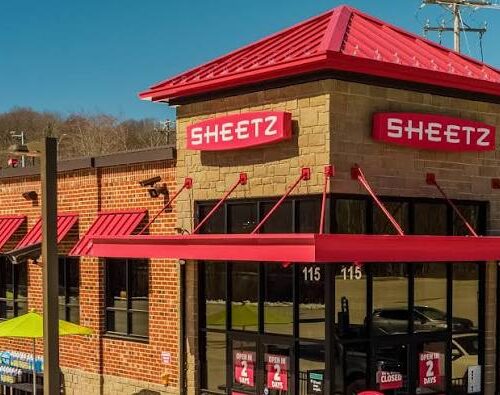
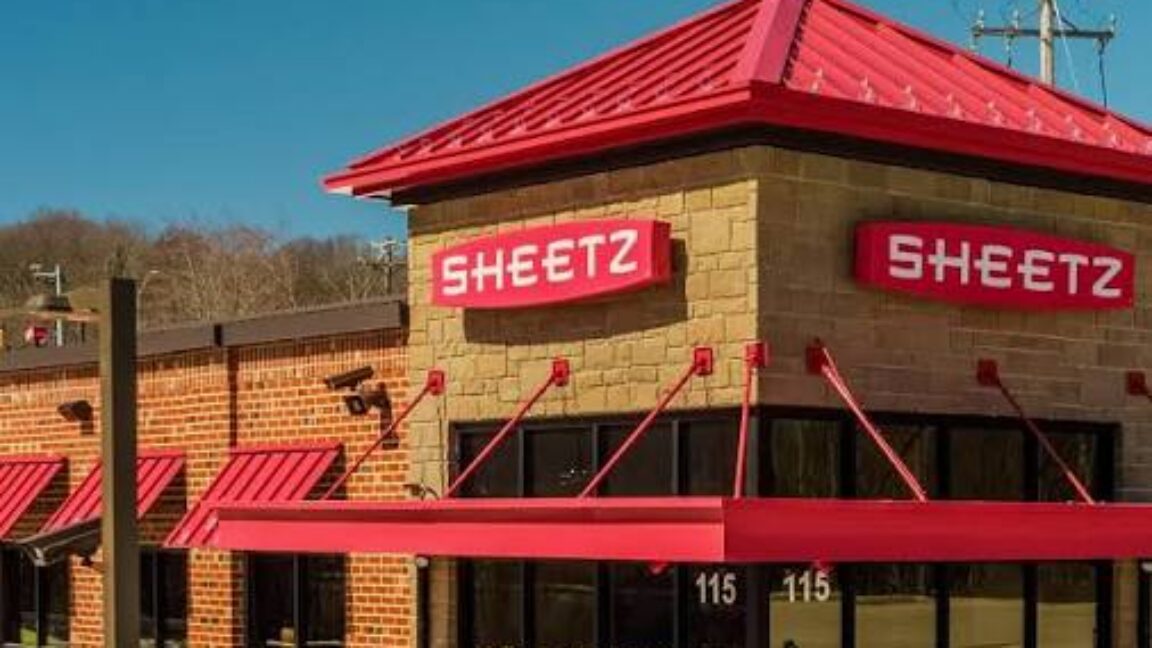
Sheetz, a US convenience store chain, is moving its 838 locations off VMware.

Sheetz has used VMware virtualization across two Dell R440/R450-series servers at each of its locations since 2019. Now it’s migrating 12 to 14 virtual machines (VMs) in each of its stores from VMware vSphere to StorMagic’s SvHCI, “with an additional two VMs to be replaced over the coming months to transition from Windows 10 to Windows 11,” Scott Robertson, infrastructure team manager at Sheetz, told Ars Technica via email. Ultimately, Sheetz will move about 11,000 VMs from Broadcom's virtualization platform. Sheetz is still running the original Dell server hardware.

So far, Sheetz has finished migrating more than 600 stores, averaging 200 per month, according to a company announcement today. Sheetz should be finished with the migration in four months, the announcement said.
Read full article

Comments

© Sheetz

  •  

Judge: Trump can’t deport researchers just for working in content moderation

This week, the Coalition for Independent Technology Research (CITR) won a key battle in its fight to reverse a visa-restriction policy that the Trump administration had used to attempt to revoke green cards and deport non-US citizens who work on misinformation, disinformation, fact-checking, content moderation, compliance, and trust and safety.

In an opinion published Tuesday, US District Judge James Boasberg granted a preliminary injunction blocking the State Department from enforcing the policy until the CITR’s lawsuit is resolved.

On its face, the policy does not require visa denials or deportations. Instead, it authorizes immigration investigations into individuals suspected of helping foreign adversaries attempt to manipulate public opinion by suppressing US speech.

Read full article

Comments

© UCG / Contributor | Universal Images Group

  •  

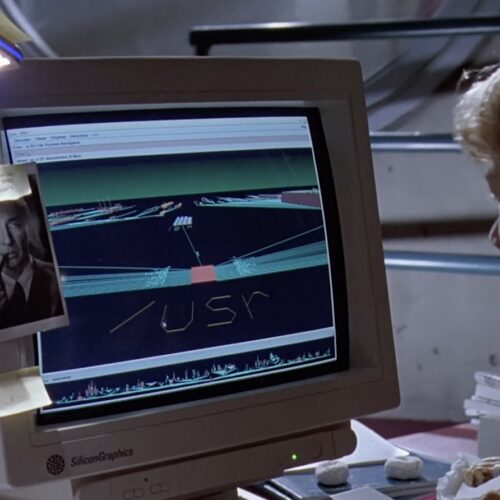
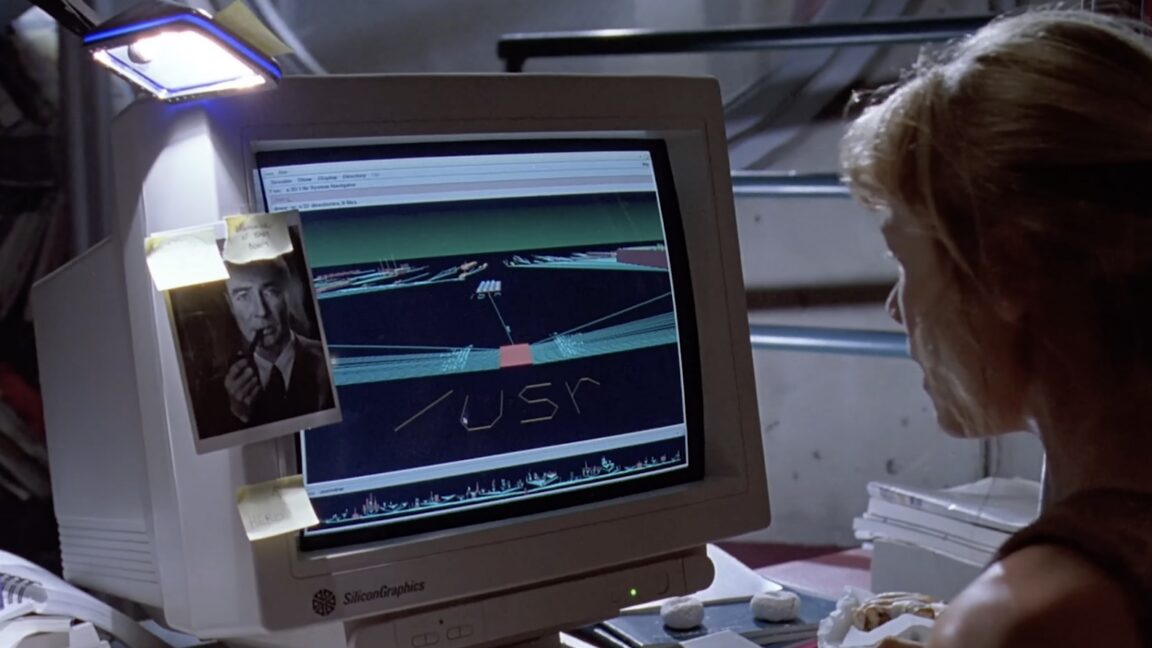
Engineer identifies and explains every '90s computer seen in Jurassic Park

Jurassic Park, while beloved as a film, has been the subject of snarky memes for the infamous line in which one of the characters declares, "This is a Unix system, I know this!" while using a computer with an unusual 3D file manager interface.

Despite the memes, the film's production team was meticulous in accurately sourcing the right PCs (and adjacent details) for the sets—not too much of a surprise, given writer Michael Crichton's background with computing and his obsessive attention to detail in the book the film is based on.

Read full article

Comments

© Universal Pictures

  •  

Windows 0-day drops the same day Microsoft releases record number of patches

Right on the heels of Microsoft releasing a record number of security patches, a researcher has published exploit code that can enable low-privilege Windows accounts to make sensitive changes to administrator accounts.

The exploit, which multiple researchers say works, is sending Microsoft scrambling, yet again, to patch a zero-day released by an anonymous researcher who has complained about the software maker’s handling of their bug reports. To date, the pseudonymous NightmareEclypse has published nine such exploits, including Tuesday’s HiveLegacy. The researcher said the proof-of-concept code included in the report was stripped down to prevent attackers from using it maliciously.

A “pretty powerful primitive”

HiveLegacy is an elevation-of-privilege exploit that targets a vulnerability residing in the Windows User Profile Service. It allows users (and with more work likely processes) with limited system rights to compromise an admin user's account by modifying its classes registry hive, a resource that ensures the correct application opens when certain types of files are clicked on in Windows Explorer.

Read full article

Comments

© Getty Images

  •  

FCC to repeal 39% TV ownership cap in boost for Trump-friendly news orgs

The Federal Communications Commission will vote to repeal the National Television Ownership Rule that is supposed to prevent a single broadcast station owner from reaching more than 39 percent of all TV households in the US. The proposed change sets up a likely court battle over the FCC claim that it has authority to repeal a limit set by Congress.

FCC Chairman Brendan Carr has already treated the rule as more of a suggestion. In March, the Carr FCC granted a waiver allowing Nexstar Media Group to buy Tegna in a deal that let it reach over half of TV households. The Carr FCC argued that Congress gave it authority to modify or waive the rule.

Carr now plans to repeal the 39 percent limit and replace it with a "case-by-case review" of each proposed merger, the chairman announced today in an op-ed published on Breitbart. The change would make it easier for the FCC to pick and choose which station groups get to surpass the limit. Under Carr, this would likely benefit news companies that provide favorable coverage for President Trump.

Read full article

Comments

© Getty Images | Heather Diehl

  •  

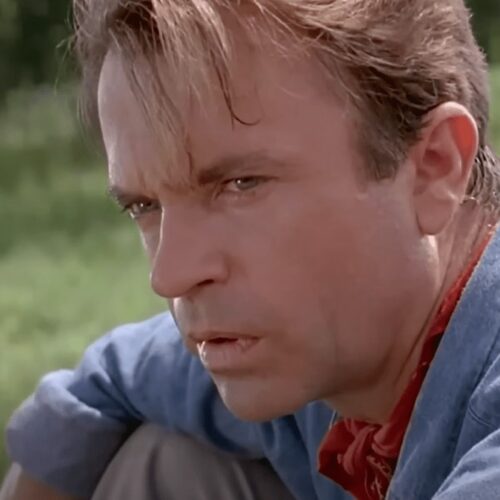
In memoriam: 7 of our favorite Sam Neill films

New Zealand actor Sam Neill, who starred as Dr. Alan Grant in the 1993 blockbuster Jurassic Park and its 2022 sequel, Jurassic World Dominion, died on Monday in Sydney, Australia. He was 78.

While American audiences likely know Neill best for Jurassic Park, he had a long and varied career in film and television. His sheer versatility won him fans around the world. He played the grown Damien in Omen III: The Final Conflict; a Russian officer in The Hunt for Red October; and even made brief cameos (as an actor playing Odin in a theatrical troupe) in Thor: Ragnarok and Thor: Love and Thunder. (The less said about 1997's space horror travesty, Event Horizon, the better, although it has its fans, and Neill made the most of his role.) Yet some of his best performances were in smaller, critically acclaimed independent films such as 1993's Oscar-winning The Piano.

On television, Neill earned his first Golden Globe nomination for the lead role in Reilly, Ace of Spies in the 1980s. He was nominated for both an Emmy and a second Golden Globe for playing the titular Arthurian wizard in the 1998 miniseries Merlin. He played Cardinal Wolsley in The Tudors, and was part of the ensemble cast in the (excellent) 2015 adaptation of Agatha Christie's And Then There Were None. Neill was magnetic as the ruthless CI Major Chester Campbell in Peaky Blinders—an antagonist and romantic rival of Cillian Murphy's Tommy Shelby.

Read full article

Comments

© Universal Pictures

  •  

Third-party app stores coming to Google Play next week as Epic settlement withdrawn

Big changes are coming to Android apps, but they're not the changes Google wanted. The settlement between Google and Epic that aimed to put to rest the companies' long-running antitrust battle is being withdrawn, and that means third-party app stores are coming to the Play Store. Google has confirmed that it will begin distributing rival app stores next week, setting the stage for competing platforms to take a bite out of Google's Android revenue stream.

This case has the potential to upend software distribution on Android, and it's all because of V-Bucks. In 2020, Epic Games was frustrated that it had to pay a 30 percent cut to Apple and Google every time someone bought a bundle of V-Bucks in a mobile version of Fortnite. The publisher added a direct purchase option to the game in violation of both Apple's and Google's rules. Naturally, Fortnite was pulled from the App Store and Google Play, kicking off the antitrust lawsuit that is only now reaching its conclusion.

While Apple suffered little penalty in its Epic case, Google was tripped up by its anti-competitive management of the supposedly open Android ecosystem. Google used its market position to discourage device makers from promoting or pre-loading non-Google app stores and attempted to hide that conduct. The remedies set by Judge James Donato included lower fees, mirroring Google Play apps in other stores, and most vitally, placement of alternative app stores in Google Play.

Read full article

Comments

© Getty Images | Kirill Kudryavtsev

  •  

OpenAI's first branded hardware is... a light-up keyboard?

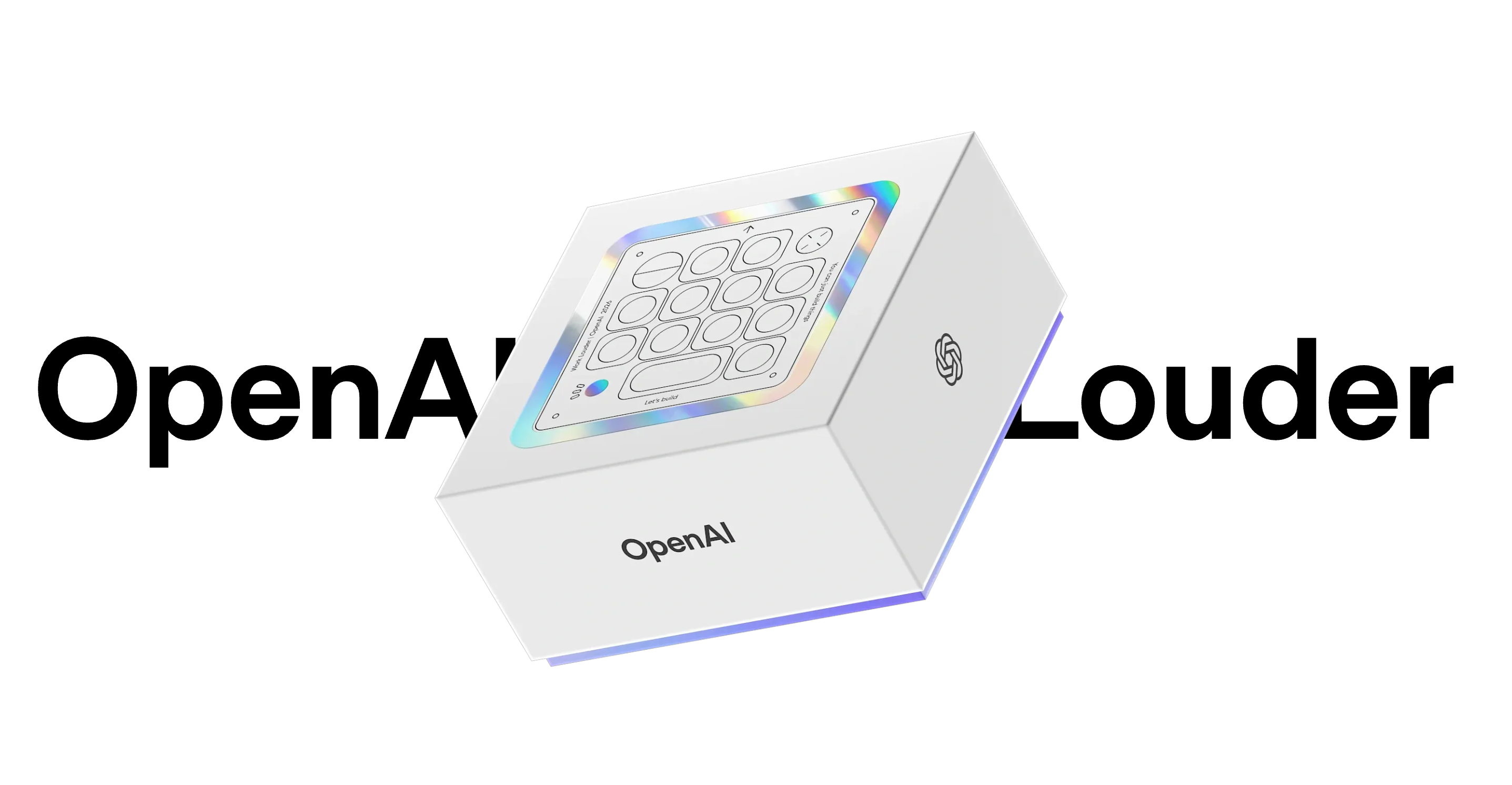
As rumors continue to swirl about OpenAI's work on a personalized smart speaker and other hardware, the company is today rolling out its first branded device. The $230 Codex Micro is a specialized, RGB-lit mini-keyboard designed to let users monitor and quickly interact with multiple Codex agents with a glance and a few clicks.

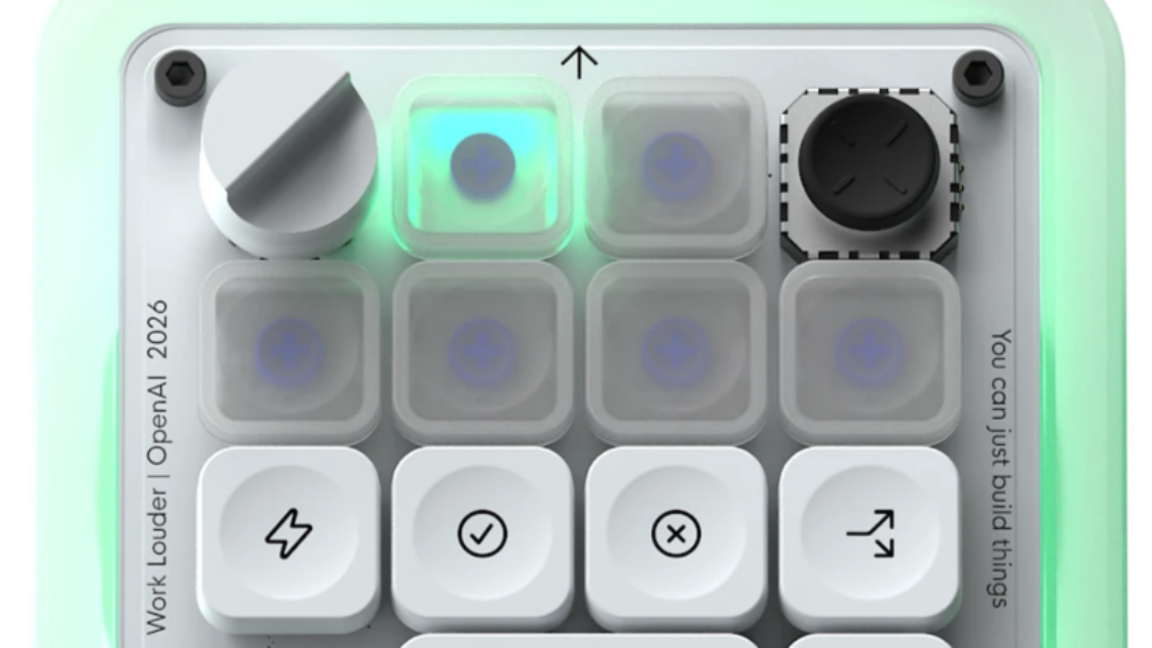
The device is described as a "limited-run collaboration" with Work Louder, which already sells a very similar-looking Creator Micro line of customizable square keyboards targeted at creative professionals. The Codex Micro differentiates itself from those mainly through six frosted keys in the top two rows, which offer color-coded live feedback on up to six Codex threads, even when they are not in focus on-screen.

Open the OpenAI box for AI assistance. Credit: OpenAI / Work Louder
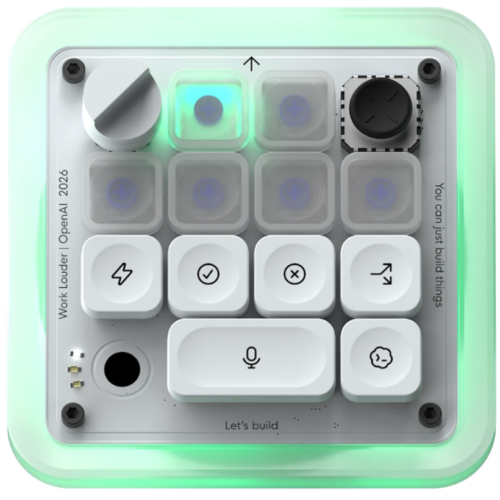
Ideally, those colored keys will cycle from white when a thread is idle to blue when Codex is thinking to green when a task is complete. But the keys can also flash amber when Codex requires feedback or a decision from a human operator and red when a thread encounters an error, letting users know at a glance which of their Codex tasks needs immediate attention. A quick tap on the lit-up button brings up the applicable Codex window on-screen.

Read full article

Comments

© OpenAI / WorkLouder

  •  

A most improbable astronaut just went to space

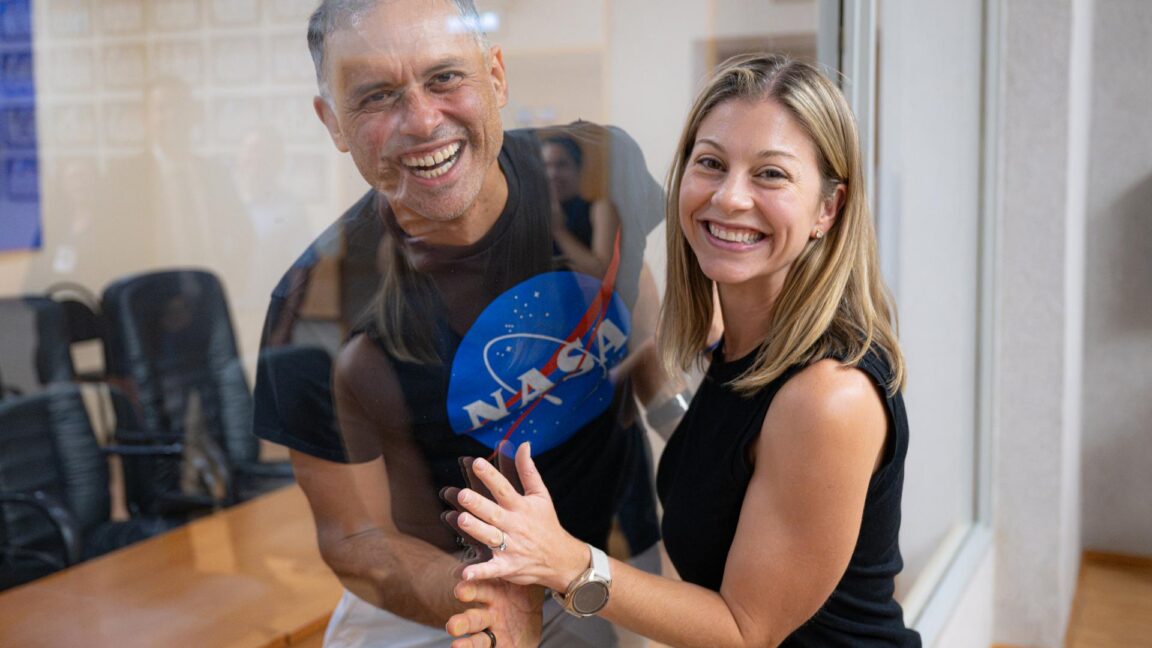
Anil Menon, a NASA flight surgeon, felt crushed nine years ago as his hopes and aspirations collapsed around him.

For the fourth time, he had diligently applied to become an astronaut at the US space agency, seeking to fulfill a lifelong dream. Although he made it to the final round, NASA had once again rejected his application at the end of the grueling process.

"I was so sad, and I admitted defeat," Menon said. "I just did not see a pathway forward. So I pretty much, at that point in time, gave up on being an astronaut. I thought there was a zero percent chance."

Read full article

Comments

© John Kraus/NASA

  •  

How hard is it to build orbital data centers, actually?

SpaceX has pinned the bulk of its future value on orbital data centers. Not rockets. Not spacecraft.

Instead, it envisions launching and maintaining a constellation of 1 million satellites capable of generating 120 GW to power tens of millions—and potentially up to 100 million—frontier-class GPUs for data center services.

The company's founder, Elon Musk, revealed plans for this massive constellation months ago, but until recently, the scope of the individual satellites was largely unknown. That changed in June, when Musk and Ian Dahl, director of satellite engineering for SpaceX, spoke in a promotional video about the company's plans to develop the first iteration of an orbital data center, called an AI1 satellite. The video finally provided the company's numbers about the satellite's size and power capabilities.

Read full article

Comments

© Aurich Lawson | Getty Images

  •  

Sotheby's big T. rex auction raises concerns hype and wealth are upending science

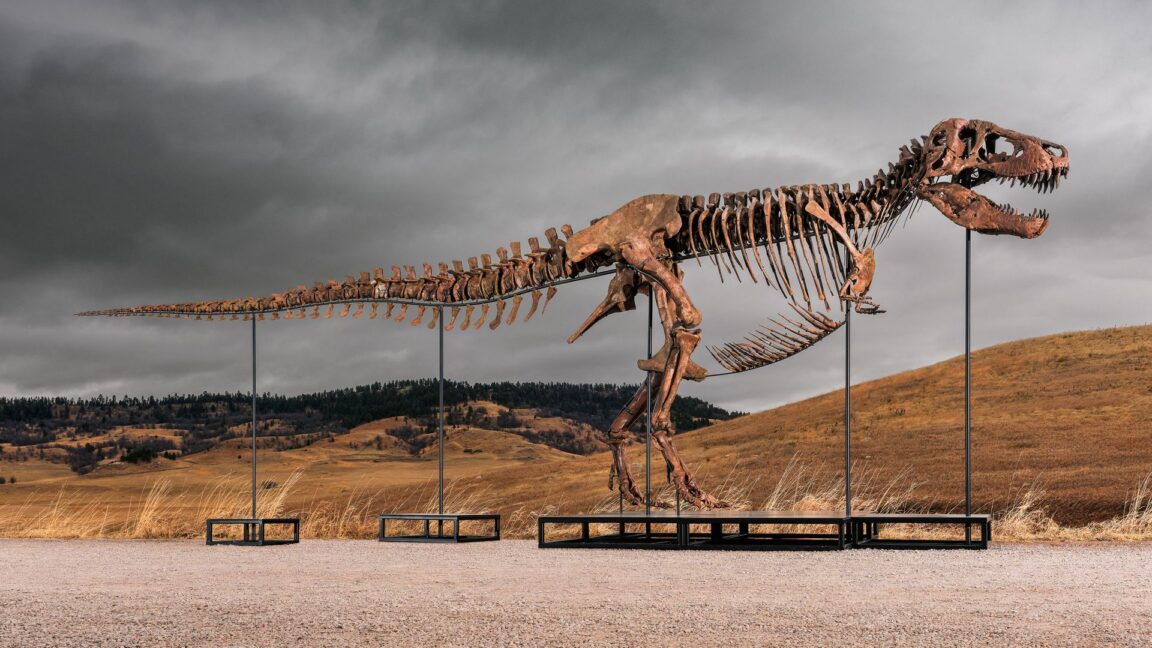
Forget the sale of the century. The auction house Sotheby’s has geared up for the sale of the epoch. On July 14 it opened live bidding on assorted fossils, but the pièce de résistance is lot 20, a rare 67-million-year-old Tyrannosaurus rex skeleton.

The specimen—dubbed Gus—is billed as one of the largest, most complete T. rexes ever found. Gus is expected to fetch up to $30 million and will go to the highest bidder, whether public museum or private collector. The latter have played an increasingly prominent role in buying fossils, with auction houses, according to paleontologists, contributing to the trend by building hype. But when private collectors swoop in and buy fossils at auction as luxury assets, those pieces of history are effectively lost to science.

By nearly all accounts, Gus is a big deal. In its description, Sotheby’s boasts that the specimen, which was discovered on a ranch in South Dakota, comprises “an incredible 183 fossil bone elements” making it “approximately 61% complete by bone count.” The fossil remains have been mounted in a custom steel armature along with replicas of the missing bones. The result is a reconstructed skeleton posed as if in hot pursuit, its mouth full of dagger teeth ready to tear into prey.

Read full article

Comments

© Courtesy of Matthew Sherman/Sotheby's

  •  
❌