Reading view

Fear of humanoid robots spurs human workers to strike at Hyundai auto factory

Thousands of unionized Hyundai auto workers began walking off the job early after negotiations with the South Korean automaker broke down over plans to deploy humanoid robots—the most significant pushback from organized labor so far over the latest wave of robotic automation.

The partial strike at Hyundai’s automotive production complex in the city of Ulsan in South Korea represents “the car industry’s first factory stoppage addressing humanoid robots,” according to The Wall Street Journal. Workers have already ended their day and night shifts two hours early at the world’s largest automotive plant from July 13 through July 15, and plan to start staging four-hour strikes from July 20 to 22 after 15 rounds of negotiations failed to reach an agreement, The Korea Times reported.

Union pushback began as soon as Hyundai Motor Group unveiled the latest version of the Atlas humanoid robot, a two-legged robot that stands at more than 6 feet tall and can lift more than 100 pounds, at the start of this year. Atlas is made by Boston Dynamics, the US robotics company that is about to become a wholly owned subsidiary of Hyundai.

Read full article

Comments

© Boston Dynamics

  •  

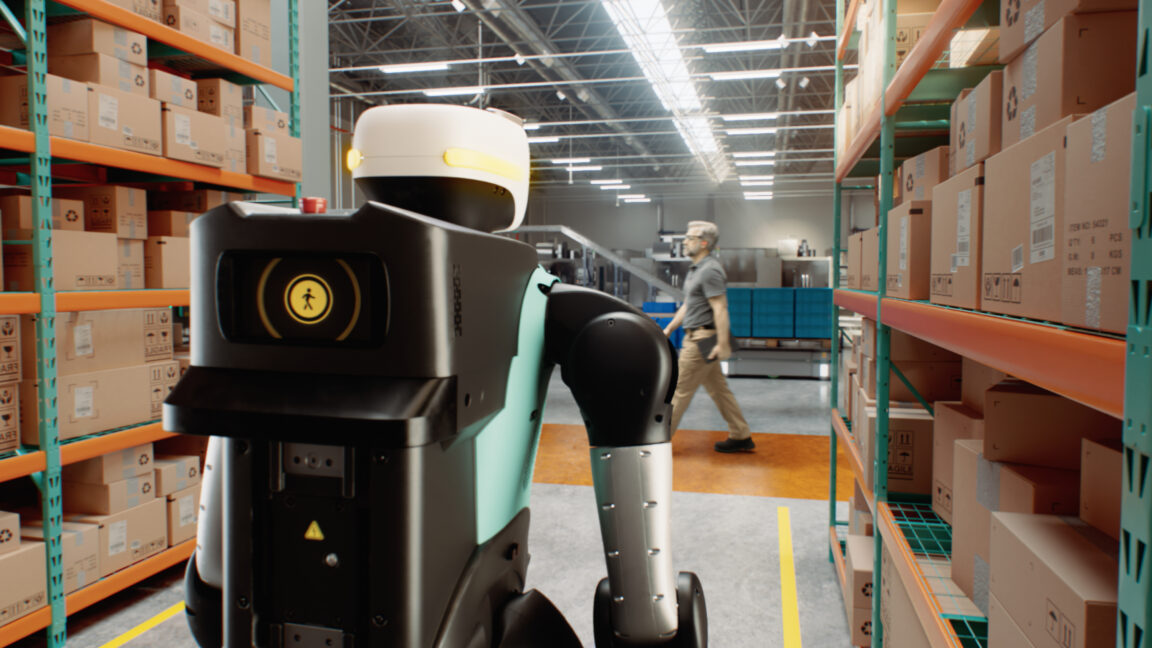
How AI could enable autonomous robot workers in workplaces—and maybe homes

In a world where self-driving robotaxis glide through major city streets without drivers behind the wheel and delivery drones autonomously fly through the skies to drop off orders at customers’ homes, the idea of general-purpose robots helping humans with various tasks in workplaces or even homes may not seem far-fetched.

But that future hinges on developing increasingly autonomous robots powered by modern artificial intelligence—an ambitious vision that has motivated many researchers to become startup founders while also attracting billions of dollars in investment.

“When I started maybe about 15 years ago, I led a project team that was focused on autonomy, but in that era, the goal of that team was to just get a robot to navigate from point A to point B,” said Matt Malchano, vice president of software at the robotics company Boston Dynamics based in Waltham, Massachusetts. “And now, when we think of autonomy, we think of this huge space of tasks and things that we can imagine a robot doing on its own.”

Read full article

Comments

© Agility Robotics

  •  

How AI could enable autonomous robot workers in workplaces—and maybe homes

In a world where self-driving robotaxis glide through major city streets without drivers behind the wheel and delivery drones autonomously fly through the skies to drop off orders at customers’ homes, the idea of general-purpose robots helping humans with various tasks in workplaces or even homes may not seem far-fetched.

But that future hinges on developing increasingly autonomous robots powered by modern artificial intelligence—an ambitious vision that has motivated many researchers to become startup founders while also attracting billions of dollars in investment.

“When I started maybe about 15 years ago, I led a project team that was focused on autonomy, but in that era, the goal of that team was to just get a robot to navigate from point A to point B,” said Matt Malchano, vice president of software at the robotics company Boston Dynamics based in Waltham, Massachusetts. “And now, when we think of autonomy, we think of this huge space of tasks and things that we can imagine a robot doing on its own.”

Read full article

Comments

© Agility Robotics

  •  
❌