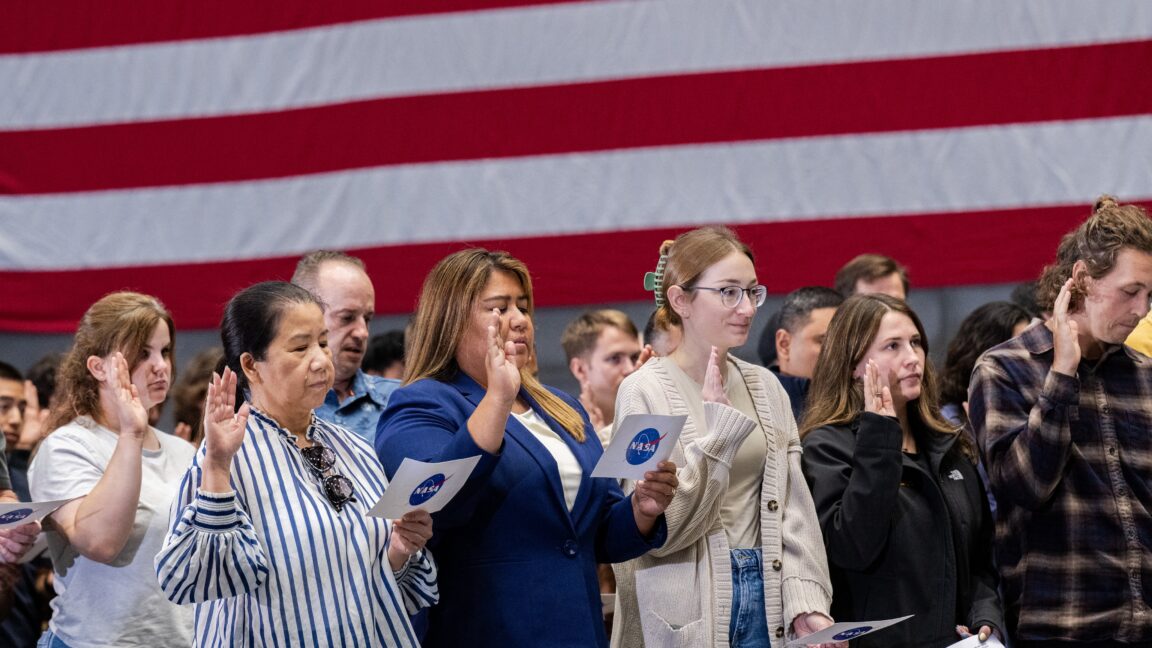
Anil Menon, a NASA flight surgeon, felt crushed nine years ago as his hopes and aspirations collapsed around him.
For the fourth time, he had diligently applied to become an astronaut at the US space agency, seeking to fulfill a lifelong dream. Although he made it to the final round, NASA had once again rejected his application at the end of the grueling process.
"I was so sad, and I admitted defeat," Menon said. "I just did not see a pathway forward. So I pretty much, at that point in time, gave up on being an astronaut. I thought there was a zero percent chance."
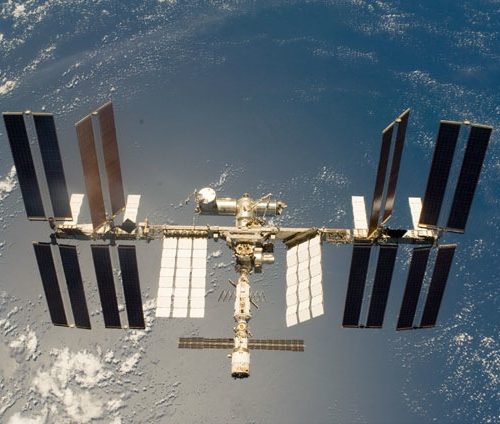
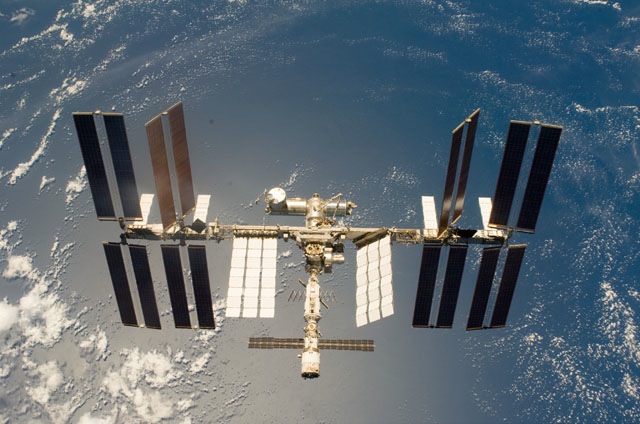
NASA this week released a much-anticipated document, known as a "draft Request for Proposals," that provides some clarity about what it expects from US companies attempting to build privately operated space stations in low-Earth orbit.
The stakes are high with this document, known as a draft RFP. The space agency, publicly, has set an end date for the International Space Station of 2030. Although there is likely to be a two-year extension, time is still running short to build, test, and fly a vehicle as complex as a space station. NASA officials and the US Congress have both said they want to avoid a gap in having a human presence in orbit, and this has created considerable urgency about what comes next.
Nearly five years ago the space agency took a concrete step toward filling this gap, awarding funding to three companies to develop space station concepts. Previously, NASA had also provided $140 million to another space station company, Axiom Space. These Space Act Agreements were intended as a prelude to a second phase of the program, which would award substantially more funding to one or two more companies to proceed into the construction and launch of their space stations. But phase two of the program kept getting delayed, in part because Congress dithered on funding.
High above the remote Pacific Ocean, about halfway between Hawaii and the northernmost part of Australia, an air-launched rocket fired into space on Independence Day weekend to kick off a weekslong pursuit of a NASA astronomy satellite perilously close to falling out of orbit.
The endeavor to rescue NASA's Swift satellite is the first mission of its kind. NASA put out a call for commercial companies less than a year ago to propose how they could rapidly build and launch a small satellite to latch onto the Swift spacecraft and boost its altitude so that it doesn't come down in a few months.
Katalyst Space Technologies responded with the best offer. NASA awarded the company a contract last September to build and launch a mission to rescue Swift. A little more than nine months later, Katalyst's nearly half-ton Link satellite is safely in orbit. For anyone who follows the space industry, building, testing, and launching a functioning first-of-its-kind satellite of that size in less than a year is a remarkable achievement; it would usually take several years.
High above the remote Pacific Ocean, about halfway between Hawaii and the northernmost part of Australia, an air-launched rocket fired into space on Independence Day weekend to kick off a weekslong pursuit of a NASA astronomy satellite perilously close to falling out of orbit.
The endeavor to rescue NASA's Swift satellite is the first mission of its kind. NASA put out a call for commercial companies less than a year ago to propose how they could rapidly build and launch a small satellite to latch onto the Swift spacecraft and boost its altitude so that it doesn't come down in a few months.
Katalyst Space Technologies responded with the best offer. NASA awarded the company a contract last September to build and launch a mission to rescue Swift. A little more than nine months later, Katalyst's nearly half-ton Link satellite is safely in orbit. For anyone who follows the space industry, building, testing, and launching a functioning first-of-its-kind satellite of that size in less than a year is a remarkable achievement; it would usually take several years.
A long-standing ban on commercial supersonic flights over the United States would be overturned in a new rule proposed by the US Federal Aviation Administration. That could pave the way for the possible return of commercial supersonic airliners—as long as such aircraft can reduce the ground-level impacts of their sonic booms.
The FAA originally banned overland supersonic flights by civil aircraft in 1973, following US military tests involving supersonic flights over US cities such as Oklahoma City, Chicago, and St. Louis in the 1960s. But the Trump administration has championed the repeal of the ban to pave the way for supersonic airliners that could operate without disruptive sonic booms. So the FAA’s new rulemaking action on June 30, 2026, follows the direction of an executive order issued by President Trump on June 6, 2025.
The newly proposed rule would replace the 53-year prohibition with an interim “noise-based” certification standard requiring any sonic boom overpressure at the surface to be kept below 0.11 pounds per square foot. That proposed standard is based on the Colorado-based startup Boom Supersonic having demonstrated quiet Mach cutoff flights with its XB-1 aircraft—harnessing specific atmospheric conditions while flying just beyond supersonic speeds at higher altitudes so that the aircraft’s shockwaves are refracted upward into the atmosphere rather than traveling to the ground.
NASA's inspector general released an audit Tuesday of the agency's Commercial Crew Program, and it looks increasingly likely that Boeing's Starliner crew capsule won't be certified for operational flights to the International Space Station until next year.
That's just three years before NASA's official retirement date for the ISS in 2030, though lawmakers in Congress are seeking an extension until 2032. What's more, declaring Starliner ready for regular crew rotation flights next year would put the Boeing crew capsule a decade behind its original target of 2017.
The inspector general issued six recommendations. NASA officials agreed to all of them. The recommendations include developing a schedule for the next Starliner flight and future crew missions and making sure the schedule is updated to include sufficient time to ensure all of the problems from Starliner's first test flight with astronauts in 2024 are "resolved and documented."
NASA officials said Tuesday that they are seriously considering sending the full-scale engineering model of the Perseverance rover, which is currently housed at the Jet Propulsion Laboratory in California, to the Moon to expedite their efforts to explore the south pole region.
The car-sized rover nicknamed "Promise," which serves as a testbed for Perseverance and was not otherwise planned for a launch, would land equipped with a multi-mission radioisotope thermoelectric generator (MMRTG) to power it across difficult terrain and through the lunar night. NASA's other rovers primarily operate on solar power.
"We are thinking very hard right now about sending Promise to the Moon," NASA Administrator Jared Isaacman said Tuesday during a monthly update on the agency's plans to build a Moon base.