❌

Reading view

Neutrino physicist wins 2026 Nobel Physics Prize

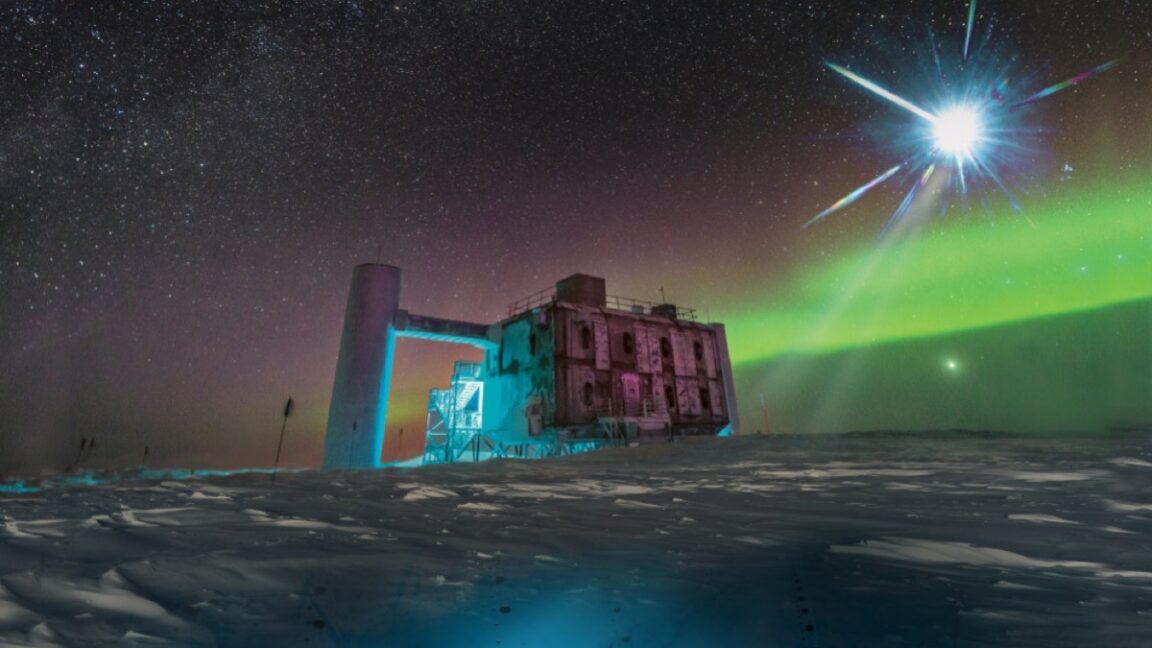
Francis Halzen, a physicist at the University of Wisconsin, Madison, has won the 2026 Nobel Prize in Physics "for decisive contributions to the IceCube Neutrino Observatory and the discovery of high-energy neutrinos of astrophysical origin.” Halzen spearheaded the development and construction of the IceCube Neutrino Observatory in Antarctica, enabling physicists to capture high-energy neutrinos created in the distant universe.

“It was a great surprise, and I obviously didn’t expect it,” Halzen said during a news conference in Stockholm, Sweden, speaking by phone from Italy. While the Nobel was awarded to Halzen, he emphasized that his work was the result of a “large collaboration” with other researchers.

“This reflects on the really courageous people who joined me in this project when really no respectable conservative physicist would have joined me. But many talented people did, and that’s why I’m here,” he said.
Read full article

Comments

© IceCube/NSF

  •  

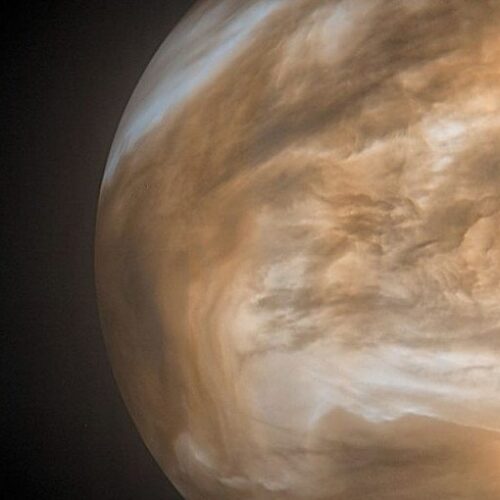
Venus' mysterious haze is actually cosmic dust

Venus is shrouded in a veil of mystery. The yellowish “lower haze” at the bottom of its atmosphere was discovered by the Venera and Pioneer Venus probes in the 1970s. These spacecraft were some of the first to successfully send images of the planet back to Earth, but the haze they saw went unexplained for decades. Now the mystery Venus was keeping has been unveiled.

What nobody knew then was that the haze is an accumulation of particles from meteorites. “Shooting stars” that burn up in the atmosphere leave behind cosmic dust particles, and after sulfuric acid interacts with these particles, it leaves behind a haze. Planetary scientist Hiroki Karyu and his research team at Tohoku University in Sendai City, Japan, finally figured out how the haze formed using a microphysical model. This type of model involves microphysics—the micro-scale processes that create clouds and precipitation on Earth and other bodies.

“The continuous influx of cosmic dust is sufficient to sustain this lower haze layer with the particle size distribution observed by the entry probes,” Karyu said in a study published in Nature Astronomy. “These haze particles of cosmic origin act as efficient condensation nuclei, promoting cloud formation in the main cloud deck even far from their initial source.”

Read full article

Comments

© JAXA / ISAS / DARTS / DAMIA BOUIC.

  •  

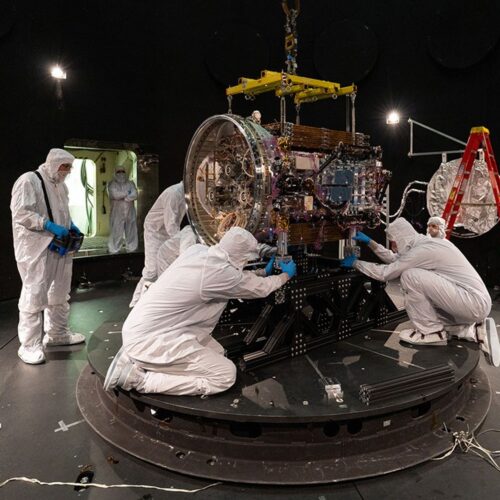
NASA squeezed Treasury, vibe coded, and broke the mold in bid to save Swift

An attempt to save NASA's $500 million Neil Gehrels Swift Observatory from dropping out of orbit fell short, but the behind-the-scenes machinations required just to make a rescue possible deserve recognition, government and commercial space officials said in a recounting of the mission.

The rescue mission was developed by Katalyst Space Technologies, working under a $30 million contract awarded by NASA last September. NASA gave Katalyst nine months to build and launch a satellite to capture Swift flying some 200 miles above the Earth and boost it into a higher orbit.

Katalyst's rescue spacecraft, known as Link, successfully launched July 3 and completed some of its initial checkouts before a malfunction caused it to spin out of control a few weeks later. NASA announced in August that Link would not be able to reach Swift as intended, and the rescue mission was aborted.

Read full article

Comments

© NASA/Sophia Roberts

  •  
❌