❌

Reading view

The Pentagon's Space Development Agency hasn't moved as fast as anyone would like

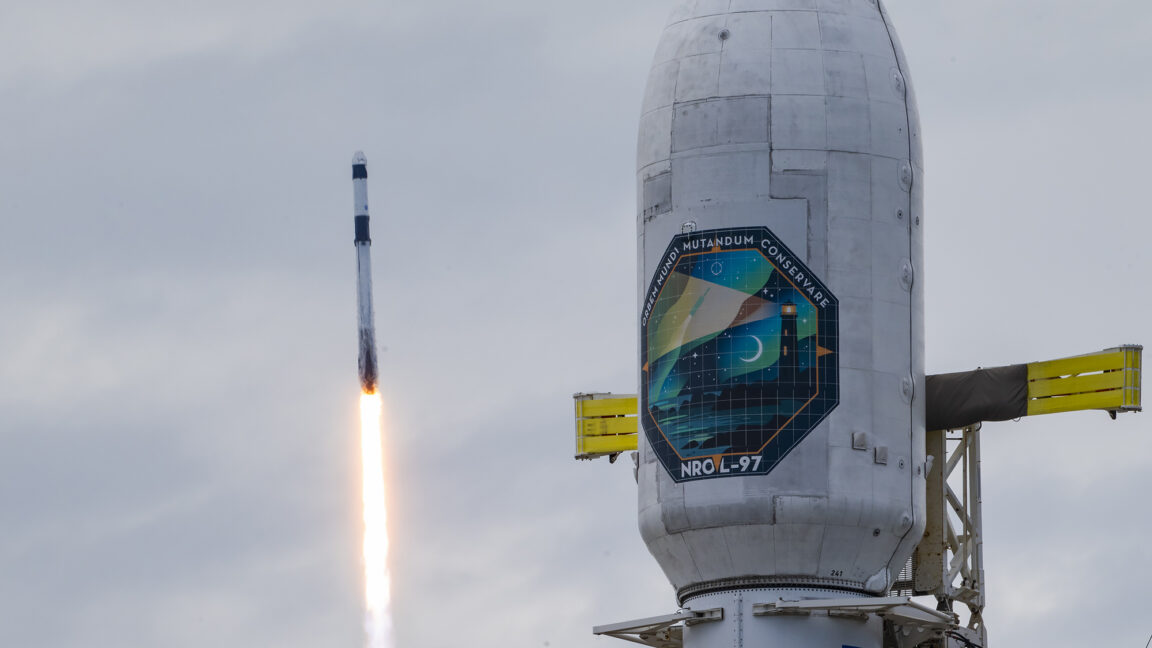
The Space Development Agency was established in 2019 to help speed up the deployment of US military space systems by sidestepping the Pentagon's traditional sluggish bureaucracy.

Seven years later, SDA is finally launching its first batches of operational satellites, just as the Pentagon plans to shutter the semi-autonomous agency and fold it back into the Space Force's procurement pipeline, newly reorganized under several program acquisition executives in a bid to streamline weapons buying.

SDA's fate is not a surprise, and lawmakers in both houses of Congress have backed the agency's closure in drafts of this year's National Defense Authorization Act.

Read full article

Comments

Β© SpaceX

  •  

Will Russia's answer to the Falcon 9 rocket ever take flight?

Everyone seems to be launching and landing rockets these days.

Last week, China joined the club of countries that have launched an orbital mission and brought its booster safely back to Earth, which is just the beginning of public and private ventures in that country aggressively pushing into rocket reuse. Also in Asia, Japan's space agency has been conducting hop tests, and Honda recently performed vertical reuse tests.

In the United States, of course, SpaceX launches and lands reusable rockets every few days. Blue Origin, although its New Glenn booster is temporarily grounded, has also demonstrated the ability to both land and re-launch a large orbital booster. Other US companies, including Stoke Space, Rocket Lab, and Relativity Space, are all making credible progress toward partially or fully reusable rockets.

Read full article

Comments

Β© GK Launch Services

  •  

Miami-based City Labs achieves a first for commercial nuclear power in space

The proliferation of nuclear power in space got a little more real Tuesday with the launch of a small satellite developed by a Florida-based company specializing in nuclear micro-power technology.

It's a long way from launching a bona fide nuclear reactor, a breakthrough that could help power a permanent Moon base and efficiently drive rockets throughout the Solar System. But you have to start somewhere.

The satellite from Miami-based City Labs is named BOHR, short for Betavoltaic Orbital High-Reliability, and it launched on a SpaceX rideshare mission Tuesday alongside 80 other payloads. SpaceX's Falcon 9 rocket released the BOHR satellite into an orbit between 350 and 400 miles (nearly 600 km) in altitude.

Read full article

Comments

Β© City Labs

  •  

Rocket Report: Indian startup nears first launch; SpaceX's millenary milestone

Welcome to Edition 9.01 of the Rocket Report! Back in January, I wrote about the 20 launches and landings we were most excited about in 2026. The list included things that were, at the time, officially scheduled to occur this year. I also gave my own view of the probability of each of these events actually happening before December 31. Halfway through the year, we can only count one of the events as completed, and that was NASA's Artemis II mission in April. Many are now scheduled for next year, proving again that delays are a constant in theΒ space industry. A couple of themβ€”such as the launch of NASA's Roman Space Telescopeβ€”do appear to be on track to happen soon.

As always, we welcome reader submissions. If you don't want to miss an issue, please subscribe using the box below (the form will not appear on AMP-enabled versions of the site). Each report will include information on small-, medium-, and heavy-lift rockets, as well as a quick look ahead at the next three launches on the calendar.

Swift Boost Mission reaches orbit. A pioneering commercial mission to reboost the orbit of NASA's Swift astronomy satellite launched early Friday after attempts earlier in the week were thwarted by bad weather and a technical issue. The Link servicing satellite developed by Katalyst Space Technologies soared to orbit on the tip of a Northrop Grumman Pegasus XL rocket that dropped from the belly of a modified L-1011 jetliner over the remote Pacific Ocean. Mission managers called off two launch attempts Tuesday and Wednesday due to poor weather around the L-1011's staging base on Kwajalein Atoll in the Marshall Islands. On Thursday, "a launch vehicle issue temporarily prevented teams from deploying the rocket" after takeoff of the L-1011.

Read full article

Comments

Β© SpaceX

  •  
❌