❌

Reading view

Could China and Russia really destroy Starlink? Only with a boomerang.

One week ago, three widely respected European news outlets published the results of an investigation into what they described as a "joint plan" by China and Russia to "defeat Elon Musk's Starlink."

The story was the product of a long-running inquiry by The Insider, Der Spiegel, and Le Monde. Reporters at those publications said they reviewed a cache of documents detailing growing military cooperation between China and Russia. The documents covered discussions between the nuclear powers on integrated air and missile defense systems, autonomous "swarm" loitering munitions, next-generation armored vehicles, and military aviation, the report said.

According to the papers, the investigation found evidence of a partnership between China and Russia in the field of space weapons far deeper than either country has acknowledged. One particular focus for China and Russia has been developing strategies to counter SpaceX's Starlink satellite broadband network.

Read full article

Comments

Β© SpaceX

  •  

SpaceX is gearing up for Starship's 13th test flight later this week

The next test flight of SpaceX's Starship spacecraft and Super Heavy booster could take off as soon as Thursday, and much of the hour-long mission will look a lot like the last Starship flight in May.

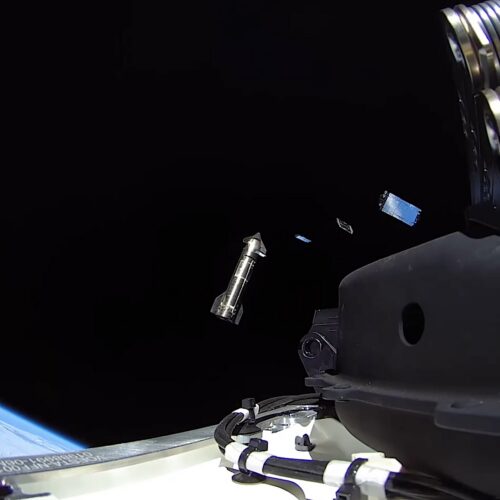
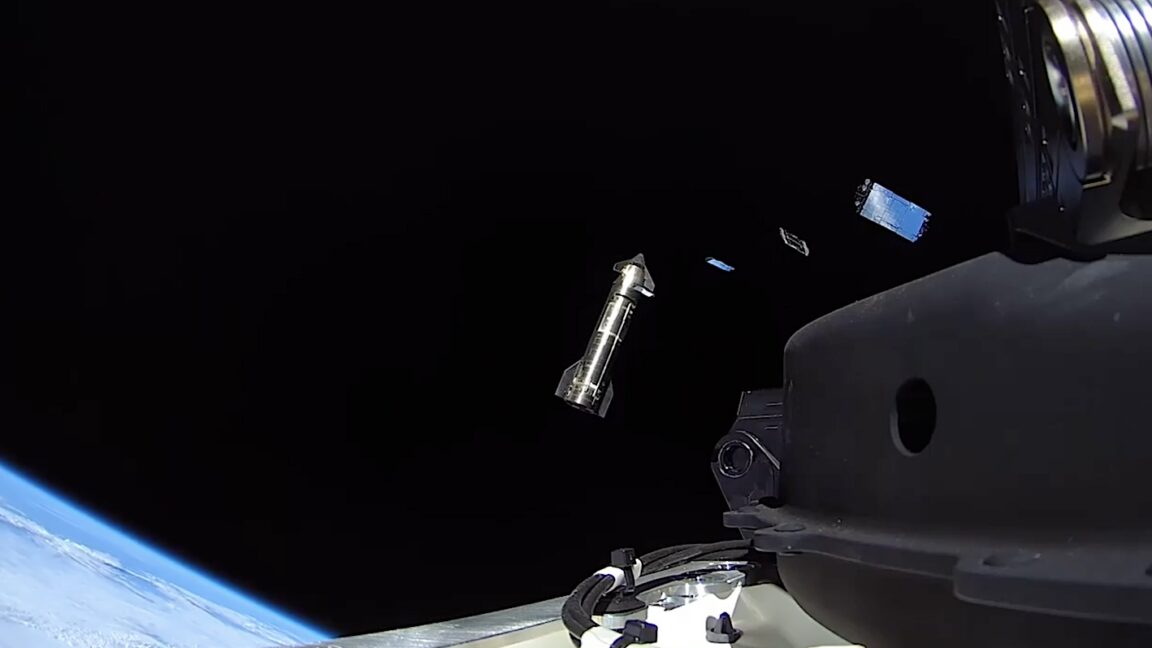
But there are a few key differences for this launch, set to occur during a launch window that opens at 5:45 pm CDT (22:45 UTC) on Thursday. The most notable change is the inclusion of real, functioning Starlink satellites inside Starship's cargo bay. SpaceX previously tested the ship's payload deployment mechanism using simulators mimicking the mass and dimensions of the company's next-generation Starlink Version 3 broadband satellites.

This timeβ€”Starship's 13th full-scale test flight and the second to use SpaceX's newest version of Starshipβ€”technicians have installed 20 Starlink V3 satellites into the ship's deployer, a system of pulleys and cables designed to eject a stack of satellites one at a time through an opening on the side of the spacecraft. The satellites will not be part of SpaceX's operational network, but engineers will attempt to briefly establish laser communication links between the Starlink V3s and other spacecraft flying in low-Earth orbit. If successful, these links will validate Starlink V3's interoperability with SpaceX's previous generation of Starlink satellites.

Read full article

Comments

Β© SpaceX

  •  

Payloads used to dictate the terms of launch. That's finally changing.

It wasn't easy to find anyone outside of SpaceX clamoring for a rocket like Starship just 10 years ago. Today, the space industry can't wait for Starship to finally deliver.

With a payload capacity of more than 100 metric tons (220,000 pounds) to low-Earth orbit, SpaceX's new rocket is changing the thinking of just about everyone in the space industry. With the unrealized but potentially game-changing benefits of refueling, Starship could carry the same amount of payload to higher orbits, the Moon, or Mars.

It's important to note that Starship is still very much in its experimental phase, far from proving Elon Musk's loftiest claims about what it can do. Still, NASA and the US military are considering novel ways to use Starship to fly to the Moon or transport cargo to far-flung war zones. Scientists are eager to use its enormous volume to launch giant space telescopes. Competitors are taking notice. China, the strongest strategic adversary America has ever faced, is looking for its own Starship. Now, some US satellite manufacturers are adapting for the substantial capacity of the world's most powerful rocket.

Read full article

Comments

Β© SpaceX

  •  
❌