Reading view

Two Trump health nominees crash and burn in tense Senate hearing

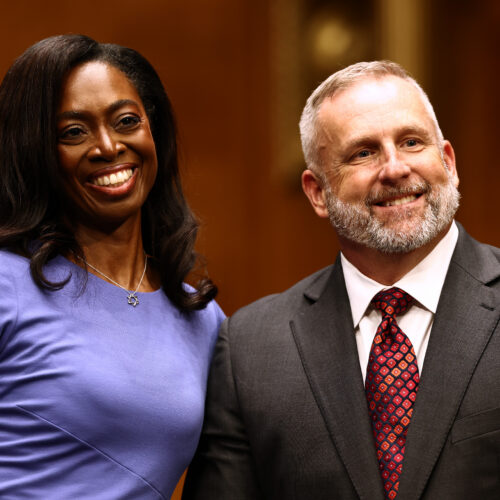
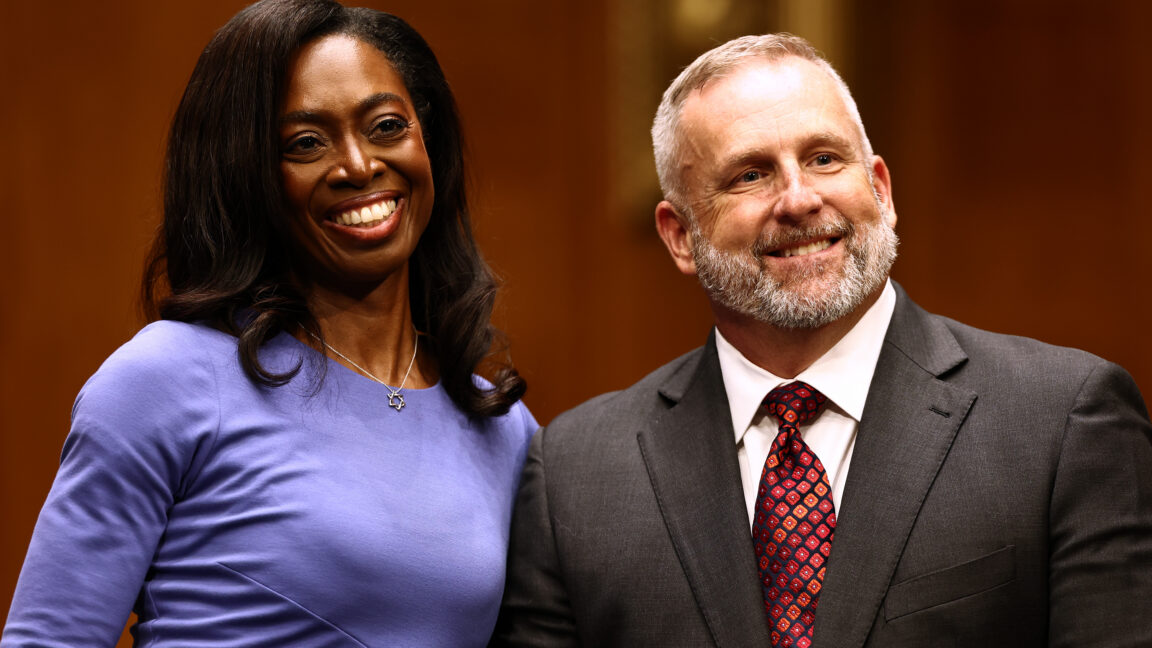
Two nominees for high-profile health roles in the Trump administration faced scrutiny from the Senate health committee Wednesday—and both crashed and burned in their own special ways.

The Senate Committee on Health, Education, Labor, and Pensions (HELP) scrutinized Erica Schwartz, the nominee for director of the Centers for Disease Control and Prevention, and Sean Kaufman, up for the role of assistant secretary for preparedness and response.

Schwartz's assignment

Public health experts were "cautiously optimistic" about Schwartz's nomination. She is well-respected and holds views in line with evidence-based medicine, including being supportive of vaccinations—in contrast to anti-vaccine Health Secretary Robert F. Kennedy Jr., whom she will serve under. She is also highly qualified for the role, with a medical degree, a master's degree in public health, and a law degree. She's had a long career as a Navy Officer and previously held the roles of chief medical officer for the US Coast Guard and deputy surgeon general in the first Trump administration.
Read full article

Comments

© Getty | Finn Gomez

  •  

Study shows how toxic RFK Jr.’s change to measles vaccine is for US toddlers

With no new data or clear reasoning, a panel of advisors hand-selected by anti-vaccine Health Secretary Robert F. Kennedy Jr. voted last September to strip federal recommendations for a combination shot against measles, mumps, rubella, and varicella (chickenpox). An analysis published today by independent researchers does the work the advisors neglected to do before the vote and, in turn, shows how harmful the decision is to vulnerable US toddlers.

The decision last fall followed clumsy discussion by Kennedy's dubiously qualified advisors, who make up the Advisory Committee on Immunization Practices (ACIP) for the Centers for Disease Control and Prevention. Most noticeably, their unprompted review of the MMRV vaccine did not include a standard decision-making framework ACIP has historically used to comprehensively evaluate what the change would mean for US children in practice—including basic questions, such as which children would be affected.

Still, the decision meant that private health insurance providers would no longer be required to cover the vaccine, called MMRV. It also meant the shot would no longer be available through a federal program that provides vaccines to about half of American children, mostly from low-income families.

Read full article

Comments

© Getty | Leandro Lozada

  •  
❌