Reading view

Google loses long-running appeal of record EU fine, will have to cough up $4.7 billion

Back in 2018, Google was handed a record-setting 4.34 billion-euro ($4.9 billion) fine in Europe for abusing its monopoly on Android. The company has spent the intervening years challenging that decision, but the continent's highest court has put a stop to that. The Court of Justice of the European Union has affirmed the penalty, meaning Google is out of options.

Google's fight may not have turned out the way the company wanted, but it wasn't for nothing. The initial amount was trimmed slightly by a lower court in 2022, bringing the total to a still record-setting 4.1 billion euros ($4.7 billion). And that looks like the amount Google will have to pay since there are no further avenues for appeal.

The fine stems from the way Google bundles apps and services with Android phones. The EU took issue with Google search and Chrome being the default options on Android. Even devices made by other companies, such as Samsung and Xiaomi, include Google apps as the default per the Android licensing agreement, giving Google an unfair advantage, according to European antitrust regulators. This is not to be confused with a 2.95 billion euro ($3.45 billion) fine against Google's advertising monopoly issued by the European Union last year.
Read full article

Comments

© Getty Images / SOPA Images

  •  

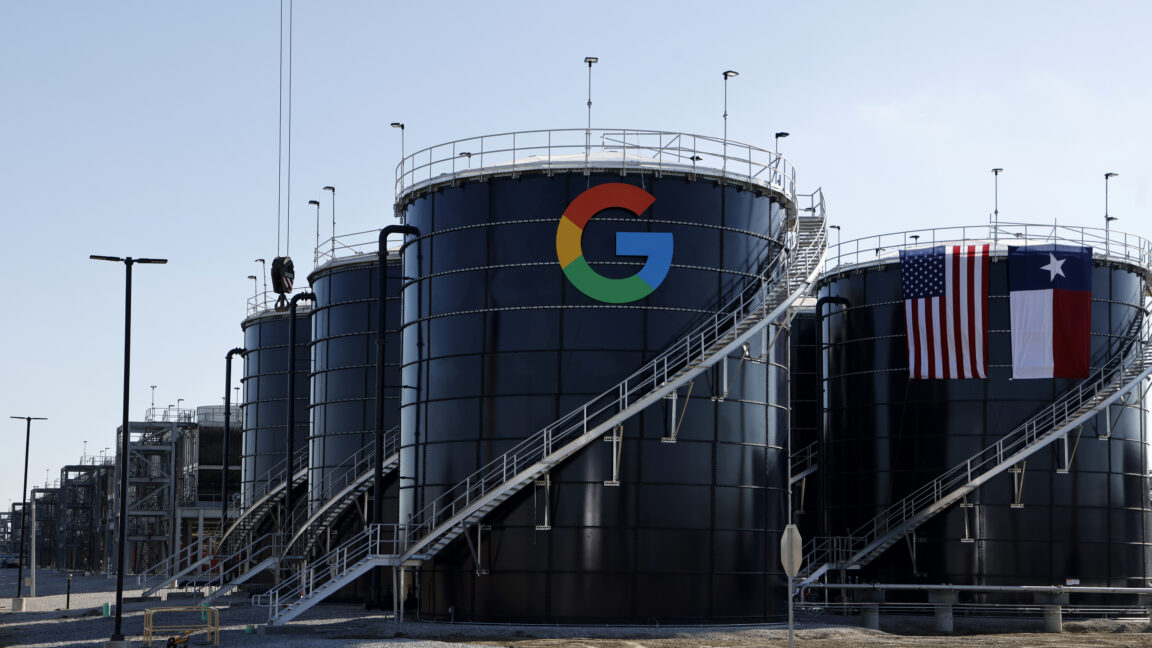
Google’s AI buildout drove 37% increase in electricity use in 2025

Google reported that its annual electricity consumption rose by 37 percent in 2025—the largest increase in the company’s history as Silicon Valley’s AI data center buildout continues. But the tech giant says it kept operational carbon emissions down by continuing to purchase massive amounts of clean energy.

The company’s latest sustainability report acknowledges that Google’s total electricity usage has increased by more than 250 percent since 2019, which the company attributed to ongoing growth in Google Cloud, YouTube video streaming, and data center construction and operations supporting various AI products and services. The unprecedented 37 percent annual increase is part of an ongoing trend, given how Google’s total electricity consumption also grew by 27 percent in 2024.

“While the path to achieving our climate ambitions will not be linear—given our AI infrastructure buildout is currently accelerating faster than the grid is decarbonizing—we remain focused on scaling abundant and affordable clean power globally and progressing technological innovations that drive down emissions across our operations and the broader industry,” according to the Google sustainability report.

Read full article

Comments

© Ron Jenkins | Getty Images

  •  

Google kills Tenor GIF API, forcing changes at X, Discord, and more

Google is so famous for killing products that there's a whole virtual graveyard you can explore. Google's latest shutdown now has a headstone of its own. Effective today, Google has discontinued the Tenor API, which you may not be familiar with by name. You've probably used it, though. Tenor is a database of searchable GIFs, which used to serve animated images to sites like X/Twitter, Discord, and more. Now, it only serves Google—maybe the headstone is a bit premature.

Like many Google products, Tenor started as an independent company. Google came along and bought Tenor in 2018, and it continued running it largely unchanged in the intervening years. Tenor was integrated into Google products like Gboard and Google Messages, but the API also gave other platforms a way to help users find, share, and save GIFs. It's similar to services like Giphy and Klipy.

In January, Google announced it was going to start winding down that API access. It stopped accepting new integrations at that time, and the end date has now arrived: As of June 30, the Tenor API is no more. Google, a company with nearly 200,000 employees and more than $130 billion in 2025 profit, says it decided to stop supporting the image API so it could better focus its resources. The real problem was probably that Tenor was free, and Google didn't see a way it could make money from a GIF API.

Read full article

Comments

© Aurich Lawson

  •  
❌