Reading view

Data centers’ energy demand threatens Trump’s “Made in America” plan

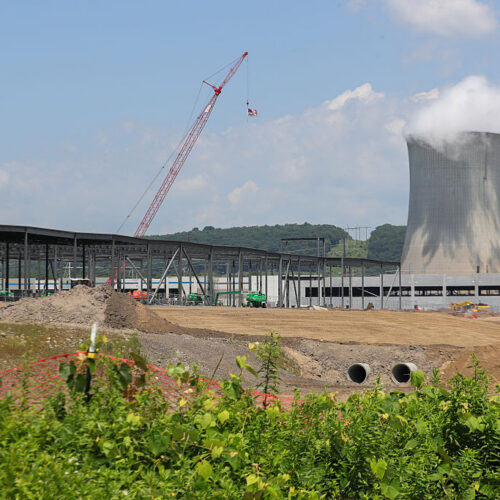
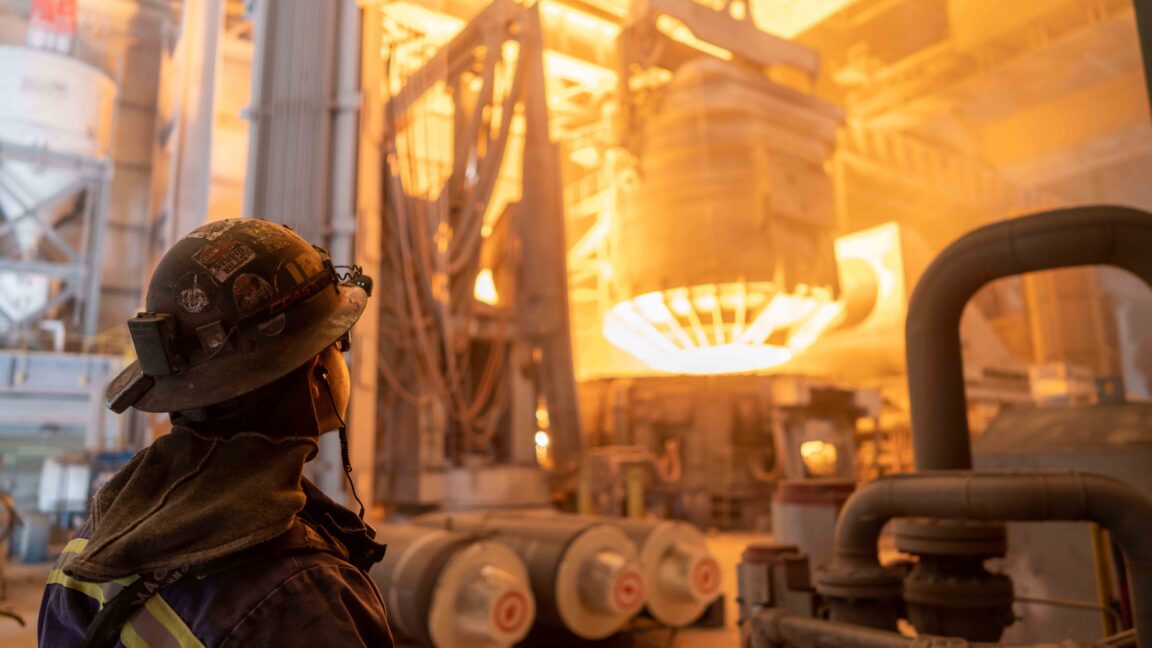
US manufacturers in many Rust Belt cities and towns are paying significantly higher electricity costs as growing energy demand from data centers strains the largest power grid operator in the United States. The resulting squeeze on profit margins for steelmakers and brick factories could further undermine President Donald Trump’s “Made in America” plan to revive US manufacturing, and it comes as Trump has simultaneously championed the tech companies behind the AI data center boom.

Factory electricity bills are generally rising faster than those for other business customers or residential customers, according to a Reuters analysis. It highlighted the example of the Belden Brick Company, a 141-year-old brick manufacturer in Ohio, whose electricity bills have soared from $1,600 to $12,000 per month due to a higher monthly capacity charge in the 13-state region served by the grid operator PJM Interconnection.

Meanwhile, the Steel Manufacturers Association warned that US steel companies concentrated in the Rust Belt region served by PJM Interconnection are paying tens of millions of dollars in higher power costs per year. Electricity accounts for 20 to 40 percent of the total production costs of making steel.
Read full article

Comments

  •  

SCOTUS lets Texas enforce app store law that Big Tech calls "censorship regime"

The Supreme Court yesterday decided not to intervene in challenges to a Texas app store law, allowing the state to enforce age-verification rules while a lawsuit continues.

A federal judge issued a preliminary injunction blocking the Texas App Store Accountability Act in December 2025, finding that it likely violates the First Amendment. US District Judge Robert Pitman's ruling prevented Texas from enforcing the law when it was scheduled to take effect on January 1, 2026.

But the US Court of Appeals for the 5th Circuit stayed the injunction on June 4, deciding that there is "no legitimate justification for enjoining enforcement of the entire Act." A lobby group representing Big Tech companies and an advocacy group for students then asked the Supreme Court to reinstate the injunction.

Read full article

Comments

© Getty Images | Joseph Sohm/Visions of America

  •  

FCC to end Biden-era rule that forces ISPs to list all their fees

The Federal Communications Commission will vote to eliminate a rule that requires Internet service providers to list all of their so-called "passthrough" fees on an easily accessible broadband price label. The FCC vote could also make the price labels themselves a bit harder for consumers to find.

ISPs routinely advertise prices much lower than those actually charged to consumers on their monthly bills. One method of raising monthly bill prices above advertised rates is to tack on fees that, ISPs claim, are used to offset charges imposed by local governments.

ISPs would be well within their rights to advertise accurate monthly prices and charge those exact prices on monthly bills. But because ISPs rarely do that, the FCC has required them to make specific price disclosures to consumers for the past decade.

Read full article

Comments

© Getty Images | GamePH

  •  

NRC is (sort of) getting rid of "as low as reasonably achievable" standard

Last week, just before the US started its break for the July Fourth holiday, the Nuclear Regulatory Commission (NRC) proposed a new rule that would change how it regulated exposure to radiation. The Trump administration has been pushing to restart construction of nuclear power plants in the US, and many pro-nuclear advocates have been complaining about the US's existing regulations, portraying them as the main barrier to the flourishing of the industry. So, it had seemed likely that major revisions were coming.

Instead, the NRC's proposed new rules endorse the science behind its current rules and suggest that any problems are largely in the vagueness of the terminology that it has been using. So, instead, it's endorsing standards that are meant to accomplish the same thing, but avoid using some of the language it had relied on. Probably the clearest indication of the evolutionary change at play is that the NRC estimates the changing rules will save industry—not just power, but also medical and research applications—only about $9.5 million a year.

LNT and ALARA

There are two technical abbreviations at the center of US nuclear regulations. The first is LNT, which stands for "linear non-threshold." It's in reference to the issue of whether there's any level of radiation that is so low that it no longer produces harmful biological effects—the "threshold" in LNT. The "non-threshold" implies that it doesn't, and that's in keeping with biology, which has demonstrated that even single particles or photons of radiation can damage DNA and that the mechanisms cells have for repairing that damage are inherently error-prone. The "linear" in LNT simply describes how the impact of radiation scales directly with the dose.

Read full article

Comments

© SOPA Images

  •  

Secret Claude tracker shocks users after Anthropic’s anti-surveillance stance

Anthropic quickly removed a tracker secretly monitoring Claude Code users in China after a security researcher exposed the hidden code and condemned the spyware-like tracking as a “serious breach of user trust.”

Last week, a web developer known as “Thereallo” was researching privacy issues in Claude Code and was shocked to find that the AI firm was using “prompt steganography” to hide code that tracks Chinese users “in plain sight.” This code wasn’t malicious, but it was sending information to Anthropic that most users wouldn’t detect, relying on shorthand markers to quietly flag users’ timezone, proxy, and potential connection to Chinese AI labs that Anthropic has accused of distillation attacks.

On X, Anthropic engineer Thariq Shihipar confirmed that the tracker was added to Claude Code as an “experiment” in March. According to Shihipar, the code “was meant to prevent account abuse from unauthorized resellers and protect against distillation.” Regarding the former, The Washington Post found unauthorized retailers have sold access to free models for $1 a month, and pro subscriptions that can cost $100 monthly sell for "as little as $12."

Read full article

Comments

© SOPA Images / Contributor | LightRocket

  •  

UK regulator warns of "arms race" to keep up with AI use in financial services

Regulators are in an “arms race” to keep up with the use of artificial intelligence in financial services, a senior UK official has warned, with millions of people using the technology to help them make personal finance decisions.

Sheldon Mills, an executive director at the Financial Conduct Authority, told the FT the watchdog would need greater powers to stay on top of the rapid growth of AI and urged UK authorities to review whether the use of ChatGPT, Claude, Gemini, and other large language models should be subject to their rules.

Speaking ahead of the publication on Monday of an FCA-commissioned report he has written on the impact of AI in financial services, Mills said regulators in the area would have to embrace AI themselves to keep up with the “speed, pace, and scale of change” the technology is bringing to the sector and to help “monitor, detect, and tackle the risks.”

Read full article

Comments

© Charlie Bibby/FT

  •  

Chemical accidents rise as Trump administration proposes weakening safety rules

Physicist Ronald Koopman appeared at a Southern California Air District meeting in 2018 to talk about what seemed like an arcane scientific topic: hydrofluoric acid dispersion and water mitigation testing.

Hydrofluoric acid, also known as hydrogen fluoride or HF, is used to manufacture a range of materials, including refrigerants, gasoline, fluorine-based pesticides and fluoropolymers like those used to make Teflon. It’s also one of the most corrosive and dangerous chemicals known. Koopman conducted experiments with the chemical in the 1980s that warned about the potential of deadly accidents at facilities that use the hazardous materials.

With the Trump administration poised to roll back rules intended to protect workers and communities from catastrophic industrial chemical releases, and a new analysis showing rising rates of chemical accidents, Koopman’s presentation on highly hazardous materials has taken on a new urgency.

Read full article

Comments

© Apu Gomes/Getty Images

  •  

FAA proposal: Supersonic airliners can fly over US cities if they’re quiet

A long-standing ban on commercial supersonic flights over the United States would be overturned in a new rule proposed by the US Federal Aviation Administration. That could pave the way for the possible return of commercial supersonic airliners—as long as such aircraft can reduce the ground-level impacts of their sonic booms.

The FAA originally banned overland supersonic flights by civil aircraft in 1973, following US military tests involving supersonic flights over US cities such as Oklahoma City, Chicago, and St. Louis in the 1960s. But the Trump administration has championed the repeal of the ban to pave the way for supersonic airliners that could operate without disruptive sonic booms. So the FAA’s new rulemaking action on June 30, 2026, follows the direction of an executive order issued by President Trump on June 6, 2025.

The newly proposed rule would replace the 53-year prohibition with an interim “noise-based” certification standard requiring any sonic boom overpressure at the surface to be kept below 0.11 pounds per square foot. That proposed standard is based on the Colorado-based startup Boom Supersonic having demonstrated quiet Mach cutoff flights with its XB-1 aircraft—harnessing specific atmospheric conditions while flying just beyond supersonic speeds at higher altitudes so that the aircraft’s shockwaves are refracted upward into the atmosphere rather than traveling to the ground.

Read full article

Comments

© Boom Supersonic

  •  

Trump gets OpenAI to offer US 5% stake, far lower than Sanders’ target

OpenAI CEO Sam Altman is reportedly in active talks with the Trump administration about the US potentially acquiring a 5 percent stake in the leading AI firm.

Insider sources told the Financial Times that these talks are in “early stages,” but Altman “has argued that giving the public a financial stake in the company is the best way to share the upside of AI.”

Donald Trump favors the idea, and his administration has reportedly been talking to several AI firms about the possibility. According to FT’s sources, other companies approached to share similar stakes include Google and Meta.

Read full article

Comments

© NurPhoto / Contributor | NurPhoto

  •  

Musk’s X poses “serious risk to Americans’ privacy,” advocates warn FTC

Ahead of a July 2 deadline to submit public comments, advocates are warning the Federal Trade Commission that it must keep close watch over Elon Musk’s X and firmly reject a recent bid to end the agency’s ongoing audits of the platform’s data handling.

Last month, the FTC posted a notice explaining that X had argued that an FTC order was no longer necessary due to changes Musk had made to the platform.

The initial order came as a penalty after the FTC found that a coding error had caused then-Twitter to improperly share users’ contact information for ad targeting that had initially been submitted for two-factor authentication. Under the order, X is subjected to costly independent audits, and the FTC has authority to demand documents to ensure compliance with data privacy laws without taking additional legal action.

Read full article

Comments

© CHARLY TRIBALLEAU / Contributor | AFP

  •  

After spooking Trump into safety testing, Anthropic AI models get global release

The US has lifted export curbs on Anthropic’s newest Claude models, Fable 5 and Mythos 5, about three weeks after the Trump administration flagged the models as national security risks.

As of today, Anthropic confirmed in a blog post, Fable 5 will be available globally, and US organizations have had access restored to Mythos 5 since June 26. Anthropic said it is now working with the government to expand Mythos access to a “broader set of domestic and international partners in the Glasswing program.” That program allows cybersecurity researchers at trusted companies to access Mythos for defensive purposes.

In a letter to Anthropic viewed by Reuters and The New York Times, Commerce Secretary Howard Lutnick said Anthropic would “no longer need a license for exports or in-country transfers of its Claude Mythos and Claude Fable AI models.” The letter acknowledged that Anthropic had “taken steps in close coordination with the US government to address the risks” posed by the models.

Read full article

Comments

© NurPhoto / Contributor | NurPhoto

  •  

UK likely to intervene in Paramount takeover of Warner Bros. Discovery

The British government could intervene in the $111 billion takeover of Warner Bros. Discovery by Paramount Skydance, citing concerns around the need for a plurality of views in news as well as media ownership in the UK.

UK culture secretary Lisa Nandy said on Tuesday that she was “minded to intervene” in the deal, which would create one of the world’s largest media and entertainment groups.

The takeover would lead to WBD media franchises such as CNN, HBO, and Warner Bros. movies being added to Paramount’s stable of assets, which include CBS in the US and Channel 5 in the UK.

Read full article

Comments

© Cheng Xin/Getty Images

  •  

Reddit will require you to log in to use old.reddit.com

Reddit will start requiring people to be logged into Reddit to use old.reddit.com.

The new requirement will take effect “over the next month,” a Reddit employee going by the username boat-botany announced on the social media platform today. The person claimed that the change is part of an ongoing effort to “tighten how automated systems access Reddit.”

The Reddit employee wrote:

Read full article

Comments

© Getty

  •  
❌