Reading view

DA: Cop covered bodycam to snap nude prisoners on his iPhone—but other cams caught him

On March 31, 2026, a rather odd complaint arrived at the Bucks County, Pennsylvania District Attorney's Office.

It came from the local sheriff's office, and it concerned one of their own, Deputy Sheriff Ryan Gaffney. The allegation was unusual: Gaffney had used his iPhone to snap photos of nude prisoners he had encountered in his job—and he had then shared those photos with "several female civilian employees inside the Sheriff's Office."

The main claim involved a local man suffering a mental health crisis on the morning of January 30, 2026. Five fully uniformed deputies had arrived at the house and were in the upstairs bedroom. Their detainee was naked from the waist down and had just been persuaded to put on some pants.


Read full article

Comments

© Getty Images

  •  

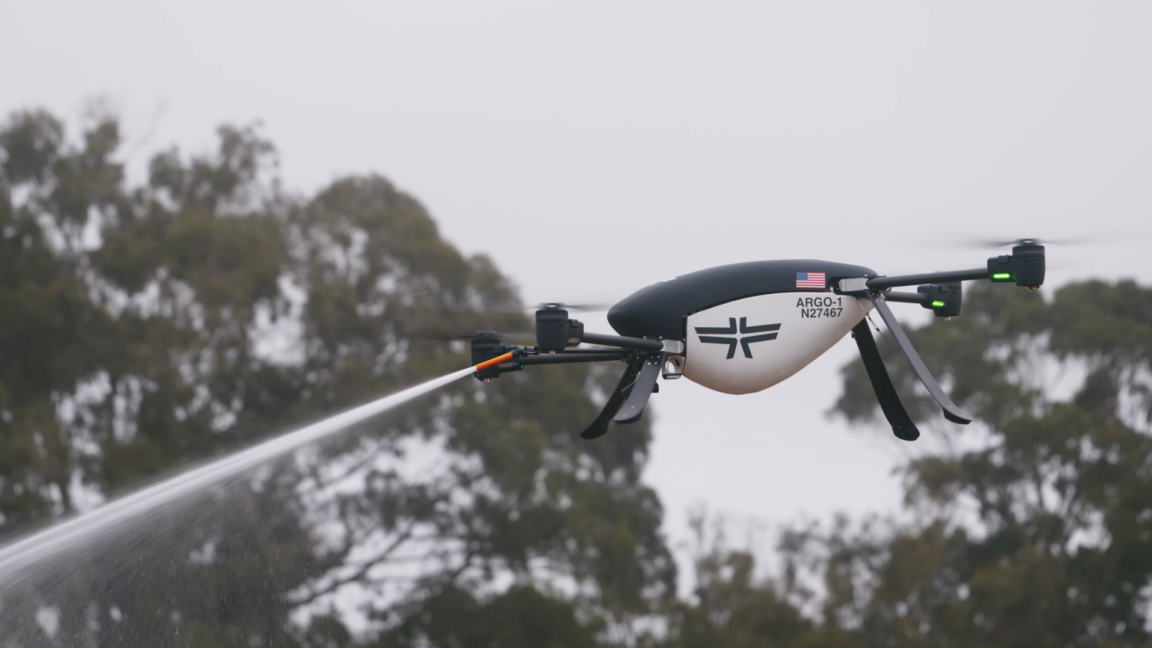
Firefighting drones in the works as wildfires plague US nearly year-round

Drones capable of spraying water and fire retardants have been practicing how to snuff out wildfires early in California and Alaska this summer—demonstrating a possible rapid-response tool for firefighting as climate change transforms wildfire season into a nearly year-round risk for much of the United States.

Most drones are significantly smaller than crewed aircraft and have shorter flight ranges, meaning they cannot replace large airtankers in delivering massive payloads of water or other fire-suppressing payloads to remote wildfires. But companies and fire agencies—along with organizers of the $11 million XPRIZE competition—are testing whether drones can help firefighting crews respond more quickly to small fires and put them out before they become more destructive.

The California Department of Forestry and Fire Protection, also known as CAL FIRE, ran its own field test involving five autonomous drones that worked together to deploy between 500 and 1,000 gallons of foam combined for suppressing fires on July 15, according to the TV station KPMH. The demonstration was organized with the help of the nonprofit FireWERX and the California-based company Seneca, which is making the drones commercially available starting in 2026.

Read full article

Comments

© Seneca

  •  

Judge halts Paramount's $111B purchase of Warner Bros. in win for US states

A federal judge today ordered Paramount Skydance and Warner Bros. Discovery to halt their $111 billion merger, handing an early win to states that sued to block the deal. The ruling granted a temporary restraining order prohibiting the firms from completing the merger and from consolidating their operations.

The temporary order is only in effect for 14 days, but it can be converted into a preliminary injunction that would prevent the merger from being completed until the case is resolved. The temporary restraining order can be extended past the 14-day period if more time is needed to rule on a preliminary injunction.

A group of 12 states led by California sued the companies last week in an attempt to block the deal, which had been approved by the Trump administration. The states say the merger will eliminate competition by combining two of the five major Hollywood movie studios, and two of the five major owners of basic cable TV channels.

Read full article

Comments

© Getty Images | SOPA Images

  •  

The Space Force is now seeking to buy up to $30 billion in rocket launches

It seems as though $5.6 billion wasn't enough. That was the news from the US Space Force on Friday, when military officials announced they were tripling the maximum value of one of the service's National Security Space Launch contracts to $17 billion.

The expansion of the Space Force's National Security Space Launch (NSSL) Phase 3 contract comes as the Pentagon signals rising demand for military satellite launches. The NSSL program is set up to allow Space Systems Command, which oversees the Space Force's launch program, to select from a pool of launch providers for individual missions to deliver the military's satellites to orbit.

The NSSL program has two parts. Lane 1 covers the Space Force's more risk-tolerant missions, such as medium-lift launches with experimental payloads or rideshare missions carrying satellites for the Pentagon's surveillance or data relay constellations. Lane 2 includes higher-priority strategic missions, like the government's largest and most expensive spy satellites, or radiation-hardened communications satellites designed to survive a nuclear war.

Read full article

Comments

© SpaceX

  •  

The Space Force is now seeking to buy up to $30 billion in rocket launches

It seems as though $5.6 billion wasn't enough. That was the news from the US Space Force on Friday, when military officials announced they were tripling the maximum value of one of the service's National Security Space Launch contracts to $17 billion.

The expansion of the Space Force's National Security Space Launch (NSSL) Phase 3 contract comes as the Pentagon signals rising demand for military satellite launches. The NSSL program is set up to allow Space Systems Command, which oversees the Space Force's launch program, to select from a pool of launch providers for individual missions to deliver the military's satellites to orbit.

The NSSL program has two parts. Lane 1 covers the Space Force's more risk-tolerant missions, such as medium-lift launches with experimental payloads or rideshare missions carrying satellites for the Pentagon's surveillance or data relay constellations. Lane 2 includes higher-priority strategic missions, like the government's largest and most expensive spy satellites, or radiation-hardened communications satellites designed to survive a nuclear war.

Read full article

Comments

© SpaceX

  •  

AT&T loses key ruling in bid to stop offering basic phone service in California

California can keep enforcing rules that require AT&T to offer basic phone service to new customers in its wireline territory, following a federal judge's ruling last week.

AT&T sued California in May in a bid to end the state's Carrier of Last Resort (COLR) rules that require it to offer telephone service to any potential customer in its territory. AT&T asked for a preliminary injunction that would prevent California from enforcing the COLR rules while the litigation continues.

To win a preliminary injunction, AT&T had to show it is likely to succeed on the merits of its claim that California rules are preempted by a Federal Communications Commission order. US District Judge Linda Lopez denied AT&T's request for a preliminary injunction during a motion hearing on Thursday, according to a docket entry. The case is in US District Court for the Southern District of California.

Read full article

Comments

© Getty Images | AaronP/Bauer-Griffin

  •  

RIP bargain bin: The price impact of Sony's disc-free PlayStation plan

Since Sony announced that it was planning to stop producing physical PlayStation discs in 2028, many people have been justifiably worried about how they will maintain ownership and long-term game access in a disc-free world. But halting production of PlayStation discs also means eliminating the market for cheap used PlayStation discs, which are often available for well below the price of a digital download.

How much is this disc-based discount worth? To find out, Ars analyzed how the prices of 19 current top-selling PlayStation games varied between digital downloads and physical discs (both new and used). We found that, while used discs are the cheapest option for most games for most of the year, the frequent and periodic deep discounts offered on the PlayStation Store often undercut the cheapest game disc options. That state of affairs will likely persist even in a future without PlayStation discs.

Our prices are so low, you'll think we've suffered brain damage

For our analysis, we started with Sony's list of the bestsellers on the PlayStation Store. We eliminated any games that weren't available on a physical disc, then used the database over at PlatPrices.com to determine both the "Standard" price and the lowest "Discount" price offered for those games on the PlayStation Store in the last year (as well as the total number of days the discount price was offered).

Read full article

Comments

© Getty Images
  •  

F1 in Belgium: Machine learning algorithms are ruining the sport

Formula 1 returned to the Spa-Francorchamps circuit for the Belgium Grand Prix this weekend. This ribbon of tarmac in the Ardennes is one of the sport's historic venues, featuring in the first F1 season way back in 1950. But as yesterday's race showed, the current F1 machinery is utterly ill-suited to this dramatic venue.

As we saw at Suzuka in Japan earlier this year, a 2026 F1 battery is able to power the race car's electric motor for only a few seconds a lap; for much of the rest of the lap, the energy-starved cars have less power going to their rear wheels than in the junior F2 feeder series.

The best race track in the world

For many, including much of the current F1 grid, Spa is considered perhaps the planet's greatest race track. In fact, both Spa and the Belgian Grand Prix predate the F1 world championship, with its first race held in 1922. Back then, the circuit was a 9-mile loop of public roads, taking in the towns of Malmedy and Stavelot before returning to Francorchamps. In the postwar years, the layout shrank slightly to 8.7 miles (14.1 km) and was ferociously fast, with average lap speeds of up to 150 mph (240 km/h)—and ferociously dangerous, given cars with huge amounts of power and minimal concessions to safety.

Read full article

Comments

© Nicolas Economou/NurPhoto via Getty Images
  •  

AliExpress hit with record $625M fine after failing to make EU-ordered fixes

Yesterday, the European Commission slapped AliExpress with the largest fine yet under the Digital Services Act (DSA), exceeding $625 million.

In a press release, the EC said that AliExpress failed to “diligently assess and mitigate risks relating to the sale of illegal, unsafe, or counterfeit products on its e-commerce platform.”

Officials found that AliExpress not only failed to staff teams dedicated to removing counterfeit and dangerous items from the platform, but it also made it easy for bad actors to evade detection.

Read full article

Comments

© NurPhoto / Contributor | NurPhoto

  •  

The first trailer for Avengers: Doomsday is finally here

With San Diego Comic-Con kicking off later this week, Marvel Studios has released the first official full trailer for Avengers: Doomsday, the penultimate film in the MCU's Phase Six and the end of the so-called "Multiverse Saga."

(Spoilers for prior relevant MCU films below.)

Marvel Studios originally planned to build its Phase Six Avengers arc (The Kang Dynasty) around Jonathan Majors’ Kang the Conqueror (and associated variants), introduced in Loki and Ant-Man and the Wasp: Quantumania. But then Majors was convicted of domestic violence, and Marvel fired the actor soon after. That meant the studio needed to retool its Phase Six plans, culminating in the announced return of the Russo brothers, who directed four of the Marvel Cinematic Universe’s most successful films, which brought in more than $6 billion at the global box office.

Read full article

Comments

© Marvel Studios

  •  

Pay up or not? Ransomware surge has victims facing tough choices.

Nearly half of companies that are targets of a ransomware cyber attack end up paying a ransom to release their data or systems, according to 2025 research from cybersecurity group Sophos, while the median amount demanded is rising.

Globally, some jurisdictions are responding by banning payments to hackers. In the UK, for example, the government is advancing plans to prohibit public sector bodies and critical national infrastructure groups—including the National Health Service, local councils and schools—from making payouts.

The potential veto comes as ransomware hackers have become more advanced and meticulous in their targeting of companies, particularly vulnerable small and medium-sized businesses, over time.

Read full article

Comments

© Suebsiri Srithanyarat / EyeEm / Getty Images
  •  

Beyond grep: The case for a context-rich AI coding harness

There are a lot of AI coding applications out there, and as impressive as large language models and the agents they enable have become, many of the most recent developments in AI-assisted development have been in the software that manages those models, not just the models themselves.

Earlier this summer, I spoke with the head of product for Claude Code, Anthropic's Cat Wu, about that company's approach to building that software.

Read full article

Comments

© Augment Code

  •  

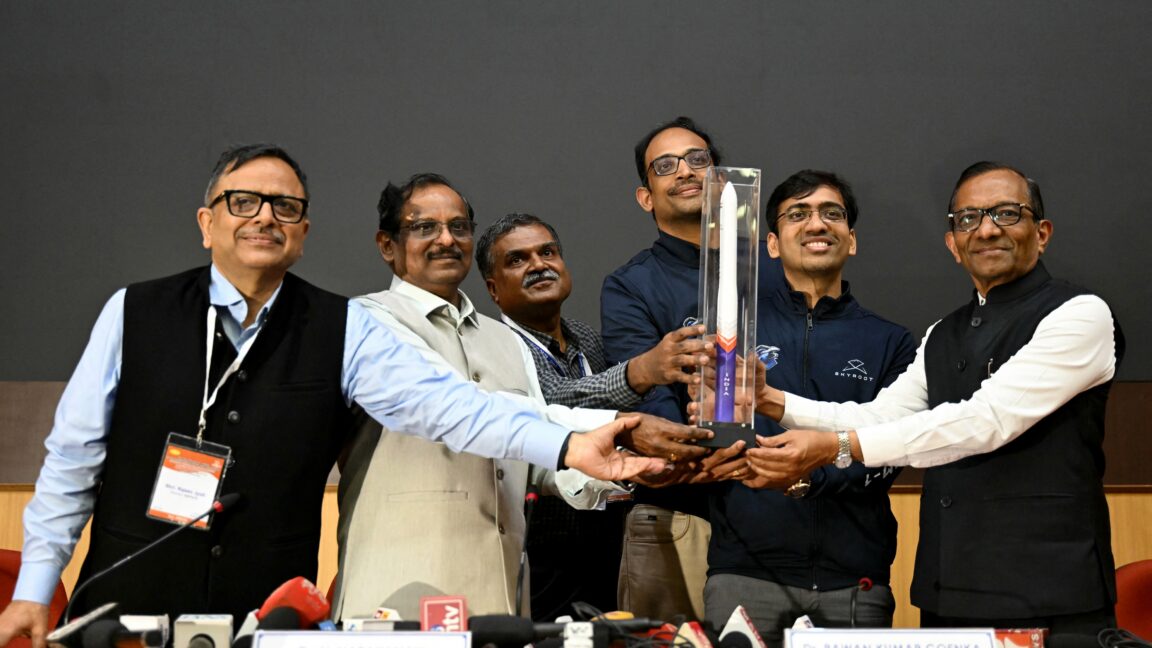
India's first privately developed rocket reaches orbit on dramatic debut launch

Indian space officials celebrated the debut flight of Skyroot Aerospace's Vikram-1 rocket, India's first fully commercial satellite launcher, as a "grand success" Saturday after an on-target climb into a 280-mile-high orbit following liftoff from an island spaceport in the Bay of Bengal.

The Vikram-1 lifted off from India's primary spaceport on Sriharikota Island at 1:35 am EDT (06:35 UTC) Saturday, around midday at the launch base along India's southeast coast. The launch was delayed more than a half-hour to resolve a last-minute technical problem. The countdown resumed, culminating in the command to ignite Vikram-1's solid-fueled first stage booster to propel the rocket off the launch pad.

Vikram-1 is modest in size compared to India's larger workhorse rockets. Skyroot's rocket stands about 72 feet (22 meters) tall, with the capability to place payloads of up to 770 pounds (350 kilograms) into low-Earth orbit. This makes Vikram-1 somewhat larger than the Electron launch vehicle developed by Rocket Lab, the world's most successful dedicated small satellite launcher.

Read full article

Comments

© R. Satish Babu/AFP via Getty Images

  •  

As mosquito ranges expand, better monitoring is key to preventing disease

With summer heat comes pool parties, beach days, backyard cookouts, and, of course, swarms of bloodthirsty mosquitoes.

But while insect bites have always been a side effect of time spent outdoors, the species doing the biting are changing in historically temperate regions like New England. As climate change makes these areas warmer and wetter, their ranges are expanding—and any diseases they carry come with them.

In Connecticut, for example, a statewide mosquito monitoring program has detected 54 different species, including invasives like the Asian tiger mosquito, which can transmit potentially serious diseases including dengue and Zika. The mosquito’s historical territory is in hot and humid climates farther south, but it has been moving north.

Read full article

Comments

  •  

Will AI fix prior authorization—or make it worse?

If you’re like me, you or a loved one has struggled through the process of gaining pre-approval for the medical care that your physician has recommended. Personal stories abound regarding the tribulations of patients as they go through hoops to get their health insurer to pay for certain prescription medications, medical procedures, and more.

When used judiciously, this process—known as prior authorization—serves as a check on overuse and spending on services or technologies for which there are less costly alternatives. But a large majority of physicians voice concerns about care delays, which can cause patients to abandon recommended treatments while waiting for the insurance company to verify their eligibility and confirm that the treatment is, indeed, medically necessary. Patients who are denied care may submit an appeal, but that requires more time.

AI might be able to help. With its ability to efficiently sort through vast reams of information, artificial intelligence could theoretically expedite approval of unambiguously allowable claims, thereby reducing care delays. However, AI-driven prior authorization is facing resistance, as it may increase wrongful denials of health insurance coverage. A 2025 American Medical Association survey of physicians revealed significant concern about the application of AI tools, with 61 percent of doctors worrying that AI will exacerbate denials of what they deem are necessary treatments.

Read full article

Comments

© showcake via iStock/Getty Images Plus
  •  

Google-backed satellites for wildfire detection launch as smoke chokes US, Canada

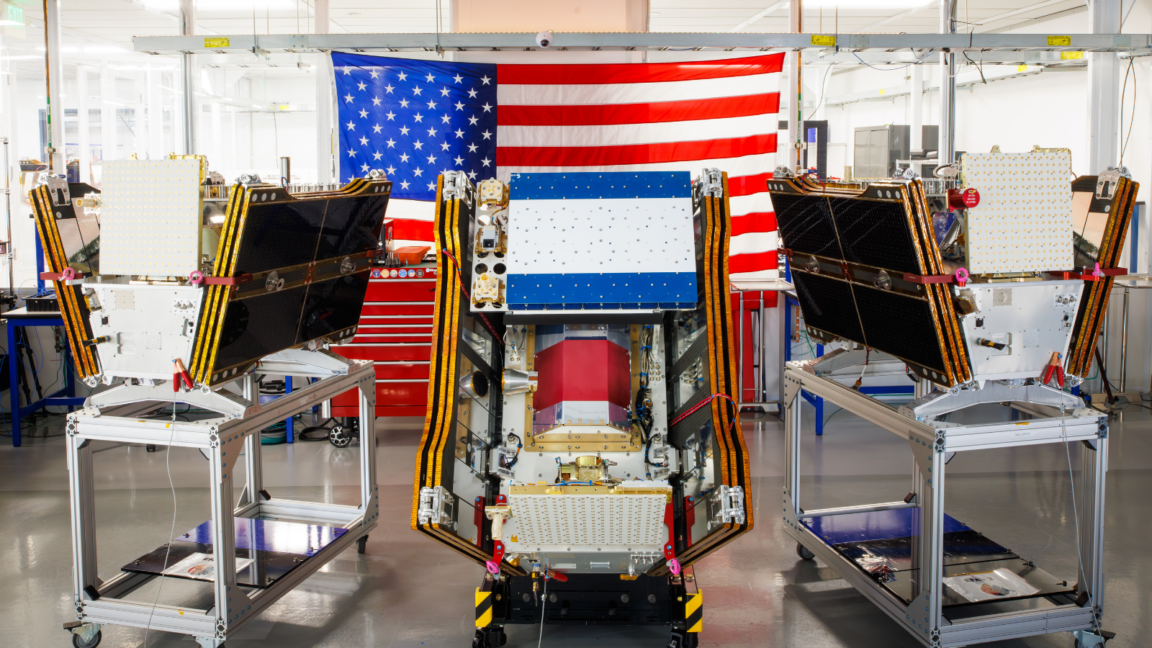
As smoke from hundreds of burning wildfires spread across Canada and the United States, the first three operational satellites in the Google-backed FireSat program successfully launched into orbit. The satellites will begin providing wildfire detection capable of spotting even small fires in the United States, Australia, and Europe before the end of the year.

The launch of the microsatellites aboard a SpaceX Falcon 9 rocket from Vandenberg Space Force Base in California on July 7, 2026 marks a transition to “initial operational capability” for the FireSat constellation managed by the nonprofit Earth Fire Alliance. After a three-month testing period, the three satellites will begin actively providing data to fire agencies while covering every fire-prone region on Earth at least twice per day.

FireSat represents the first satellite constellation purpose-built for detecting wildfires, including spotting smaller fires that other satellites may miss. The satellites were designed by California-based satellite manufacturer Muon Space and have received over $15 million from Google to support initial deployment. Other notable financial supporters include the Bezos Earth Fund that committed $26 million.

Read full article

Comments

© Muon Space

  •  

The Pentagon's Space Development Agency hasn't moved as fast as anyone would like

The Space Development Agency was established in 2019 to help speed up the deployment of US military space systems by sidestepping the Pentagon's traditional sluggish bureaucracy.

Seven years later, SDA is finally launching its first batches of operational satellites, just as the Pentagon plans to shutter the semi-autonomous agency and fold it back into the Space Force's procurement pipeline, newly reorganized under several program acquisition executives in a bid to streamline weapons buying.

SDA's fate is not a surprise, and lawmakers in both houses of Congress have backed the agency's closure in drafts of this year's National Defense Authorization Act.

Read full article

Comments

© SpaceX

  •  

Hegseth wants a "High-T" military; doctors call it a clinical minefield

On Wednesday, Defense Secretary Pete Hegseth made the startling announcement that the US military would begin requiring all active duty and reserve personnel aged 30 and older to undergo mandatory screening for testosterone deficiency. The screenings will take place during yearly health assessments. Those under age 30 can also get screened on request.

In a short video posted on social media, Hegseth explained to the military community that the screenings and possible subsequent treatments are intended to "optimize your performance, your resilience, and your long-term health." While saying that the initiative wasn't about "artificial enhancement" and that members could decline treatment, Hegseth claimed that the testing and potential treatment was for "restoring and optimizing" capabilities, protecting "longevity," and "ensuring you have the biological foundation required to sustain the fight."

But will testosterone screening and treatment actually "optimize" our "warfighters"? Will it help most of them live longer? Should everyone else get screened and treated, too?

Read full article

Comments

© Getty | Stefani Reynolds

  •  

Taco Bell iceberg lettuce identified as source of cyclosporiasis in 5 states

Federal officials on Friday announced that shredded iceberg lettuce imported from Mexico and served at Taco Bell restaurants in five states is a source of Cyclospora, the foodborne parasite causing the nationwide surge in cases of explosive, watery diarrhea. The five states are Indiana, Kentucky, Michigan, Ohio, and West Virginia.

A traceback investigation by the Centers for Disease Control and Prevention and the Food and Drug Administration identified a single supplier in Mexico as the source of iceberg lettuce for Taco Bell restaurants where sick people reported eating. While federal authorities did not name the supplier, sources told the Washington Post that it is Taylor Farms.

Taylor Farms was also implicated in a 2024 multi-state E. coli outbreak linked to contaminated onions served at McDonald's and other fast-food restaurants. At the time, FDA inspectors found multiple violations at a Taylor Farms facility in Colorado.

Read full article

Comments

© Getty | Mario Tama

  •  

Troubling new details emerge on diabetes ouster controversy

Last month, we reported on a troubling incident at the annual meeting of the American Diabetes Association (ADA) in New Orleans. On June 5, five leading scientists were ousted for handing out copies of an editorial, published in the journal Diabetes Care (an ADA journal) in April, sharply criticizing the Trump administration’s ongoing attacks on scientific research. There was a public outcry and (eventually) a personal apology from the ADA's CEO for the heavy-handed response, but it seems the organization has not yet learned its lesson.

The deputy editors of Diabetes Care have posted an editorial and seven accompanying opinion articles to a preprint server—handily contained in a single PDF file—that they say the ADA has refused to publish. Several troubling new details are included in the articles, including an accusation that ADA leadership knew in advance that members would be handing out copies of the editorial and deliberately set up an ambush by venue security and local police. That decision, in turn, might be due to simmering tensions connected to a session organized the year before.

ADA leadership was provided with the articles in advance of publication with an invitation to simultaneously publish their response.

Read full article

Comments

© Screenshot/MedPage Today

  •  

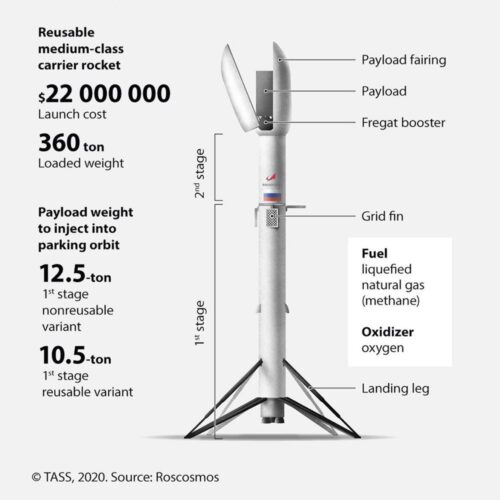
Will Russia's answer to the Falcon 9 rocket ever take flight?

Everyone seems to be launching and landing rockets these days.

Last week, China joined the club of countries that have launched an orbital mission and brought its booster safely back to Earth, which is just the beginning of public and private ventures in that country aggressively pushing into rocket reuse. Also in Asia, Japan's space agency has been conducting hop tests, and Honda recently performed vertical reuse tests.

In the United States, of course, SpaceX launches and lands reusable rockets every few days. Blue Origin, although its New Glenn booster is temporarily grounded, has also demonstrated the ability to both land and re-launch a large orbital booster. Other US companies, including Stoke Space, Rocket Lab, and Relativity Space, are all making credible progress toward partially or fully reusable rockets.

Read full article

Comments

© GK Launch Services

  •  

Fubo hikes prices by $15 after restoring some NBCU channels lost in November

Fubo prices are going up by $15 per month because it will have some NBCUniversal channels again.

For years, Fubo, a sports-centric vMVPD (virtual multichannel video programming distributor, which lets subscribers watch traditional TV channels live over the Internet), offered NBCUniversal channels. That stopped in November 2025 due to a contract dispute.

With the loss of local NBC affiliates, Telemundo, nine regional sports channels, and 32 national channels, Fubo made the sensible but rare decision to lower subscription prices in December. The Essential plan went from $85 per month to $74 per month. The Pro plan dropped from $85 to $75 per month, and the Elite plan dropped from $95 to $84 per month.

Read full article

Comments

© Gabby Jones/Bloomberg via Getty Images

  •  

San Francisco orders Apple, Google to remove nudify apps from app stores

This week, San Francisco’s attorney general, David Chiu, sent cease-and-desist letters, demanding that Apple and Google remove 13 so-called nudification apps from their app stores, Wired reported.

Nudification apps can make it trivially easy to transform ordinary photos of real people into explicit images. The harmful AI tools allow bad actors to remove clothing, change a person’s features, place them in sexualized positions, and swap victims’ faces onto other people’s naked bodies.

Chiu's letter warned that app stores were violating "California’s laws that prohibit supporting services that create deepfake pornography," Wired reported.

Read full article

Comments

© SOPA Images / Contributor | LightRocket

  •  

Ars is looking for a senior technology reporter, and you might be it!

If you're a skilled writer with outsize technology chops who gets excited by the idea of taking the Ars audience with you as you go hands-on with hardware—all kinds of hardware!—then this position has your name all over it. Plus, you get to have me as your boss, and how could that be anything other than awesome?!

The job

The formal job description and application is right here and has all the specifics and HR stuff, including salary range. The short summary is that we're looking for an experienced writer (where "experience" means "several years of professional work"), who is a technologist first and foremost. We want people who tinker around with tech because they can't not tinker around with tech; that kind of joy tends to leak out into the work, and it's impossible to fake.

Some specifics on the subject matter the job will cover, copied from the job description:

Read full article

Comments

© Aurich Lawson | Getty Images

  •  

The report oil companies are worried about: Climate attribution science

Climate change is being driven largely by the greenhouse gases we've pumped into the atmosphere, which trap more of the Sun's energy there. That added energy increases the odds of extreme events: longer, more intense heat waves and droughts, interspersed with excessive precipitation. But these sorts of events have happened in the past—how can we tell if any given weather disaster has been made more likely by the climate?

It's a question with implications for everything from building codes to disaster preparedness. And there's some good news: According to a report released by the US National Academies of Science on Thursday, the field of climate attribution is growing increasingly mature and can answer some questions for us with far greater confidence than it could just a decade ago. The report also notes that there are still important limits and suggests steps to address them.

Overall, this makes it clear that climate attribution is normal, mainstream science. And the fossil fuel industry views that as a problem, as it could make it easier to hold companies liable for damages. This has triggered a backlash that has Republicans in Congress and state governments threatening the National Academies' funding.

Read full article

Comments

© Zhen Li

  •  

FCC took pricey gifts from Paramount as the company needed approval for deals

The rich and famous who filed into the Kennedy Center’s opera house in December were there to enjoy one of the nation’s most exclusive celebrations of the performing arts: the center’s annual honors gala.

The black-tie event, hosted by President Donald Trump, prioritized tickets to people who donated more than $75,000 to the center. This year, it feted Hollywood icon Sylvester Stallone, the legendary glam rock band Kiss and the Grammy Award-winning disco pioneer Gloria Gaynor.

Among the attendees that evening were two lower-profile government officials whose regulatory decisions had been crucial to the future of the gala’s broadcast sponsor, CBS, and its parent company, Paramount.

Read full article

Comments

© Cheng Xin/Getty Images

  •  

2026 Lucid Gravity Touring review: A strong act 2

When Lucid introduced the Air electric sedan in late 2021, the first Air Dream Edition I tested packed over 1,100 hp (820 kW) and carried a $180,000-plus window sticker. It's easily the most powerful street car I've tested; the only vehicle I've driven with more power was a purebred race car with a third the mass, and it was on a proper track. Its combustion engine was also about 1,000 times louder than the Air, helping to remind us that "combustion" really does mean explosion after explosion.

For Lucid's second act, the company debuted the Gravity electric SUV last year, and I've just tested the 2026 Gravity Touring, which starts at about $82,000 in the US, including the required destination charge.

My test model carried a bevy of options, including a 22-speaker audio system, the Comfort and Convenience package, third-row seating, a Dynamic Handling package (combining rear-wheel steering and three-chamber air suspension), a luxury seating package (bundling Nappa leather and massaging and ventilated front seats), and special metallic paint.

Read full article

Comments

© Jim Resnick

  •  

Rocket Report: India's Vikram-1 nears debut flight; AST to become rocket company?

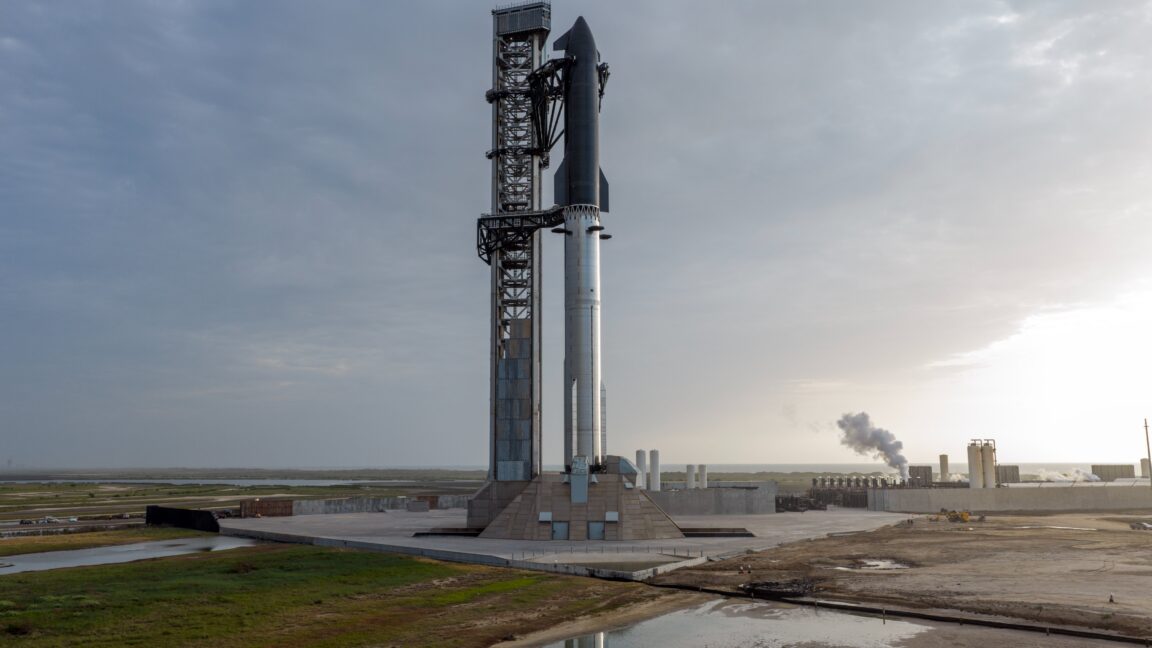
Welcome to Edition 9.03 of the Rocket Report! SpaceX counted down all the way to T-0 on Thursday evening in South Texas before a handful of Raptor engines decided not to light at ignition of the rocket. It is not clear whether the vehicle can be worked on at the pad, or whether Starship will need to be de-stacked before this can occur. In any case, a few days delay beats a significant issue in flight.

As always, we welcome reader submissions, and if you don't want to miss an issue, please subscribe using the box below (the form will not appear on AMP-enabled versions of the site). Each report will include information on small-, medium-, and heavy-lift rockets as well as a quick look ahead at the next three launches on the calendar.

Vikram-1 rocket gets a launch date. The debut launch attempt by Skyroot Aerospace of its Vikram-1 rocket is now set for July 18, at 11:30 am local time in India. This will be the first time a commercial rocket developed in India attempts to reach orbit. Designed to carry small satellites weighing up to 350 kg to low-Earth orbit, Vikram-1 is targeting a 450 km orbit at a 60-degree inclination.

Read full article

Comments

© SpaceX

  •  

SpaceX scrubs Starship launch after some of its engines didn't start

SpaceX called off a test flight of its powerful Starship rocket and Super Heavy booster as the countdown clock reached zero Thursday at the company's spaceport in South Texas.

The launch team at Starbase, Texas, just north of the US-Mexico border, aimed to launch the more than 400-foot-tall rocket at 5:45 pm local time (6:45 pm EDT; 22:45 UTC). The countdown proceeded smoothly throughout the day, culminating in the loading of more than 11.5 million pounds of liquid methane and liquid oxygen into the two-stage rocket.

But the computers controlling the countdown called an abort during the Super Heavy booster's engine startup sequence. SpaceX scrubbed the launch attempt, and engineers began preparations to drain the rocket's propellant tanks. Officials did not immediately announce when they plan to try to launch again.

Read full article

Comments

© SpaceX

  •  

Two Trump health nominees crash and burn in tense Senate hearing

Two nominees for high-profile health roles in the Trump administration faced scrutiny from the Senate health committee Wednesday—and both crashed and burned in their own special ways.

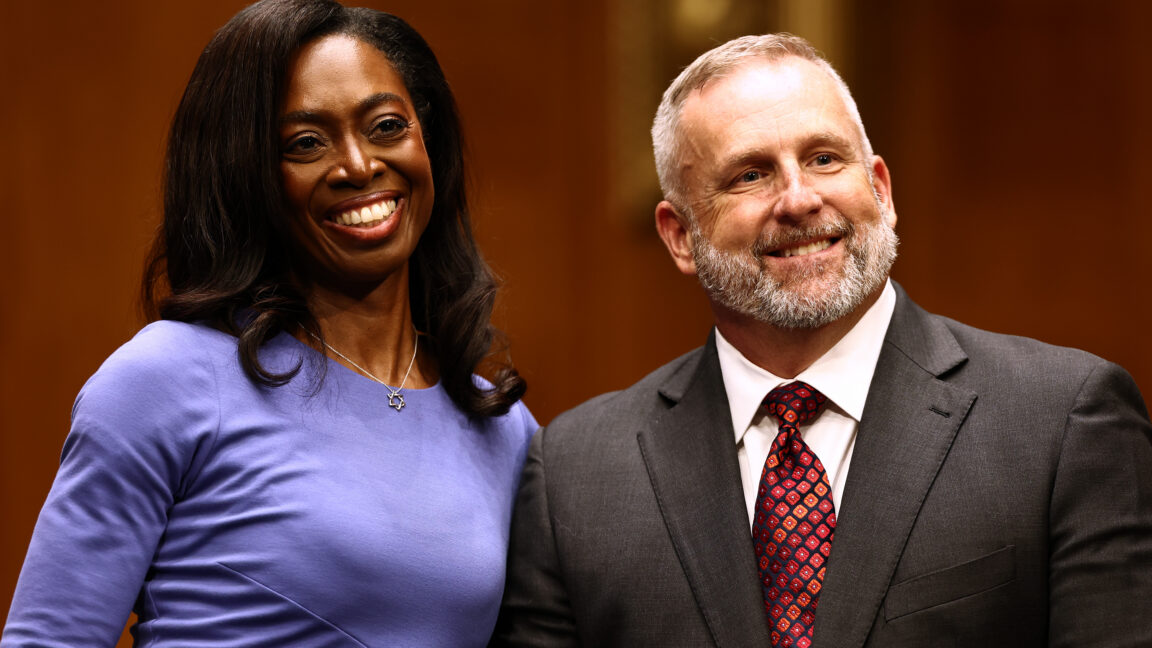
The Senate Committee on Health, Education, Labor, and Pensions (HELP) scrutinized Erica Schwartz, the nominee for director of the Centers for Disease Control and Prevention, and Sean Kaufman, up for the role of assistant secretary for preparedness and response.

Schwartz's assignment

Public health experts were "cautiously optimistic" about Schwartz's nomination. She is well-respected and holds views in line with evidence-based medicine, including being supportive of vaccinations—in contrast to anti-vaccine Health Secretary Robert F. Kennedy Jr., whom she will serve under. She is also highly qualified for the role, with a medical degree, a master's degree in public health, and a law degree. She's had a long career as a Navy Officer and previously held the roles of chief medical officer for the US Coast Guard and deputy surgeon general in the first Trump administration.

Read full article

Comments

© Getty | Finn Gomez

  •  

HP fined 1.4 billion rupees for “cartelization” of ink cartridges, toner, PCs

The Indian government has fined HP India and its partners a total of 1.4 billion rupees (about $14.4 million) for working with reseller partners in the “cartelization” of computers, ink cartridges, and toner.

The Competition Commission of India (CCI) said this week that it found HP India had colluded with some channel partners to drive up the cost of bids for government contracts for computers, as well as for selling ink cartridges, toner, and other printing supplies, including graphic and digital manufacturing supplies.

It said that HP was aiming to outcompete other OEMs and discourage resellers from selling “counterfeit” ink and toner.

Read full article

Comments

© Getty

  •  

T-Mobile bungled forced plan migration, canceling some users' free lines

T-Mobile canceled some longtime subscribers' free-line promotions as part of a forced migration to new rate plans, spurring complaints from customers yesterday. T-Mobile admitted the problem and blamed it on technical errors that it is trying to fix.

The forced plan changes were controversial to begin with, particularly as many longtime users are being hit with price hikes of $6 per line. The unexpected loss of free lines for some of those users could raise prices by a much higher amount if the change isn't reversed.

There is good news, though. T-Mobile told Ars today that it was a mistake and that the company is working to fix the problem. Of course, it's not always easy for telecom customers to get the proper resolution even after a company admits to an error publicly. But given T-Mobile's statement today, we hope the firm will fix the problem for all impacted customers with as little hassle as possible.

Read full article

Comments

© Getty Images | Erik McGregor

  •  

It's official: EU will force Google to share search data and open up AI on Android

Europe wasted no time using its landmark Digital Markets Act (DMA) to try to rein in Big Tech. Companies like Apple, Meta, and Google have faced steep fines and orders to modify their business practices since the law came into force in 2024. And the hits keep on coming for Big Tech in Europe. After several months of consideration, the European Commission has announced new DMA measures that will force Google to support interoperability and competition in the European Union, and Google is not happy about it.

The new "specification measures" cover two elements of Google's business: Android phones and search. Both changes could theoretically increase competition and give users more choices, but Google claims they will undermine privacy and security. But as a "gatekeeper" under the DMA, Google has no choice but to comply. As the European Commission points out in its announcement, these decisions are legally binding.

On Android, Google will have to open up access to competing AI platforms. Currently, Google's Gemini gets preferential access to the system. Gemini is preloaded on all Google-certified Android phones and can wake up in response to the "Hey Google" hot word. Google's AI also includes system and app automation features, screen content access, and more.

Read full article

Comments

© Getty Images | BeeBright

  •  

xAI can’t deny Grok makes CSAM anymore. So it’s suing users.

Facing mounting pressure to acknowledge that Grok can still be used to generate non-consensual sexualized images of adults and minors, xAI filed a lawsuit Tuesday, suing the first user that Elon Musk’s firm has accused of using its chatbot to create illegal content.

The complaint targets Terry Wayne Harwood, who was arrested earlier this year for possession and distribution of child sexual abuse materials (CSAM), the South Carolina attorney’s office announced.

As xAI alleged, the company assisted in that arrest after discovering that Harwood had been using two xAI accounts for months to undress or “nudify” non-sexual images of multiple victims, including a young girl who appeared to be as young as 10.
Read full article

Comments

© NurPhoto / Contributor | NurPhoto

  •  

Fear of humanoid robots spurs human workers to strike at Hyundai auto factory

Thousands of unionized Hyundai auto workers began walking off the job early after negotiations with the South Korean automaker broke down over plans to deploy humanoid robots—the most significant pushback from organized labor so far over the latest wave of robotic automation.

The partial strike at Hyundai’s automotive production complex in the city of Ulsan in South Korea represents “the car industry’s first factory stoppage addressing humanoid robots,” according to The Wall Street Journal. Workers have already ended their day and night shifts two hours early at the world’s largest automotive plant from July 13 through July 15, and plan to start staging four-hour strikes from July 20 to 22 after 15 rounds of negotiations failed to reach an agreement, The Korea Times reported.

Union pushback began as soon as Hyundai Motor Group unveiled the latest version of the Atlas humanoid robot, a two-legged robot that stands at more than 6 feet tall and can lift more than 100 pounds, at the start of this year. Atlas is made by Boston Dynamics, the US robotics company that is about to become a wholly owned subsidiary of Hyundai.

Read full article

Comments

© Boston Dynamics

  •  

Trump teleprompter aide made $100,000 betting on what Trump would say, reports say

Kalshi is a high-tech prediction market that allows people to "forecast the future" (their term). It is about contracts and information, the company says, making its offerings more like a soybean futures contract than a round of blackjack or a pull on the one-armed bandit.

Still, prediction markets look a lot like betting if you squint, which is why states like New York have tried to regulate them under gambling laws. To head this off, Kalshi has sought federal protection under the Commodity Futures Trading Commission (CFTC). Yes, this means regulation for Kalshi, but it also means the CFTC will sue states like Kentucky, Minnesota, Illinois, and Rhode Island, trying to pre-empt their laws in favor of a single national standard that the CFTC controls.

While this battle plays out, government insiders continue to generate insider trading stories after using their work knowledge to place bets "forecast the future" and make huge sums of money. The classic example, of course, was Gannon Ken Van Dyke, a US soldier who participated in planning the capture of Venezuela's Nicolas Maduro and then made $410,000 from that knowledge on the prediction site Polymarket. Van Dyke was arrested in April.

Read full article

Comments

© Getty Images

  •  

2026 Toyota RAV4 plug-in: Big battery means daily drives are all-electric

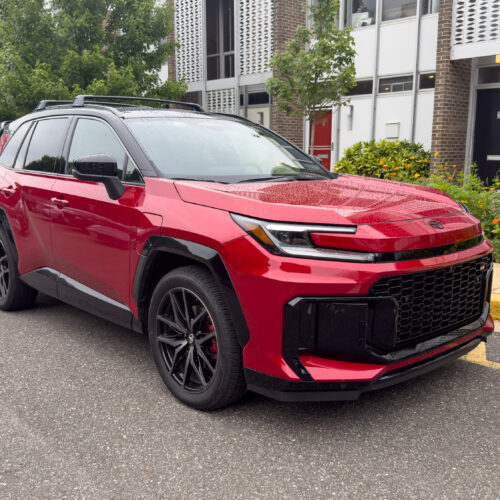
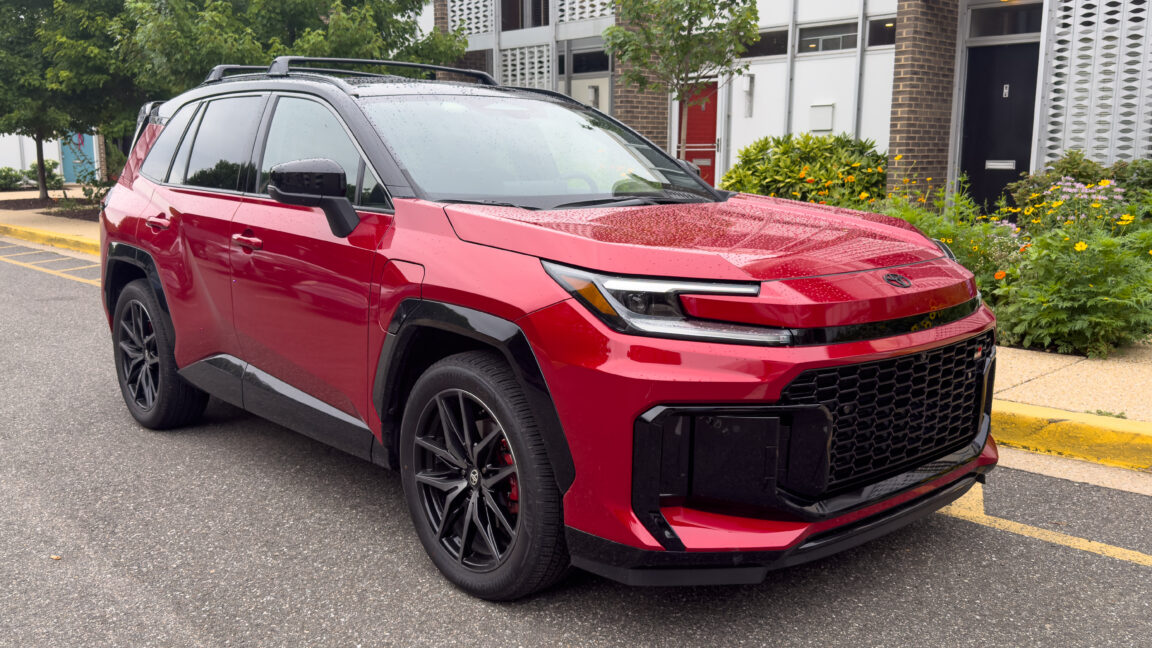
For year after year, more Americans have bought Toyota RAV4s than anything that isn't a pickup truck. The brand's reputation for solid reliability has kept it ahead of SUVs from other automakers, and the nation's embrace of SUVs and crossovers relegated the poor old Camry to near-bottom of the top 10. For the latest generation—the sixth since 1994—all RAV4s are electrified. Most will use a mix of internal combustion engine and brakes to recharge their hybrid powertrains' traction batteries, like the millions of Priuses out there on the roads. But there's also a plug-in hybrid EV option, with an all-new powertrain with some noticeable improvements compared to the outgoing PHEV.

Just as Toyota's designers and engineers have tried to improve on the previous RAV4 with each successive generation, their counterparts in the powertrain department have similarly been iterating and improving the combination of electric motors and piston engine. Under the hood there's a naturally aspirated 2.5 L four-cylinder engine that operates on the Atkinson-cycle, aided by variable valve timing on both intake and exhaust sides.

The engine, which on its own generates 186 hp (139 kW) and 172 lb-ft (233 Nm), is connected to one of two electric motors under the RAV4's hood, as well as to Toyota's electronically controlled variable ratio transmission.

Read full article

Comments

© Jonathan Gitlin

  •  

Now, even Russia's most elite hackers are using Clickfix to infect devices

One of the Russian government’s most elite hacking groups has adopted an attack, known as Clickfix, to compromise devices belonging to sensitive organizations in Ukraine, the latter country’s CERT center is warning.

Clickfix has emerged as an effective attack technique that attackers, primarily financially motivated criminals, began using in the last year or so. Websites under the control of the attackers display a CAPTCHA that requires the visitor to copy a jumble of text and paste it into the terminal. The text contains scripts that, once entered, perform malicious actions, typically by installing malware or exfiltrating sensitive data. Ukraine’s CERT said Wednesday that Sandworm, an advanced hacking unit inside the GRU, Russia’s military intelligence arm, is now using the technique.

"GhettoVibe," "ScoutCurl," and many more

The Clickfix attacks began in the spring and have continued through the summer. The campaign has resulted in the network compromise of at least one organization when a connected device was found to be infected by FreakyPoll, the name of one of Sandworm’s custom malware packages. Ukrainian authorities discovered 10 compromised websites that displayed a PowerShell command as part of a fake CAPTCHA that said it had to be passed to ensure a real human was behind the visiting device’s keyboard.

Read full article

Comments

© Getty Images

  •  

Linus Torvalds to critics of AI coding in Linux: "Fork it. Or just walk away."

The widespread introduction of AI-powered coding tools has led to some dramatic splits between those integrating those tools into their workflows and anti-AI absolutists who don't want large language model-generated code anywhere near their projects. When it comes to the Linux kernel, though, creator and top-level maintainer Linus Torvalds said he is "willing to absolutely put my foot down" in support of using AI tools to improve the long-standing open source project.

Writing in a lengthy post on the Linux kernel mailing list this week, Torvalds said that "Linux is not one of those anti-AI projects, and if somebody has issues with that, they can do the open-source thing and fork it. Or just walk away."

The statement came amid a lengthy thread arguing about the use of Sashiko, an "agentic Linux kernel code review system" that its creators claim can, in tests, independently find 53.6 percent of the bugs that would end up being fixed by human coders in later commits. But the tool can also waste maintainers' time by sending "false positive" reports of bugs that don't exist, at a rate Sashiko's maintainers estimate is "well within [the] 20% range."

Read full article

Comments

© Getty Images

  •  

We've seen helium baked off a rocky exoplanet's atmosphere

Most of the gas in the Universe is a mixture of hydrogen and helium. It's thought that the initial atmospheres of most planets also start out that way. However, over billions of years, as planets evolve, the composition of their atmospheres may shift. Hydrogen can react with other chemicals, and both it and helium can be lost to space. Venus, Earth, and Mars are thought to have second atmospheres, with their original hydrogen/helium envelopes having been lost and/or transformed.

The dynamics of loss are complicated. Lighter elements are lost more easily, but hydrogen can be protected by being incorporated into molecules like methane and ammonia. The gravity of the body can help retain some molecules, and a magnetic field can limit radiation's ability to blast material out of the atmosphere. Proximity to a star will matter too, both because of the radiation it produces and because it can heat the atmosphere and expand it to where gravity's influence is less substantial.

Given all these complications, it can be difficult to know what to expect to find on exoplanets. But a study in Wednesday's issue of Nature describes observations of helium being lost from the atmosphere of an exoplanet orbiting the star LHS 1140, about 50 light-years away. Based on the rate at which the helium is being lost, we can infer something about the remaining atmosphere.

Read full article

Comments

© NASA/JPL-Caltech/T. Pyle (SSC)

  •  

OnePlus confirms shutdown in the US and Europe, ending months of speculation

OnePlus arrived on the scene in 2014 with brash marketing and a compelling pitch: What if your phone was cheaper and faster? More than a decade later, the market is much different, and so is OnePlus. Confirming months of rumors and speculation, OnePlus has confirmed it's ending phone releases in North America and Europe.

This development has been expected for a while. After a brief period of expansion in the US through deals with T-Mobile and Verizon, OnePlus began visibly shifting its focus to India after the pandemic. OnePlus has also increasingly come under the control of its parent company, Oppo, aligning its device releases and software experience with the larger brand. Still, OnePlus has continued to launch flagship devices in the US and Europe, with the OnePlus 15 going on sale in late 2025. That will be the last OnePlus phone many people see, though.

OnePlus denied rumors of a shutdown earlier this year, but its language was vague and never promised future phone releases. The new statement is also worded gingerly, but the outcome is clear. "As part of the proactive global strategy adjustment, OnePlus has decided to conclude new product rollouts in Europe and North America," the official post reads.

Read full article

Comments

© Ryan Whitwam

  •  

Could China and Russia really destroy Starlink? Only with a boomerang.

One week ago, three widely respected European news outlets published the results of an investigation into what they described as a "joint plan" by China and Russia to "defeat Elon Musk's Starlink."

The story was the product of a long-running inquiry by The Insider, Der Spiegel, and Le Monde. Reporters at those publications said they reviewed a cache of documents detailing growing military cooperation between China and Russia. The documents covered discussions between the nuclear powers on integrated air and missile defense systems, autonomous "swarm" loitering munitions, next-generation armored vehicles, and military aviation, the report said.

According to the papers, the investigation found evidence of a partnership between China and Russia in the field of space weapons far deeper than either country has acknowledged. One particular focus for China and Russia has been developing strategies to counter SpaceX's Starlink satellite broadband network.

Read full article

Comments

© SpaceX

  •  

Energy IPOs surge as investors hunt for ways to play AI boom

Energy companies are raising money at IPO at their fastest pace this century, taking advantage of investors’ hunt for new ways to bet on the boom in power-intensive AI data centers.

Initial public offerings for energy firms raised $12.6 billion in the first half of this year, according to data firm Dealogic. That marks the highest half-year level since the peak of the dotcom bubble in late 1999 and the highest first-half figure on record. It is well above 2025’s full-year total of $4.3 billion.

The surge in fundraising comes as access to the vast amounts of energy needed to run data centers emerges as a bottleneck in a multi-trillion-dollar AI investment boom.

Read full article

Comments

© Michael Nagle/Bloomberg

  •  

Tesla driver who blamed crash on autopilot pressed accelerator 100%, NTSB finds

On Wednesday, the National Transportation Safety Board (NTSB) released preliminary findings verifying Elon Musk’s and Tesla’s claims that a driver involved in a fatal Texas crash that killed a grandmother overrode Full Self Driving in the moments ahead of impact.

Last month, 44-year-old Michael Butler told police that the autopilot feature was engaged at the time of the crash. On X, Musk disputed the claim, writing that Butler must have overridden the feature because “FSD drives slowly through neighborhood streets, and this was a high-speed crash!” Moving to back Musk’s claim, Tesla’s vice president of AI software, Ashok Elluswamy, said that internal data showed “the driver manually overrode self-driving by pressing the accelerator all the way to 100 percent of the accel pedal in this residential area.”

NTSB’s preliminary report, which does not yet determine what caused the crash, confirmed Tesla’s claims. Its probe found that FSD was engaged at the time of the crash, but electronic data showed “the driver manually overrode FSD (Supervised) by pressing the accelerator pedal to 100 percent.”

Read full article

Comments

© via Jennifer Barbour's complaint

  •  

Move over, GPS: Navigation satellites in low-Earth orbit are making a comeback

New navigation satellites in low-Earth orbit could provide 100 times stronger signal strength compared to GPS and other global navigation satellite systems operating from higher orbital altitudes—enabling greater location accuracy within dense cities, under thick foliage, and even inside buildings. Such signals would also likely prove more resilient to interference at a time when commercial flights, maritime shipping, and even various smartphone apps face increasingly widespread disruption from GPS jamming.

That vision may start to take shape when the first six production satellites of California-based Xona Space Systems are scheduled to launch in October 2026, with early service starting in 2027. Once the full constellation of 258 Pulsar satellites has been launched in the following years, Xona claims that customers will be able to accurately pinpoint their locations anywhere on Earth to within several centimeters.

“That added power means that we can get into that indoor environment that GPS can't get to today,” Adrien Perkins, co-founder and VP of engineering at Xona Space Systems, told Ars. “Our higher power allows you to get into those jamming environments a lot further than you would with GPS by itself.”

Read full article

Comments

© Xona Space Systems

  •  

Hundreds rally at Bethesda HQ to protest Xbox layoffs, and Ars was there

ROCKVILLE, Maryland—Hundreds of Bethesda Game Studios and Zenimax Online Studios employees and their supporters braved nearly 100° F temperatures to protest sweeping layoffs across Xbox during a lunchtime rally in front of parent company Zenimax's headquarters today. The rally was one of five today organized by Zenimax Workers United and its parent union, the Communication Workers of America, at offices across Texas, California, and Montreal.

Attendees held up signs with messages like "Layoffs... layoffs never change" and "Our players deserve better" as union organizers and employees rallied the crowd with speeches and songs. The overwhelming message was one of solidarity and a willingness to push back against job cuts they say have decimated their development and quality assurance teams.

"It's about us building our movement and making sure that we get seen and we're visible," Bethesda technical producer and union volunteer organizer Nathan Hahn told Ars. "Because we want to make sure that we're not okay with these layoffs and that Xbox knows."

Read full article

Comments

  •  

Buzz Aldrin sells famous felt-tip pen that helped launch Apollo from the Moon

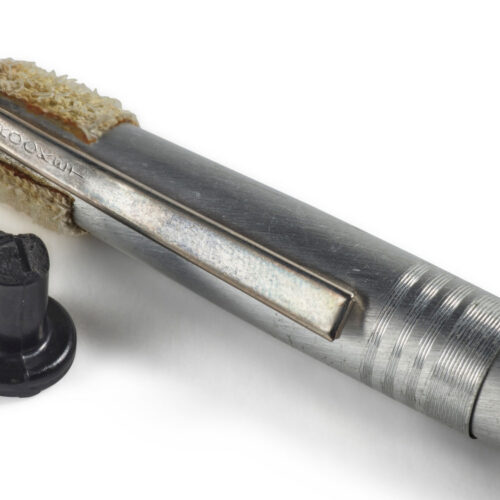
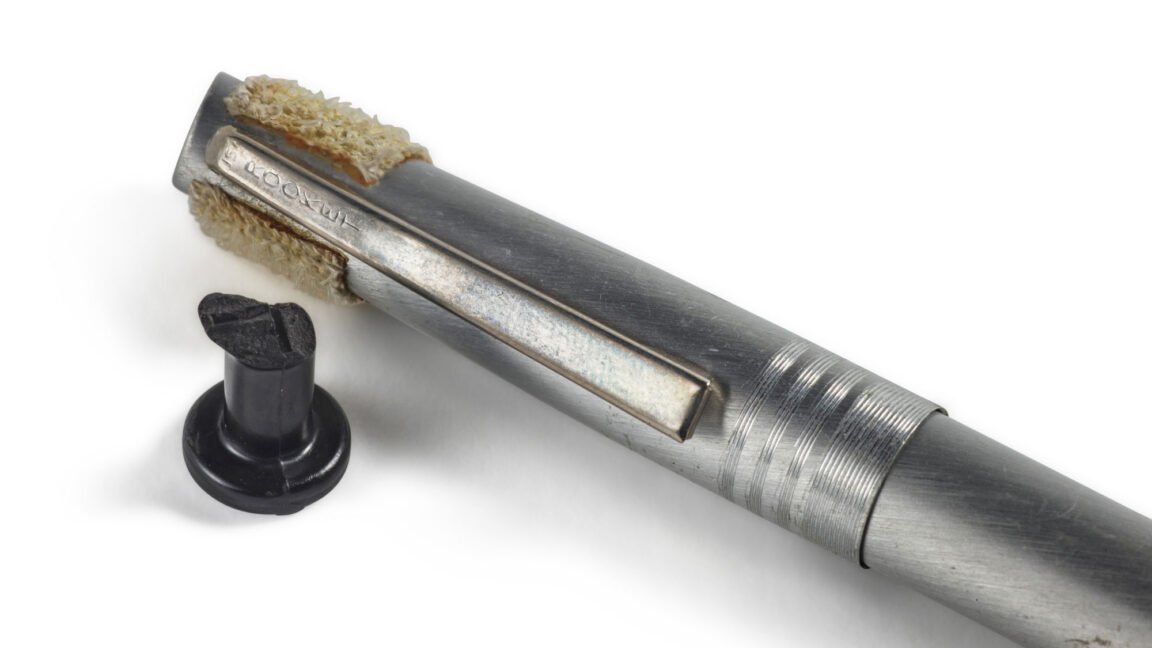
A dried-out felt-tip marker and a snapped-off piece of molded black plastic sold for $857,600 at a Sotheby's auction on Wednesday.

What otherwise might have been worthless bits of trash commanded the highest bids due to where the two items were 57 years ago—lifting off aboard NASA's Apollo 11 spacecraft on humanity's first mission to land astronauts on the Moon. More than flown odds and ends, one was the problem that almost stranded Neil Armstrong and Buzz Aldrin on the lunar surface, and the other was the simple solution to saving the mission.

"Houston, Tranquility. Do you have a way of showing the configuration of the engine arm circuit breaker?" radioed Aldrin to Mission Control after realizing he or Armstrong had inadvertently broken off the top of the circuit breaker switch that would enable their ascent engine to ignite, beginning their trip back to Earth. "The reason I'm asking is because the end of it appears to be broken off. I think we can push it back in again. I'm not sure we could pull it out if we pushed it in, though."

Read full article

Comments

© Sotheby's

  •  

Sheetz is quitting VMware, migrating 11,000 virtual machines

Sheetz, a US convenience store chain, is moving its 838 locations off VMware.

Sheetz has used VMware virtualization across two Dell R440/R450-series servers at each of its locations since 2019. Now it’s migrating 12 to 14 virtual machines (VMs) in each of its stores from VMware vSphere to StorMagic’s SvHCI, “with an additional two VMs to be replaced over the coming months to transition from Windows 10 to Windows 11,” Scott Robertson, infrastructure team manager at Sheetz, told Ars Technica via email. Ultimately, Sheetz will move about 11,000 VMs from Broadcom's virtualization platform. Sheetz is still running the original Dell server hardware.

So far, Sheetz has finished migrating more than 600 stores, averaging 200 per month, according to a company announcement today. Sheetz should be finished with the migration in four months, the announcement said.

Read full article

Comments

© Sheetz

  •  

Judge: Trump can’t deport researchers just for working in content moderation

This week, the Coalition for Independent Technology Research (CITR) won a key battle in its fight to reverse a visa-restriction policy that the Trump administration had used to attempt to revoke green cards and deport non-US citizens who work on misinformation, disinformation, fact-checking, content moderation, compliance, and trust and safety.

In an opinion published Tuesday, US District Judge James Boasberg granted a preliminary injunction blocking the State Department from enforcing the policy until the CITR’s lawsuit is resolved.

On its face, the policy does not require visa denials or deportations. Instead, it authorizes immigration investigations into individuals suspected of helping foreign adversaries attempt to manipulate public opinion by suppressing US speech.

Read full article

Comments

© UCG / Contributor | Universal Images Group

  •  

Engineer identifies and explains every '90s computer seen in Jurassic Park

Jurassic Park, while beloved as a film, has been the subject of snarky memes for the infamous line in which one of the characters declares, "This is a Unix system, I know this!" while using a computer with an unusual 3D file manager interface.

Despite the memes, the film's production team was meticulous in accurately sourcing the right PCs (and adjacent details) for the sets—not too much of a surprise, given writer Michael Crichton's background with computing and his obsessive attention to detail in the book the film is based on.

Read full article

Comments

© Universal Pictures

  •  
❌