❌

Reading view

Google announces the Fitbit Edge, a middle ground between Pixel Watch 5 and Fitbit Air

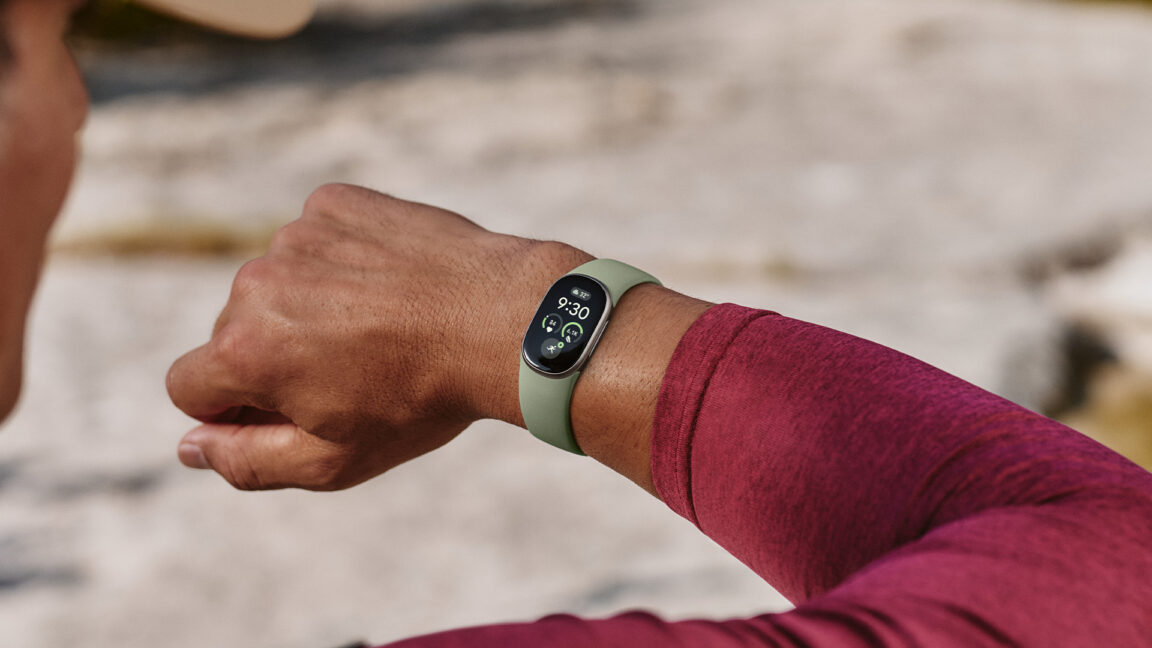
Google is releasing its second Fitbit tracker of 2026, offering fans of the aging Charge 6 a more refined option. The new Fitbit Edge slots right in between the Pixel Watch 5 and the Fitbit Air, featuring a compact screen and more health sensors than the Air. You won't get all the apps and features of the Pixel Watch 5, but the Edge is only about half as expensive.

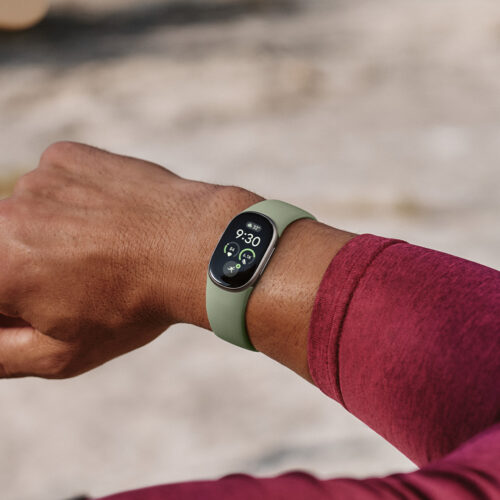
The Fitbit Edge is essentially a new Charge 6, but it has more of a Pixel Watch aesthetic. Squish Google's smartwatch from the sides, and you've got the Edge. It has a pill-shaped 1.34-inch OLED touch display inside a slender aluminum frame that is rated IP68 (5 ATM) for water and dust protection. Google says the screen has 46 percent more viewable area compared to the Charge 6. It's very close in overall size to the Fitbit Air and uses the same magnetic charging puck.
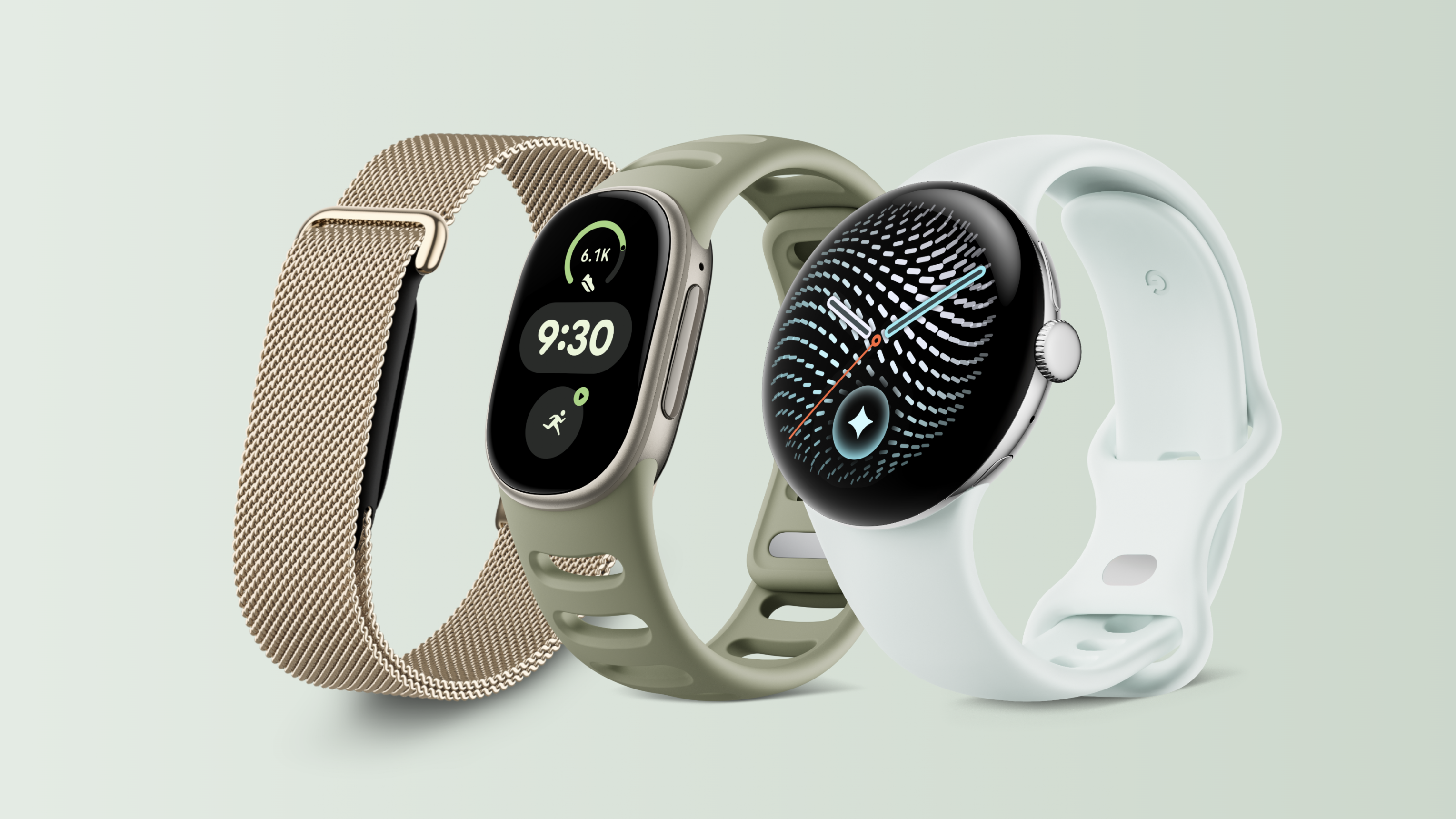
Left to right: Fitbit Air (with new metal mesh band), Fitbit Edge, and Pixel Watch 5. Credit: Google

The Edge works with Android or iPhones via the Google Health app, and it can run for about seven days on a charge. If the tracker is away from your phone, it can still follow your activity all week with support for seven days of full health data storage (or 30 days of basic data). However, the generous weeklong battery life does not include always-on display mode. If you turn it on, battery life drops to about two days, barely longer than the Pixel Watch 5.
Read full article

Comments

© Google

  •  

Google rolls out improved SynthID AI content detector, now available globally

Every piece of AI content from Google's Gemini models has a hidden SynthID label, which makes it very difficult to pass the content off as authentic. SynthID has also gotten buy-in from other major AI players, but actually checking for those invisible watermarks has been a convoluted process. It's going to be a little easier going forward, though. Google has announced that its SynthID detector now supports watermarks from all its partners, and it's available for anyone to use on a new dedicated website.

SynthID is an invisible signal encoded in the pixels of AI-generated images and videos, and in the waveform of AI audio. Google says Gemini alone has integrated SynthID with over 180 billion images and videos, plus 240,000 years of audio. Until now, the only way for those outside of Google's trusted tester program to check for SynthID was to ask Gemini. This is rather clunky, and the model's output could sometimes be confusing when you just wanted a simple "yes" or "no."

Now you can cut Gemini out of the loop. Starting today, you can go to the new SynthID.com website to check a piece of content for an AI watermark. A major limitation of Google's previous detector was that it only checked for Google's version of SynthID. Even though ChatGPT images, for example, have SynthID, they wouldn't be flagged in Google's detector. That's no longer a problem.

Read full article

Comments

© Aurich Lawson

  •  

Googlebook "Better Together" phone features don't work with Samsung at launch

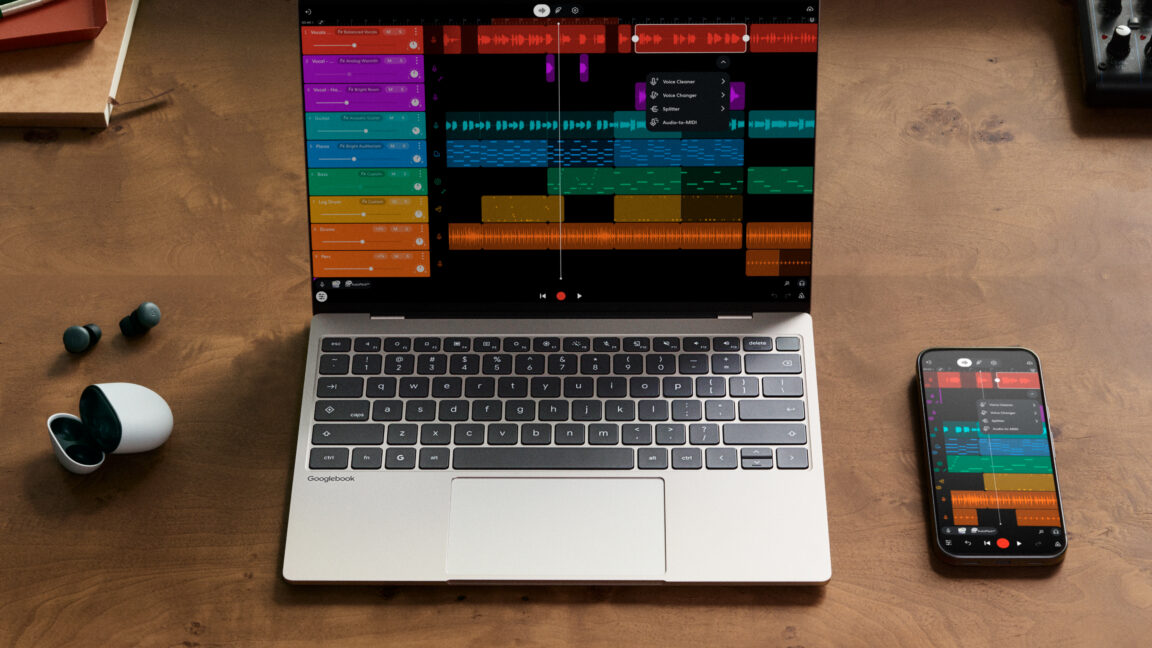
Googlebooks are Google's latest attempt to carve out a piece of the premium laptop market, and tight integration with Android phones is a key part of that effort. Now that Googlebooks are available, we're learning of some frustrating limitations of that plan. For now, Googlebooks will only play nicely with your phone if you have a Pixel.

When Google announced the launch window for Googlebooks, it said the laptops were "engineered to work with your Android phone right out of the box." But as with many things Google, the truth is more convoluted. We have since learned that you need Android 17 for any of the nifty integrations to work. With a compatible Android 17 phone, you can seamlessly stream apps to your laptop, access files on your phone, mirror notifications, and continue where you left off in certain apps when switching from phone to laptop.

You might think that the latest Samsung phones, which shipped with Android 17, would be ready for this experience. You'd be wrong, though. Some early Googlebook adopters have complained that phones like the Z Fold 8 won't work with the laptops. While the devices appear to see each other, the phone doesn't stay connected. Google representatives have since confirmed that these "Better Together" features are not currently supported on even the latest Samsung phones. An update that brings support to Samsung phones will roll out in "the coming weeks."

Read full article

Comments

© Google

  •  

Judge dismisses Chegg and Penske antitrust lawsuits targeting Google AI search

In a setback for publishers worried about the effects of AI search, a US federal judge has dismissed lawsuits filed by Chegg and Penske Media against Google. The companies accused Google of antitrust violations in products like AI overviews, which have led to decreasing traffic at numerous sites. However, US District Judge Amit Mehta has ruled that Google's conduct is not illegal under antitrust law.

The lawsuits were filed in 2025, and Google requested a dismissal earlier this year. Chegg, an education and learning platform, claimed in its lawsuit that Google illegally scraped its educational content. This allowed Gemini models to essentially recreate that content and reduce the site's traffic. Penske, which owns publications like Rolling Stone and Variety, filed a similar case that alleged lost traffic. Specifically, the publisher claimed it was unfair that sites indexed for organic search would also have their content harvested for AI answers, with no way to opt out.

These arguments did not sway the judge, who noted that Google's implicit agreement with websites is not legally relevant. "Plaintiffs have pleaded only that they have an ‘expectation’ that Google will send them search ​traffic if they make their content available for free," wrote Mehta. "But an expectation is not an agreement. It is simply how a general search engine works."

Read full article

Comments

© Ryan Whitwam

  •  

Google announces Gemini 4 Argon AI model, but you can't use it yet

Google promised Gemini 3.5 Pro in June, but it spent the summer trotting out smaller Flash models. Now, Google is ready to take on the frontier again with Gemini 4 Argon. The company claims this new AI offers industry-leading performance in coding, knowledge work, and cybersecurity, but you aren't allowed to use it yet.

While most of us will have to wait to test Gemini 4, Google says engineers inside the company are already using the new model extensively. Argon reportedly used "fleet-wide telemetry data" to help Google save 300 TiB of memory across its data centers. Meanwhile, Argon agents have been working to migrate C/C++ codebases to Rust across Google, including thousands of lines in the core re2 and libgav1 libraries and more than 800,000 lines in the Fuchsia OS Zircon kernel.

Google has also come armed with a raft of benchmarks to back up its claims. On the software engineering DeepSWE v1.1 benchmark, Gemini 4 Argon hits 77.9 percent, which is higher than GPT-6 Astra, Fable 5.1, and Opus 5.5. Google promises similar power across a range of long-horizon tasks, pointing to Argon's industry-leading score in the economic analysis Vals Index test.

Read full article

Comments

© Aurich Lawson

  •  

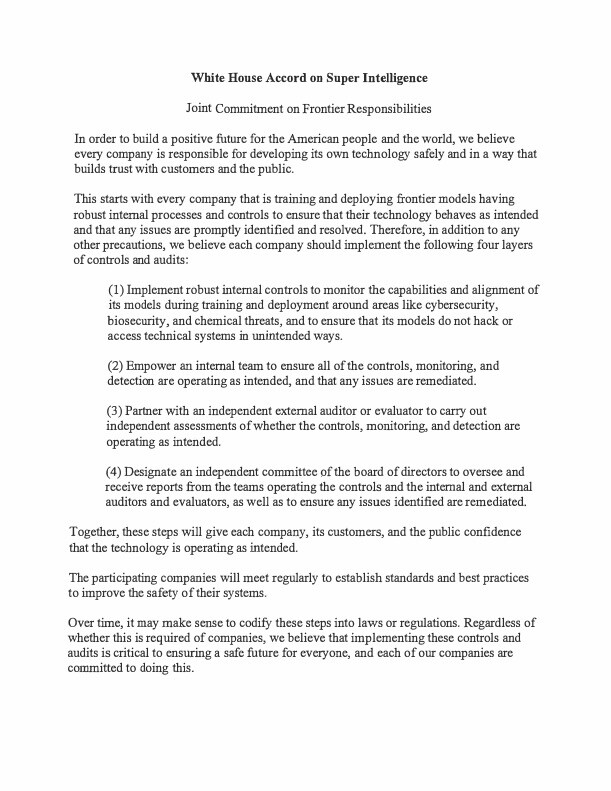
Trump plan to combat AI risks hinges on Big Tech pals policing themselves

Amid escalating AI security incidents causing OpenAI to halt training and pause releases, Donald Trump continues to advocate for the AI industry to regulate itself as the best path to combat emerging risks when developing frontier AI.

In an agreement Tuesday, two dozen tech firms voluntarily committed to implementing controls recommended by the White House, including undergoing independent safety audits that will test whether firms’ internal controls, monitoring, and detecting are actually working. Key focuses for external reviews included “risks related to cybersecurity, biosecurity, chemical threats, and unintended actions by AI models.”

Firms also agreed to regularly meet to discuss best practices and set common AI safety standards and benchmarks. Among signers were leaders like Anthropic’s Dario Amodei, OpenAI’s Sam Altman, SpaceXAI’s Elon Musk, Nvidia’s Jensen Huang, Meta’s Mark Zuckerberg, and Alphabet/Google’s Sundar Pichai.

Read full article

Comments

© Kevin Dietsch / Staff | Getty Images News

  •  

Google's early attempt to pay websites for AI answers is struggling

Google's shift to AI-powered search has upended the way the world's largest search engine generates web traffic, rankling large and small publishers alike. In recent months, the company has experimented with paying publishers when their content appears in AI answers, but a new report claims the payouts in this pilot program are miniscule. That has publishers in the program, as well as those watching from the sidelines, feeling skeptical.

According to The Information, Google has admitted about 100 publishers to the AI contribution pilot. The pitch is that websites can get payments from Google when their content materially contributes to Gemini-powered search results like an AI Overview. Google has long resisted the idea of direct payments to publishers, arguing that websites get traffic in exchange for allowing Google bots to scrape their content for use in search and knowledge graph tools. In the age of AI, that relationship is breaking down, hence the AI pilot.

So far, publishers aren't getting much for their trouble. The Information heard from several small and mid-sized publishers in the program that Google's AI payments are minuscule, equaling roughly one-tenth of one percent of their advertising revenue. These payments have been so disappointing that several larger publishers have reportedly declined to participate in the program. These publishers hope that by refusing to join the pilot, they can force Google to offer a more generous deal.

Read full article

Comments

© Aurich Lawson

  •  
❌