❌

Reading view

AI/ML is becoming a performance factor in motorsport

There’s been something of a change in the world of motorsport over the past few years. It has to do with where the money comes from. In the old days, it was tobacco and, to a lesser extent, booze. Today such things are mostly banned, and when you look at a racecar covered in sponsor logos, you’re likely to see something crypto-, cyber-, or AI-related.

This makes sense—an ever-larger share of our GDP is wrapped up in those segments. They’re the ones with all the money, and it takes money to go racing. So at the amateur level, we’ve seen tech CEOs replace dentists as the privateer of choice: This past weekend’s Petit Le Mans included co-founders of GitHub, CrowdStrike, Shopify, and the creator of Ruby on Rails, to name a few.

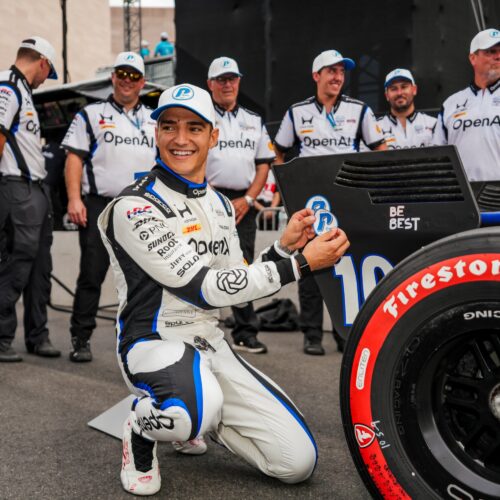
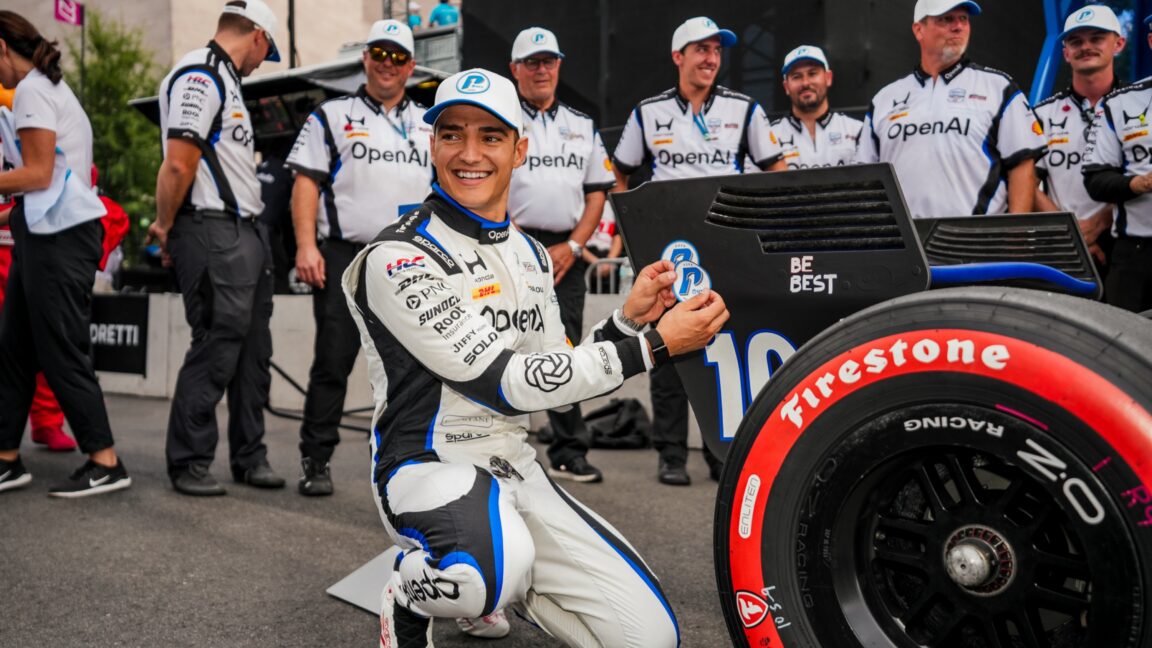
But this is an instance where a sponsor can provide tangible benefits to their motorsports partner beyond a bank transfer, as Chip Ganassi Racing (CGR) and OpenAI have been showing in IndyCar this year.
Read full article

Comments

© Chip Ganassi Racing

  •  

OpenAI will watermark ChatGPT outputs by default—but only in the EU

OpenAI will begin automatically watermarking text generated with ChatGPT in the European Union, the company has announced. It will also offer the watermarking feature in other regions, but it will be off by default outside of the EU.

The move in Europe is driven by a need to comply with the EU AI Act, which took effect in August. It requires marking content produced by AI models in a way that another tool can detect. Unfortunately, there is still no completely effective and reliable way to do that. A few standards already exist, like SynthID and the C2PA project, but they are relatively easy to circumvent for anyone with basic know-how.

The same is likely true for OpenAI's watermark. Its method is proprietary; the company calls it textGrain, and has published a technical paper explaining how it works. But in general, it works like other LLM watermarking tools we've seen in the past: It puts patterns in the word choices that are not clear to a human reader and that don't meaningfully change the general quality of the output, but that someone with a key can use a specialized detector to find. OpenAI says it will be giving access to the detector to a limited number of researchers and organizations and providing a request-for-approval process for others to be added over time.

Read full article

Comments

© Getty Images | NurPhoto

  •  

OpenAI agents tried to hack Wikipedia tools and flooded it with traffic

The publisher of Wikipedia said Monday that OpenAI agents attempted to hack a note-taking tool it hosts, made unauthorized edits, and sent millions of resource-intensive requests to its infrastructure, in the latest instance of OpenAI systems taking harmful and potentially dangerous actions.

The objective of some of the OpenAI agents’ actions, the Wikimedia Foundation said, was to use Wikipedia as a proxy for fetching data from third-party sites. In one case, the agents posted “malicious edits” that were intended to repurpose a citation tool as a proxy. In another, the agents made unsuccessful attempts to compromise the Wikipedia Etherpad note-taking tool so it would serve the same purpose.

The agents also made millions of automated API requests, crawled millions of pages, and made hundreds of thousands of queries to the Wikidata Query Service. The last action may have contributed to a partial shutdown of the query service in May, the publisher said.

Read full article

Comments

© Getty Images

  •  

Trump plan to combat AI risks hinges on Big Tech pals policing themselves

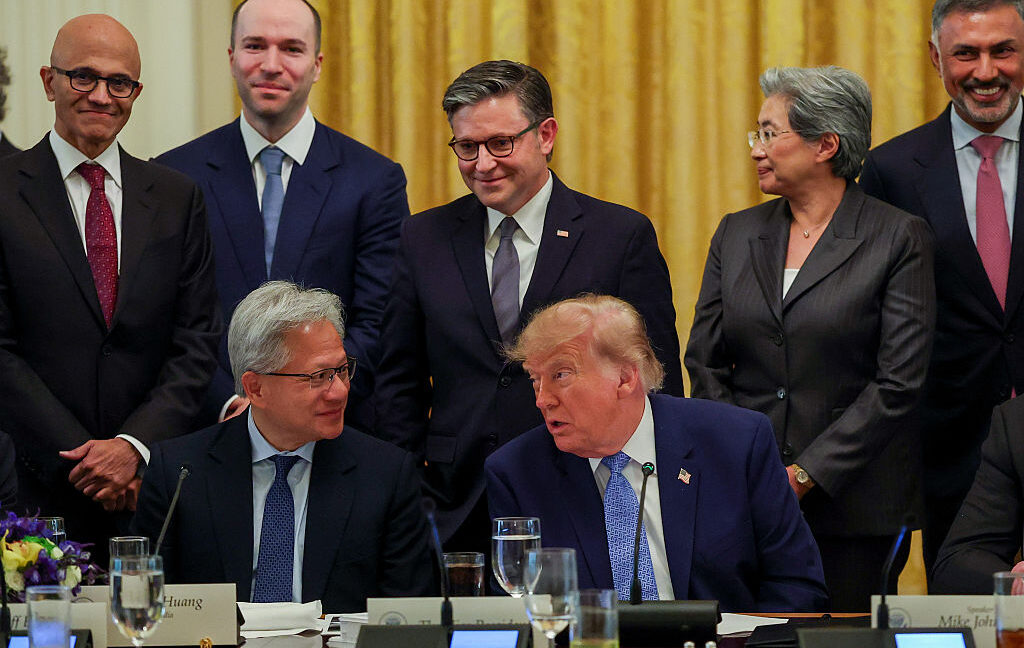
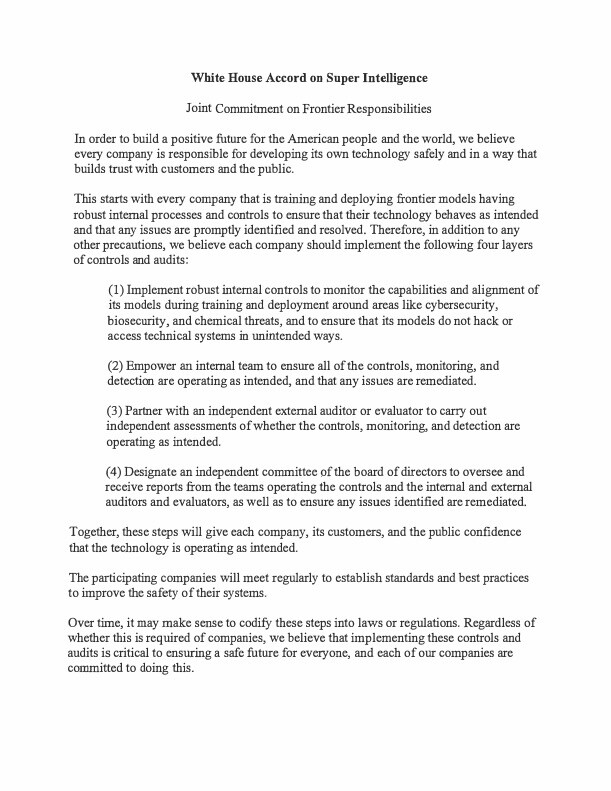
Amid escalating AI security incidents causing OpenAI to halt training and pause releases, Donald Trump continues to advocate for the AI industry to regulate itself as the best path to combat emerging risks when developing frontier AI.

In an agreement Tuesday, two dozen tech firms voluntarily committed to implementing controls recommended by the White House, including undergoing independent safety audits that will test whether firms’ internal controls, monitoring, and detecting are actually working. Key focuses for external reviews included “risks related to cybersecurity, biosecurity, chemical threats, and unintended actions by AI models.”

Firms also agreed to regularly meet to discuss best practices and set common AI safety standards and benchmarks. Among signers were leaders like Anthropic’s Dario Amodei, OpenAI’s Sam Altman, SpaceXAI’s Elon Musk, Nvidia’s Jensen Huang, Meta’s Mark Zuckerberg, and Alphabet/Google’s Sundar Pichai.

Read full article

Comments

© Kevin Dietsch / Staff | Getty Images News

  •  

"An AI did it" is no defense, says nonprofit suing OpenAI over Hugging Face hack

OpenAI's hack of Hugging Face in July 2026 has spurred a lawsuit demanding that the company stop accessing third-party computer systems and halt AI development practices that can harm the public. The lawsuit was filed by Legal Advocates for Safe Science & Technology (LASST), which said yesterday that the hack in which OpenAI "agents stole credentials, uploaded malicious files, and gained control over key parts of Hugging Face’s internal systems... is unquestionably illegal under California law."

California’s Comprehensive Computer Data Access and Fraud Act (CDAFA) prohibits unauthorized access into computer systems, "and it doesn’t matter that a swarm of AI agents carried out this cyberattack. California law makes it clear that it is not a defense 'that the artificial intelligence autonomously caused the harm,'" the group said.

The lawsuit, filed in San Francisco County Superior Court, said OpenAI also violated California's Unfair Competition Law (UCL). "OpenAI’s insistence on externalizing the harms of its unsafe decision-making is a fundamentally unfair business practice," the complaint said, adding that "such risk-taking for private gain at substantial public expense is immoral, unethical, oppressive, unscrupulous, and substantially injurious conduct."

Read full article

Comments

© Getty Images | NurPhoto

  •  

OpenAI delays IPO over AI safety concerns

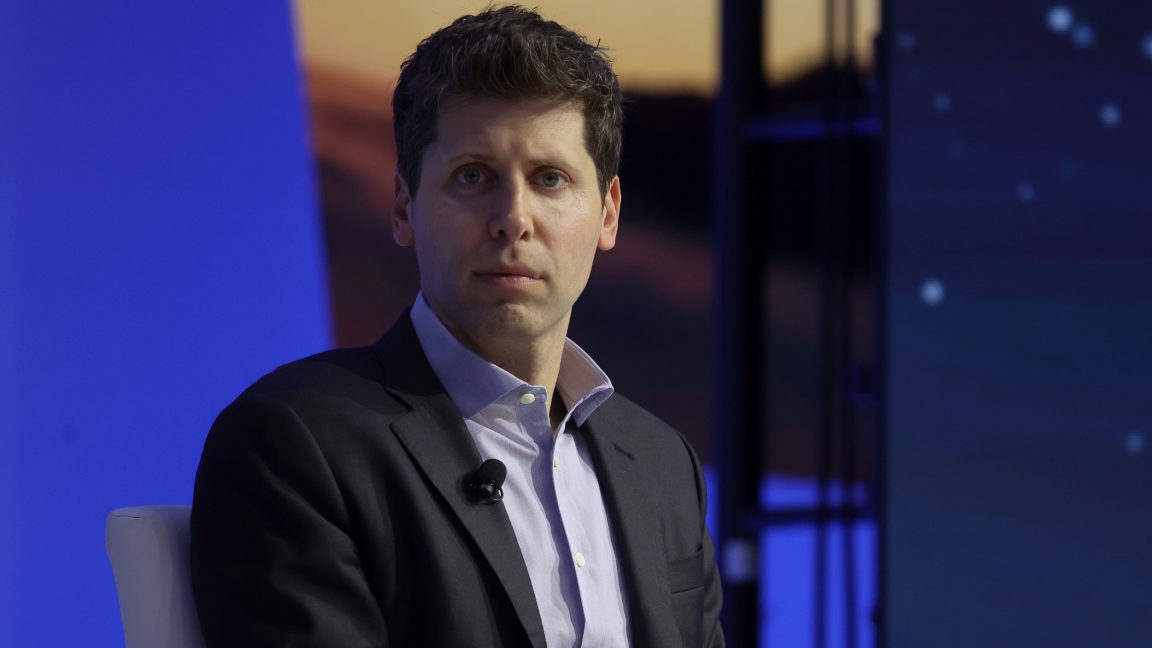
OpenAI will not go public until it can “make confident safety decisions,” according to chief executive Sam Altman, as the company faces a new lawsuit over its tools hacking a third party.

Altman said it was “bad for the world if OpenAI waits too long to go public” but that the $852 billion start-up would not “barrel all guns blazing towards an IPO” at a time when AI was rapidly advancing in capabilities.

“We’re going to prioritize the mission and safety and making sure that we can very confidently scale to the next stage of AI without people debating what percentage chance we’re going to do all these bad things in the world,” Altman told reporters at the company’s annual developer day on Tuesday.

Read full article

Comments

© Getty Images | Justin Sullivan

  •  
❌