❌

Reading view

Plex now helps sell movie theater tickets

Plex, which made a name for itself by letting users share movies they own, is now helping sell movie theater tickets. The company is looking to monetize its content-discovery capabilities and expand its business beyond its media server software.

Plex partnered with Fandango, which has sold movie tickets since 2000, to drive ticket sales from people searching for movies to stream. Per the announcement:

Starting today, Plex users in the US will see a Fandango ticketing option on title pages for movies currently playing in theaters, allowing them to click through to Fandango to find showtimes and purchase tickets. The integration also enables direct attribution through Kochava, giving studios and advertisers greater visibility into how campaigns and audience engagement translate into ticket sales.

Fandango says it sells tickets for 31,000 movie theater screens in the US. The Plex deal allows it to leverage data from Plex’s streaming service (Plex claims users of the service “make more than 100 million streaming decisions each month”), including "ratings and cross-platform viewing" to gain “insight into audience intent," the announcement said.


Read full article

Comments

© Getty

  •  

Hegseth’s dubious low-T screening may flag up to 25 percent of the Army

Up to a quarter of active-duty Army members could receive a low testosterone result from mandatory military screening, despite the true prevalence of the condition likely being a tiny fraction of that figure, according to a study published Thursday in JAMA.

The finding adds to concerns that the mandatory screening announced by Defense Secretary Pete Hegseth in July will lead to a cascade of unnecessary medical evaluations for military members. Those evaluations could result in inappropriate testing, inaccurate results and diagnoses, and overtreatment that could cause harm, including infertility. Medical experts, including the Endocrine Society and the American Urological Association (AUA), have recommended against blanket screenings for these reasons. Still, the Pentagon has moved forward with the plans, releasing clinical guidance in September.

The JAMA study highlights the reasons why testosterone levels are not measured in men without symptoms—and also offers a glimpse of how many Army members could become ensnared in the clinically dubious screenings.

Read full article

Comments

© Getty | Win McNamee

  •  

Targeted ads delivered 0-click exploits to install mercenary malware

Researchers say that mercenary hackers laced ads with zero-click exploits that installed sophisticated malware on the devices of targeted individuals when they did nothing other than load a website or open an installed app.

The finding, published Thursday by the University of Toronto’s Citizen Lab, said the incident is likely to be the first confirmation of zero-click mercenary spyware delivered through targeted ads. The attacks, which worked on iOS and Android devices, are particularly pernicious because they work without requiring any interaction from the target and are invisible unless users run special forensic hardware or software. Citizen Lab said it confirmed that AdFection, as it named the campaign, infected 45 devices at international media organization Al Jazeera in 2024 and 2025.

A clear warning signal

“This investigation should… serve as a clear warning signal to news organizations around the world that they may be being actively targeted via this new threat,” Citizen Lab researchers wrote. “This targeting may happen both in newsrooms and to individual journalists, editors, and other staff members.” Their report went on to say: “The distribution of spyware via targeted ads represents a security risk not only for potential victims but also for states and civil society at large.”

Read full article

Comments

© Getty Images

  •  

Above the 911? Porsche previews a new mid-engined supercar.

Porsche showed us a preview of a new model this afternoon as it unveiled the Mission S concept in New York. It’s a mid-engined sports car that will slot into the Porsche range above the 911. But this won’t be a limited-run car like the Carrera GT or 918 Spyder—instead it will be a regular production model, part of Porsche’s plan to dig itself out of a financial hole by 2035.

Things have been tough for the German automaker of late. Just three years ago its profit margin was the envy of the industry at 18 percent; last year it collapsed to just 1 percent. It has recovered a little since then, and Porsche’s board has a plan to get back to double-digit margins by 2035, called “Sportwagenschmiede '35,” which involves prioritizing “value over volume,” with greater individualization for customers—and the associated higher selling prices that come with it.

A white Porsche concept car Note the quad exhausts—will this be powered by a flat-8? Credit: Porsche

“We are pursuing a clear plan with our strategy Sportwagenschmiede '35. The ultimate goal is to further strengthen our unique sports car brand–across all model lines and with new, highly desirable models in particularly high-margin segments,” said Porsche Chairman Michael Leiters.

Read full article

Comments

© Porsche
  •  

What did the Liberty Bell sound like? Science is on the case.

The Liberty Bell, with its famous crack, hasn't been rung in 180 years, but that hasn't stopped scientists from pondering what the bell might have sounded like when tolling. In honor of the nation's 250th anniversary, researchers at Penn State University have modeled its acoustic properties, drawing on data collected from one of the bell's replicas. The work was first presented at a meeting of the Acoustical Society of America in Philadelphia earlier this year, followed by an article in Physics Today.

Historians aren't sure exactly when the Liberty Bell acquired its distinctive crack, just that it occurred sometime between 1817 and 1846. An 1846 account in the Public Ledger described the ringing of the bell on February 23 that year and mentioned that the bell had developed a crack, which someone had attempted to fix by filing the sides down. But it didn't work: The February 23 ringing extended the crack even more, so much so that "the old Independence Bell ... now hangs in the great steeple irreparably cracked and forever dumb." Nobody has heard it ring since.

This wasn't the first time the bell had cracked; the rim cracked shortly after it arrived in Philadelphia in 1752, the first time the clapper struck while testing the sound. It was recast by two local foundry workers, John Pass and John Stow, not once but twice, because the first recast produced a sound that one bystander likened to coal scuttles banging together.

Read full article

Comments

© William Zhang/CC BY 2.0

  •  

Black Sea drone attacks enter NATO country's territorial waters for first time

Russian drones are suspected of sinking a cargo ship and leaving chemical tankers ablaze near the Black Sea coasts of Bulgaria and Romania, respectively. The latest attacks mean that at least seven ships have been attacked in the exclusive economic zones of NATO member countries—and even within Romania's territorial waters if Russian involvement is confirmed in the case of the chemical tankers.

Such attacks have spurred requests for NATO to redeploy counter-drone systems to provide more protection. In a social media post on October 15, NATO Secretary General Mark Rutte stated that NATO had increased "counter-drone capabilities" along the alliance's eastern flank after meeting with the leaders of Bulgaria and Romania.

The latest attacks this week occurred within 24 hours between October 14 and October 15, when the two chemical tankers were set afire after Russian drones were detected in Romanian airspace, according to Deutsche Welle. Both ships were sitting at anchor near the mouth of the Sulina canal that connects the Black Sea to the Danube River, which has become a crucial shipping export route for Ukraine, Reuters reported.

Read full article

Comments

© Hristo Rusev/Getty Images

  •  

Microplastics in water aren’t inert and make damaging chemicals on their own

One reason plastics are used so often is that they’re chemically inert, meaning bags, food containers, and cups don't react with what we put in them. Yet they can still break down into microplastics, which turn up in drinking water, human blood, arteries, and brains. The consequences of that are uncertain.

“Whether microplastics can directly cause human disease is still being researched,” said Wei Min, a chemist at Columbia University. In a new Nature study, Min's team took a step toward answering this question by demonstrating that microplastics are likely not as chemically inert as we might expect.

Microdroplet chemistry

Min's lab has spent years working on microdroplet chemistry, studying how water broken into tiny droplets behaves at its boundary with air. These droplets have been reported to generate reactive oxygen species, or ROS, a family of harmful, oxygen-containing molecules. “ROS will essentially bump into proteins, lipids, DNA, and cause damage,” Min said. “You could break a DNA strand into segments. You could mutate DNA; you could misfold proteins.”

Read full article

Comments

© Brandon Bell/Getty Images

  •  

Trump cancels Pentagon plans to livestream firing squad execution

On Thursday, Donald Trump called off the Pentagon’s highly controversial plans to livestream a firing squad execution that is still on schedule for December 3.

Trump supports the execution of Nidal Hasan, who was convicted of killing 13 people and wounding more than 30 others in the 2009 mass shooting at Fort Hood. But sources close to Trump told CNN that the president was blindsided last week when Secretary of Defense Pete Hegseth announced that the event—which is the first US execution of a soldier since World War II—would be livestreamed.

Backlash to the livestream was immediate and crossed political divides. On the morning Trump canceled the plans, an ABC News poll found 8 in 10 Americans were against the livestream, including a 55 percent majority of MAGA Republicans.

Read full article

Comments

© Chip Somodevilla / Staff | Getty Images News

  •  

Neutron's first launch slips again amid trouble with carbon composites

Rocket Lab announced Wednesday that its Neutron launch vehicle won't fly until 2027, citing an issue discovered during manufacturing of the rocket's carbon composite structures.

The announcement was public confirmation of what nearly everyone inside Rocket Lab and the wider space industry already knew. The most recent official update from Rocket Lab in August suggested the company still held hope of delivering the first Neutron rocket to its launch pad at Wallops Island, Virginia, before the end of this year, a schedule that would have almost certainly pushed the first flight into 2027.

But Rocket Lab's statement Wednesday about Neutron's schedule suggests the company is still struggling with manufacturing the rocket's large booster stage. Neutron's reusable first stage is made of carbon composite structures, which offer low weight, high strength, and corrosion resistance. But carbon composites in aerospace are generally harder to manufacture than metallic structures.

Read full article

Comments

© Rocket Lab

  •  

Report: FTC probes Anthropic, OpenAI after Trump dismissed AI fears as “hoax”

Following a string of incidents where AI models hacked websites and breached government systems during testing phases, the Federal Trade Commission is officially probing Anthropic and OpenAI over consumer harms, an insider told Axios.

On Wednesday, the FTC sent out civil investigative demands seeking a wide range of information from the AI firms on recent safety incidents.

The FTC did not respond to Ars’ request to review the subpoena demands. However, Axios’ source said the requests spanned more than 50 pages of questions and sought documents related to the incidents, internal security measures taken, and marketing materials that may suggest consumers were misled.

Read full article

Comments

© Tom Williams / Contributor | CQ-Roll Call, Inc.

  •  

Singer or clanker? YouTube Music will tell you with new gen AI labeling.

Genuine human creativity takes time, but you know what doesn't? AI slop. There are countless AI models out there that can make something that passes for music, and you might come across those tracks on streaming services without realizing it. Google says it will begin labeling that content in YouTube Music, building on similar disclosures in the main YouTube app.

Google is not outright banning AI music or even speaking ill of it. "Generative AI is opening up new ways for artists to create, experiment, and share music," the company says in a blog post.

However, the company also acknowledges that people want to know if a song was created with generative AI tools. A new label for AI content on YouTube Music is now rolling out in the app and on the website, which looks a lot like a label Google began adding to AI-generated videos on YouTube earlier this year.

Read full article

Comments

© Google

  •  

Rewilding could help vulnerable islands keep pace with rising seas

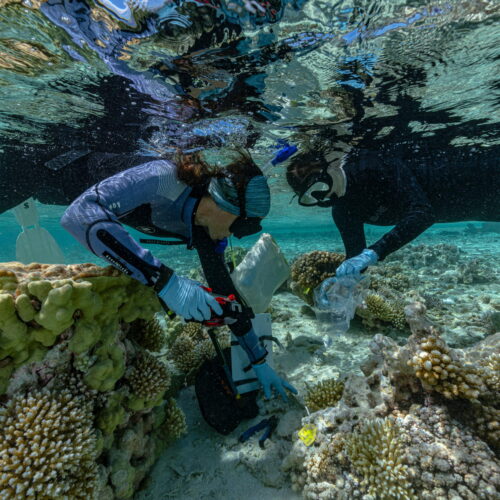
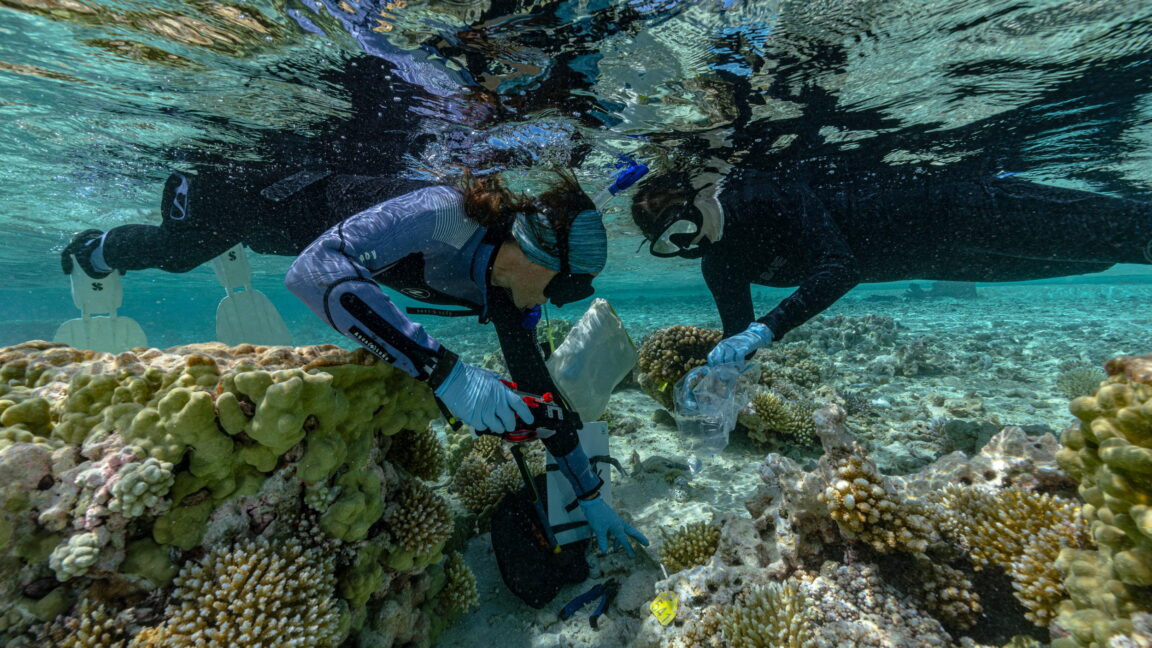
Coral-fringed tropical atolls are among the landforms most threatened by global warming, but many have a potential superpower: Healthy ecosystems may help them keep pace with rising seas.

Atoll islands with native vegetation and thriving seabird populations are “naturally active systems that can change and adapt to their environmental conditions if they are allowed to do so,” said Nick Graham, a marine ecologist at Lancaster University in the United Kingdom, who led an international team of scientists that studied island resilience across 28 atoll islands in the Pacific and Indian oceans.

Their paper, published Wednesday in Science Advances, shows that restoring atoll ecosystems reinforces their growth. Seabirds ferry nutrients from the open ocean and deposit them on the atolls as guano that nurtures land plants, marine life and coral growth. This provides more material for reef building, as parrotfish and other reef feeders turn dead coral into sand to maintain beaches, while native plants with extensive root networks stabilize sediments.

Read full article

Comments

© Alexis Rosenfeld/Getty Images

  •  

Fridge hack costing millions and sparking fires stemmed from poor security

Earlier this week, a mass hack of refrigeration systems at an estimated 700 supermarkets throughout France caused them to suddenly malfunction, causing spoilage of untold tons of perishables and, in some cases, fires. As is now the norm, basic cybersecurity would have prevented it.

French authorities say the systems, made up of entire fleets of refrigerators and freezers throughout a store, were hacked. More specifically, Internet-connected controllers that allow technicians to remotely administer the store-wide systems were compromised. The unknown attackers responsible then activated defrosters long enough for the fridges to reach temperatures as high as 50° Celsius (122° Fahrenheit). By the time the mass compromise was discovered, food was spoiled, and in some cases their electrical systems caught fire.

The hacks that didn't have to happen

Multiple security advisories and public research reports show that all three of the controller models reportedly hacked in the incident—sold by Danfoss of Denmark and Dixell and its parent company Copeland in the US—contained critical vulnerabilities that allow attackers to remotely log in to the devices with the same system rights as administrators. Until recently, Danfoss controllers, for instance, used a credential that changes each day. The password is generated by the publicly available firmware based on the date. A hacker who takes the time to analyze the code can do the same thing on any device that hasn’t received a recent update. Daily passwords are identical across models located in hundreds or thousands of stores.

Read full article

Comments

© Getty Images

  •  

Epic says its new vibe-coded Epic Games Launcher is faster than Steam

Nearly eight years after Epic took on Steam with its own Game Store and launcher, the Fortnite maker is deploying a new tool to give it an edge over Valve: vibe coding.

In announcing the new publicly available "Preview" build of its Epic Games Launcher, Epic writes that "programming is hard. So, instead of doing that, we vibe coded a new Epic Games Launcher that’s way faster and more responsive than the current one, and has a new look." And while that might sound a little tongue-in-cheek, Epic Games Store General Manager and VP Martin Keely told PC Gamer that the team "started from scratch" and used AI as "a tool to write and review new features and new capabilities from the ground up in a different tech stack than what we had previously." The goal, Keely said, was to "look at functionality that existed [in the current Epic Games Launcher] and [say] we want to replicate that, but not the code itself."

Speaking to IGN, Keely clarified that using AI to code the new Launcher "made us more efficient and allowed a small team to rewrite the code base and be able to launch it faster across platforms, support Windows and Mac, and we're going to have a Linux version as well."

Read full article

Comments

© Epic

  •  

NATO may redeploy anti-drone defenses as attacks sink more Black Sea shipping

Suspected Russian drone attacks sank a cargo ship and forced the evacuation of another vessel within two dozen miles of the coast of Bulgaria in the Black Sea on October 13. The latest attacks mean that five ships have been attacked in the exclusive economic zones of NATO member countries—spurring requests for NATO to redeploy counter-drone systems to provide more protection.

Although there is no hard proof that the drone attacks originated from Russia, one of the ships that came under attack was the Ukrainian-operated coastal freighter Chelsea 3, registered under the flag of Malta. Bulgarian Prime Minister Rumen Radev told the Russian ambassador in Sofia that “it makes no sense for Ukraine to destroy its own ships in the Black Sea, and the results of these strikes favor Russia’s interests,” according to The Associated Press.

All 15 members of the Ukrainian-owned Chelsea 3 were safely evacuated by Bulgarian rescue operations after the ship was reportedly struck by three aerial drones.

Read full article

Comments

© Hristo Rusev/Getty Images

  •  

Things are finally looking up for NASA's first missions to Venus in a generation

Most planetary scientists will tell you the heyday of Venus exploration was more than a generation ago. That is about to change.

Two NASA missions are on track to launch to Venus in the early 2030s. The first, known as the Deep Atmosphere Venus Investigation of Noble gases, Chemistry, and Imaging (DAVINCI), is now scheduled for launch in December 2030, a year earlier than previously planned. DAVINCI will send a parachute-assisted descent probe through the atmosphere of Venus, returning the first direct images of the planet's surface since 1982. A second mission, Venus Emissivity, Radio science, InSAR, Topography, And Spectroscopy (VERITAS), will follow with a launch in November 2032 to map the Venusian surface by radar from orbit.

The European Space Agency is building another orbiter, Envision, for launch to Venus in 2032. The Venus armada might get started as soon as next year, when Rocket Lab aims to launch a privately funded probe to search for signs of organic material in the planet's clouds.

Read full article

Comments

© NASA/Mike Guinto

  •  

Schools across US protest FCC plan that could disconnect kids from Internet

Schools and libraries from around the US pleaded with the Federal Communications Commission to drop the idea of ending E-Rate, a $2 billion-a-year program that connects students and library visitors to the Internet.

FCC Chairman Brendan Carr has criticized school districts for having "experimented with a massive increase in screen time for students," and said E-Rate expanded too far beyond its original purpose of "supporting basic Internet access to schools and libraries for educational purposes." In June, Carr led a 2-1 vote to issue a Notice of Proposed Rulemaking (NPRM) seeking public comment on whether E-Rate should be "limited or sunset to reflect today’s extensive connectivity rates."

Carr's proposal could result in E-Rate cutting the discounts that schools and libraries receive for telecom services and equipment, and imposing more restrictions on how E-Rate money can be used. The FCC seeking comment on whether to sunset the program also raises the possibility that Carr might choose to axe E-Rate entirely.

Read full article

Comments

© Getty Images | picture alliance

  •  

Georgia man sues Flock, sheriff's office over alleged ALPR-fueled retaliation

A small-business owner in Georgia has sued Flock and the Coweta County Sheriff’s Office over alleged retaliation using license plate cameras.

“[The lawsuit] alleges illegal [license plate tracking] searches over many months without probable cause and unrelated to any specific investigation,” Hall & Lampros, attorneys for plaintiff Tyler Murkerson, wrote in a press release. “The lawsuit alleges that Flock also failed to put safeguards in place to prevent illegal surveillance by officers by accepting free-text-field entries instead of specific case numbers or investigations.”

Murkerson’s saga began in February 2023, when he was arrested by sheriff’s deputies over an alleged seatbelt violation; those charges were dropped months later. In September 2024, Murkerson sued the department, accusing them of excessive force. The case was only recently settled.

Read full article

Comments

© Getty Images

  •  

Software development and rules stability: Prototype racing in 2030

The rising tide that has been the Drive to Survive effect has lifted more boats in motorsport than simply Formula 1’s. Sportscar racing is enjoying its own surge in popularity internationally at races like Le Mans in France, but also in North America in IMSA’s WeatherTech Sportscar Championship. For one thing, multi-hour, multi-class racing lends itself better to the age of streaming and second screens than it did linear broadcast TV, and fans are taking advantage of that: IMSA’s audience grew by more than a third domestically and almost a quarter internationally last year.

Having some of the coolest-looking cars racing today certainly helps, whether that’s the (mostly) hybrid prototypes or the GTs, racing versions of road-going cars from Porsche, Ferrari, and others. And it definitely helps that fan access at the races is virtually unmatched, with open paddocks and grid walks that now see huge crowds get up close to the cars just before the start of each race.

“I think we're just scratching the surface,” said IMSA President John Doonan. “I think besides the people that are here on the ground, the people watching, people engaging with us on social media, I'm seeing the passion come out more. Just on the grid walk, these fans coming up and being so excited to be here.” The series has certainly been making an effort, among other things getting local high school students exposed to the industry and starting a partnership to train more mechanics with ASE.

Read full article

Comments

© Porsche
  •  

Greta Gerwig channels Bowie in psychedelic The Magician's Nephew trailer

Director Greta Gerwig could have made pretty much any movie she wanted after 2023's Barbie racked up nearly $1.5 billion at the box office. She chose to make Narnia: The Magician's Nephew for Netflix, an adaptation of C.S. Lewis' sixth novel in The Chronicles of Narnia series. Gerwig has said little publicly about the film, other than that she was inspired by 1960s-era David Bowie, although she said it would not be a musical. Netflix just released the trailer, set to "Stairway to Heaven," and it's quite the psychedelic ride.

The first book in the series, The Lion, the Witch, and the Wardrobe, was published in 1950, and Lewis did not initially intend to write any more Narnia adventures. But then an acquaintance asked how the London lamppost ended up in the middle of Narnia's woodland, and Lewis was intrigued enough by the question to start a prequel, The Magician's Nephew, in order to find an answer. Lewis found it difficult to finish the book, however, writing four other Narnia books first before completing The Magician's Nephew in 1955.

There have been several adaptations, in various media, of The Chronicles of Narnia, most recently the early 2000s film franchise adapting the first three novels in the series. Those films showed diminishing returns, however, and by 2011 the film rights had expired. There were initial plans to adapt the fourth novel, The Silver Chair.

Read full article

Comments

© YouTube/Netflix

  •  

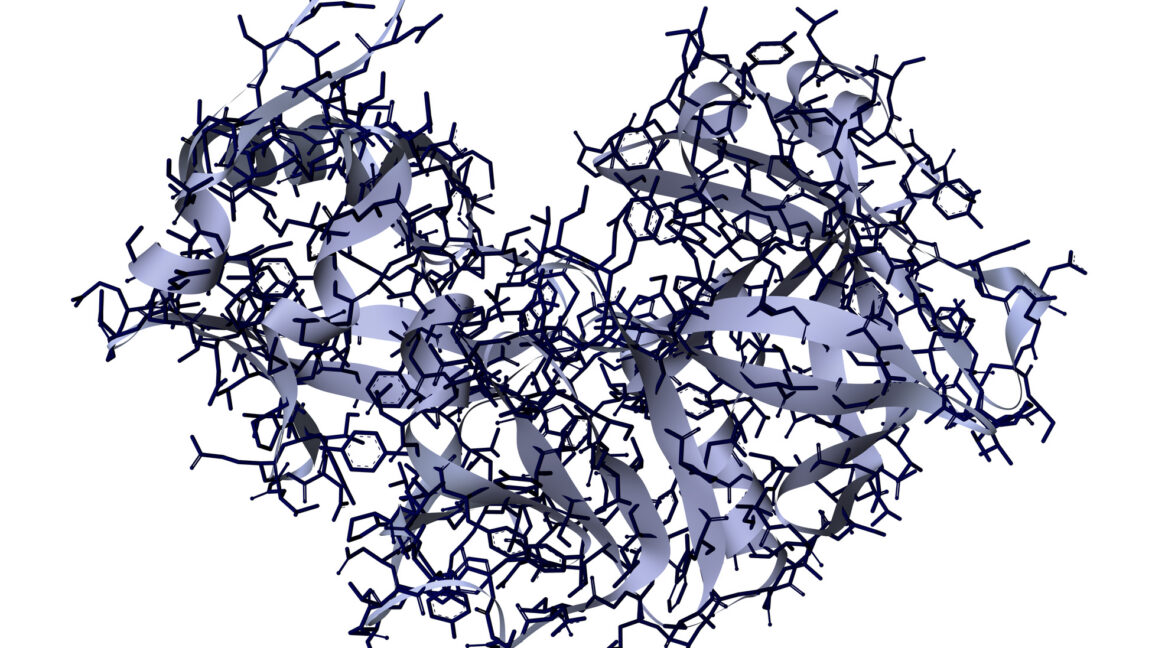
Researchers use AI to design proteins that cut up other proteins

A protein is a chain of amino acids held together by what are called peptide bonds. On their own, those bonds are extremely stable; they're estimated to have a half-life of several hundred years. But in Earth's environment, most proteins don't last nearly that long. That's because organisms have evolved a handful of ways to catalyze the break-up of peptide bonds, which have diversified into countless specialized protein-digesting enzymes. Proteases are everywhere and generally make short work of any proteins that find their way into the environment.

Now, researchers have basically short-circuited the diversification process, using AI-based protein design tools to take the catalytic core of two types of protease and replace the entire rest of the protein. The resulting enzymes could be tuned to cut specific proteins in half, and the researchers demonstrated their effectiveness by using them to cut proteins associated with neurological diseases.

Cutting proteins

The basic peptide bond isn't especially interesting-looking—it's what you get when you link an amino group to an acid, releasing a water molecule in the process. As their name implies, amino acids have both an amino and an acid group, allowing them to form peptide bonds on two sides of the amino acid. This is critical for building up the long chains found in proteins. (The amino acids also have side chains with distinctive chemistry, which gives a backbone specific properties.)

Read full article

Comments

© Basic

  •  

Recording device hidden in toilet paper found in top-secret OpenAI meeting room

It took OpenAI two days to notice that a recording device was hidden in a restricted executive conference room where leadership met to discuss highly confidential information, including technical progress, government engagements, and commercial partnerships.

Only those with special clearance are supposed to access that room. But the FBI believes the recording device was planted by Abdulrahman Alfozan, a 35-year-old engineer from Saudi Arabia, who became a permanent US legal resident in 2020. In a press release Tuesday announcing his arrest, the FBI alleged that chatbot logs and CCTV footage suggested that Alfozan—who worked as an OpenAI engineer for more than a year—sought to use the device to spy on OpenAI and risked leaking trade secrets in a way that threatened national security.

To conceal the USB device, Alfozan allegedly wrapped it in toilet paper, then plugged it into the back of a conference room television. The device was likely planted on September 28, and OpenAI found it on September 30 and quickly determined that its contents were encrypted, the FBI said. Days later, on October 5, OpenAI installed a camera in that conference room, and the CCTV footage allegedly showed Alfozan attempting to retrieve the recording device that same day.

Read full article

Comments

© U.S. v. Abdulrahman Alfozan | Aurich Lawson

  •  

Legendary FPS level designer Richard "Levelord" Gray dies at 68

Prolific first-person shooter level designer Richard "Levelord" Gray died Monday at the age of 68, based on reports shared on social media by Apogee Entertainment yesterday. He had "dealt with cancer on and off for a while now," according to former colleague Joe Siegler.

After studying computer engineering in the '80s and tinkering on some early games in COBOL, Gray broke into the industry at the age of 35 in 1994 with the launch of GrayDoom, a set of four maps for the then-new Doom that were widely shared on CompuServe and beyond. The work attracted the attention of Q Studios' Nick Newhard, who contracted Gray to work on level design for the late '90s cult classic Blood.

Gray was subsequently hired by 3D Realms, where he said he was given free rein in designing "half the levels" for Duke Nukem 3D. There, he was also responsible for the famous, signed "You're Not Supposed to Be Here" easter egg, which players could find only by using cheats to explore outside of the usual confines of the map.

Read full article

Comments

© Apogee Entertainment

  •  

Ukraine blindsided by Starlink throttling restrictions and intelligence gaps

Ukrainian troops have been caught off guard by restrictions on Elon Musk’s Starlink satellite Internet systems that disrupted frontline operations, while Kyiv received no warning from its partners of a Russian missile attack on its energy facilities for the second day running, according to Ukrainian officials.

Starlink terminals used by Ukrainian drone units began experiencing signal failures at speeds above 160 km/h, disrupting several missions early on Wednesday morning, according to military personnel and senior Ukrainian officials.

“Logistics at the frontline and middle strikes are badly limited,” one senior official familiar with the situation on the front told the FT. Ukraine’s middle strikes target Russian military supply lines and logistics. The limitations came with “no warning, just in the middle of the night,” the official said.

Read full article

Comments

© NurPhoto / Contributor

  •  

Anthropic warns small AI models could self-replicate through IoT devices

AI company Anthropic is warning that advances in small AI models could soon usher in a new era of self-replicating malware that’s capable of infecting smart fridges, vacuum cleaners, and a wide range of other Internet of Things devices and is more resistant to takedown.

By next year, smaller AI models may be able to autonomously self-replicate on all kinds of IoT devices, the company said. Eventually, the capability could enable computer worms, which propagate without requiring human interaction and are capable of infecting unfamiliar IoT devices. An experiment the company performed recently revealed significant challenges in bringing such an AI malware replicator to fruition, so the finding is necessarily tempered. Still, the results raise concerns about the possibility of new forms of computer worms.

Challenging to shut down

Anthropic further warned not only about the new potential malware, but also that it could be difficult to stop. In its blog post, it wrote that “a replicator like this would be challenging to shut down, since there’s no centralized point to shut off—though it may be slow (with a doubling time of days). Unlike non-AI malware, it could also figure out unfamiliar devices on its own.”

Read full article

Comments

© Getty Images

  •  

The Internet’s undersea backbone is slipping into the danger zone

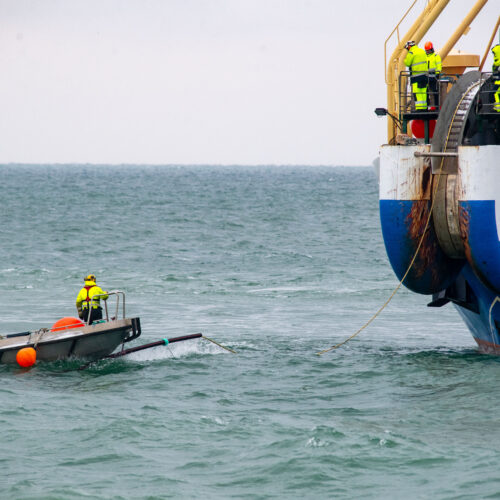
Despite the expansion of Starlink and other communications satellite services, most of the world’s Internet traffic still travels through subsea cables crisscrossing the ocean floors. Those fiber-optic cables coexist with a network of oil and gas pipelines and submarine power cables—and all these crucial links connecting countries and continents now face growing sabotage risks as gray-zone warfare and open conflicts have become widespread.

The rising risks to the world’s invisible infrastructure beneath the waves are the main subject of a new book by Elisabeth Braw, a senior fellow at the Atlantic Council who leads the Threats to the Global Maritime Order Initiative. Her book, titled Undersea War, explores the modern rise in suspicious incidents in which ships dragging their anchors for unusually long periods have cut or damaged undersea cables and pipelines, from the Baltic Sea to the Pacific Ocean.

Braw acknowledges that about 60 percent of undersea cable damage is primarily due to human error during fishing and shipping activities, when weighted nets or anchors drag across the seabed. Natural hazards like storms and undersea landslides also account for a smaller proportion of such incidents. In total, between 150 and 200 cables are damaged each year and usually repaired quickly.

Read full article

Comments

© Stefan Sauer/picture alliance via Getty Images

  •  

OpenAI, Google pushing new AI models easily tricked into making nudes, researchers say

Safety researchers continue to warn that a large volume of AI-generated explicit content is spreading unchecked, while regulators do little to meaningfully stop it.

This non-consensual content is commonly shared in text and direct messages or stored in private clouds where it’s less likely to be detected or reported, a Google co-authored study of Internet users across the United States, Australia, and the United Kingdom found this July. That’s why the “most critical intervention point” remains at the source: the harmful AI tools used to make the fake sexual images, Google researchers concluded.

Yet red-teaming in recent months suggests that as some of the leading AI image generators from Google and OpenAI become more capable, they may be getting worse at blocking explicit outputs.

Read full article

Comments

© Aurich Lawson | Getty Images

  •  

Martin Shkreli livestreamed himself violating lifetime pharma ban, FTC says

Martin Shkreli—the ex-pharmaceutical executive infamous for illegally hiking the price of a lifesaving anti-parasitic drug by more than 4,000 percent and getting a seven-year prison sentence for the fraudulent scheme he used to do it—has been under a lifetime ban from the pharmaceutical industry since 2022.

However, according to the Federal Trade Commission and the attorneys general of seven states, Shkreli has "flagrantly and repeatedly" violated that ban nearly the entire time—allegedly by trading stock in dozens of drug companies and discussing the industry during livestreams on social media.

On Tuesday, the FTC and the seven states asked a federal judge to hold Shkreli in contempt for the alleged violations. The states include New York, California, Illinois, North Carolina, Ohio, Pennsylvania, and Virginia—the same states that joined the FTC in suing Shkreli in 2020 over the "elaborate anticompetitive scheme" involving the anti-parasitic drug, Daraprim. The scheme raised the price from $17.50 per pill to $750 per pill virtually overnight, while blocking generic competitors from entering the market.

Read full article

Comments

© Getty | Bloomberg

  •  

ESA targets Anbernic emulation handhelds as "superfake" piracy enablers

For years, Chinese hardware manufacturers have carved out a market niche with an array of handheld Android gaming devices focused on retro emulation and/or more modern game-streaming capabilities. Now, though, a major game industry trade group is targeting one of those manufacturers, Anbernic, asking the US Trade Representative (USTR) to add the company to its list of "Notorious Markets" that "engage in or facilitate substantial copyright piracy or trademark counterfeiting."



TorrentFreak was among the first to notice the request from the Entertainment Software Association (ESA), which was submitted to the USTR last week. In it, the US trade group—which represents major publishers including Nintendo, Microsoft, PlayStation, Amazon, Epic, EA, Ubisoft, and more—notes that Anbernic devices "are routinely offered or shipped with removable memory cards preloaded with hundreds or thousands of unauthorized copies of copyright-protected video games published by ESA members."

While many online sellers do include an SD card full of ROMs alongside emulation hardware of all types, Anbernic itself does not appear to do the same when selling directly from its website. Regardless, the ESA argues that these ROM-laden Anbernic devices selling through "normal retail channels" help to "normalize hardware-based piracy by delivering illicit catalogues through a polished consumer product." This, the ESA says, meets the threshold for a "superfake," an ill-defined designation that applies to "high-quality counterfeit trademark goods ... on a commercial scale."

Read full article

Comments

© Anbernic

  •  

Topgolf saved over $11.3 million after leaving VMware

Topgolf’s VMware costs were going to increase by 400 percent under Broadcom. To avoid that cost, the sports entertainment company moved 12,000 virtual machines (VMs) to VergeIO’s VergeOS and has saved over $11 million so far.

Before migrating, Topgolf’s VMware connection “ran very deep,” Scott Forehand, Topgolf’s global infrastructure manager, told Ars Technica.

Topgolf has over 100 locations worldwide featuring interactive golf games with real-time shot tracking and digital analytics. The company used vSphere and ESXi for decades and started using VxRail, the hyperconverged infrastructure (HCI) platform that VMware co-engineered with Dell, in 2017. Topgolf employees previously participated in numerous VMware customer councils and have been interviewed for books on how Topgolf used vSphere and Horizon (now Omnissa Horizon), per Forehand, who is a leader of the Dallas/Ft. Worth VMware User Group.

Read full article

Comments

© TopGolf

  •  

Trump commercial railing against his enemies kept airing after court blocked it

Trump commercials paid for by the US government continued airing on TV the day after a judge blocked the ads because they likely violate a US law against government-funded publicity or propaganda.

In the most widely aired commercial, Trump railed against his perceived enemies and said he would "liberate America from these villains once and for all.” The campaign also included a commercial praising Trump's record as president, another in which Trump calls the US the "most exceptional nation ever to exist in human history," and commercials related to the Iran war and the capture of Venezuelan President Nicolás Maduro.

US District Judge Jennifer Rochon issued a temporary restraining order (TRO) blocking the ads on Sunday, October 11, which took effect at 6:45 pm that night. The order said the government must cancel the ads, "including those placements for the evening of October 11, 2026."

Read full article

Comments

  •  

Disney offers $20M for Character.AI’s scandal-plagued chatbot tech

In a bankruptcy proceeding that kicked off yesterday, Disney has offered to buy some of the technology that powers the controversy-plagued chatbot Character.AI.

Disney is willing to pay $20 million for “a non-exclusive perpetual license” of certain Character Technologies intellectual property, the chatbot maker said in a press release that did not go into much further detail on which assets Disney wanted.

The move may be surprising. In September 2025, Disney joined others in publicly criticizing Character.AI for stealing content and harming kids. Specifically, Disney sent a strongly worded cease-and-desist letter that accused Character Technologies of weaponizing Disney characters “in a way that could damage its brand long term,” Axios reported.

Read full article

Comments

© SOPA Images / Contributor | LightRocket

  •  

Skydance’s Discovery+ prices increase by up to 20 percent

Discovery+ subscription prices went up today.

Ad-free plans for new subscribers went from $10 per month to $12/month. Ad-based plans went from $6 to $7.

The new prices take effect for new subscribers immediately. Current subscribers to the streaming service, which primarily features unscripted content, like reality shows and documentaries, will receive 30 days’ notice before the new prices take effect, starting with bills issued as of November 12.

Read full article

Comments

© Jakub Porzycki/NurPhoto via Getty Images

  •  

The Paris Auto Show is full of interesting cars Americans can’t have

Perhaps the days when auto shows debuted new models aren’t entirely over. The big trade shows for cars were a gateway drug for many, expos where you could see the newest models of today and the concepts of tomorrow. But automakers increasingly got tired of sharing the spotlight with each other. New reveals moved offsite to events the night or even the week before the show itself. One by one, brands pulled out of auto show after auto show until there was little left to see. And then the pandemic hit.

But the news out of Paris, where its auto show held media day yesterday, seems like we stepped back into a time when automakers would debut new cars aplenty. That retro vibe extends to the cars themselves, with plenty of familiar nameplates reimagined.

France’s Renault has a long and glorious history of delightful concept cars, and more on what it brought to Paris later. But the star of the show was arguably Stellantis, with strong work from Citroen, Peugeot, and Fiat, to name but three. But this article is meant to irritate you, because I’m pretty sure none of the stuff you’re seeing here will come to the United States. And it’s doubly irritating considering what Stellantis’ brands do offer us over here, doubling down on the same malign trends I saw back in 2020: did you know they’re about to relaunch a V8 Hellcat-powered Charger?

Read full article

Comments

© Citroën | Getty Images

  •  

Google wants to host your personal vibe-coded apps in the Play Store

Google has already added a few AI features to the Play Store, but a lot more are coming. The previously released Ask Play feature is expanding to offer more AI-powered discovery options in Google's app store, and Google is also using AI to build a recommendation engine called Game Finder. For people who have embraced AI to build their own apps, the Play Store will soon offer a way to privately host and share those creations.

Google rolled out Ask Play in 2025 as a small chatbot interface on Play Store listings. It lets you ask questions about an app or game, either by typing it in manually or choosing from a list of suggested queries. Starting today, Ask Play is expanding into a more general way to search for apps and games. You ask the robot questions, and it generates recommendations that can include detailed comparison charts. Gemini will roll out a similar capability soon.

Google's other AI discovery announcement focuses on games. The new Game Finder feature leans on all the usage data Google's app platform has hoovered up over the years, featuring insights into the way 1.2 billion people play games on Android. It builds a profile called Gamer DNA and matches you with players who have similar DNA.

Read full article

Comments

© Google

  •  

Gemini 4 Argon begins rolling out in Gemini app and Antigravity, but only if you pay

Google revealed Gemini 4 Argon a few weeks ago, saying that it needed to move cautiously toward a full release because of the potential for nefarious use. Google seems to have worked all that out pretty quickly, though. Argon is beginning its wide rollout today, but it's only coming to paying users at this time, and even those on lower-tier plans won't have full access.

Nothing about Gemini 4 Argon's capabilities has changed. Google still points to the benchmarks it published late last month as evidence of the model's advanced reasoning and agentic coding capabilities. The model is supposedly trained to refuse malicious instructions, and an automated misalignment monitor can stop processing if it detects an unintended workflow. Google claims Argon needs that because it's so capable.

The company has a few new examples of how Argon has helped inside Google, where it has been used by thousands of Googlers. Argon has reportedly been instrumental in making YouTube's comment system more efficient. Argon identified redundant emoji rendering that, when eliminated, dropped server load by 45 percent. Engineers also turned Gemini 4 loose on the proprietary drone physics simulator used in Project Wing, and the AI found critical bugs that had been in the codebase since 2018. Google also notes that Argon has advanced its robotics program, showing a measurable step increase in embodied reasoning.

Read full article

Comments

© Google

  •  

Apple’s first smart display is the 7-inch HomeView for $299

Apple opened preorders for the HomeView smart home hub today.

The HomeView is a 7-inch smart display and speaker that aims to be a central access point for up to six members of a family to access and control Apple’s ecosystem of devices, apps, and the Siri generative AI chatbot that's currently in beta.

Users can speak to HomeView to control smart home devices, such as, for example, telling Siri to close the smart blinds or activate smart locks. HomeView can also show a livestream for up to nine video feeds simultaneously.

Read full article

Comments

© Apple

  •  

They war-gamed dimming the Sun. It went even worse than you think.

When it comes to deciding the fate of the planet, Colleen Golja always thought science and reason would have a seat at the table. That was until one morning last September in London, when the climate researcher took part in the first in a series of war games. The goal: to prevent an uncontrolled global race to develop a technology aimed at cooling the planet but that comes with vast, unknown risks that could reshape life on Earth.

“I thought that would be such an easy thing. Like, we can all agree to do ethical research and make sure it's for the better of all humans,” she told WIRED. “And boy, was I wrong.”

The simulation, titled Exploring Geopolitical Tipping Points and Climate Cooling Strategies, saw a couple dozen foreign-relations experts, scientists, military personnel, and former government officials from across the world convene in a meeting room at Queen Mary University of London. After making introductions over coffee and little yogurts, they sat at tables arranged in a square with the name of the country or organization each person was playing: national governments, climate NGOs and nonprofits, indigenous groups, and tech companies. Golja was assigned to provide technical advice to help participants make scientifically literate decisions.

Read full article

Comments

© Lisa Werner / Contributor

  •  

High-speed video reveals how honey bee stingers pump venom

Credit: Ramirez-Esquivel et al 202

Honey bees are known to leave their stingers embedded in tender flesh once they sting you and fly away. Scientists have now determined that the stinger is able to continue pumping venom into its unfortunate victim even after the bee flies away, thanks to a unique double-piston pump-like mechanism, according to a new paper published in the Proceedings of the National Academy of Sciences.

Different species have evolved different mechanisms for delivering venom, which involves piercing the skin and then pumping venom from a gland or reservoir. Spiders, for instance, have muscles surrounding their venom glands, which contract and eject venom through hollow fangs. Bees, wasps, and ants deliver venom via their stingers, either by contracting muscles around the venom reservoir or through stiff elements called lancets working together to pump venom.

Honey bees (Apis mellifera) add a unique feature: Worker bees fly away after inserting their stingers in the target, leaving the stinger behind. The stinger continues to penetrate the tissue and pump venom on its own, a rare phenomenon known as autotomy. A honey bee's stinger has three main interlocking elements that form the venom canal: a stylet that widens to form the main pumping chamber and two sharp-tipped lancets that slide back and forth, piercing the tissue and pumping venom into the target. But the precise mechanism by which the pumping action is achieved has never been directly observed.

Read full article

Comments

© Maciej A. Czyzewski/CC BY-SA 4.0

  •  

39-year-old unvaccinated woman becomes 6th measles death in Pennsylvania

A 39-year-old unvaccinated woman in Franklin County, Pennsylvania, has become the sixth person to die of the highly infectious virus amid a state outbreak that has stricken over a thousand people since it began in April.

The woman died on Saturday, October 10. She had several underlying health conditions and had recently tested positive for measles, according to an advisory posted on social media by Franklin County Coroner Jordan Conner. The advisory noted that the woman's death meets the definition of a measles death set by the state's health department.

In an emailed statement to The Washington Post, the coroner's office said the primary cause of death was listed as "probable acute cardiac event due to possible complications of the measles."

Read full article

Comments

© Getty | BSIP

  •  

Epic Games reportedly pivoting to "AI first" game development model

Epic Games is shifting to an "AI first" development strategy for its collaboration with the Walt Disney Company, letting AI models write all the code and guide all the artwork for an upcoming shooter. That's according to a Bloomberg report, which cites unnamed people familiar with the project who commented on the significant pivot in internal development at the Unreal Engine maker.

Human developers will be tasked with managing and guiding code and art assets generated by models such as Anthropic's Claude, according to internal Epic employee messages viewed by Bloomberg. That means "no more hand-written code" and art assets "generated with full AI workflows," according to the report.

The $1.5 billion collaboration between Epic and Disney, announced in early 2024, was slated to release a Marvel- and Star Wars-themed shooter in March 2027. That project has now been delayed indefinitely amid the AI-related shakeup and understaffed, slower-than-expected development thus far, according to the report.

Read full article

Comments

© Epic / Disney

  •  

After a 10-year redemption arc, No Man's Sky is coming to the iPhone and iPad

Just over 10 years after its initial release, space exploration and survival crafting game No Man's Sky is making its way to the iPhone and iPad, Apple and developer Hello Games announced today.

It will run on devices as far back as the iPhone 11 and the third-generation iPad Air. No Man's Sky might not have the most cutting-edge AAA graphics (though they're still strong, and they've come a long way since launch via updates), but the game's uncommon method of generating galaxies of incomprehensible scale on-device, and consistently for all players from a single-seed, happening on a phone is remarkable for those of us who remember phones performing far behind consoles or desktop PCs.

Read full article

Comments

© Hello Games

  •  

WHO report on Russian lab worker death highlights "key uncertainty"

Over the weekend, the World Health Organization released a disease outbreak report on the events surrounding the death of a Russian infectious disease researcher earlier this month, highlighting that Russia has yet to report a confirmed cause of death. With that "key uncertainty," the United Nations health agency said it remains impossible to assess the risk of the event or whether the public health measures Russia took were adequate to prevent spread of the unknown disease.

The WHO reported that, so far, it has seen no evidence of ongoing transmission of the mystery disease. "However, confidence in the assessment remains limited by the absence of a confirmed etiological diagnosis, and the remaining uncertainty regarding the source and mode of exposure," the agency wrote in its report.

The agency laid out the order of events as information trickled out from Russian authorities, noting that it only became aware of the death via media reports on October 2. The WHO subsequently made contact with Russian authorities and requested information on October 3, 6, 7, and 8.

Read full article

Comments

© Getty | FABRICE COFFRINI

  •  

Anthropic's Claude AI submitted false murder tip to Philadelphia police

An Anthropic AI model submitted a false tip about an unsolved murder to Philadelphia police, the company and police department confirmed on Friday.

A Claude model sent the false tip on July 18 to the Philadelphia Police Department's website for submitting information about unsolved murders, but it was flagged by a spam filter. Anthropic apparently discovered the incident on September 28 and informed the police department about it on October 8.

During internal testing, Claude Haiku 4.5 was instructed to complete various forms up to the final submission stage and to stop before submitting those forms. "Several times Claude mistakenly submitted the form instead, expecting there to be an additional confirmation page," Anthropic said in a report describing "unintended model actions we’ve observed during evaluations and internal use of Claude."

Read full article

Comments

© Getty Images | picture alliance

  •  

Russia was not ready for the data center war it started with Ukraine

When Russia began attacking Ukrainian data centers and telecommunication infrastructure, it apparently failed to prepare for possible retaliation. Now Russia’s digital services are facing widespread outages after Ukrainian drone strikes knocked out three of the largest data centers owned by Russian tech giant Yandex within several days.

Pro-Kremlin bloggers are warning that Russia’s centralized digital economy could collapse because the country is not prepared for the “data center war” it started, according to posts translated by the pseudonymous independent researcher ChrisO_wiki. The Russian commentators also suggested that Ukraine’s decentralized digital services could prove more resilient than Russia’s system if the countries continue trading such blows.

Russia initially launched a drone strike campaign targeting Ukrainian data centers and mobile phone networks in late September. The attacks temporarily disrupted Internet and cell phone service for up to 100,000 households in the Ukrainian capital of Kyiv and came as part of a broader long-range strike campaign that has involved Russian missiles and jet-powered drones hitting Ukraine’s power grid infrastructure, transportation hubs, and even residential apartment building blocks.

Read full article

Comments

© Igor IVANKO / AFP via Getty Images

  •  

Long-lost horror gaming cult classic P.T. gets a much-needed PC port

For over a decade now, the only "official" way to play Hideo Kojima's cult classic, P.T.—the long-discontinued "playable trailer" for Kojima's canceled "Silent Hills" project—has been via one of the increasingly rare PlayStation 4s that previously downloaded a copy during its monthslong availability window. Now, though, one coder is helping to preserve the game with a porting tool that builds a playable x86 PC executable from the original PS4 files.

Coder Lorean Xavier said he was inspired to work on the "P.T. for PC" project "because P.T. deserved to keep existing somewhere other than on consoles that still have it installed." The open source porting effort rebuilds the P.T. engine in C++ and Vulkan, using the original files from the PS4 game to re-create "every level, model, texture, sound, script and cutscene," according to its GitHub listing. That means players without their own legitimate decrypted copy of the original P.T. will have to track one down in order to generate a playable PC version.

The reliance on real P.T. files makes this port more authentic than previous hobbyist efforts to re-create the look and feel of P.T. for a PC audience. And while PS4 emulators recently reached a point where they could run P.T. completely, this native port also sports extra features, like upscaling and frame-generation, a camera mode, experimental third-person and VR support, and a "museum" section where you can look at and listen to in-game assets (including "unused content").

Read full article

Comments

© Kyle Orland / PT on PC

  •  

F1 in Singapore: There's a new fastest car now

Formula 1’s lengthy 2026 season is entering its final stretch. The sport took to the floodlit streets of Singapore on Sunday night, but Saturday saw action, too; this Grand Prix weekend was also the final of six sprints this year. The night race might be one of modern F1’s greatest spectacles. From overhead shots, the track becomes a bright, illuminated ribbon among the looming darkness of the city-state’s overpasses and skyscrapers. At ground level, the cars shower glittering sparks from their titanium skid blocks as the drivers flirt with how close they can get to the walls. As tracks go, the 90-degree turns and concrete barrier-lined streets were a world away from the abrasive tarmac and ample runoff of Malaysia last time out. But the tropical heat and humidity were a constant given both locations’ proximity to the equator.

Showers for the sprint

In Malaysia (which was still technically the Bahrain GP), a pre-race downpour disrupted things mightily. On Saturday morning in Singapore, shortly before the start of the sprint, it seemed history was about to rhyme when the skies opened. With standing water in places on the track, the sprint was delayed by 30 minutes. The sprint format, where a short extra race replaces a practice session a day before the main event, is unloved by the drivers and teams. For one thing, there’s little prestige in winning Saturday’s sprint. And with qualifying just a few hours later, risk-taking is discouraged lest one wreck the car and ruin Sunday’s race a day early.

SINGAPORE, SINGAPORE - OCTOBER 10: Marshals sweep away the standing water on track as the rain falls prior to the Sprint ahead of the F1 Grand Prix of Singapore at Marina Bay Street Circuit on October 10, 2026 in Singapore, Singapore. (Photo by Mark Thompson/Getty Images) Oh no, not again! Credit: Mark Thompson/Getty Images

And in Singapore, like most street circuits, the proximity of the unyielding barriers that line the track means there are real, punishing consequences for getting it even a little wrong.

Read full article

Comments

© Then Chih Wey/Xinhua via Getty Images

  •  

Google announces the Fitbit Edge, a middle ground between Pixel Watch 5 and Fitbit Air

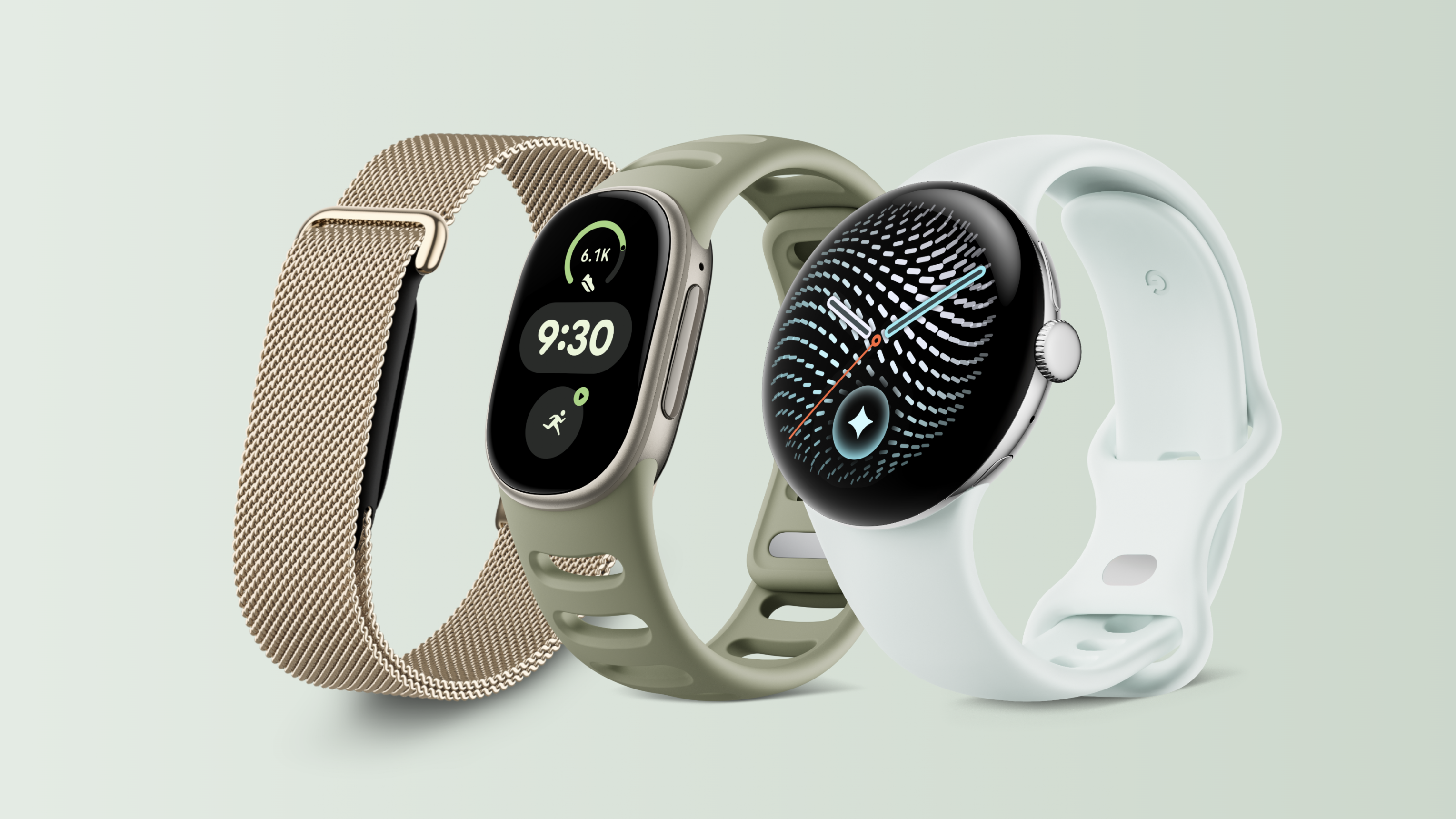
Google is releasing its second Fitbit tracker of 2026, offering fans of the aging Charge 6 a more refined option. The new Fitbit Edge slots right in between the Pixel Watch 5 and the Fitbit Air, featuring a compact screen and more health sensors than the Air. You won't get all the apps and features of the Pixel Watch 5, but the Edge is only about half as expensive.

The Fitbit Edge is essentially a new Charge 6, but it has more of a Pixel Watch aesthetic. Squish Google's smartwatch from the sides, and you've got the Edge. It has a pill-shaped 1.34-inch OLED touch display inside a slender aluminum frame that is rated IP68 (5 ATM) for water and dust protection. Google says the screen has 46 percent more viewable area compared to the Charge 6. It's very close in overall size to the Fitbit Air and uses the same magnetic charging puck.

Left to right: Fitbit Air (with new metal mesh band), Fitbit Edge, and Pixel Watch 5. Credit: Google
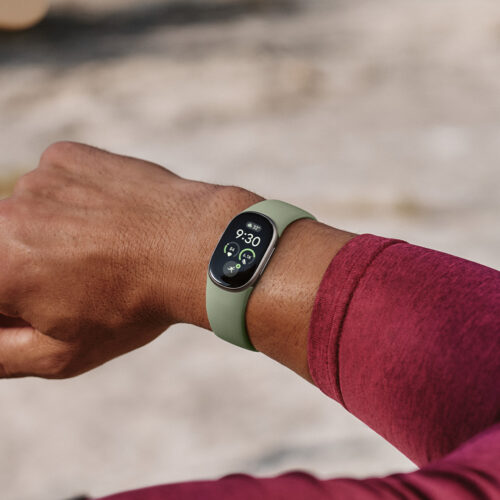
The Edge works with Android or iPhones via the Google Health app, and it can run for about seven days on a charge. If the tracker is away from your phone, it can still follow your activity all week with support for seven days of full health data storage (or 30 days of basic data). However, the generous weeklong battery life does not include always-on display mode. If you turn it on, battery life drops to about two days, barely longer than the Pixel Watch 5.

Read full article

Comments

© Google

  •  

Amazon has over 1 million robot workers. What’s next for human employees?

No organization in the world operates more robots than Amazon. The company already has more than 1 million robots working in warehouses around the clock to make tens of millions of same-day and one-day package deliveries happen on a daily basis—and Amazon is poised to significantly grow that robotic fleet in the coming years as it establishes new factories to churn out increasingly more capable robot workers.

Despite deploying so many robots, Amazon is also the second-largest corporate employer in the world, with more than 1.5 million full-time and part-time human workers, according to its 2025 annual report. Amazon executives say that the growing robot fleet has eased the burden on its human workforce by taking on the toughest fulfillment center tasks that carry the greatest risks of physical fatigue and injury. But labor advocacy groups and independent researchers point to evidence suggesting that warehouse automation driven by AI is not all upside for the humans who work alongside robots.

“For the last 100 years, most of the automation that we've seen usually happens away from workers—you're taking that high-risk task away from the worker, and you're doing so in a way that is not physically proximate,” Brad Greenwood, professor of business at George Mason University, told Ars. “The rise of collaborative robots really changes that dynamic for two reasons: one is that it is physically proximate, and two, the robot has the ability to dictate the pace of work.”

Read full article

Comments

© Amazon

  •  

Review: 4-hour Musk documentary feels like two different films

Elon Musk is a very familiar figure to Ars readers, given his massive influence (for better and worse) on the technology sector over the last 20 years. Oscar-winning director Alex Gibney's latest biographical documentary—simply titled Musk—covers a lot of well-known ground and challenges the carefully crafted public image of Musk as a visionary tech titan.

Gibney's documentary presents Musk as more of a Gilded Age confidence man, rejiggered for the 21st century: an investor cosplaying as an inventor whose real genius is pumping stocks and dazzling investors and the public alike with visions of a high-tech utopian future. The film is bound to push all the right outrage buttons, whether one is a Musk fan or a detractor—which makes it very much a product of the peculiar social media-driven era in which we live.

Gibney has been making documentaries since the 1980s, covering such varied subjects as Jimi Hendrix, Hunter S. Thompson and gonzo journalism, WikiLeaks, Scientology, Steve Jobs, Elizabeth Holmes (the subject of another forthcoming documentary, You Can See Everything, featuring comedian Nathan Fielder), Boris Becker, The Sopranos creator David Chase, alleged Russian interference in the US 2016 presidential election, the opioid epidemic, and cyclist Lance Armstrong. He snagged his first Oscar nomination for 2005’s Enron: The Smartest Guys in the Room, and won the Oscar for Best Documentary Feature two years later for Taxi to the Dark Side.

Read full article

Comments

© AP

  •  
❌