❌

Reading view

A Cray-1 supercomputer replica from 30 "obsolete" Mac Minis

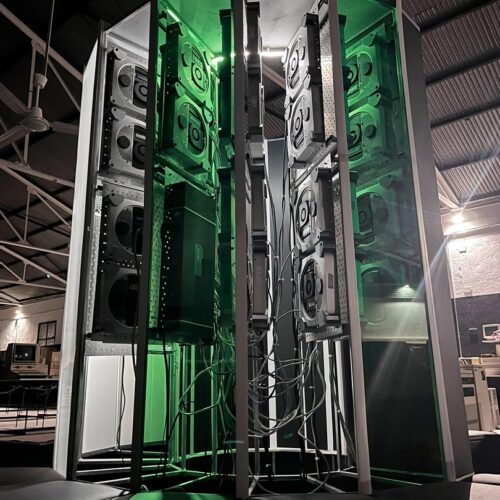
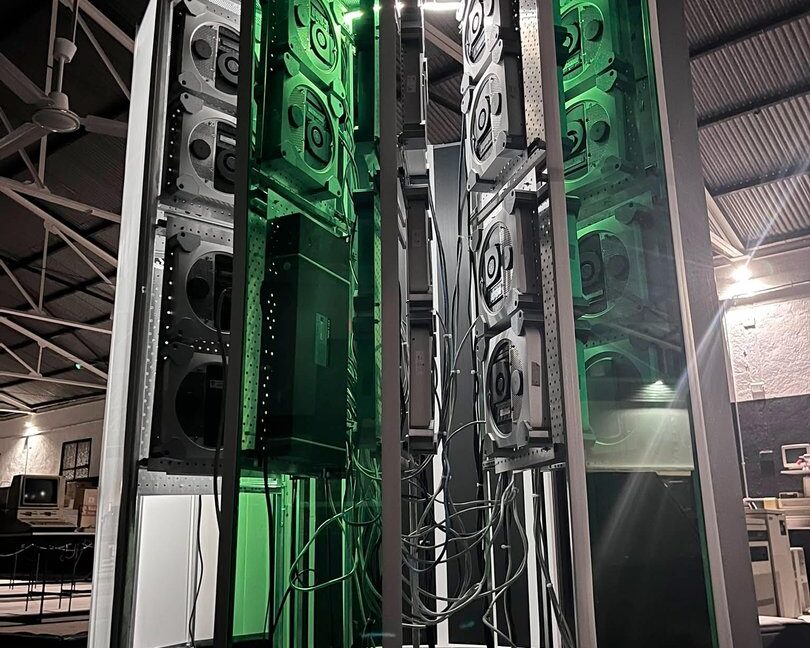
The Museo de Historia de la ComputaciΓ³n in Spain has unveiled a 1:1 scale visual replica of the famous Cray-1 supercomputer from 1976. Instead of sourcing expensive, cutting-edge tech to run the system, the creative team powered the project with 30 2012-era Mac Minis. Developed over 18 months, the project serves as a 50th-anniversary tribute to the Cray-1 and Apple's founding.

Mac Minis from over a decade ago might not seem like the obvious first choice for building a cluster supercomputer, but when networked together, the developers can orchestrate the 64 active processing cores into a combined 1.3 teraflops of performance in their most recent tests. The museum reportedly achieved 1.5 teraflops previously using all 70 available cores, prior to one node going offline. Benchmarks were obtained using a custom matrix-multiplication Python script. Five PCs are quad-core i7s, and the remaining 25 are dual-core i5 models. Except for two units from 2014, the rest of the array dates to 2012.

The replica is a valuable tool for museum-goers to understand the shifts in computer architecture since 1976. The original Cray-1 used vector processing, applying a single instruction to multiple data elements simultaneously, whereas the replica distributes work across independent processors in a parallel cluster. The peak theoretical performance of the original Cray-1 was approximately 160 megaflops. What was originally a purpose-built research machine has been re-created with consumer hardware that's vastly more capable than the machine that inspired it.
Read full article

Comments

  •  

Your artwork could be featured in the next Debian release

The Debian Linux project has opened a call for community artwork submissions ahead of the release of the upcoming Forky (Debian 14). If you think you've got the artistic chops, your art could appear on the boot screens, login prompts, and desktop wallpapers of millions of users. The submission deadline is November 26.

Continuing Debian's community-driven ethos, the artwork submission process mirrors that of previous releases. The artwork must feel distinctively "Debian," integrate cleanly without the need for core software patching, and remain visually appealing for the long term.

Elise Couper's "Ceratopsian" theme was chosen as the winning default for Debian 13 Trixie. For anyone who might not be up on the latest from the Toy Story franchise, the release names echo character names from the animated films. Trixie was a triceratops introduced in Toy Story 3, hence the "Ceratopsian" wink in the winning submission. It makes sense that the next version of Debian continues this trend with Forky, a character introduced in the franchise's fourth entry. The Debian team cautions against overly busy designs that may cause user fatigue, but if anyone can successfully incorporate Forky's googly eyes into the design somehow, know that you'd at least win the contest for my Debian desktop wallpaper.

Read full article

Comments

  •  

Let's Encrypt cuts certificate lifetimes to 64 days starting February 2027

Let's Encrypt is continuing a push toward tighter security by reducing free SSL/TLS certificate lifetimes from 90 days to 64 days, starting February 10, 2027. For administrators already implementing modern ACME clients that support ARI (ACME Renewal Information), the change should be seamless. For those still relying on hardcoded renewal schedules or manual processes, February will be the deadline to update before certificates start expiring unexpectedly.

Starting on October 14, Let's Encrypt will begin testing the 64-day certificates, and interested users can opt in to test their setups before production goes live.

Prior to Let's Encrypt's launch in early 2016, certificates were often issued for as long as one to three years. The service started with 90-day certificates to force renewal automation that didn't previously exist. Shorter certificate validity periods limited vulnerabilities from private key thefts and encouraged accelerated HTTPS adoption across the web.

Read full article

Comments

Β© Getty Images | Yuichiro Chino

  •  

Microsoft event debuts new AI-friendly hardware and Windows changes

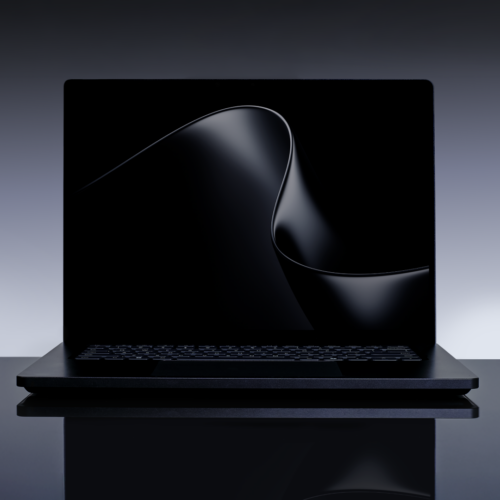
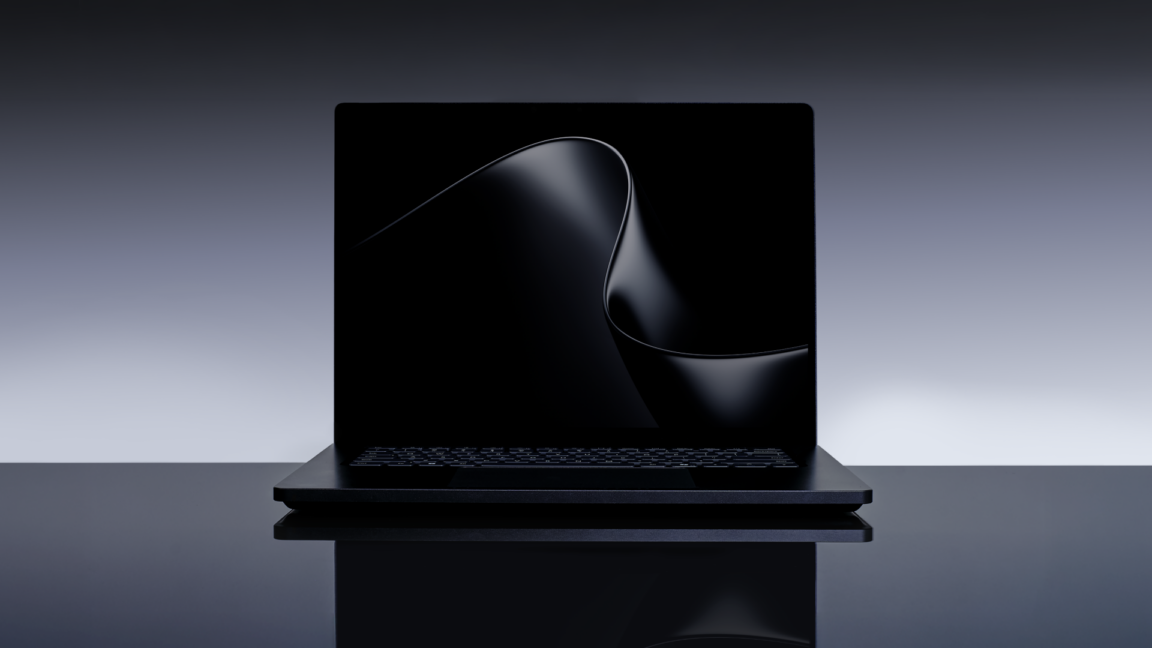
In its first live event in two years, Microsoft today announced its newest Surface laptop, outlined a host of changes coming to Windows 11, and shared a vision of how local-AI and agentic workflows could reshape personal computing for those in the dev community as well as home enthusiasts.

Surface Laptop Ultra

Originally teased in May 2026, the new Surface Laptop Ultra will be Microsoft's first offering to take advantage of the new Nvidia RTX Spark SoC (system on a chip). The device has a starting price of $2,599 and comes in various SoC and memory configurations, with either a 5120-core or 6144-core Blackwell GPU and up to 128GB of LPDDR5x unified memory. It will begin shipping on October 16 and is available for preorder now.

While the new Ultra is clearly focused on the developer crowd, graphical performance was highlighted during the presentation to show off just how capable the laptop can be. By leaning on unified memory allocation rather than the physical VRAM limits of a traditional GPU, the laptop can assign its resources to handle modern gaming tasks as well as local AI development and deployment. The new Gears of War: E-Day was shown running on the system, meaning that even without a traditional gaming GPU, AAA titles are on the table.

Read full article

Comments

Β© Microsoft

  •  
❌