Reading view

S&P 500 rejects SpaceX, also blocking entry for OpenAI and Anthropic

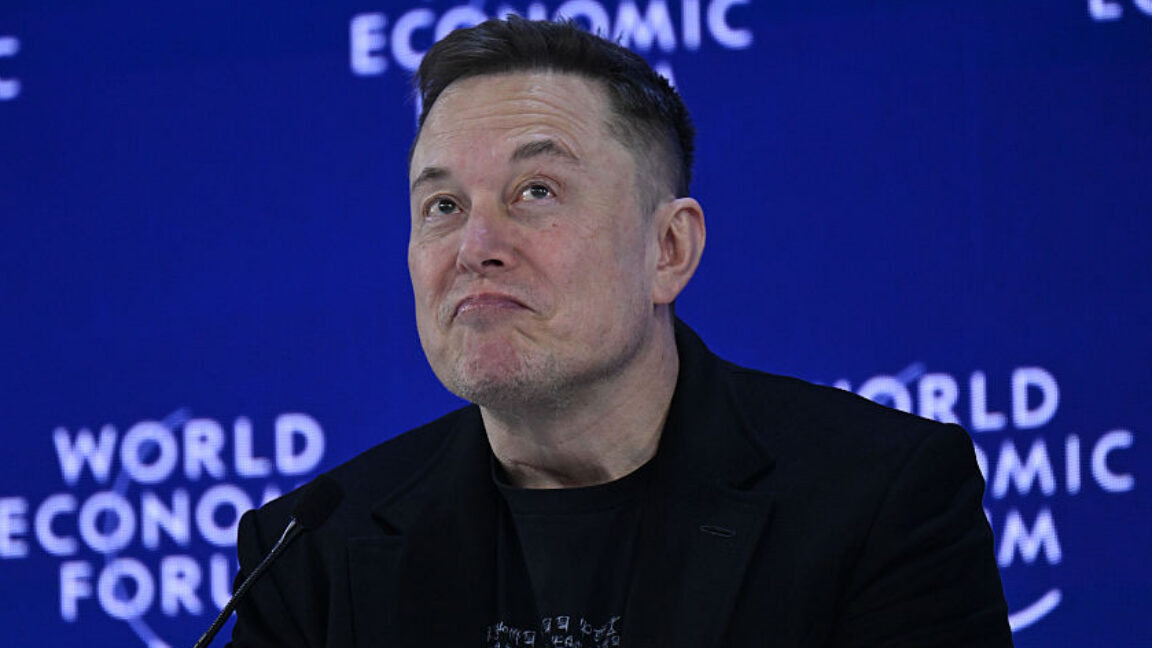
SpaceX has requested unusually swift entry into several leading stock market indexes as a condition of its historic stock market debut. But the S&P 500 stock market index representing many of the largest profitable US companies has surprised market analysts by refusing to bend the rules for Elon Musk’s space and AI company.

The June 4 decision by S&P Dow Jones Indices—the company that creates and manages stock market indexes such as the S&P 500—means that SpaceX will not gain accelerated access to potentially billions more dollars through passive investment funds that automatically purchase shares of S&P 500 companies. An exception for SpaceX could have also allowed leading AI companies such as OpenAI and Anthropic to gain entry not long after their own expected initial public offerings (IPOs). That possibility has now been shuttered.

The news will likely come as a relief to people concerned about passive investor money and people’s retirement savings plans having greater exposure to the market risks associated with SpaceX’s big bet on AI and speculative orbital data center plans. AI companies are generally facing more challenges in funding and building expensive AI data centers, even as they shift more of the subsidized costs of running AI services onto shocked customers through usage-based pricing.


Read full article

Comments

© Michael Yanow/NurPhoto via Getty Images
  •  

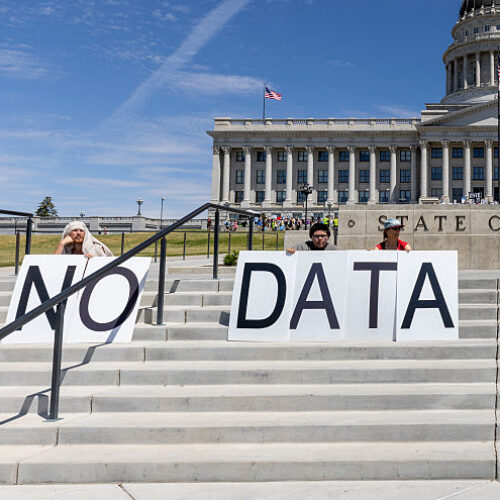
"We pissed off a lot of people": Giant data center plan cut 50% amid protests

One of the world's biggest data center projects was designed to be nearly three times the size of Manhattan, stretching across multiple Utah sites. But intense local backlash in Box Elder County has now pushed the developer to cut the project plans in half before construction starts.

Residents' top concern was the Stratos data center project draining local waters, and they were willing to pay to protect them, most especially the vulnerable Great Salt Lake. Many locals paid a $15 fee to register comments to block the transfer of 1,900 acre-feet of water from a ranch to the hyperscale data center. Other concerns include electricity bills rising and potential risks to air quality, local wildlife, and land.

Venture capitalist Kevin O'Leary, chair of O'Leary Digital and Shark Tank investor, is behind the construction of the project. He told a local ABC affiliate that he regrets not working with state officials to be more transparent about the project from the beginning.

Read full article

Comments

© Natalie Behring / Stringer | Getty Images News

  •  

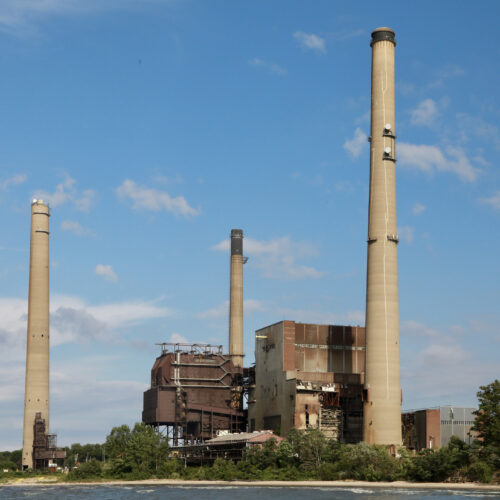
Trump admin tries again to revive dying coal industry

On Thursday, President Donald Trump announced his administration's latest attempt to prop up the US coal industry during an incoherent press event that randomly oscillated between energy issues and Trump's fixation with building and renovating monuments in DC. The energy portion of the events was also frequently disconnected from reality.

"Today we're taking historic action to bring down the price of energy and the cost of living for all Americans with the power of clean, beautiful coal," said Trump, apparently unaware that coal is one of the most expensive means of generating electricity in the US.

With wind and solar power getting cheaper, coal has become the second-most expensive way of producing electricity, trailing only the cost of building a new nuclear plant. As a result, no new coal plants have been completed in over a decade, and coal has gone from powering over half the electrical grid to producing only about 15 percent of the nation's electricity. That's before the indirect costs of coal use are considered. It produces the most greenhouse gas emissions per unit of energy, releases dangerous particulates and chemicals into the atmosphere, and leaves behind ash that has high levels of toxic metals.

Read full article

Comments

© Douglas Sacha

  •  

AT&T and Verizon lose Supreme Court case over fines for selling location data

AT&T and Verizon lost an attempt to overturn fines for selling users’ real-time location data without consent, as the Supreme Court ruled today that the Federal Communications Commission process for issuing financial penalties did not violate the right to a jury trial.

AT&T convinced the US Court of Appeals for the 5th Circuit to overturn its fine last year, while Verizon lost in the 2nd Circuit. The Supreme Court took up the case to resolve the circuit split and reversed the 5th Circuit decision in today's ruling, which was 8-1 with Justice Clarence Thomas dissenting.

AT&T and Verizon were fined a total of $104 million by the FCC in 2024 for violations revealed in 2018. The carriers paid their fines and challenged them in circuit appeals courts, where judges’ panels ruled on the cases. Carriers claimed this system deprived them of the Seventh Amendment right to a jury trial.

Read full article

Comments

© Getty Images | Kevin Carter

  •  

Elon Musk tries again to escape FTC audits of X data handling

Critics hope to keep Elon Musk from escaping a strict data-privacy order imposed by the Federal Trade Commission (FTC) shortly before he took over Twitter.

The FTC order placed restrictions on X's data use for 20 years, while requiring regular independent audits and granting the agency authority to request documents as needed to ensure compliance.

The FTC’s action came after Twitter voluntarily disclosed that between May 2013 and September 2019, a coding error accidentally allowed phone numbers and email addresses that users shared for two-factor authentication purposes to be used for targeted advertising aimed at those same users. In a settlement that came just months before Musk's 2022 takeover, Twitter agreed to pay $150 million and to allow the FTC to monitor the platform's data-handling practices until 2042 in order to protect user privacy.

Read full article

Comments

© Anadolu / Contributor | Anadolu

  •  

Cable lobby warns of chaos if FCC doesn't relax ban on foreign routers

The cable industry's primary lobby group is seeking a waiver of the Federal Communications Commission ban on foreign routers, warning of potential chaos if cable Internet service providers can't change some of the components in routers they offer to home broadband users.

In March, the FCC added all consumer-grade routers made at least partly outside the US to its Covered List, which imposes restrictions on devices deemed to pose an unacceptable risk to national security. The change affected virtually all consumer routers, preventing new or changed models from being imported into or sold in the US.

In a petition filed on Tuesday, NCTA-The Internet & Television Association asked the FCC to grant an expedited waiver allowing its members' suppliers to "substitute substrate materials and memory modules in the previously certified routers that are now on the Covered List" as long as the changes "are otherwise consistent" with FCC regulations.

Read full article

Comments

© Getty Images | BernardaSv

  •  

My SSN was exposed in a breach at Columbia—a school I have no connection with

A weird text from my dad in February sent me on a months-long quest to solve a mystery that has been troubling an odd group of victims from a Columbia University data breach last year. That group? People with absolutely no connection to the school.

The text included a photo of a letter from Columbia, informing me that I was a victim of a data breach last June, one that exposed a wide range of sensitive information, including 1.8 million Social Security numbers.

Columbia's public notices about the breach were addressed exclusively to "members of the Columbia community." In the notices, Columbia warned that an "unauthorized party obtained information about students and applicants related to admissions, enrollment, and financial aid processes, as well as certain personal information associated with some Columbia employees." Major news reports that followed only referenced people affiliated with Columbia as victims, while pointing out that the hacktivist behind the breach was reportedly motivated to expose Columbia's history of "affirmative action-based" admissions.

Read full article

Comments

© Aurich Lawson | Getty Images

  •  

Google ordered to put clearer links in AI search and let UK publishers opt out

UK regulators today ordered Google to put clearer attributions and links to publishers' content in its AI-generated search features. The UK's Competition and Markets Authority (CMA) also said Google must give publishers a way to opt out of AI features in search.

"In a world first, publishers will now have effective tools to prevent their content being used to power AI features in search, such as AI Overviews," the CMA said today. "This will put publishers, like news organizations, in a stronger position to negotiate content deals with Google. To boost consumer trust, Google is also now required to make sure that publisher content is properly attributed, using clear links, in AI‑generated search results."

The CMA ruled that Google may not penalize publishers for opting out of AI, meaning that Google can't downrank opted-out publishers in general search results. The CMA said Google will have nine months to comply with all requirements but that the agency "expects important parts of the controls to become available to publishers well before that deadline. Google will also be required to submit and publish compliance reports, supported by key data and metrics, explaining changes it has made and how it has complied."

Read full article

Comments

© Getty Images | Bloomberg

  •  
❌