 Login
Login
Artificial cell manages a few rounds of cell division
Understanding the origin of life requires addressing a collection of overlapping scientific questions. We've made a lot of progress toward explaining how simple chemicals present on an early Earth built the complex molecules used by life and how some of those chemicals built the first genetic/catalytic molecules. But we're much further from understanding a key conundrum: How did membranes end up surrounding the first cells?
It's relatively easy to make membranes spontaneously form in water, and they'll enclose anything dissolved in that water, including nucleic acids. But the membranes then cut their interior off from everything else in the solution. Any interesting chemical reactions enclosed there would eat through the raw materials and grind to a halt.
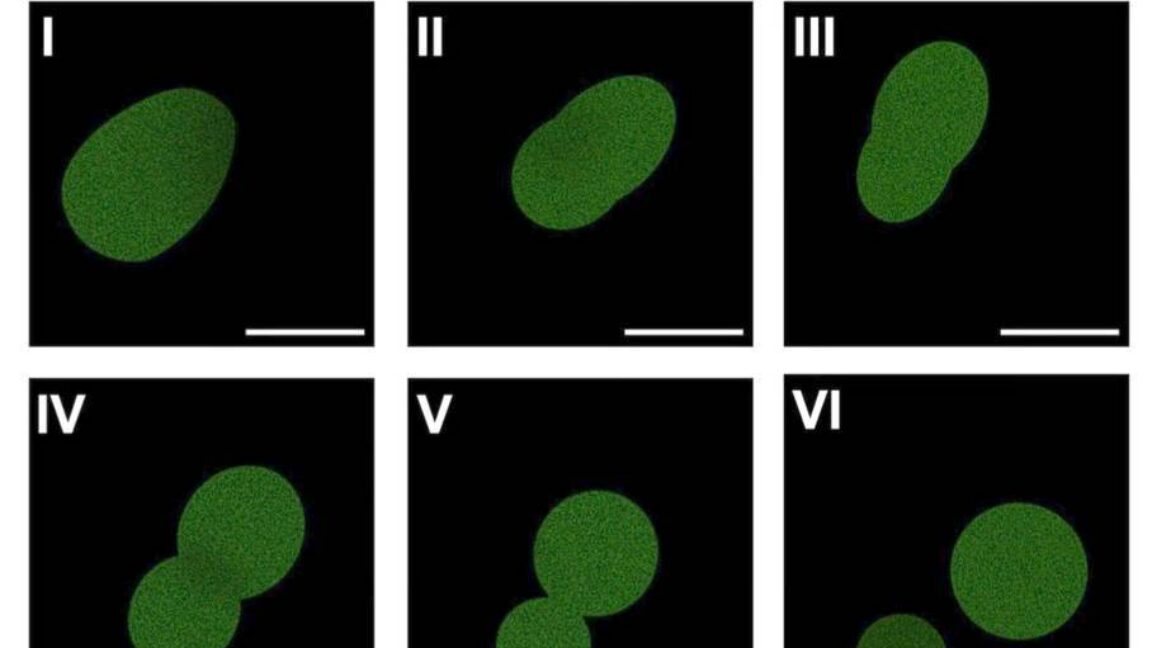
Now, a lab at the University of Minnesota has announced that it has developed a simplified system in which a membrane encloses some genetic material but can continually import new materials supplied to it. The system also spontaneously divides, producing a few generations of "offspring" before things start failing. It's still extremely dependent upon human intervention, but it might provide a new avenue to explore questions about the origin of life and what a truly minimalistic form of life might look like.
© Biotic