Reading view

Rocket Report: Indian startup nears first launch; SpaceX's millenary milestone

Welcome to Edition 9.01 of the Rocket Report! Back in January, I wrote about the 20 launches and landings we were most excited about in 2026. The list included things that were, at the time, officially scheduled to occur this year. I also gave my own view of the probability of each of these events actually happening before December 31. Halfway through the year, we can only count one of the events as completed, and that was NASA's Artemis II mission in April. Many are now scheduled for next year, proving again that delays are a constant in the space industry. A couple of them—such as the launch of NASA's Roman Space Telescope—do appear to be on track to happen soon.

As always, we welcome reader submissions. If you don't want to miss an issue, please subscribe using the box below (the form will not appear on AMP-enabled versions of the site). Each report will include information on small-, medium-, and heavy-lift rockets, as well as a quick look ahead at the next three launches on the calendar.

Swift Boost Mission reaches orbit. A pioneering commercial mission to reboost the orbit of NASA's Swift astronomy satellite launched early Friday after attempts earlier in the week were thwarted by bad weather and a technical issue. The Link servicing satellite developed by Katalyst Space Technologies soared to orbit on the tip of a Northrop Grumman Pegasus XL rocket that dropped from the belly of a modified L-1011 jetliner over the remote Pacific Ocean. Mission managers called off two launch attempts Tuesday and Wednesday due to poor weather around the L-1011's staging base on Kwajalein Atoll in the Marshall Islands. On Thursday, "a launch vehicle issue temporarily prevented teams from deploying the rocket" after takeoff of the L-1011.
Read full article

Comments

© SpaceX

  •  

Inside the Luddite festival harnessing Gen Z’s rage against Big Tech

On a Sunday evening in the middle of Tompkins Square Park in New York City’s East Village, hundreds of people gather in front of a giant papier-mâché face of a woman wearing a crown. She’s the backdrop of a play, her body made up of curtains that look like a dress but serve a dual purpose, allowing actors to scurry on and offstage.

I’m here to watch a performance called “Luddite Recreations,” which is a history of the Luddite movement—a group of artisans and textile workers who resisted the adoption of machines during the early years of the Industrial Revolution in England and whose resistance to being displaced from their work was met with violence by the British monarchy.

It’s one of the opening events of the Summer of Ludd, a weeklong series of talks and activities like how to flirt and date offline, mending, and learning to fight against data centers, all focused on getting people off their phones and into community.

Read full article

Comments

© Rapeepong Puttakumwong via Getty Images

  •  

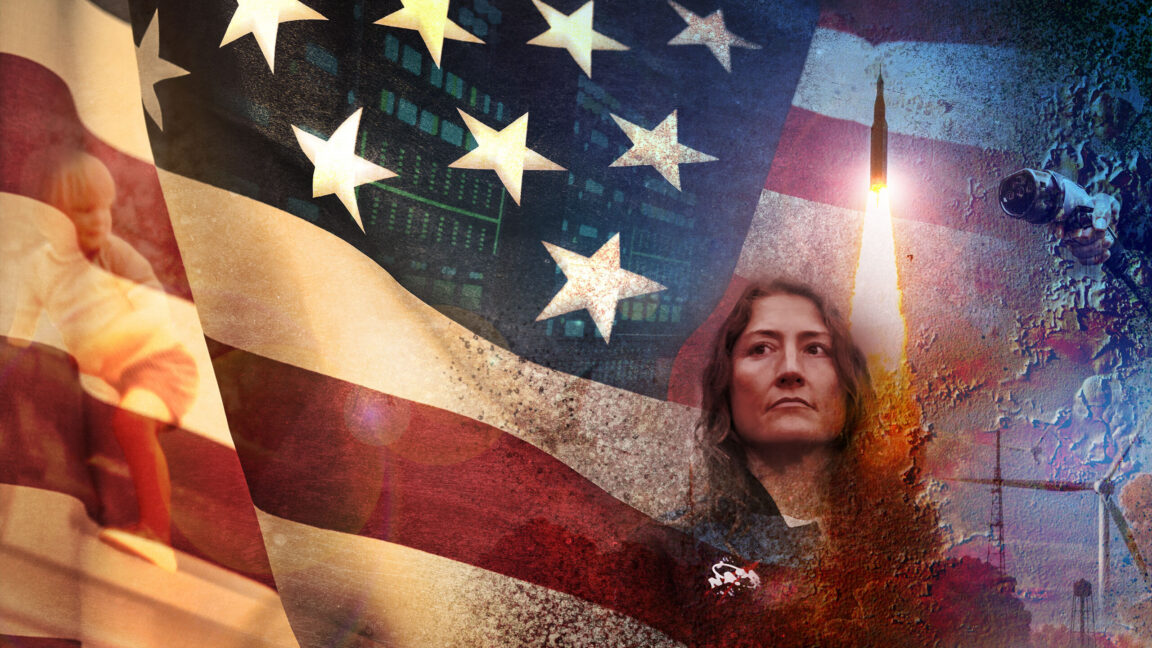
Despite the darkness, I still see signs of hope in America

The last time America celebrated a big anniversary, I was all of three years old. Even so, I retain a few fuzzy memories from a sunny summer afternoon in small-town Michigan: climbing on a cannon in front of the courthouse, watching a parade, and seeing my dad, a veteran and Centreville city councilman, giving a short talk about democracy.

Only later would I realize the significance of the date: July 4th, 1976, America’s bicentennial.

America was imperfect and inconsistent in its approaches to "freedom," but the country had done some big, difficult things in recent decades. We had led the charge to roll back the tide of fascism and Holocaust during World War II. We had begun to confront internal demons through the nonviolent activism of the civil rights movement. And, critically for my own life trajectory, we had landed on the Moon.

Read full article

Comments

© Aurich Lawson | Getty Images

  •  

Visiting the stars (and planets, and telescopes) in VR

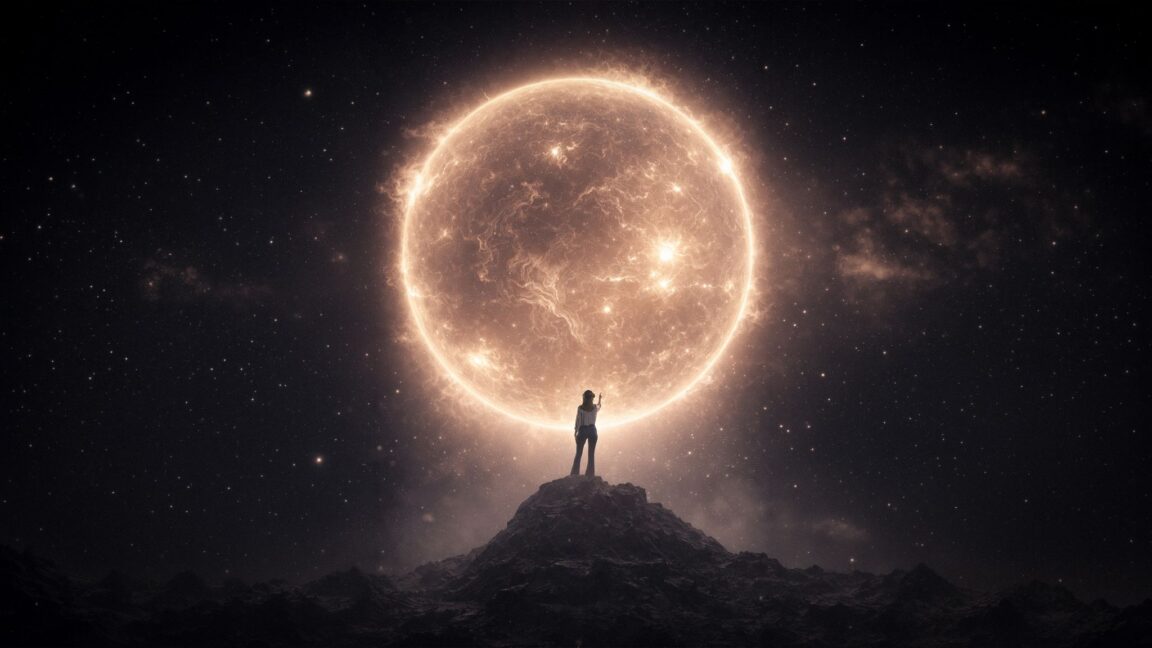
Having a computer strapped to my face for 40 minutes was one reason to feel a little sweaty. But the tour of the Universe I had just received in virtual reality—including visits to the near vicinity of the Sun, the giant black hole at the center of our galaxy, and a hellscape of an exoplanet 41 light-years distant—provided another excuse for sensing some heat.

Smithsonian Starstruck: An Immersive Experience is a 40-minute astronomy walk-through. It debuted in Washington, DC, in May with solo adult tickets now ranging from $29 to $35 and group tickets for four or more starting at $18 each (all now discounted by 15 percent); it will also open in Denver, Orlando, Florida, and San Antonio, Texas, later this year. I stopped by on a Monday in June to take it in.

After some onboarding that included setting such preferences as closed captioning and signing a waiver, I had enough time to sit on a bench next to the exhibit space (which has hosted other VR experiences) to enjoy watching another attendee with a VR headset blurt out, “Oh my God!”

Read full article

Comments

© Smithsonian Starstruck

  •  

Wing Commander IV and the FMV future that never quite was

If I had to pick a chunk of the 1990s that feels the most 90s-ish to me, it'd be the two-year stretch between 1996 and 1997. 1996 saw me graduating from high school and starting college; 1997 saw me meeting my future wife and falling in love. While I tried to figure out how to navigate the University of Houston's still mostly pre-digital first-semester registration process (we had to sign up for classes over the phone, with touch-tone buttons, like cavemen!), the larger world kept turning in ways that felt inevitable and good and right. The Cold War was in the rearview mirror—how could we ever have been so worried about nuclear annihilation just a few years before? Russia was a friendly bear presided over by everyone's favorite drunk uncle, and things would obviously keep getting better, right?

Equally obvious, at least according to gaming tastemakers like Ken and Roberta Williams or Chris Roberts, was the idea that computer games from here on would blend together the best of what Hollywood and Silicon Valley had to offer, and the resulting "Silliwood revolution" would blast us forever into the world of fully interactive entertainment. Movies and games would blend together, and neither would be the same ever again! No longer would people sit in theaters just watching movies—audiences would get to choose how the film ended! And on the computer side of things, gone would be the days of lame graphics and clunky hand-drawn art—games would have big-name actors, big-budget sets, and huge special effects!

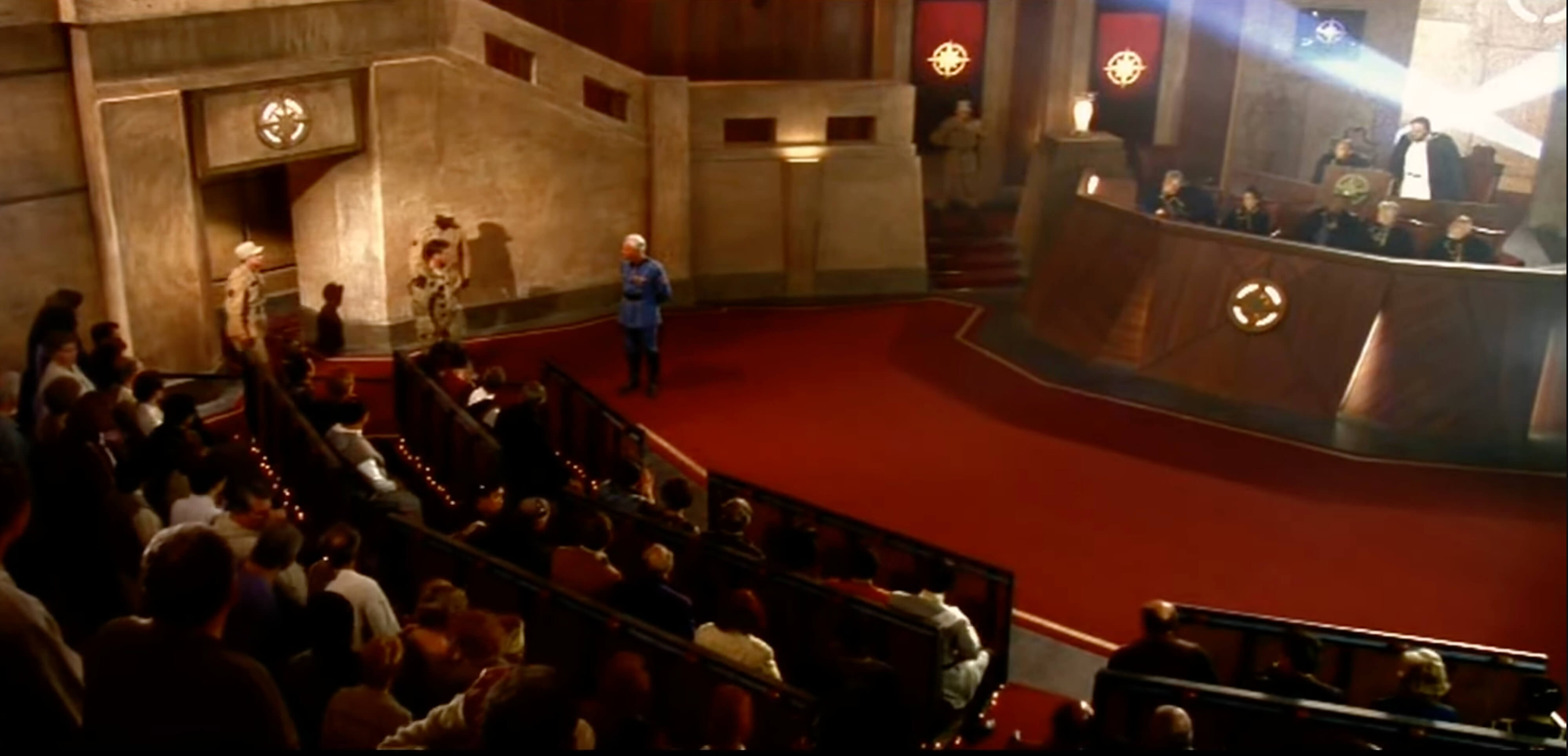
Screenshot of the "Grand Assembly" chamber from WC4's ending The "Grand Assembly" chamber is one of the major setpieces constructed for <em>Wing Commander IV's</em> filming (on film!). Credit: Origin Systems/EA
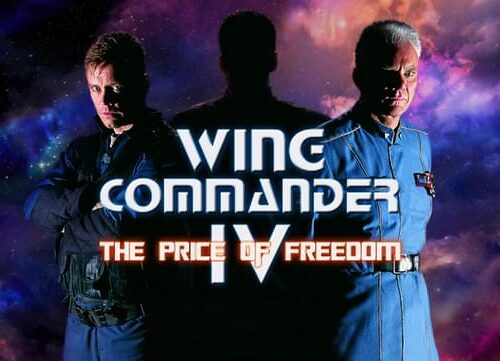
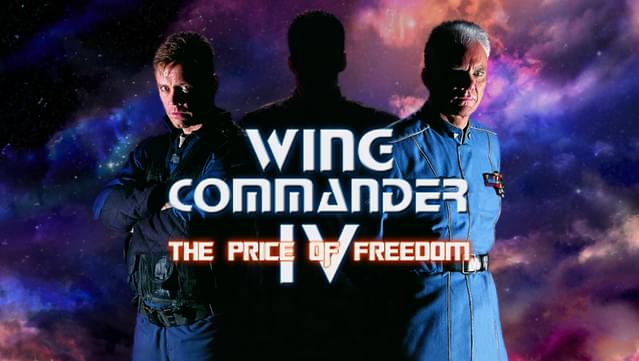
And if 1996–1997 was the high water-mark of the 90s for me, then the game that most matched that high water-mark was Wing Commander IV: The Price of Chris Roberts Having Full Creative Control—erm, I mean, Wing Commander IV: The Price of Freedom.

Read full article

Comments

© GOG/Origin Systems/EA

  •  
❌