Reading view

Nintendo customers have no legal right to tariff refunds, company tells judge

Nintendo urged a court to dismiss a lawsuit demanding that it pass tariff refunds on to customers, saying that people who bought a Switch console or other products have no legal right to refunds that Nintendo is due to receive from the government.

Nintendo said in a motion to dismiss yesterday that plaintiffs are "ask[ing] this Court to invent a legal duty out of whole cloth to retroactively re-price completed sales simply because the legal landscape has changed." Nintendo said the plaintiffs "have no legal entitlement to the tariff refunds Nintendo stands to receive."

The lawsuit was filed in April by two customers who seek to represent a class of all US residents who bought Nintendo products from February 2025 to February 2026. California resident Gregory Hoffert and Washington resident Prashant Sharan filed the class action complaint in US District Court for the Western District of Washington, alleging unjust enrichment and a violation of the Washington Consumer Protection Act's prohibition on unfair or deceptive acts.


Read full article

Comments

© Getty Images | AFP

  •  

Let Tom Hiddleston be your guide to Pompeii's final day

When Mount Vesuvius erupted in 79 CE, it spewed molten rock, pumice, and hot ash over the cities of Pompeii and Herculaneum, killing thousands of people. It's one of the most famous natural disasters in human history, so naturally there have been countless documentaries about Pompeii (and at least one popular song). But only one features actor Tom Hiddleston taking on the role of a "time detective" to bring the people of Pompeii to vivid life. That would be National Geographic's new three-part docuseries, Pompeii: Out of Time.

The Marvel connection made Out of Time happen. Executive producer Kevin Wright was also a producer on the Disney+ series Loki, which included a scene where Hiddleston's Loki travels through time to visit Pompeii. Hiddleston also studied classics at Cambridge University and had visited the Pompeii archaeological site as a teenager, which the Marvel star attributes to indirectly influencing his career path into acting.

"There is just a passion to the way Tom tells stories that's infectious," Wright told Ars. "We knew that if we could capture that and put it into [the series], it might interest people who wouldn't normally want to watch a documentary about Pompeii. "

Read full article

Comments

© National Geographic/Paolo Verzone

  •  

Naked mole-rat queens use a chemical signal to suppress fertility in rivals

Naked mole rats are weird. They spend their lives almost entirely underground, are largely insensitive to some kinds of pain, can persist without oxygen for a long time, rarely develop cancer, and can live past 30 years, which is decades longer than similarly sized rodents. They are also eusocial, like ants, bees, or termites—in a colony that can hold more than a hundred animals, only one female, the queen, breeds.

We didn’t know how exactly naked mole-rat queens stop other females from breeding. For a long time, our leading hypothesis was bullying and violence, but that may be a bit impractical, given their kingdoms are vast networks of tunnels that can stretch for up to three kilometers. But now a team of Lewin Lab scientists at Max Delbrück Center for Molecular Medicine in Berlin discovered it’s actually just one part of a sophisticated olfactory signaling program.

Running on smell

"It's very clear that mole rats actually have quite big noses and smell a lot," says Gary Lewin, a neurobiologist at the Max Delbrück Center for Molecular Medicine and senior author of the study. Naked mole rats have around 1200 olfactory receptor genes, more than mice (which have roughly 1,000 of them) and way more than the few hundred in humans. They're also blind. "They have to be able to navigate and move around without vision, so smell is one of those things that’s enhanced," Lewin said.

Read full article

Comments

© imageBROKER/Eric Isselee

  •  

Anthropic’s $1.5B copyright settlement approved; only 350 authors opted out

On Monday, a judge approved a $1.5 billion settlement between Anthropic and authors, ending the largest copyright class-action ever certified and granting the largest copyright settlement ever reached.

Back in May, some authors fought to block the settlement, which was proposed after the court ruled that Anthropic training AI on books was fair use; however, its piracy of works was likely not.

Authors opposing the settlement argued that lawyers’ fees were too high and authors’ payouts were too low. Hoping to avoid accepting the estimated $3,000-per-work payout and file separate lawsuits to seek higher damages, a handful of authors tried to opt out past the deadline.

Read full article

Comments

© yalcinadali | iStock / Getty Images Plus

  •  

Sales of Valve's Steam Deck crater after recent price hike

Since its 2022 launch, the Steam Deck has consistently been at or near the top of the company's "top selling products by revenue" charts, with brief dips outside of the top 10 treated as newsworthy events. But sales of the popular handheld gaming PC have apparently been on a steep decline since the system relaunched at a higher price in May.

Linux-focused gaming site Boiling Steam breaks down the historical data, showing how the Deck's chart position has fallen from fifth place immediately after orders resumed in late May down to 14th place for two weeks in early July (the hardware sits at 12th place in the current edition of those charts).

That's in sharp contrast to 2025, when the Steam Deck never dropped below seventh place on the bestseller charts and was only rarely outside the Top 5. Then Valve warned of "intermittent shortages" for the Steam Deck starting in February, leading to weeks of lower chart positions before the Deck became completely unavailable until May.

Read full article

Comments

© Kyle Orland

  •  

Google announces Gemini 3.6 Flash and cybersecurity AI, teases 3.5 Pro and Gemini 4

Google announced a significant evolution of its AI models at I/O in May with the release of Gemini 3.5 Flash, and it's not slowing down. The company revealed three new AI models today, including its first version of Gemini geared toward cybersecurity. However, none of the new models is the delayed Gemini 3.5 Pro, which was supposed to launch in June.

Gemini 3.5 Flash, which was the star of the show at I/O, has already been deprecated. In its place, developers and users will find Gemini 3.6 Flash. Google makes the usual claims about this model—it's marginally more capable and better at coding, and it has great multimodal features.

Google says the changes to 3.6 Flash were made in response to user feedback on the 3.5 release. In general, Gemini 3.5 Flash didn't appear to live up to Google's promises around code generation. Perhaps that is simply a consequence of Google's intense focus on efficiency as businesses have started to fret over the cost of AI tokens.

Read full article

Comments

© Aurich Lawson

  •  

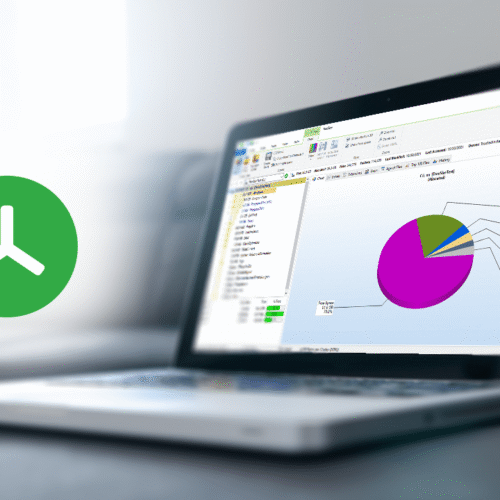
TreeSize won't renew perpetual-license support unless users subscribe

The company behind the disk space analyzer TreeSize has irked some users by no longer offering support or updates for perpetual licenses beyond their maintenance period unless customers subscribe. Further frustration has come from JAM Software's long-standing policy of not providing license keys or installers to TreeSize perpetual license holders after that support period ends.

Since 2025, JAM Software has been transitioning most TreeSize editions to subscription models. Today, it sells perpetual licenses only for personal use, which include 12 months of updates, support, and “downloads of older versions, and your license,” plus the option to extend the support period. TreeSize currently has "no plans to discontinue the sale of perpetual licenses for TreeSize Personal," product manager Hendrik Christ told Ars Technica.

As perpetual-license maintenance periods expire, customers are discovering that extending support now generally requires subscribing to software they already own the right to use.

Read full article

Comments

© TreeSize

  •  

When your vehicle outlives its cloud: What happens next?

Do you use your vehicle’s app to pre‑cool the cabin on a scorching day, confirm the doors are locked from bed, or have the car automatically call for help when the airbags go off?

Savor those connected, cloud‑based conveniences while you can—the clock is already ticking on their obsolescence. In a few short years, you may be driving today’s vehicle without many of the features you currently enjoy.

How we got hooked on the cloud

"Connected services"—cloud-based and networked features that let a vehicle communicate with external systems to deliver apps, data, and remote functions to drivers and passengers—have been around since the 1990s, when GM introduced OnStar as an option. Those early systems were mostly voice‑centric, but they still depended on centralized back‑end systems. Modern versions, which are fully data-driven and cloud-hosted, use much more sophisticated over-the-air data links to allow a considerably better feature set.

Read full article

Comments

© Aurich Lawson | Getty Images

  •  

Apps targeted at US troops contain Chinese and Russian code

A recent examination of hundreds of mobile apps marketed toward US military personnel found more than one in eight contained software built by companies in China, Russia, or other foreign nations, raising fresh concerns that adversary governments could harvest data revealing where service members live, work, and deploy.

According to researchers at Purdue University, the US Military Academy at West Point, and Florida International University, one popular app used by service members to rate living conditions on their own bases include code from Huawei, the Chinese telecom that US regulators flagged as a national security threat in 2020. Two others were built by Russian companies and incorporate the Russian ad service Yandex.

The largely unregulated advertising industry that tracks Americans online treats civilians and service members mostly the same—unless there is profit in telling them apart—despite evidence that exposure can reveal troop deployments, unit movements, and the routines of personnel within intelligence facilities and hardened shelters where nuclear weapons are believed to be stored.

Read full article

Comments

© Tomas Ragina/Getty

  •  

2027 Kia Seltos first drive gives you plenty of SUV for not much $

NEWPORT BEACH, Calif.—Although it sometimes feels like automakers have all but abandoned everything other than high-end luxury model vehicles, it's not universally true. While some car companies have lobbied the government, terrified, asking to build protective walls to fend off cheap Chinese competition, others have looked at the problem from a different angle, trying to meet the moment. One such effort is the new Kia Seltos, a small SUV that takes inspiration from the Telluride but with a starting price of just $24,990 plus delivery charge.

The US almost didn't get the Seltos in the first place; the first-generation model was designed with China in mind. Seltos take two is more considered, and also a little more substantial. The new body with its Telluride-like design cues has been stretched, mostly in the wheelbase. That said, at 174.4 inches (4,430 mm) long, 72 inches (1,829 mm) wide, and 64.9 inches (1,648 mm) tall, it's still a subcompact, one segment smaller than something like a Toyota RAV4 or Mazda CX-5.

Kia is offering a choice of three different powertrain variants. The 1.6 L hybrid is the one we're most interested in. But that version won't be in showrooms until Q4 this year; don't expect an Ars first drive of the hybrid Seltos until early next year. Or any other details in this first drive report—the hybrid Seltos is still undergoing its EPA certification, and Kia isn't prepared to talk power, torque, or efficiency until that's done and dusted.

Read full article

Comments

© Kia

  •  
❌