❌

Reading view

Driver wins $76 after ALPR led to bogus traffic stop, drug searches

A federal jury in Texas recently ruled in favor of a man who sued Bexar County and its sheriff over allegations that the agency ran what the plaintiff’s attorneys called an “unconstitutional traffic stop scheme” enabled by “AI-powered” license plate readers.

Late last month, plaintiff Alek Schott of Houston was awarded $76, one dollar for each minute that he was detained. (Schott asked for this exact amount as symbolic compensation.)

“After the stop, I filed a complaint with the Sheriff’s Office because I knew what happened to me was wrong,” Schott said in a statement after his win. “The department reviewed it, told me they didn’t see any violation, and said if I had a problem with it, I should sue them. So I did.”


Read full article

Comments

© Getty Images | Joseph Sohm/Visions of America
  •  

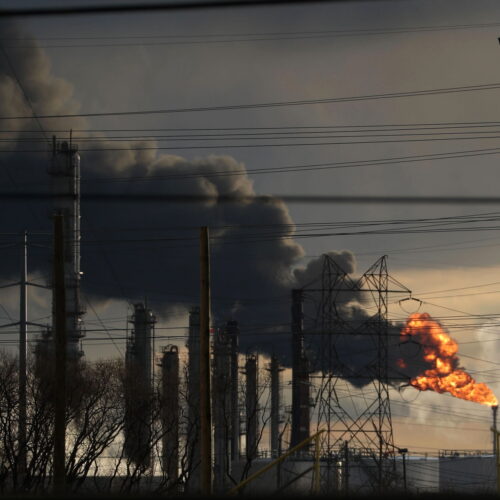
Internal files add to evidence of an ExxonMobil climate deception campaign

If there was a year the world began waking up to climate change, it might have been 1988. That June, the NASA climatologist James Hansen testified to Congress that the climate was warming and would continue to do so as long as humans pumped fossil fuel pollution into the atmosphere. Months later, the United Nations established the Intergovernmental Panel on Climate Change.

And, just weeks before the UN vote, Frank Sprow of Exxon’s corporate research department warned his colleagues in an internal memo, “If a worldwide consensus emerges that action is needed to mitigate against Greenhouse gas effects, substantial negative impacts on Exxon could occur.”

Sprow’s memo is part of a batch of previously undisclosed documents released earlier this year without fanfare as part of an ongoing lawsuit Massachusetts filed against ExxonMobil in 2019. While the memo was quoted in a 2023 article by The Wall Street Journal, it has not been published in full. Several other documents included in the filings are being reported on here for the first time, including more recent statements from Exxon scientists challenging the company’s climate-solution claims about its work on biofuels and carbon capture and storage.

Read full article

Comments

© Jason Fochtman/Houston Chronicle via Getty

  •  

A senator tried to ban gambling on prediction markets—now she's a Kalshi lobbyist

In July 2010, US Senator Blanche Lincoln (D-Ark.) predicted the rise of prediction markets and the problems they could cause. If not properly regulated, Lincoln warned during Senate proceedings on the Dodd–Frank Wall Street Reform and Consumer Protection Act, prediction markets could evade gambling laws by offering "event contracts" that let people place wagers on sports games.

"It would be quite easy to construct an event contract around sporting events such as the Super Bowl, the Kentucky Derby, and Masters golf tournament," Lincoln, who played a key role in making the law that now regulates prediction markets, told fellow senators. "These types of contracts would not serve any real commercial purpose. Rather, they would be used solely for gambling."

Today, Lincoln is a lobbyist for prediction market Kalshi and has urged the Commodity Futures Trading Commission (CFTC) to allow sports gambling on the markets. The firm she founded has received $480,000 from Kalshi since 2024 in exchange for lobbying Congress and the CFTC for looser regulation of event contracts.

Read full article

Comments

© Aurich Lawson | Getty Images

  •  
❌