❌

Reading view

Neanderthal wooden tools from Spain found preserved in stone

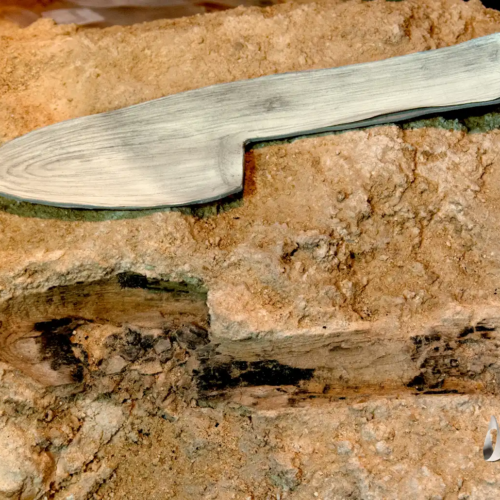
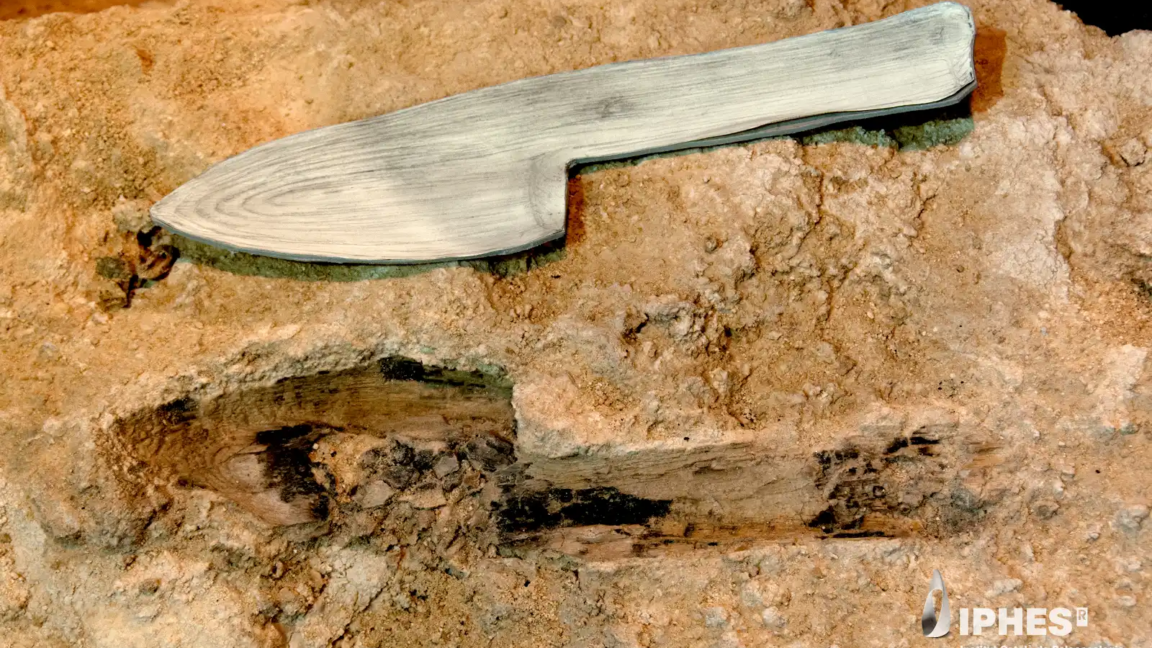
The Stone Age owes its name to tools that survived to our time. The material early humans worked with most, though, was probably wood because it is so much easier to process. Unfortunately, we know very little about Paleolithic woodwork because wood rots relatively quickly. But at Abric Romaní, a rock shelter in Capellades, west of Barcelona, mineral-rich water coated wooden Neanderthal tools in a limestone-like crust. When wood rotted away, it left behind hollow molds that faithfully reflect its shape.

In a recent Science Advances study, a team of Spanish archaeologists has cataloged 597 wooden remains from Neanderthal living areas dating from 62,000 to 40,000 years ago. They found spears, digging sticks, bark trays, parts of shelters, and a club unlike anything seen before, suggesting Neanderthals were likely much more than just Homo sapiens’ dumber cousins.

Beyond hunting gear

The oldest wooden artifacts we have are mostly weapons. They include spears from a German town called Schöningen, a spear tip from Clacton-on-Sea in England, and the spear found alongside an elephant skeleton in Lehringen, Germany. Most came from waterlogged sediments, where a lack of oxygen slowed decay.
Read full article

Comments

© Gerard Campeny / IPHES-CERCA

  •  

What's been driving Hawaii's lava fountains?

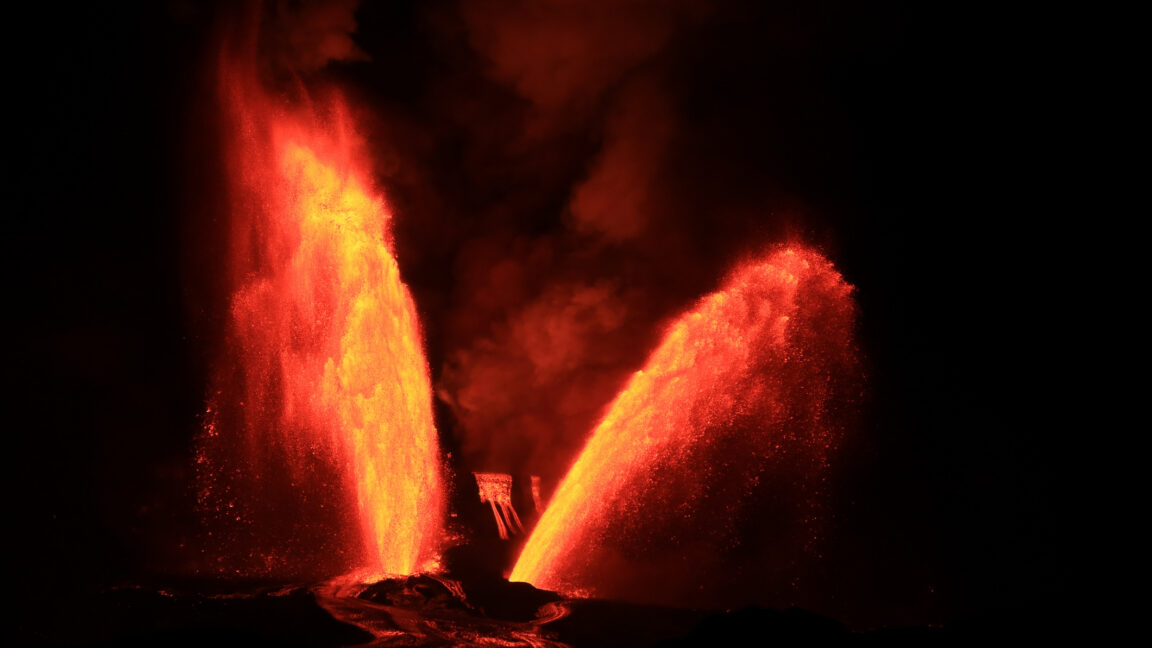
In most cases, hotspot-driven volcanism is relatively sedate, with lava flowing down mountainsides slowly enough that people can walk out of its way. But in a number of locations—Mount Etna, Hawaii, Iceland—lava gets expelled in dramatic fountains that can reach several hundred meters in height.

Right now, we're not sure what powers them. However, thanks to a recent set of eruptions at the Kilauea volcano, we have some of the best documentation yet of erupting lava fountains. In a recent edition of Science, researchers from the US Geological Survey describe what we've seen and compare it with what we might expect based on our best ideas about what powers these fountains of molten rock.

Years of fountains

With three active volcanic regions that engage in fountaining, there has been a steady flow of dramatic videos of red-hot molten rock spouting from the Earth. But Kilauea has had only three fountaining episodes since 1823, even though it's the youngest and most active volcano in Hawaii. That activity has led to intensive study, and we have a good idea of the volcano's structure. Previous work has identified a couple of lava residues within a few kilometers of the surface, and the volcano had 35 separate data-gathering stations set up on Kilauea, including "seismic, infrasound, geodetic, gas, and visual and thermal cameras."

Read full article

Comments

© Mike Lyvers

  •  

AI disqualification yields new Nikon Small World in Motion winner

Credit: Nguyen Nam Nhat.

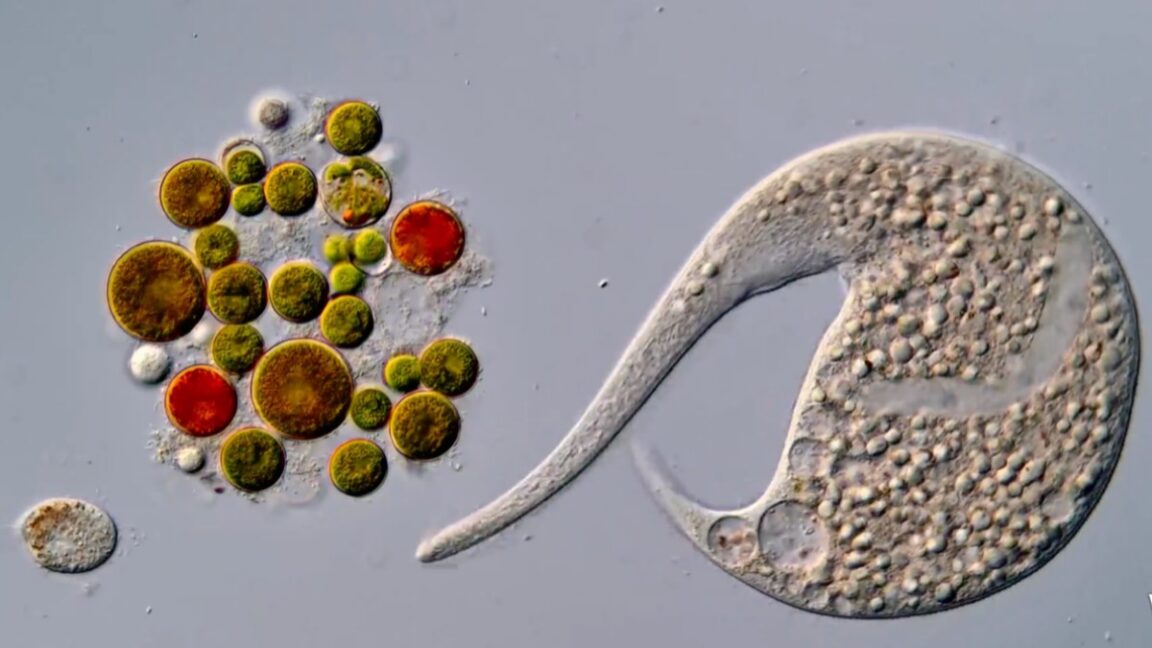
Last month we covered the winner of Nikon's Small World in Motion video: Ning Xu of Tsinghua University in China, whose video captured tiny cilia beating in the airways of a child with a rare respiratory disorder. But allegations surfaced about Xu's use of AI while making the video. Nikon launched an investigation and concluded that Xu's entry did not comply with competition rules. The new winner is Nguyen Nam Nhat of Vietnam with a video of a tiny roundworm and a single-celled organism (above).

According to a BBC report, some researchers expressed concern that Xu's video had structural abnormalities and that cell features appeared and disappeared in a way one would not see in actual cellular biology. Others spotted what looked like AI watermarks embedded within the source files. Xu said he used AI “to distinguish and visualize features in the reconstructed grayscale images”; however, he denied that AI was used "to generate the experimental movie, the cilia, or their motion.”

Founded in 2011, the Nikon Small World in Motion competition is a spinoff of the company’s Small World Photomicrography Competition, which has been around since 1974. Both are meant “to showcase the beauty and complexity of things seen through the light microscope”—one through still photographs, the other through photovideography, taking advantage of all the technological advances that now allow users to make movies or time-lapse images through the microscope.

The other winners also moved up a notch with Xu's disqualification. Benedikt Pleyer of Bavaria, Germany, placed second with a video of jellyfish larvae suspended in water droplets; Andrew Moore of Howard Hughes Medical Institute in the US placed third with a video of synchronized cell division in neighboring cells; Patrick Hickey of Hypha Research Ltd. in Edinburgh, Scotland, placed fourth with a video of the dynamics of mitochondria and chloroplasts in Turtle Vine leaf cells; and Igor Adameyko placed fifth with a video of a tiny, colorful sea slug (Cyerce kikutarobabai) on the move.

Read full article

Comments

© Nguyen Nam Nhat

  •  
❌