❌

Reading view

ReactOS reaches major milestone with NTFS install support

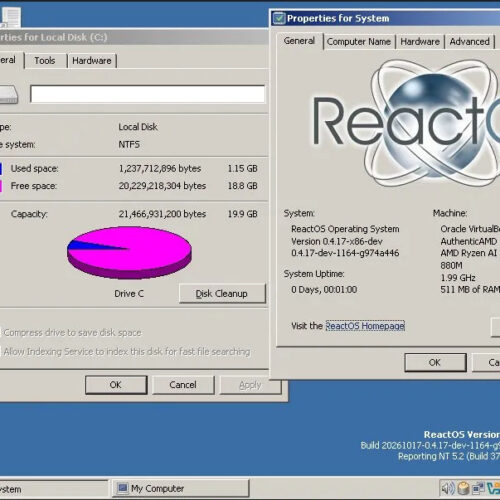
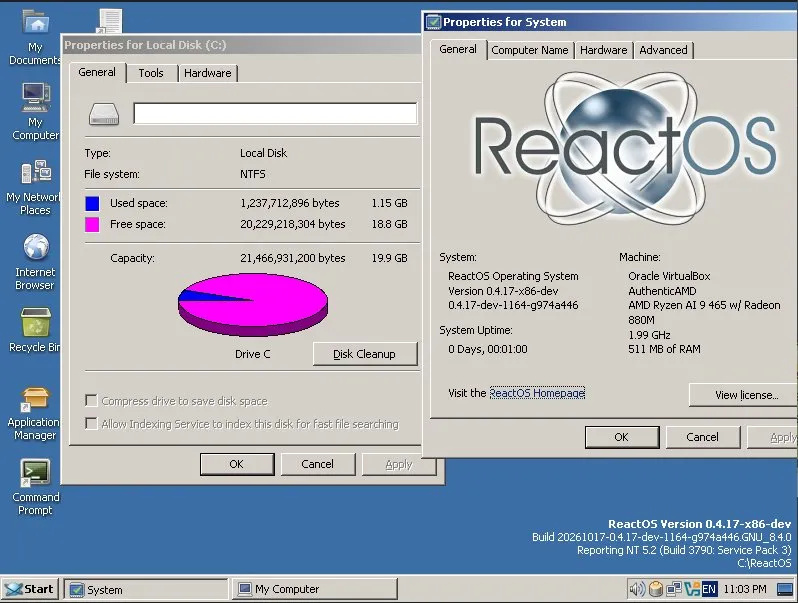
Open source Windows alternative ReactOS has reached a major milestone: The operating system can now be installed directly onto an NT Files System drive partition. As reported by Phoronix, the move to NTFS clears a long-standing hurdle for the project and brings it one step closer to finally reaching beta.

Prior to this latest announcement, ReactOS required users to keep a FAT32 partition for installations. A proprietary Microsoft-developed filesystem, NTFS can trace its roots back through the Windows NT family lineage starting in 1993 with Windows NT 3.1. The variant introduced with Windows XP in 2001 remains the standard used by most Windows systems today. With ReactOS's stated goal of reaching binary compatibility with Windows Server 2003, being confined to FAT32 partitions was a practical barrier to clear on the way to reproducing the Windows environment.

However, users looking to hop off the Windows train shouldn't be grabbing their bags just yet. ReactOS wrote that the new driver still "lacks caching (which causes inferior performance), journaling and security support." So while the new driver is here, even the most intrepid of OS tinkerers should tread carefully. The ReactOS team warned in its announcement on X that there are still "potentially undiscovered bugs."
Read full article

Comments

Β© ReactOS

  •  

DIY VR: How to build your own headset, and why you probably won't want to

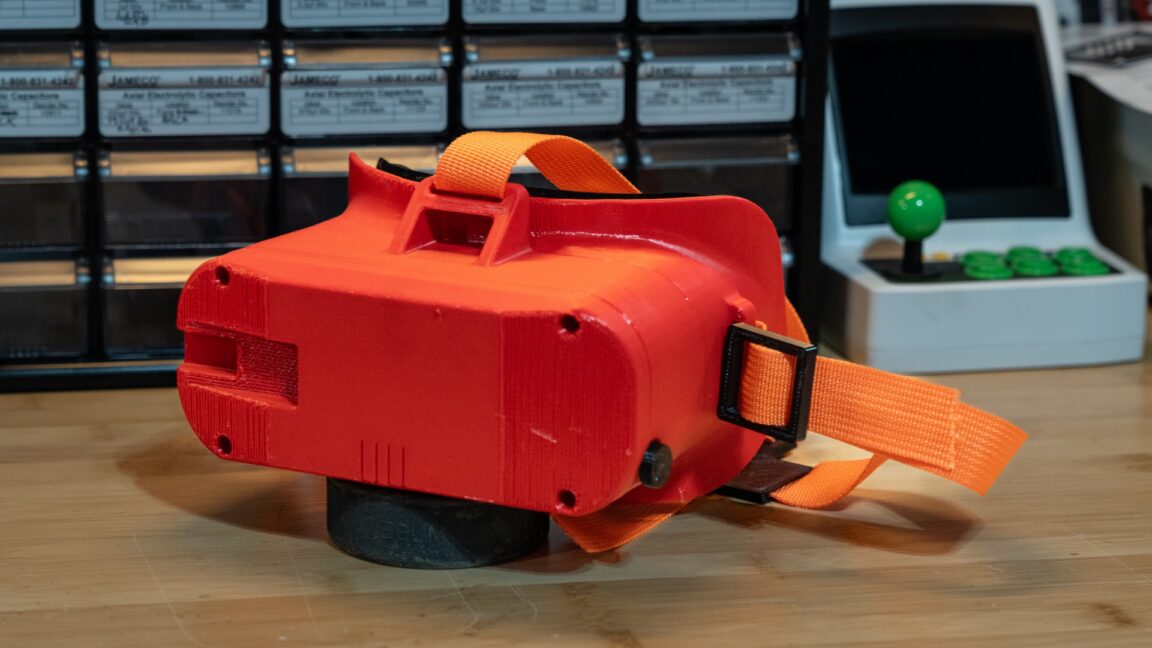
Virtual reality is in a bit of a weird place right now. After a lot of unfulfilled promise in the 1990s, it came back strong with the 2016 release of the Oculus Rift. For a while, it looked like VR, AR, XR, the metaverse, or whatever you wanted to call it, was going to be huge. Mark Zuckerberg was certainly convinced, and even Apple got in on the hype with its Vision Pro.

But by then momentum for alternate realities of every acronym was already in steady decline, and it only dwindled from there. The rate of development of new headsets has slowed, with many companies (including Apple) scaling back or shelving their efforts. While new releases like the Steam Frame and Pimax Dream Air are still happening, many of the most interesting developments in the space these days are on the enthusiast front.

That's right, DIY VR is a thing, and with a couple hundred dollars in components, plus many hours of your time, you too can enter the immersive world of virtual reality while also experiencing the highs and lows of soldering, firmware flashing, and 3D printing. I rode that rollercoaster myself and learned why this is still a decidedly niche movement.

Read full article

Comments

Β© Tim Stevens

  •  

Stratospheric airship flew from US to Japan to test sky cell tower concept

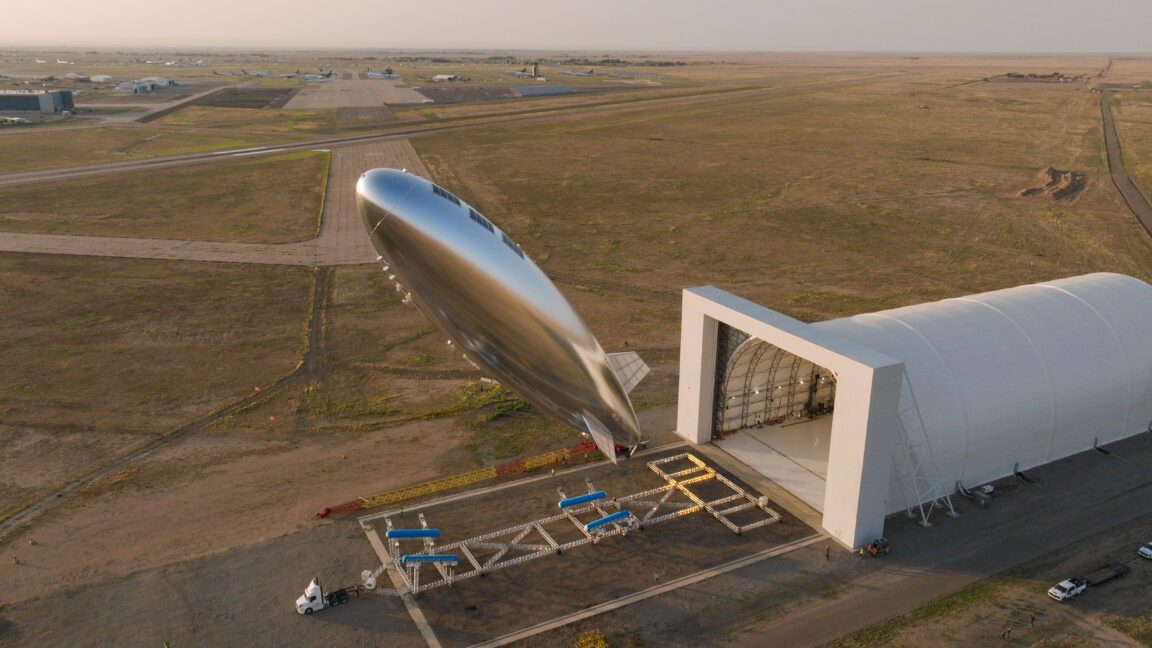
Nearly 100 years after the dirigible Graf Zeppelin made the first nonstop airship journey across the Pacific Ocean, another airship has successfully completed a round-trip flight from New Mexico to Japan and back. But the significance of this modern feat was less about the journey's length and more about its purpose: demonstrating how a lighter-than-air platform can act as a cell phone tower in the sky.

The trans-Pacific flight that took place over a month between August and September 2026 was the most notable milestone yet for Sceye, a US aerospace company based near Albuquerque, New Mexico. Sceye has developed an uncrewed platform filled with helium for buoyancy and equipped with an electric-powered propeller for active propulsion, allowing it to resist most strong winds and keep hovering over the same location for long periods. The platform also uses top-mounted solar panels and onboard batteries to stay powered for stratospheric operations around the clock.

β€œWe can stay over an area of operation, and we do that in the stratosphere right around 60,000 feet, so we're twice as high as air traffic and we're above the jet stream, and yet 30 times closer than low-Earth orbit satellites,” Mikkel Frandsen, founder and CEO of Sceye, told Ars. β€œWe can fly through day and night until the sun comes up the next morning and recharges the batteries, at which point we're still at the same altitude and still over the same area of operation.”

Read full article

Comments

Β© Sceye

  •  
❌