❌

Reading view

RIP Margaret Hamilton, whose code saved the Apollo 11 Moon landing

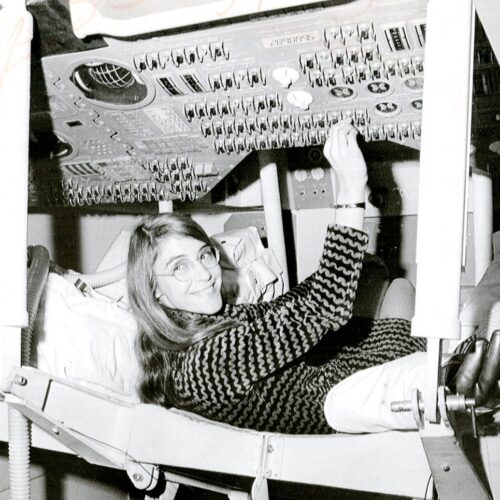
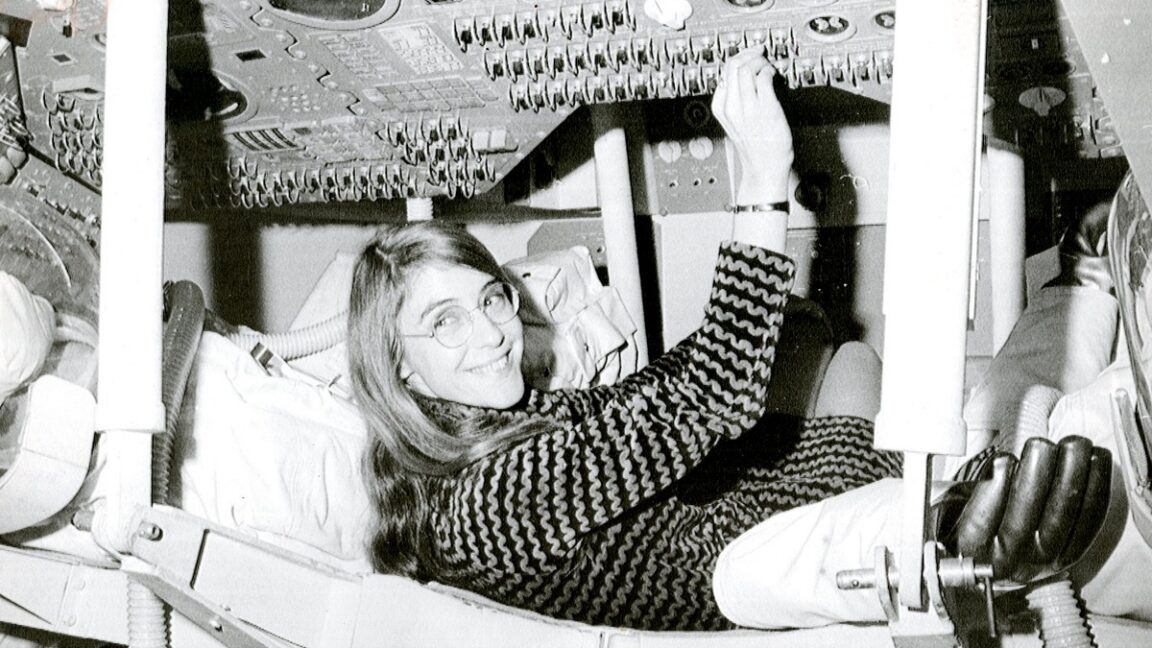
Margaret Hamilton, who coined the term "software engineering" and led the development of onboard flight software for NASA's Apollo program in the 1960s, died last week at the age of 90. A recipient of the Presidential Medal of Freedom in 2016, Hamilton was also immortalized as a LEGO minifig the following year—part of the "Women of NASA" set that also included astronauts Mae Jemison and Sally Ride.

“To say Margaret Hamilton was a pioneer—to say she was ahead of her time—would be a dramatic understatement. She was a software engineer at a time when that field was in its infancy, and she not only developed advanced code herself but also led a team in using that nascent technology to develop one of the most complex systems humanity had ever achieved,” said Olivier de Weck, interim head of the MIT Department of Aeronautics and Astronautics. “The Apollo program still stands as one of our greatest testaments to the power of collaboration, ingenuity, and engineering, and Hamilton was a fundamental contributor to that program’s success.”

Born in 1936 in Paoli, Indiana, Hamilton graduated from Earlham College in 1958 with a degree in mathematics and a minor in philosophy—the latter a nod to her father (a poet) and grandfather (a headmaster). She married her first husband, James Cox Hamilton, that same year. The plan was for her to work until he finished his law degree, after which he would support her through graduate school to earn a PhD in mathematics.
Read full article

Comments

© NASA/Public domain
  •  

Let's Encrypt cuts certificate lifetimes to 64 days starting February 2027

Let's Encrypt is continuing a push toward tighter security by reducing free SSL/TLS certificate lifetimes from 90 days to 64 days, starting February 10, 2027. For administrators already implementing modern ACME clients that support ARI (ACME Renewal Information), the change should be seamless. For those still relying on hardcoded renewal schedules or manual processes, February will be the deadline to update before certificates start expiring unexpectedly.

Starting on October 14, Let's Encrypt will begin testing the 64-day certificates, and interested users can opt in to test their setups before production goes live.

Prior to Let's Encrypt's launch in early 2016, certificates were often issued for as long as one to three years. The service started with 90-day certificates to force renewal automation that didn't previously exist. Shorter certificate validity periods limited vulnerabilities from private key thefts and encouraged accelerated HTTPS adoption across the web.

Read full article

Comments

© Getty Images | Yuichiro Chino

  •  

Driver wins $76 after ALPR led to bogus traffic stop, drug searches

A federal jury in Texas recently ruled in favor of a man who sued Bexar County and its sheriff over allegations that the agency ran what the plaintiff’s attorneys called an “unconstitutional traffic stop scheme” enabled by “AI-powered” license plate readers.

Late last month, plaintiff Alek Schott of Houston was awarded $76, one dollar for each minute that he was detained. (Schott asked for this exact amount as symbolic compensation.)

“After the stop, I filed a complaint with the Sheriff’s Office because I knew what happened to me was wrong,” Schott said in a statement after his win. “The department reviewed it, told me they didn’t see any violation, and said if I had a problem with it, I should sue them. So I did.”

Read full article

Comments

© Getty Images | Joseph Sohm/Visions of America

  •  

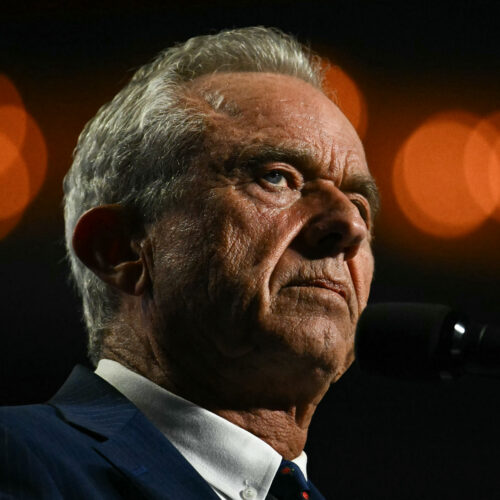
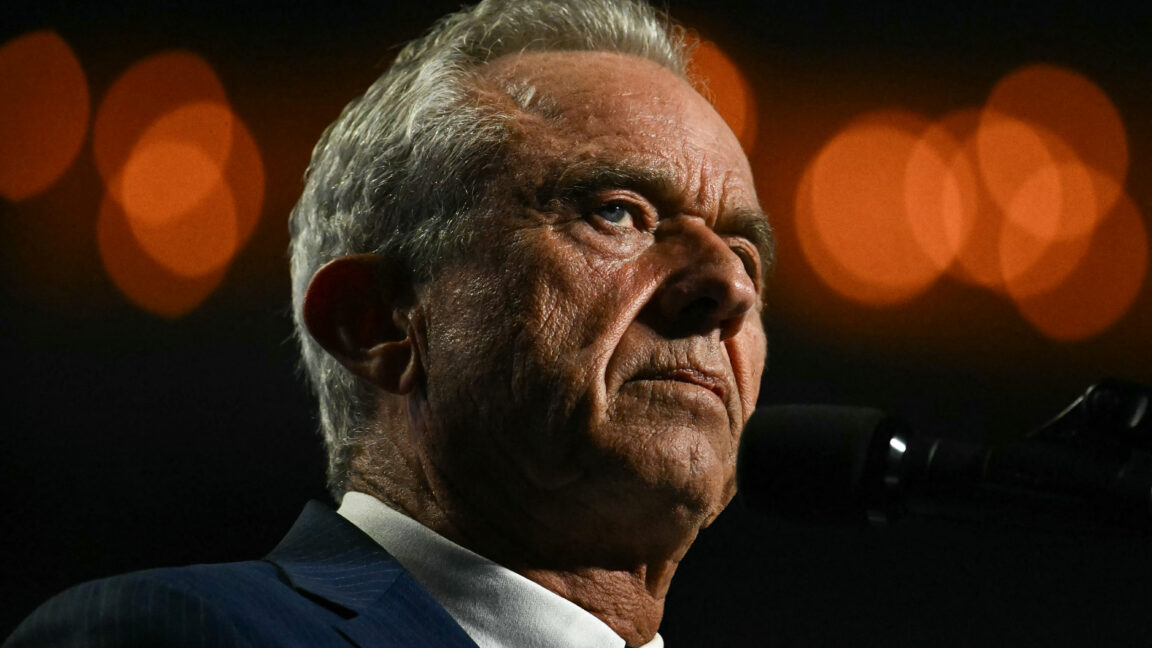
RFK Jr. unveils sweeping federal initiative to find evidence of vaccine injuries

Under anti-vaccine Health Secretary Robert F. Kennedy Jr., the federal health department is undertaking an agency-wide effort to focus on injuries claimed to be related to vaccines.

In a press announcement Thursday, the Department of Health and Human Services (HHS) laid out four aspects of the large-scale initiative. The first is a new clinic at the National Institutes of Health that is "dedicated to studying and caring for patients experiencing health problems following vaccination." Despite only being announced today, the clinic actually opened October 5, and Kennedy secretly attended its ribbon-cutting ceremony alongside other high-level Trump administration officials. It's unclear why his visit and the clinic's opening were not disclosed by the Trump administration, but they were reported by Bloomberg Law at the time.

Another aspect of the initiative is a proposal to reimburse doctors for reporting possible injuries from vaccines to a federal system called VAERS (Vaccine Adverse Event Reporting System). VAERS, which is run by the Centers for Disease Control and Prevention, is a common focus of anti-vaccine advocates, who incessantly misuse it. The system is meant to be an indiscriminate dragnet of any potential safety concerns linked to vaccines, providing a sensitive early warning monitoring system. Anyone, including members of the public, can submit an unvetted report.

Read full article

Comments

© Getty | Kent NISHIMURA

  •  

An experimental tour-de-force: Entanglement between glass bead and light

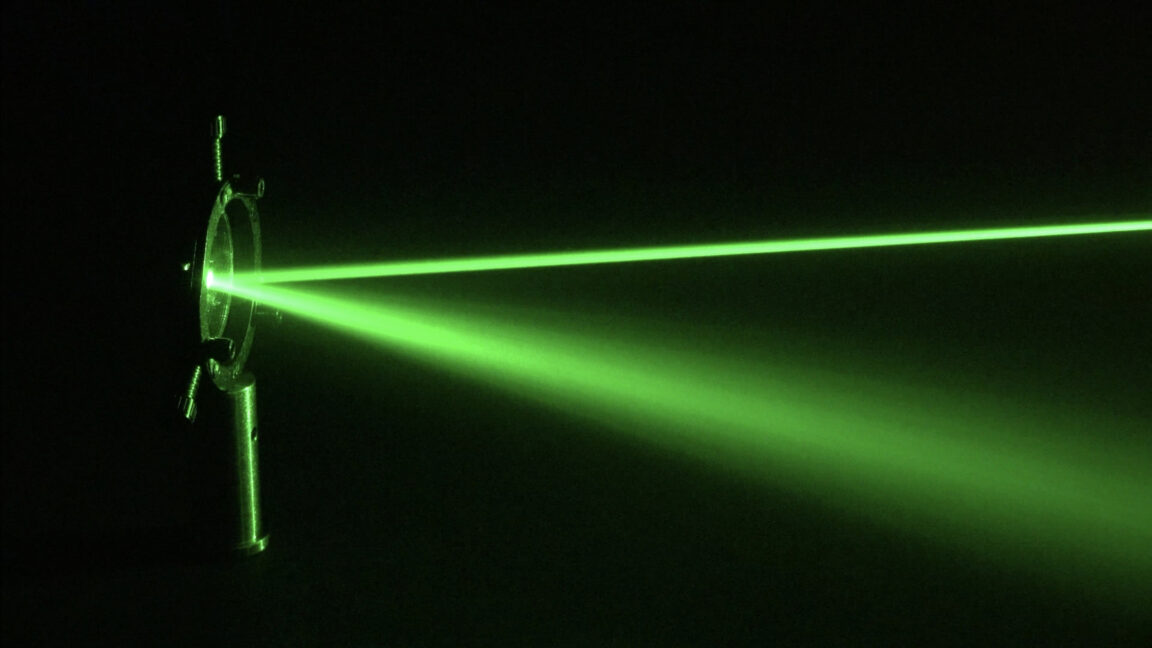
Writing about quantum entanglement is always a challenge. There are so many clichés to avoid: It’s mysterious, ghostly, spooky, and weird. Entanglement is none of those things, and yet it is also all of those things—a superposition of clichés, you might say. So, having gotten all of my clichés out of the way in the second sentence, let’s take a look at how a group of researchers managed to entangle a light beam with a glass bead, which is, frankly, quite an achievement.

Cliché-free entanglement

Quantum entanglement is nothing more or less than the idea that if two objects are linked, then their behavior will, in some ways, be correlated. To take a terrible example: My upper and lower arm are very strongly correlated in terms of relative position because they are connected at the elbow. No one is surprised by this because we can see that they are actually a single object called an arm.

Two photons can be, in a sense, joined together, meaning that they have correlations, too. In this case, we are (naively) surprised for three reasons. First, we think of photons as separate objects that cannot be joined—this is a mistake of understanding. Second, when we connect two photons, we only connect them in limited ways: The two photons may be wholly uncorrelated in terms of polarization, but strongly correlated in terms of energy.

Read full article

Comments

© twilightproductions

  •  

Amazon's new Alexa Tablets drop the Fire branding but are more Android than ever

For the last 15 years, you've been able to buy a Fire tablet from Amazon. Which Fire tablet? It doesn't matter—like Kindles, they have been pretty much the same year to year. The company's new tablet lineup is a big change, though. Amazon has dropped the Fire branding in favor of Alexa, and the new Alexa Tablets are now Google-certified Android devices.

Throughout the history of Fire Tablets, Amazon downplayed its use of Android. They ran Android apps from the company's Appstore platform, but there was no Google integration with "Fire OS." However, Amazon shut down its app store last year. The new Alexa Tablets run full-fledged Google-y versions of Android with the Play Store and all the apps you'd expect. This contrasts sharply with Amazon's Fire Sticks, which have abandoned Android for the custom Linux-based Vega OS.

The Alexa Tablet lineup consists of three devices, all redesigned with unibody aluminum housings. The Alexa Tablet 8 starts at $230, and the Tablet 11 jumps to $330. They run on the budget MediaTek 8189 processor, but that's still an upgrade from the last-gen Fire tablets. Both devices have 16:10 display ratios that are better for watching video, but the flagship tablet is a little different.

Read full article

Comments

© Amazon

  •  

Amazon builds 1,000th satellite, will launch space internet service by end of year

The world's largest retailer wants to sell you something else—Internet from space.

Amazon has been developing a constellation of satellites to deliver broadband Internet from low-Earth orbit for the better part of a decade, and the company is just about ready to pull back the curtain. It is entering a market that SpaceX, with its Starlink Internet, has dominated for the last half-decade. Amazon's debut into satellite Internet is being closely watched, not just by some consumers, but by businesses ranging from airlines to shipping companies to governments. Broadband Internet from orbit has proven broadly useful for a lot of purposes, from video games to commerce to warfighting.

But until now, most people had to buy it from Elon Musk and SpaceX. OneWeb has only offered limited services, leaving Amazon as the only real competitor to deliver high-speed Internet globally. Moreover, at the head of the company's broadband efforts is Rajeev Badyal, who led Starlink during its early years, but whom Musk fired eight years ago for moving too cautiously on Starlink.

Read full article

Comments

© Amazon Leo

  •  

Internal files add to evidence of an ExxonMobil climate deception campaign

If there was a year the world began waking up to climate change, it might have been 1988. That June, the NASA climatologist James Hansen testified to Congress that the climate was warming and would continue to do so as long as humans pumped fossil fuel pollution into the atmosphere. Months later, the United Nations established the Intergovernmental Panel on Climate Change.

And, just weeks before the UN vote, Frank Sprow of Exxon’s corporate research department warned his colleagues in an internal memo, “If a worldwide consensus emerges that action is needed to mitigate against Greenhouse gas effects, substantial negative impacts on Exxon could occur.”

Sprow’s memo is part of a batch of previously undisclosed documents released earlier this year without fanfare as part of an ongoing lawsuit Massachusetts filed against ExxonMobil in 2019. While the memo was quoted in a 2023 article by The Wall Street Journal, it has not been published in full. Several other documents included in the filings are being reported on here for the first time, including more recent statements from Exxon scientists challenging the company’s climate-solution claims about its work on biofuels and carbon capture and storage.

Read full article

Comments

© Jason Fochtman/Houston Chronicle via Getty

  •  

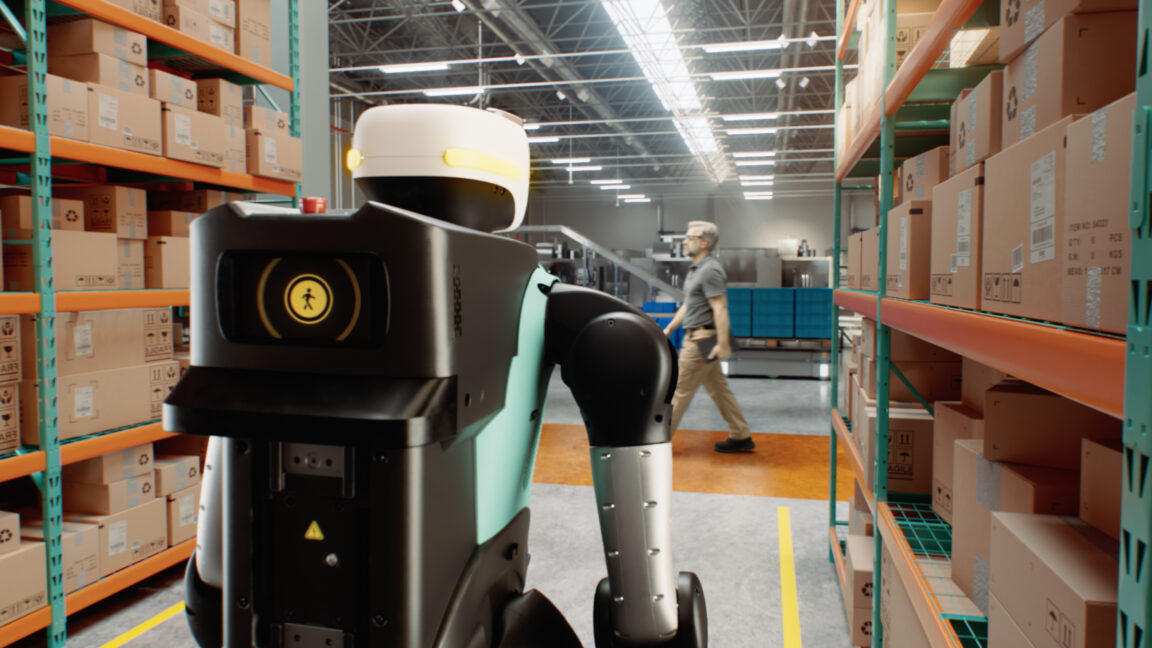
Nvidia's big bet on physical AI aims for safer robotaxis, humanoid robots

Investors bullish on AI data centers may be fueling Nvidia’s multitrillion-dollar market capitalization, but the AI chipmaker has also bet billions of dollars on physical AI technologies such as robotics and self-driving cars. Part of that gambit has involved developing a full-stack safety system that companies can build upon to reduce the risk of their machines harming nearby people.

Nvidia's Halos system launched in 2025 with hardware and software tools to help developers implement guardrails in self-driving cars and other autonomous vehicles. Then the company expanded its safety architecture to more physical AI technologies by announcing Nvidia Halos for Robotics in June 2026—with the goal of enabling safe deployments of autonomous mobile robots in warehouses, humanoid robots walking around inside a factory, or even surgical robots.

“Now the AI models are getting capable, the robot hardware is getting capable, and a thing we thought is going to be the next bottleneck is safety,” Amit Goel, head of robotics ecosystem and edge computing at Nvidia, told Ars. “So that's why we launched our Halos for Robotics to unlock the capability of these systems.”

Read full article

Comments

© Agility Robotics

  •  

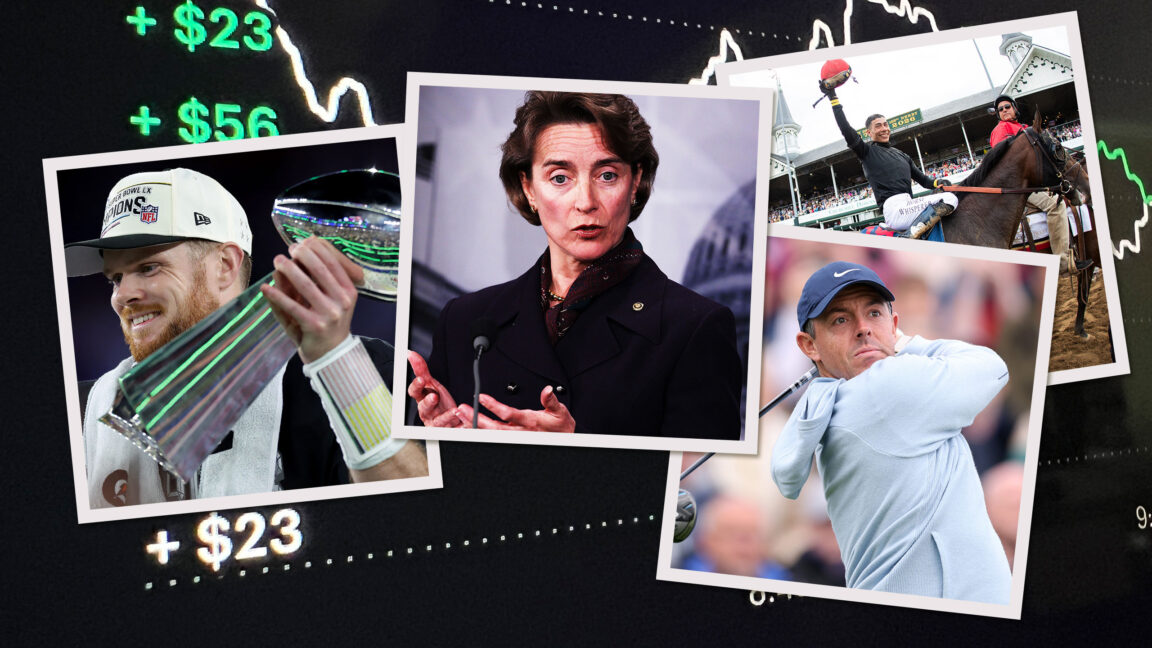
A senator tried to ban gambling on prediction markets—now she's a Kalshi lobbyist

In July 2010, US Senator Blanche Lincoln (D-Ark.) predicted the rise of prediction markets and the problems they could cause. If not properly regulated, Lincoln warned during Senate proceedings on the Dodd–Frank Wall Street Reform and Consumer Protection Act, prediction markets could evade gambling laws by offering "event contracts" that let people place wagers on sports games.

"It would be quite easy to construct an event contract around sporting events such as the Super Bowl, the Kentucky Derby, and Masters golf tournament," Lincoln, who played a key role in making the law that now regulates prediction markets, told fellow senators. "These types of contracts would not serve any real commercial purpose. Rather, they would be used solely for gambling."

Today, Lincoln is a lobbyist for prediction market Kalshi and has urged the Commodity Futures Trading Commission (CFTC) to allow sports gambling on the markets. The firm she founded has received $480,000 from Kalshi since 2024 in exchange for lobbying Congress and the CFTC for looser regulation of event contracts.

Read full article

Comments

© Aurich Lawson | Getty Images

  •  

Microsoft event debuts new AI-friendly hardware and Windows changes

In its first live event in two years, Microsoft today announced its newest Surface laptop, outlined a host of changes coming to Windows 11, and shared a vision of how local-AI and agentic workflows could reshape personal computing for those in the dev community as well as home enthusiasts.

Surface Laptop Ultra

Originally teased in May 2026, the new Surface Laptop Ultra will be Microsoft's first offering to take advantage of the new Nvidia RTX Spark SoC (system on a chip). The device has a starting price of $2,599 and comes in various SoC and memory configurations, with either a 5120-core or 6144-core Blackwell GPU and up to 128GB of LPDDR5x unified memory. It will begin shipping on October 16 and is available for preorder now.

While the new Ultra is clearly focused on the developer crowd, graphical performance was highlighted during the presentation to show off just how capable the laptop can be. By leaning on unified memory allocation rather than the physical VRAM limits of a traditional GPU, the laptop can assign its resources to handle modern gaming tasks as well as local AI development and deployment. The new Gears of War: E-Day was shown running on the system, meaning that even without a traditional gaming GPU, AAA titles are on the table.

Read full article

Comments

© Microsoft

  •  

“Software is over”: Bold AI developer takes aim at Adobe with open source clones

For a while, those hoping to avoid the difficulty and expense of dealing with Adobe's Creative Suite have been able to use several free and/or open source alternatives that replicate some or all of those capabilities. Now, one developer is using AI-powered reverse engineering to mimic the look, feel, and functionality of Adobe's well-known software with what he hopes will soon be perfect fidelity.

Artcraft got its start last year as a "controllable AI for artists" that allows for precise post-generation editing of AI-crafted images and videos. Over the weekend, though, the brand debuted its pivot to a suite of seven open source apps recreating the user interface and tools found in Adobe's Photoshop, Illustrator, Premiere, Lightroom, After Effects, InDesign, and Acrobat Pro.

In announcing those new apps on Reddit earlier this week, software developer Brandon Thomas said he used Anthropic's Claude Opus 5.5 to create "clean-room replacements" for Adobe's closed source software in Rust (with WebAssembly versions available for use in a browser). And while commenters on Hacker News and elsewhere have taken pains to point out the new software's many current shortcomings, Thomas makes the grandiose promise that the current "super early alpha" state will soon lead to something just as functional as anything Adobe has ever put out.

Read full article

Comments

© Artcraft

  •  

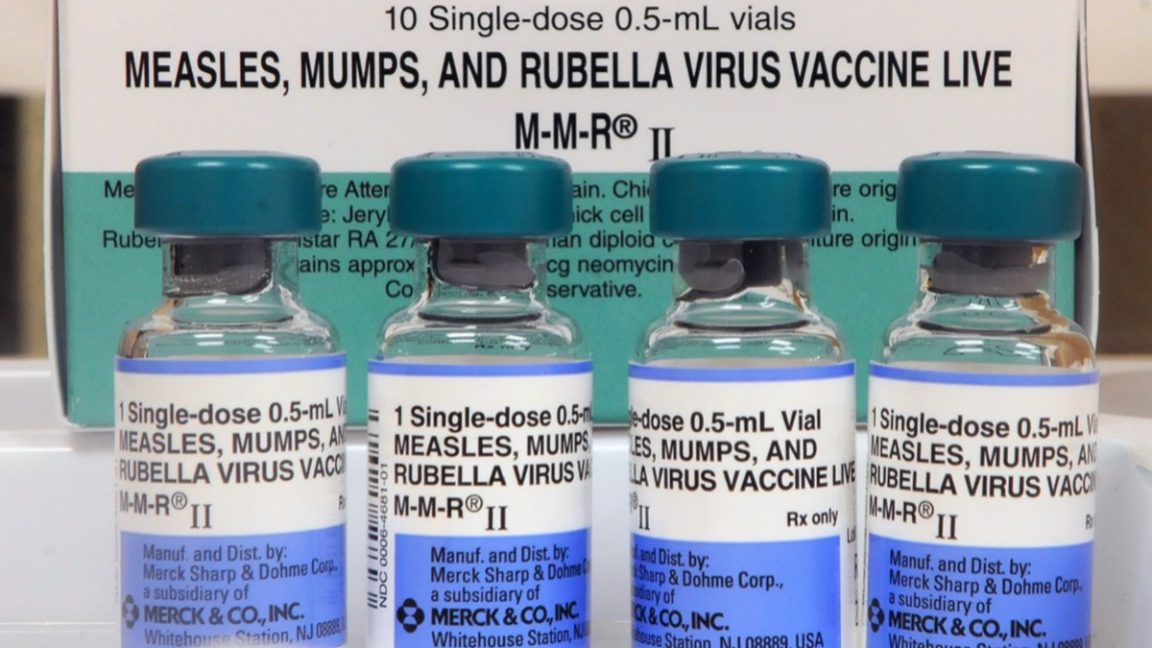
PA measles outbreak tops 1,000 cases, largest since disease was eliminated

Pennsylvania's explosive measles outbreak is now the largest the US has seen since the highly infectious virus was declared eliminated in 2000. With well over 1,000 cases, it's the largest on record since 1991.

Pennsylvania's health officials reported 1,078 measles cases in all of 2026 as of this afternoon. That includes 12 cases in January and March, with the remaining 1,066 cases since April, when the current outbreak began. The tally includes 145 cases recorded in the last seven days and 74 identified since the previous update on Monday. Health officials noted that 40 of the 74 cases added today were from more than two weeks ago and are just now being recorded.

Among the cases, there have been 207 hospitalizations and five deaths—a newborn, a 6-week-old, an 18-year-old, a 20-year-old, and a 40-year-old. All of the deaths occurred during the current outbreak in people who were unvaccinated; the two infants were too young to have been vaccinated.

Read full article

Comments

© Paul Hennessy/NurPhoto via Getty Images

  •  

TP-Link problems in US grow amid FCC router ban and four state lawsuits

TP-Link is facing more legal troubles in the US as Florida and three other states filed lawsuits alleging that it lied to consumers about its connections to China and the risks of its routers being exploited by Chinese state hackers.

The lawsuits were filed yesterday, about six months after the Federal Communications Commission announced a sweeping ban on consumer-grade routers produced wholly or partly outside of the US. Numerous router makers have obtained exemptions to the ban, but the Trump administration so far has not granted one to TP-Link.

Router makers that received exemptions include Netgear, Asus, Adtran, Amazon and its Eero subsidiary, Calix, Nokia, SpaceX's Starlink division, and others. For now, TP-Link is unable to sell its latest Wi-Fi 8 routers in the US, though models approved before the ban can still be sold.

Read full article

Comments

© TP-Link

  •  

Chemistry Nobel goes to reactions like those that gave life a hand

Life is remarkably selective. Life relies on many molecules with what is termed "handedness"—they're chemically identical but are mirror images of each other. Most chemical reactions will make a 50-50 mix of the left- and right-handed forms of a chemical, but life uses only one of them. In fact, because of the differences between left- and right-handed chemicals, most of the key enzymes used by organisms will fail to work if they're presented with chemicals that have the wrong handedness.

That poses a bit of a challenge for origin-of-life research, as we're forced to explain how a world that may have started with an even mix of left- and right-handed chemicals produced organisms that only used one of them.

Today's Nobel Prize in Chemistry goes to two individuals, Henri Kagan and Kenso Soai, who discovered chemical reactions could be biased, producing large excesses of one of the two forms of a chemical.

Read full article

Comments

© ollaweila

  •  

Pediatricians renew call to ban raw milk as anti-science rhetoric reigns

As many doctors are moving ahead with the latest advances of modern medicine—from powerful obesity drugs to breakthrough cancer treatments—pediatricians are being forced to turn back, fighting to maintain advances in children's health that were hard-won decades ago.

With anti-vaccine advocate Robert F. Kennedy Jr. as health secretary, the American Academy of Pediatrics (AAP) has spent a considerable amount of time and resources in the past year fiercely defending lifesaving vaccinations—safe, routine shots that have saved the lives of millions of children over decades and thwarted untold suffering and disability.

But just this week, The New York Times reported that Ken Paxton, the attorney general of Texas, has opened aggressive investigations against pediatricians simply because they vaccinated their patients. Paxton falsely claims vaccines are part of a "multi-level, multi-industry scheme." But critics say his anti-vaccine campaign appears more aimed at currying favor with Kennedy, President Trump, and their supporters as Paxton runs for the US Senate.

Read full article

Comments

© Getty | Matthew Ludak

  •  

Fraudster jailed for using 10K bots and AI songs to outstream Taylor Swift

After pleading guilty, a 54-year-old North Carolina man, Michael Smith, was sentenced to 18 months in prison for using artificial intelligence to generate songs for a scheme that stole millions from music streaming platforms.

In a press release Tuesday, the US Department of Justice said that Smith is the first American criminally charged with AI-assisted streaming fraud.

First charged in 2024, Smith successfully ran the scheme for seven years without detection.

Read full article

Comments

© Taylor Hill / Contributor | FilmMagic

  •  

Jaguar Type 01 debuts; now, no one remembers the electric Ferrari

Does it feel like people are perhaps a little grumpier or more on edge these days? It’s not like it’s without reason. There are wars. The climate is going haywire. Someone just died of plague. Scientific research is under attack. Machines keep stealing humans’ work. The media is a mess. And just when it all starts to feel a little overwhelming, Jaguar goes and unveils a new car.

The Type 01 is the first model to arrive from Jaguar’s rebirth. The British carmaker was an early entrant to the modern EV market with the 2017 I-Pace, which was fun to drive even if it was too small inside and perhaps completely unreliable. An all-electric sedan was supposed to be next, but a year from the showroom, it was abruptly canceled, leaving the automaker with nothing to sell as old models like the F-Pace ceased production.

Instead, Jaguar got to work on an all-new electric vehicle platform called JEA, which will underpin an all-electric product line. An elevated ownership experience and a starting price of about double the brand’s previous $60,000 entry point was the idea, Jaguar boss Rawdon Glover told me in 2024. Then last year the brand started teasing its relaunch, and everyone got upset. Things got even worse when the first images of the slab-sided and pastel-shaded Type 00 coupe concept leaked.

Read full article

Comments

© Jaguar

  •  

Trade group crunches numbers on Trump’s impossible push for 100% US-made tech

One of Donald Trump’s biggest goals as president is to increase domestic manufacturing and reshore supply chains so that the most in-demand technologies in the world can be 100 percent made in the United States.

By executive order last December, he launched his “Genesis Mission,” an ambitious plan seeking to leverage US dominance in AI to maintain or seize an edge in advanced robotics, biotechnology, semiconductors, and nuclear technologies. According to Trump, that plan works best with self-sustaining supply chains. Not even neighboring countries or longtime allies should be relied upon to manufacture a single component of any US product in his ideal world.

The Consumer Technology Association (CTA) has long warned that Trump’s reshoring goals are not grounded in reality, but only recently has America’s largest technology trade association attempted to estimate what it would cost businesses and consumers to follow through on Trump’s plan.

Read full article

Comments

© sefa ozel | iStock / Getty Images Plus

  •  

Mistral says "Le Chonk" can challenge the best AI models

As tensions mount over who gets access to top-end artificial intelligence, French company Mistral has released a new freely available model that it claims can compete with the very best from the US and China.

The new 1 trillion-parameter model, Mistral Large 4—nicknamed Le Chonk—can be used and customized by anyone. It’s currently available in preview, with a final version to follow by the end of the month. Though Le Chonk is built to compete with leading general-purpose models, it’s optimized specifically for coding and cyberdefense, as well as tasks particular to manufacturing, finance, electrical engineering, and other niches.

“There are a lot of areas where the other labs will not focus that much,” Guillaume Lample, cofounder and chief scientist at Mistral, tells WIRED. “There are so many domains in which you can improve models.”

Read full article

Comments

© Mistral / Benj Edwards

  •  

Google rolls out improved SynthID AI content detector, now available globally

Every piece of AI content from Google's Gemini models has a hidden SynthID label, which makes it very difficult to pass the content off as authentic. SynthID has also gotten buy-in from other major AI players, but actually checking for those invisible watermarks has been a convoluted process. It's going to be a little easier going forward, though. Google has announced that its SynthID detector now supports watermarks from all its partners, and it's available for anyone to use on a new dedicated website.

SynthID is an invisible signal encoded in the pixels of AI-generated images and videos, and in the waveform of AI audio. Google says Gemini alone has integrated SynthID with over 180 billion images and videos, plus 240,000 years of audio. Until now, the only way for those outside of Google's trusted tester program to check for SynthID was to ask Gemini. This is rather clunky, and the model's output could sometimes be confusing when you just wanted a simple "yes" or "no."

Now you can cut Gemini out of the loop. Starting today, you can go to the new SynthID.com website to check a piece of content for an AI watermark. A major limitation of Google's previous detector was that it only checked for Google's version of SynthID. Even though ChatGPT images, for example, have SynthID, they wouldn't be flagged in Google's detector. That's no longer a problem.

Read full article

Comments

© Aurich Lawson

  •  

AI/ML is becoming a performance factor in motorsport

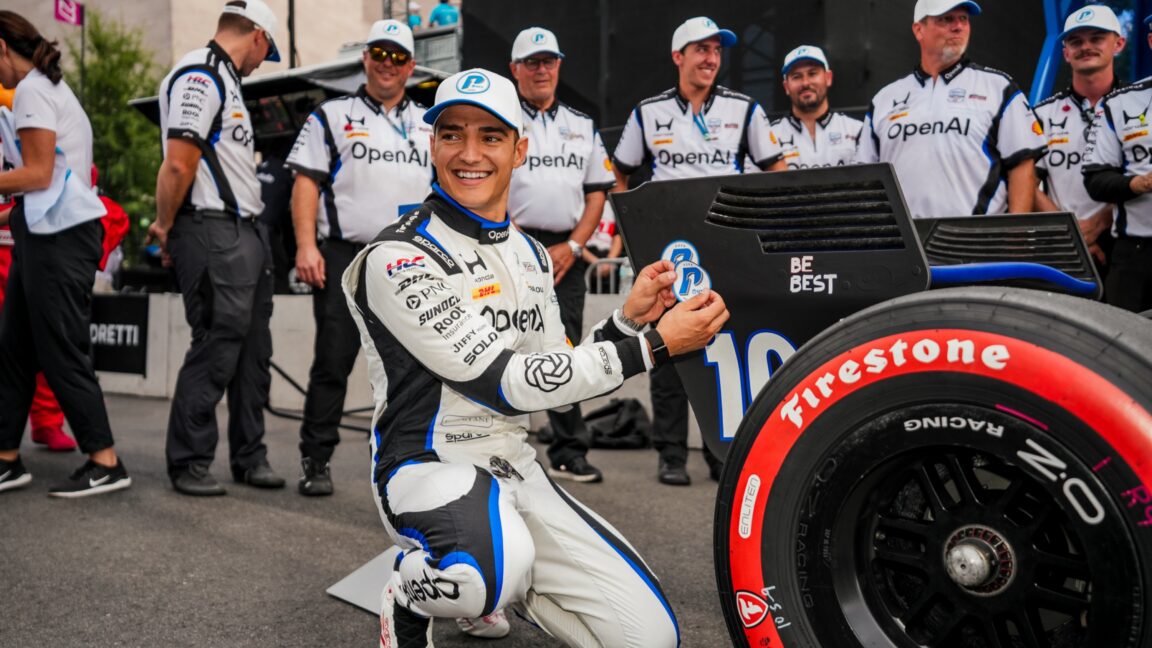
There’s been something of a change in the world of motorsport over the past few years. It has to do with where the money comes from. In the old days, it was tobacco and, to a lesser extent, booze. Today such things are mostly banned, and when you look at a racecar covered in sponsor logos, you’re likely to see something crypto-, cyber-, or AI-related.

This makes sense—an ever-larger share of our GDP is wrapped up in those segments. They’re the ones with all the money, and it takes money to go racing. So at the amateur level, we’ve seen tech CEOs replace dentists as the privateer of choice: This past weekend’s Petit Le Mans included co-founders of GitHub, CrowdStrike, Shopify, and the creator of Ruby on Rails, to name a few.

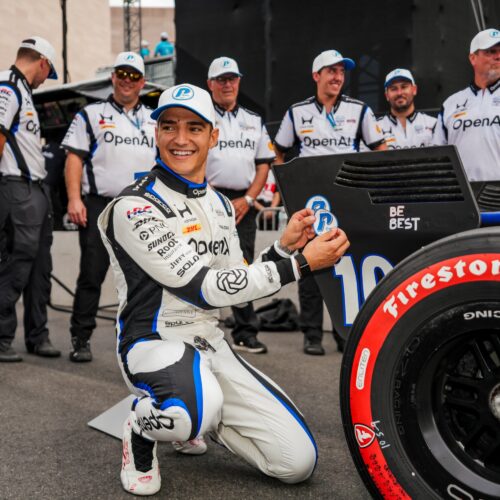
But this is an instance where a sponsor can provide tangible benefits to their motorsports partner beyond a bank transfer, as Chip Ganassi Racing (CGR) and OpenAI have been showing in IndyCar this year.

Read full article

Comments

© Chip Ganassi Racing

  •  

Review: Fine, let's talk about Digger

I found the trailer for Digger intriguing, starring a nearly unrecognizable Tom Cruise and giving off strong Dr. Strangelove vibes. Plus, it is four-time Oscar-winning director Alejandro G. Iñárritu’s (Birdman) first English-language film since 2015’s The Revenant. Those elements quickly moved it near the top of my "must-see" list even if details about the actual plot were lacking. Given Iñárritu’s pedigree, the film seemed poised to be prime Oscar bait.

(Major spoilers appear below the gallery. We'll give you a heads-up when we get there.)

By now it's clear that Digger is on track to be one of the biggest bombs of the year instead, racking up a mere $20 million globally its opening weekend, against a $125 million (possibly more) budget. It has sharply polarized critics and audiences alike, with some appreciating Iñárritu's bold, creative swings and others finding the film practically unwatchable.

Read full article

Comments

© Warner Bros.

  •  

If you're looking, here's a "good deal" for NASA and the European Space Agency

It's no surprise that NASA's new tack toward foreign partnerships—good deals only, please—is challenging preconceived notions of international cooperation in space.

Without a massive budget hike, the US space agency's emphasis on building a Moon Base and winning a competition for lunar real estate and resources with China will inevitably leave lesser priorities behind.

Gone is the Lunar Gateway, a space station that was to be assembled in orbit around the Moon. For the United States, Gateway was an unnecessary distraction and expense as NASA goes all-in on placing a surface station near the Moon's south pole.

Read full article

Comments

© AEI/MM/Exozet

  •  

Drones sink ships near NATO countries in “unacceptable” attacks, EU says

Drones sank two cargo ships and damaged a third in the exclusive economic zones of NATO member countries for the first time, killing at least two sailors. The attacks represent a notable escalation as Black Sea commercial shipping has increasingly come under attack during the Russian invasion of Ukraine, with Russia also being accused of carrying out “hybrid warfare” incidents across Europe.

The Togo-flagged cargo ship Alfa Watan sank, and the Palau-flagged cargo ship Able was set ablaze after being attacked by multiple sea and aerial drones about 80 miles (128 kilometers) off the coast of Bulgaria on October 6, according to the Associated Press. In an interview, Bulgarian Prime Minister Rumen Radev described the incidents as “an unacceptable attack in Bulgaria’s exclusive economic zone” and “a blatant violation of international law and maritime law.”

A Bulgarian ferry managed to evacuate the 18 crew members of the Able, with two severely injured mariners being flown to a hospital in the city of Varna.

Read full article

Comments

© Iuliia Kuzmina / iStock Editorial / Getty Images

  •  

OpenAI will watermark ChatGPT outputs by default—but only in the EU

OpenAI will begin automatically watermarking text generated with ChatGPT in the European Union, the company has announced. It will also offer the watermarking feature in other regions, but it will be off by default outside of the EU.

The move in Europe is driven by a need to comply with the EU AI Act, which took effect in August. It requires marking content produced by AI models in a way that another tool can detect. Unfortunately, there is still no completely effective and reliable way to do that. A few standards already exist, like SynthID and the C2PA project, but they are relatively easy to circumvent for anyone with basic know-how.

The same is likely true for OpenAI's watermark. Its method is proprietary; the company calls it textGrain, and has published a technical paper explaining how it works. But in general, it works like other LLM watermarking tools we've seen in the past: It puts patterns in the word choices that are not clear to a human reader and that don't meaningfully change the general quality of the output, but that someone with a key can use a specialized detector to find. OpenAI says it will be giving access to the detector to a limited number of researchers and organizations and providing a request-for-approval process for others to be added over time.

Read full article

Comments

© Getty Images | NurPhoto

  •  

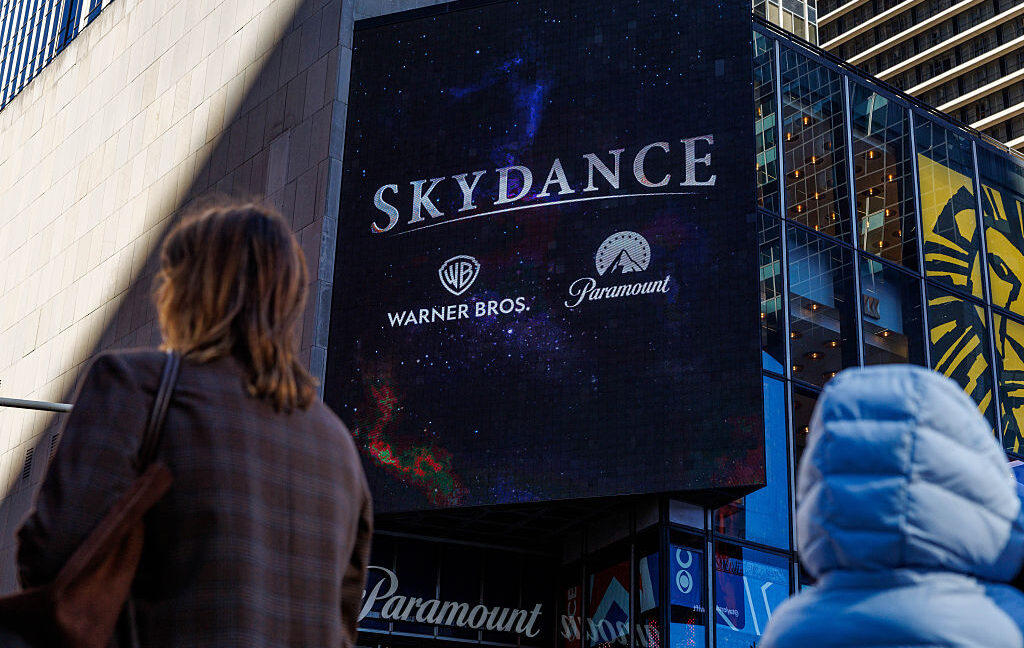
HBO Max, Paramount+, and Discovery+ "will unify into a single service”

After months of industry and customer speculation, Paramount Skydance has shed some light on the future of the HBO Max and Paramount+ streaming services.

Paramount Skydance completed its acquisition of Warner Bros. Discovery (WBD) today, ending a monthslong saga that began when Netflix last year announced its own plans to buy WBD. Netflix scrapped those plans in February. Skydance is the name of the company created from the $111 billion merger.

In an announcement today, Skydance said that all of the direct-to-consumer streaming services it owns, including the Discovery+ service that Discovery Inc. (which merged with WarnerMedia in 2022 to create WBD) launched in 2021, “will unify into a single service over time.”

Read full article

Comments

© Adam Gray/Getty Images

  •  

It looks like the Atlantic storm season may finally produce a hurricane

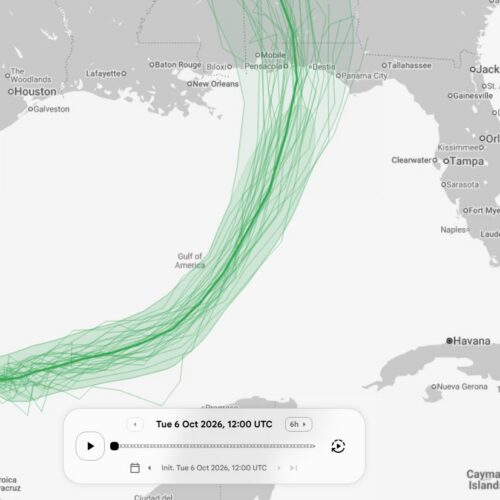
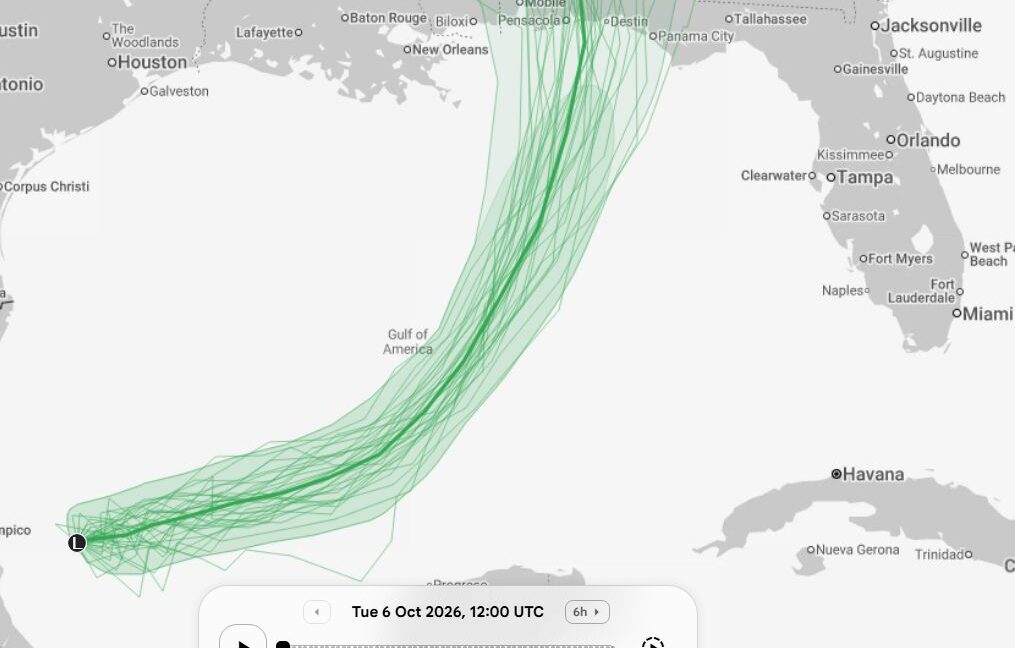
A low-pressure system in the western Gulf of Mexico should soon become a tropical storm, and based on the latest forecast modeling, it has a decent chance of becoming a hurricane.

Normally, a hurricane forming in early October would not be particularly noteworthy. However, this year the development of a hurricane would be a big deal—because it has not happened yet.

In the modern hurricane record—an era dating to about World War II when there has been aircraft reconnaissance and later continuous satellite coverage—there has never been an Atlantic season without a hurricane, and no season has gone this late without one forming.

Read full article

Comments

© Google Weather Lab

  •  

Hackers obtain counterfeit TLS certificates for Google and other large services

Attackers hijacked three top-level domains and used their control to mint counterfeit TLS certificates for Google and other large organizations, Google said Tuesday.

The attackers launched a series of attacks on the .gh, .sl, and .as country code top-level domains (ccTLDs) and then modified authoritative DNS records for selected domains within those namespaces. By controlling those DNS records, the attackers were able to pass automated domain control validation checks and obtain unauthorized certificates for “several Google domains” and “several leading global brands and widely used online services.” Google said it updated Chrome to block all certificates it identified as unauthorized, and worked with the issuing certification authorities to ensure the unauthorized certificates for Google properties were revoked.

Certificate issuance: The weak link in the chain

TLS certificates are the cryptographic credentials that underpin authentication and encryption protections for websites, mail servers, and other Internet infrastructure. These x.509 certificates use a digital signature to bind a domain name such as google.com to a public key. The public key is publicly available, while the private key is held only by the website operator. When a connection shows that the keys match, the visiting party knows it’s connected to the authentic site rather than an impostor. Possession of unauthorized certificates allows attackers to cryptographically impersonate the affected infrastructure.

Read full article

Comments

© Getty Images

  •  

Paramount completes $111B Warner merger, creating “Skydance” behemoth

Paramount Skydance completed its $111 billion merger with Warner Bros. Discovery today, after a last-ditch effort to block the deal was rejected by Supreme Court Justice Elena Kagan.

The post-merger company is called Skydance, taking the name of a firm that Paramount bought in a separate deal last year. The new Skydance combines two of the largest movie studios, streaming services Paramount+ and HBO Max, CBS, CNN, "and a portfolio of live sports including CBS Sports and TNT Sports, as well as a deep programming library and expansive collection of brands and franchises," Skydance said today in a press release announcing completion of the deal.

The merger was delayed a bit by a lawsuit filed by California and 11 other states. In July, US District Judge Araceli Martínez-Olguín in the Northern District of California ruled that the combination would likely reduce competition substantially and violate antitrust laws.

Read full article

Comments

© Getty Images

  •  

Support Ars and get a better reading experience in return

When Ars launched in 1998, there was one way to read it: in a web browser on a PC (or Mac). Your screen of choice was either some massive CRT or a very expensive LCD monitor (or, in my case, the less-expensive grayscale, passive-matrix LCD on a PowerBook). Either way, it was butt in chair, chair at desk.

One of the first perks we offered subscribers way back at the turn of the millennium allowed them to read Ars without a browser. Articles were available as formatted PDF files, so you could print out John Siracusa's Mac OS X Public Beta review and read it on the subway or build your own searchable archive of your curated Ars content. Another option was full-text RSS feeds—instead of getting a two-paragraph summary, subscribers could browse Ars in their favorite RSS reader.

It's 2026, and while screens have proliferated in size and portability, ArsPro subscribers still get PDFs of every article and full-text RSS feeds, because sometimes the web isn't always the ideal place to read the web.

Read full article

Comments

© Aurich Lawson | Getty Images

  •  

Amazon kills Alexa’s ability to control Echo speakers' AUX input

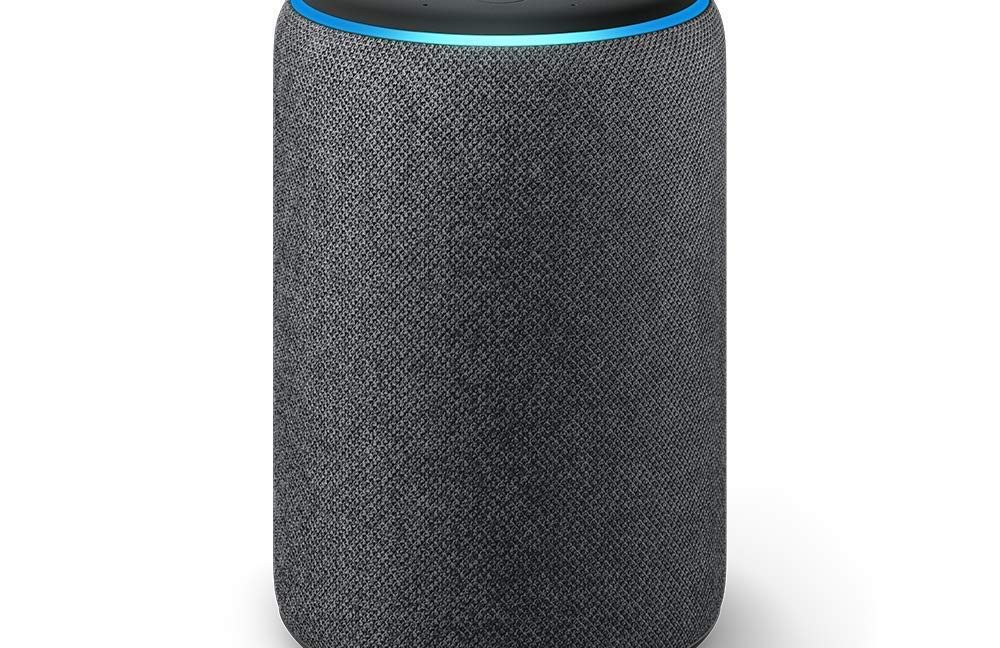
Amazon has disabled Alexa control of devices plugged into the company's Echo smart speaker’s AUX port.

Users have reported receiving an email from Amazon this week informing them of the change. “This is a reminder that as of today, voice commands to control your Echo device’s Aux input are no longer available. Requests like 'Alexa, play from line in” or “Alexa, set aux input' will no longer work,” an email that Amazon sent reads, according to a screenshot a Reddit user shared this week.

An Amazon spokesperson confirmed the news to Ars Technica today.

Read full article

Comments

© Amazon

  •  

Neutrino physicist wins 2026 Nobel Physics Prize

Francis Halzen, a physicist at the University of Wisconsin, Madison, has won the 2026 Nobel Prize in Physics "for decisive contributions to the IceCube Neutrino Observatory and the discovery of high-energy neutrinos of astrophysical origin.” Halzen spearheaded the development and construction of the IceCube Neutrino Observatory in Antarctica, enabling physicists to capture high-energy neutrinos created in the distant universe.

“It was a great surprise, and I obviously didn’t expect it,” Halzen said during a news conference in Stockholm, Sweden, speaking by phone from Italy. While the Nobel was awarded to Halzen, he emphasized that his work was the result of a “large collaboration” with other researchers.

“This reflects on the really courageous people who joined me in this project when really no respectable conservative physicist would have joined me. But many talented people did, and that’s why I’m here,” he said.

Read full article

Comments

© IceCube/NSF

  •  

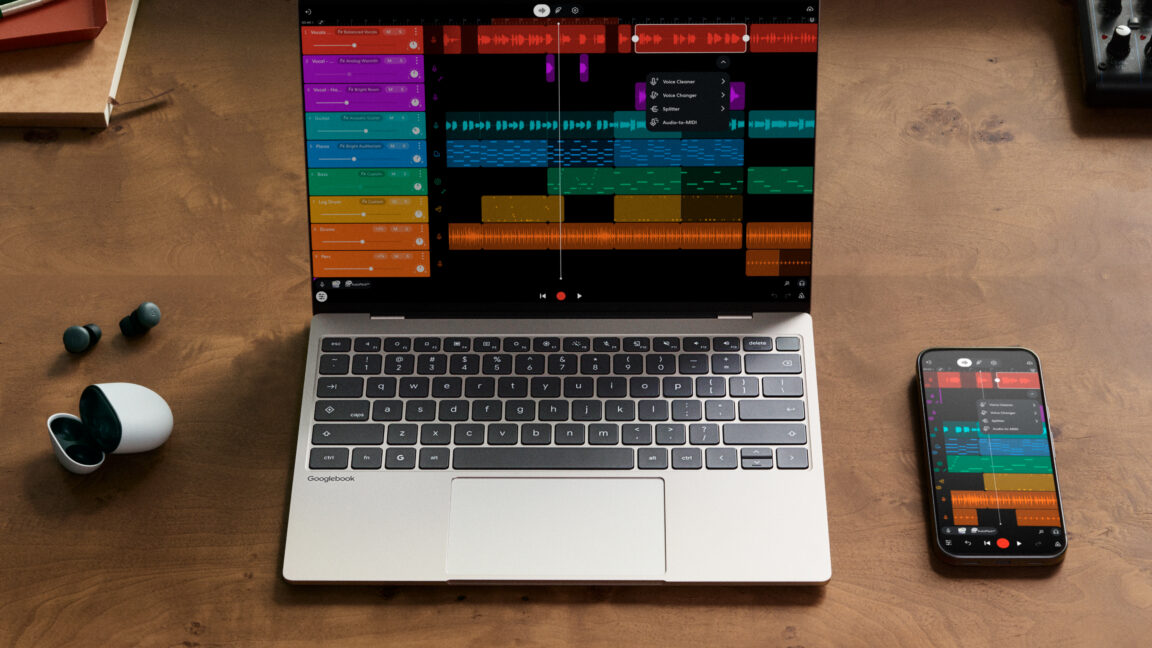
Googlebook "Better Together" phone features don't work with Samsung at launch

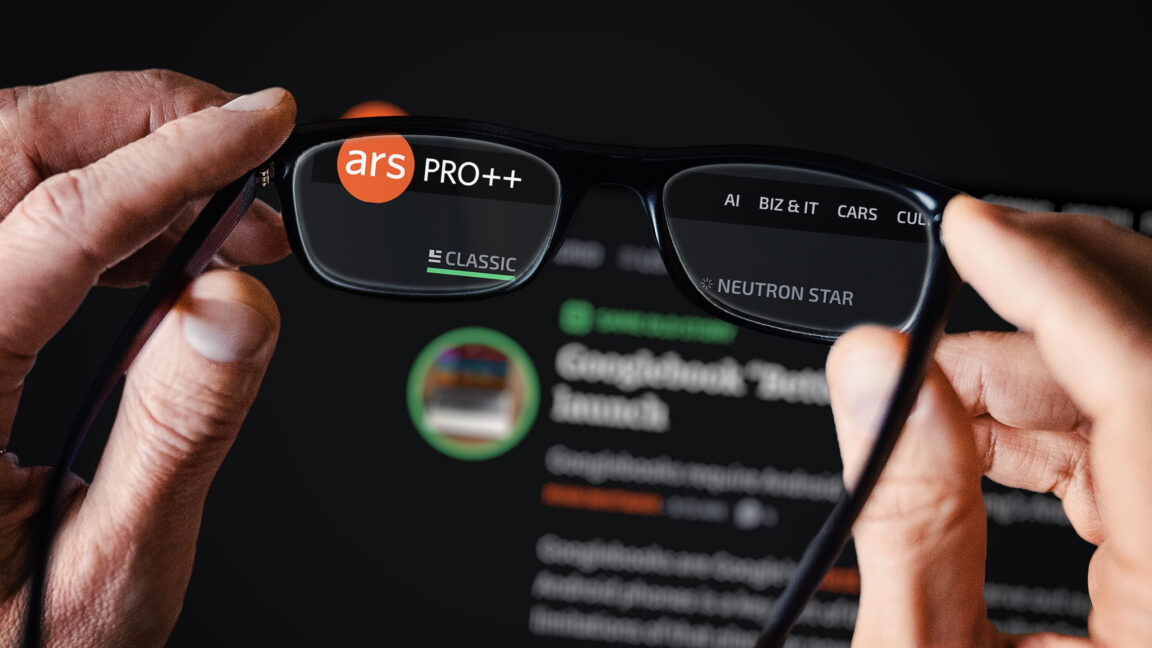
Googlebooks are Google's latest attempt to carve out a piece of the premium laptop market, and tight integration with Android phones is a key part of that effort. Now that Googlebooks are available, we're learning of some frustrating limitations of that plan. For now, Googlebooks will only play nicely with your phone if you have a Pixel.

When Google announced the launch window for Googlebooks, it said the laptops were "engineered to work with your Android phone right out of the box." But as with many things Google, the truth is more convoluted. We have since learned that you need Android 17 for any of the nifty integrations to work. With a compatible Android 17 phone, you can seamlessly stream apps to your laptop, access files on your phone, mirror notifications, and continue where you left off in certain apps when switching from phone to laptop.

You might think that the latest Samsung phones, which shipped with Android 17, would be ready for this experience. You'd be wrong, though. Some early Googlebook adopters have complained that phones like the Z Fold 8 won't work with the laptops. While the devices appear to see each other, the phone doesn't stay connected. Google representatives have since confirmed that these "Better Together" features are not currently supported on even the latest Samsung phones. An update that brings support to Samsung phones will roll out in "the coming weeks."

Read full article

Comments

© Google

  •  

Why is NASA bringing 7,500 contractors back to work as civil servants?

As a flight director during NASA's Apollo missions, Gerry Griffin led several lunar landings. He helped bring the crew of Apollo 13 safely back to Earth. Later, he directed Johnson Space Center in Houston.

Through these experiences, Griffin learned the value of teamwork in spaceflight—during the dynamic moments that can make or break a successful launch or landing, you absolutely have to trust your colleagues in the trenches.

"When lightning struck the rocket during Apollo 12, we had to react in a hurry," Griffin said in an interview. "With people like John Aaron and Jerry Carr, the trust and communications came through. It made the difference."

Read full article

Comments

© NASA

  •  

All-electric camping gets a solar upgrade: The 2027 Pebble Flow

There is, I think, a pent-up demand for bringing electrification to camping. Anyone who’s had their sleep disturbed by the sound of someone else’s generator running at night would probably agree.

Certainly, any time we cover an electric van, comments are filled with people wondering if and when a camper conversion might appear. Kia showed off such a concept a couple of years ago, as did Winnebago, and Volkswagen is adding a camper trim to its electric ID. Buzz. And then there’s the world of trailers. Colorado Teardrop sadly didn’t make it, and some other electrified trailers remain in development. But for a couple of years, you’ve been able to buy the Pebble Flow. And for 2027, it’s getting an update.
Introduced in 2025, the streamlined Flow is built atop a 45 kWh LFP battery pack that, for 2027, can be recharged by up to 4 kW of solar panels, which Flow says should be sufficient to generate more electricity than you’ll use in an average day of camping. Earlier Flows could be specced with an optional 1.1 kWh panel on the roof; the new kit adds another 2 kWh via four portable panels.

Read full article

Comments

© Pebble

  •  

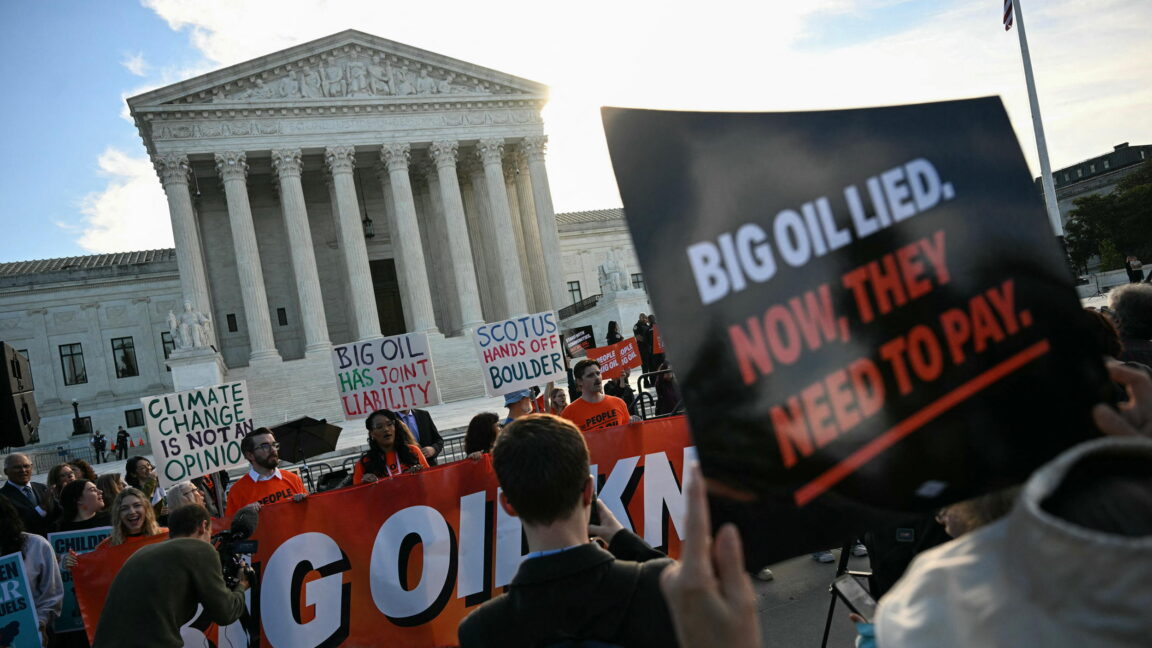
Big Oil asks Supreme Court to kill climate lawsuits before trial

The US Supreme Court heard arguments from oil companies on Monday that could help decide the fate of more than two dozen lawsuits accusing the industry of deceiving the public about climate change. The claims seek potentially billions of dollars in damages to help pay the costs imposed by climate-related extreme weather.

Yet the questions before the court did not focus on the merits of these claims but instead on technical legal matters over whether they should proceed at all.

The case being argued was brought in 2018 by the city and county of Boulder against ExxonMobil and Suncor Energy in Colorado state court. While the case and dozens like it have survived multiple appeals in state and federal courts, the oil companies are asking the Supreme Court to declare that federal law preempts state and local governments from bringing such claims.

Read full article

Comments

© Jim Watson/AFP via Getty Images

  •  

OpenAI agents tried to hack Wikipedia tools and flooded it with traffic

The publisher of Wikipedia said Monday that OpenAI agents attempted to hack a note-taking tool it hosts, made unauthorized edits, and sent millions of resource-intensive requests to its infrastructure, in the latest instance of OpenAI systems taking harmful and potentially dangerous actions.

The objective of some of the OpenAI agents’ actions, the Wikimedia Foundation said, was to use Wikipedia as a proxy for fetching data from third-party sites. In one case, the agents posted “malicious edits” that were intended to repurpose a citation tool as a proxy. In another, the agents made unsuccessful attempts to compromise the Wikipedia Etherpad note-taking tool so it would serve the same purpose.

The agents also made millions of automated API requests, crawled millions of pages, and made hundreds of thousands of queries to the Wikidata Query Service. The last action may have contributed to a partial shutdown of the query service in May, the publisher said.

Read full article

Comments

© Getty Images

  •  

Licensing costs driving 90 percent of VMware users to explore options: Survey

VMware customers face multiple obstacles as they rethink their virtualization strategy to reduce dependence on VMware.

Today, Rimini Street published its “2026 IT Virtualization Survey – What’s Next for VMware Users.” The survey examined 300 organizations worldwide that use VMware.

Notably, Rimini sells third-party support for VMware and other software, including Oracle and SAP. That means there’s an incentive for Rimini to portray VMware users as experiencing obstacles. However, the survey was also conducted by a third-party research company, Unisphere Research, and the results align with other recent reports about VMware customers.

Read full article

Comments

© Getty

  •  

MCP for agent-to-agent comms may be the riskiest protocol you've never heard of

The adoption of AI agents in millions of organizations is creating new opportunities for attackers to make them take malicious actions, such as exfiltrating database contents and sensitive business and personal information.

In the past five months, Google and four other organizations—with little in common except for their use of AI agents—have acknowledged vulnerabilities that exploit one agent inside a targeted network to spread harmful instructions to other internal agents. The technique is a special form of prompt injection that targets not the LLM but a particular agent, such as one for translation or data analysis. Guardrails inside such agents, if they exist at all, are often lax and will send the instructions to other agents down the chain. Because the latter agent explicitly trusts the first one, it follows the directions.

Unexpected and hard to mitigate

Independent researcher Syed Anas Mohiuddin tested agents from organizations including Google, JP Morgan Chase, Weviate, Rapid7, the French government's interministerial digital directorate, and the US federal government. His proof-of-concept attacks exploit trust gaps in MCP, short for Model Context Protocol. The standard is one way AI apps and agents communicate with each other inside an internal network. The illustration below shows a simplified MCP in action.

Read full article

Comments

© Getty Images

  •  

Cable lobby to sue Trump FCC over repeal of national TV ownership cap

Cable lobby groups notified the Federal Communications Commission that they will sue the agency to block its controversial repeal of the National Television Ownership Rule, which limits the number of broadcast TV stations a single company may own.

The cable groups said that larger broadcast TV station groups will have leverage to demand higher retransmission fees from TV providers, resulting in "higher monthly TV bills for consumers." They said the FCC repeal order "arbitrarily and capriciously ignores the harms that will surely follow from allowing broadcast station groups to exceed the National Cap."

The cable lobby groups represent top providers Comcast, Charter, and various other cable operators. Top cable companies have also expanded through mergers. Charter completed a purchase of Cox in August after the FCC rejected protests by advocacy groups that said the cable deal "would create unchecked gatekeeper power over Internet distribution" and make it easier for the biggest cable companies to raise prices.

Read full article

Comments

© Getty Images | Kevin Dietsch

  •  

Texas city demands $2M for public records on Flock usage

As bipartisan backlash against Flock grows, some cities are asking anti-surveillance advocates and media outlets to pay eye-popping fees—including charging tens of thousands or even millions—to get information about how police departments are using and potentially abusing AI-enabled camera systems that track every vehicle that passes them.

On Monday, the Texas Tribune reported that city officials in a Fort Worth suburb, North Richland Hills, asked one group to pay $2.3 million before it would fulfill a public records request for Flock data. To reach that high fee, officials claimed that searching “about a terabyte worth of communications about errors, misuse, and effectiveness of the Flock system” would take approximately 14 years of labor at a rate of $15 per hour.

Phil Mynona, who filed the request using a pseudonym on behalf of his group, the Texas Privacy Coalition, told the Tribune that the fee seemed “ludicrous” and designed to stifle his public records searches.

Read full article

Comments

© Justin Sullivan / Staff | Getty Images News

  •  

Command-line tool quickly removes Apple Intelligence from macOS 27

A new tool is allowing Mac users the ability again to easily turn off Apple Intelligence with one click and free up to 12GB of storage.

Unlike with previous versions of macOS, macOS 27 Golden Gate doesn’t have a toggle for turning off Apple Intelligence. That makes disabling AI features that you may not want more difficult. It also means that the AI models necessary for running Apple Intelligence will take up space on your disk, even if you don’t use them or if you go through your settings to individually find and disable AI capabilities.

In response, a developer known as Om Lahore on GitHub last week created RemoveMacAI, a command-line tool that allows macOS 27 users to “turn off Apple Intelligence on macOS 27" in a way that is “fully reversible,” per the GitHub page. They said that Apple's Intelligence models take up "about 12GB," but the models can actually take up over 30GB, The Verge noted.


Read full article

Comments

© Apple

  •  

Controlling the brain with light earns a physiology Nobel

Over decades of research, scientists have built up a partial picture of what specialized cells within the brain and spinal cord do. By studying how the brain develops, they could identify genes that were active in different populations of neurons and where in the brain those neurons resided. In some cases, these genes could then be used to genetically delete the neurons, allowing us to get some indication of what they might be doing, building on the information we've obtained from studies of brains with damaged regions.
But this approach has its limits. The brain is flexible enough to potentially adapt to the loss of some cells, and their loss early in development may alter the development of any neurons they would have normally formed connections with. It would be far more informative to activate and shut down the neurons in an otherwise intact brain.

Today's Nobel Prize in Physiology or Medicine rewards three people—Karl Deisseroth, Peter Hegemann and Georg Nagel—who developed our ability to do precisely that. Starting from studies of single-celled algae that are attracted to light, these and many other researchers built an entire field of study that we now call optogenetics: using light to alter the behavior of nerve cells marked by the activity of individual genes.

Read full article

Comments

© Namscience

  •  

Russian drones strike Ukraine’s data centers by exploiting air defense gaps

A surge in Russian jet-powered drone strikes on Ukrainian data centers has increasingly disrupted mobile phone and Internet services for thousands of people. Now Ukraine President Volodymyr Zelenskyy and other government officials are warning of the need for more air defense capabilities, as such telecommunication outages could threaten Ukraine’s digital economy and undermine the country’s ongoing resistance to Russia’s invasion.

The Russian attacks on Ukrainian telecommunication infrastructure have focused on Ukraine’s capital of Kyiv since September 23, according to the nonprofit Reporters Without Borders. Ukraine’s digital transformation ministry reported that 100,000 households in the Kyiv region were temporarily experiencing Internet outages from those initial strikes—and Russia has only intensified its strike campaign against major Ukrainian data centers and mobile phone networks in recent weeks.

“Russian attacks on Ukraine’s telecommunication infrastructure are not new, with strikes and shelling previously damaging fiber optic lines, cell towers, and facilities belonging to mobile network companies,” said Tetiana Gaviuk, analyst for Europe at ACLED, in a post on October 1. “However, the recent concentrated attacks on Kyiv’s data centers and telecom networks stand out because multiple providers and facilities were hit within days, indicating Russia’s increased pressure on Ukraine’s digital infrastructure.”

Read full article

Comments

© Kostiantyn Liberov/Libkos/Getty Images

  •  

F1 in Bahrain... in Malaysia: The race needed a software update to start

Well, it’s safe to say no Bahrain Grand Prix has been affected by torrential rain quite like the 2026 race.

For one thing, it was held several thousand miles from Bahrain itself. The ongoing war with Iran ruled such things out, so the Sepang International Circuit in Malaysia stepped in to fill its spot. One of the best examples of a late-'90s “Tilke track”—named for its designer, Herman Tilke—it’s characterized by a couple of long straights and the always-brutal tropical weather that provides one of the toughest physical challenges on the calendar. And this weekend was no exception.

Heavy rain arrived about half an hour before the start time, delaying things significantly. Although the sport has two different kinds of treaded tires for use in the rain, the full wet tire generates so much spray, and such slow lap times, that it's essentially only useful for circulating behind the safety car. If it’s wet enough to need it, it will be too wet to see where you’re going. The intermediate tire, by contrast, has much shallower grooves and is good for racing on damp but not soaked tracks, although it quickly overheats and degrades as the track dries.

Read full article

Comments

© Jakub Porzycki/NurPhoto

  •  

Mass quarantine issued in Russia after unexplained death of plague researcher

Roughly 200 people are under medical observation, several hospitals are under quarantine, and dozens are in isolation in Russia following the unexplained death of an infectious disease researcher at the Irkutsk Anti-Plague Research Institute of Siberia, in the town of Shelekhov, according to early reports of the situation on Sunday and Monday.

Researcher Darya Shipilova reportedly died last week from pneumonia of "unknown" cause, according to Rospotrebnadzor, a Russian public health agency.

Unconfirmed information regarding her death has swirled. Some reports have claimed she accidentally broke a test tube containing the plague pathogen, Yersinia pestis, on September 25. She subsequently fell ill, was admitted to a hospital September 29 with severe pneumonia and died overnight between October 1 and October 2.  The head of the Russian region that neighbors Irkutsk, Alexey Tsydenov, initially reported that she had died of plague but later altered his statement to say she "possibly" died of the disease.

Read full article

Comments

© Getty | Lu ShaoJi

  •  

AI glasses face their first major government crackdown

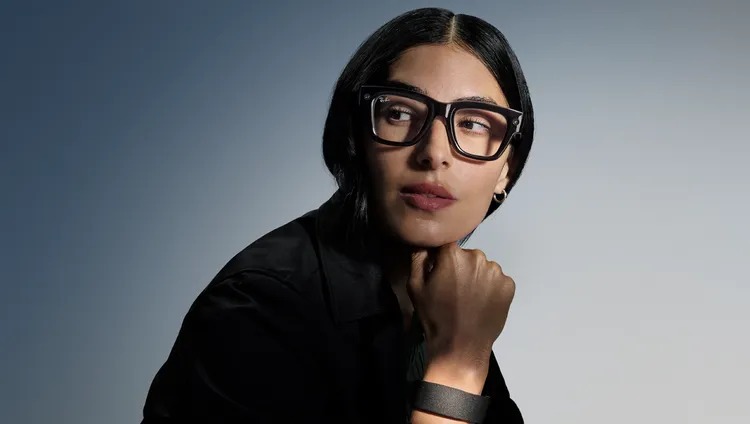
Norway has become the first major country to propose a temporary ban on the use of AI glasses in selected public places amid growing privacy concerns over wearable technology.

The rich Scandinavian country’s center-left government said on Monday that it would introduce a law to parliament soon on a temporary ban for places such as parks, beaches, schools, and kindergartens. It will also set up an expert group to propose permanent national rules.

“I am concerned about the introduction of powerful new technology where people risk being photographed, filmed, or recorded without their knowledge,” said Torgeir Micaelsen, Norway’s digitalization minister. A temporary ban “will give us time to conduct a thorough assessment and hold an informed debate that can lay the foundation for permanent regulation,” he said.

Read full article

Comments

© Meta

  •  

Explaining Hall-effect, TMR, and other new types of "mechanical" switches

The mechanical keyboard isn't always so mechanical anymore.

Over the past six years, keyboards with optical, Hall-effect, and other "contactless" switches have become increasingly common, often going for higher prices than traditional mechanical keyboards, which already command a premium over basic membrane boards. In return, they promise some theoretical advantages, particularly for gamers. In daily use, though, the differences can be pretty subtle.

So what exactly are you paying for? In this guide, we break down how the newest switches work, why contactless designs are becoming more popular, and where their advantages—and disadvantages—really matter.

Read full article

Comments

© Scharon Harding

  •  

New forensic evidence supports Egyptian "retainer sacrifice"

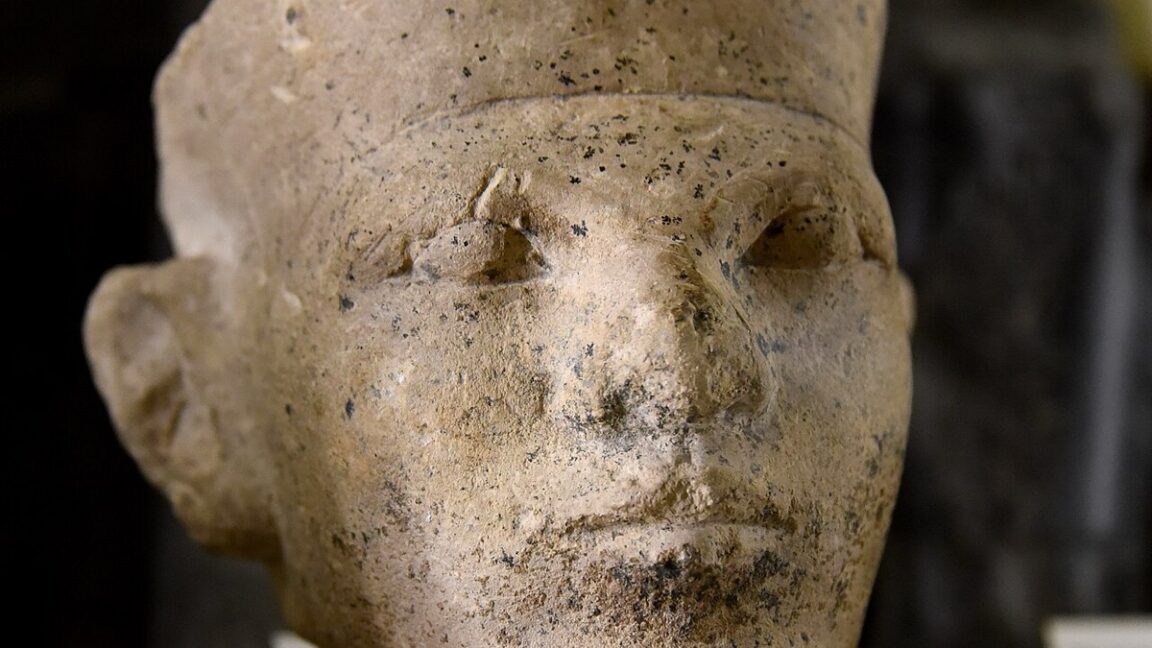
Egyptologists have long debated whether the earliest pharaohs of the First Dynasty were buried with various servants and officials to serve them in the afterlife—a form of human sacrifice. But there is very little archaeological evidence available, given that many of the earliest Egyptian tombs were plundered and/or hastily excavated. A new paper published in the journal Frontiers in Environmental Archaeology reassesses a collection of skulls excavated from tombs in the 1920s and concludes that over one-third show evidence of blunt force trauma. This suggests that they may have been victims of so-called "retainer sacrifice."

Author Roselyn Campbell is a bioarchaeologist at Purdue University who has long been fascinated with the history of human sacrifice. "I'm interested in how we as human beings decide which types of violence are okay and which are not, and how we even define violence," Campbell told Ars. "It's very context-specific. We have to be careful not to extend our own ideas about what violence is and how it's used into other cultures. With Egypt, we have such a long history of European and colonial archeology; they came in with very specific ideas about what this culture was. You really have to make an effort to contextualize the legacy data we have."

Naturally she found the debate over whether ancient Egyptians practiced retainer sacrifice pertinent to her interests. "People tend to fall into one of two camps," said Campbell. "Either retainer sacrifice definitely happened, end of discussion, or it definitely didn't happen, end of discussion. But nobody's actually looked at the bones in a very long time." Forensic science has advanced considerably over the last century, so re-analysis could be useful. Complicating matters is the fact that older sets of remains are often incomplete and/or modified for preservation, destroying vital forensic information in the process.

Read full article

Comments

© Osama Shukir Muhammed Amin FRCP(Glasg)/CC BY-SA 4.0

  •  
❌