Reading view

Sheetz is quitting VMware, migrating 11,000 virtual machines

Sheetz, a US convenience store chain, is moving its 838 locations off VMware.

Sheetz has used VMware virtualization across two Dell R440/R450-series servers at each of its locations since 2019. Now it’s migrating 12 to 14 virtual machines (VMs) in each of its stores from VMware vSphere to StorMagic’s SvHCI, “with an additional two VMs to be replaced over the coming months to transition from Windows 10 to Windows 11,” Scott Robertson, infrastructure team manager at Sheetz, told Ars Technica via email. Ultimately, Sheetz will move about 11,000 VMs from Broadcom's virtualization platform. Sheetz is still running the original Dell server hardware.

So far, Sheetz has finished migrating more than 600 stores, averaging 200 per month, according to a company announcement today. Sheetz should be finished with the migration in four months, the announcement said.


Read full article

Comments

© Sheetz

  •  

Judge: Trump can’t deport researchers just for working in content moderation

This week, the Coalition for Independent Technology Research (CITR) won a key battle in its fight to reverse a visa-restriction policy that the Trump administration had used to attempt to revoke green cards and deport non-US citizens who work on misinformation, disinformation, fact-checking, content moderation, compliance, and trust and safety.

In an opinion published Tuesday, US District Judge James Boasberg granted a preliminary injunction blocking the State Department from enforcing the policy until the CITR’s lawsuit is resolved.

On its face, the policy does not require visa denials or deportations. Instead, it authorizes immigration investigations into individuals suspected of helping foreign adversaries attempt to manipulate public opinion by suppressing US speech.

Read full article

Comments

© UCG / Contributor | Universal Images Group

  •  

Engineer identifies and explains every '90s computer seen in Jurassic Park

Jurassic Park, while beloved as a film, has been the subject of snarky memes for the infamous line in which one of the characters declares, "This is a Unix system, I know this!" while using a computer with an unusual 3D file manager interface.

Despite the memes, the film's production team was meticulous in accurately sourcing the right PCs (and adjacent details) for the sets—not too much of a surprise, given writer Michael Crichton's background with computing and his obsessive attention to detail in the book the film is based on.

Read full article

Comments

© Universal Pictures

  •  

Windows 0-day drops the same day Microsoft releases record number of patches

Right on the heels of Microsoft releasing a record number of security patches, a researcher has published exploit code that can enable low-privilege Windows accounts to make sensitive changes to administrator accounts.

The exploit, which multiple researchers say works, is sending Microsoft scrambling, yet again, to patch a zero-day released by an anonymous researcher who has complained about the software maker’s handling of their bug reports. To date, the pseudonymous NightmareEclypse has published nine such exploits, including Tuesday’s HiveLegacy. The researcher said the proof-of-concept code included in the report was stripped down to prevent attackers from using it maliciously.

A “pretty powerful primitive”

HiveLegacy is an elevation-of-privilege exploit that targets a vulnerability residing in the Windows User Profile Service. It allows users (and with more work likely processes) with limited system rights to compromise an admin user's account by modifying its classes registry hive, a resource that ensures the correct application opens when certain types of files are clicked on in Windows Explorer.

Read full article

Comments

© Getty Images

  •  

FCC to repeal 39% TV ownership cap in boost for Trump-friendly news orgs

The Federal Communications Commission will vote to repeal the National Television Ownership Rule that is supposed to prevent a single broadcast station owner from reaching more than 39 percent of all TV households in the US. The proposed change sets up a likely court battle over the FCC claim that it has authority to repeal a limit set by Congress.

FCC Chairman Brendan Carr has already treated the rule as more of a suggestion. In March, the Carr FCC granted a waiver allowing Nexstar Media Group to buy Tegna in a deal that let it reach over half of TV households. The Carr FCC argued that Congress gave it authority to modify or waive the rule.

Carr now plans to repeal the 39 percent limit and replace it with a "case-by-case review" of each proposed merger, the chairman announced today in an op-ed published on Breitbart. The change would make it easier for the FCC to pick and choose which station groups get to surpass the limit. Under Carr, this would likely benefit news companies that provide favorable coverage for President Trump.

Read full article

Comments

© Getty Images | Heather Diehl

  •  

In memoriam: 7 of our favorite Sam Neill films

New Zealand actor Sam Neill, who starred as Dr. Alan Grant in the 1993 blockbuster Jurassic Park and its 2022 sequel, Jurassic World Dominion, died on Monday in Sydney, Australia. He was 78.

While American audiences likely know Neill best for Jurassic Park, he had a long and varied career in film and television. His sheer versatility won him fans around the world. He played the grown Damien in Omen III: The Final Conflict; a Russian officer in The Hunt for Red October; and even made brief cameos (as an actor playing Odin in a theatrical troupe) in Thor: Ragnarok and Thor: Love and Thunder. (The less said about 1997's space horror travesty, Event Horizon, the better, although it has its fans, and Neill made the most of his role.) Yet some of his best performances were in smaller, critically acclaimed independent films such as 1993's Oscar-winning The Piano.

On television, Neill earned his first Golden Globe nomination for the lead role in Reilly, Ace of Spies in the 1980s. He was nominated for both an Emmy and a second Golden Globe for playing the titular Arthurian wizard in the 1998 miniseries Merlin. He played Cardinal Wolsley in The Tudors, and was part of the ensemble cast in the (excellent) 2015 adaptation of Agatha Christie's And Then There Were None. Neill was magnetic as the ruthless CI Major Chester Campbell in Peaky Blinders—an antagonist and romantic rival of Cillian Murphy's Tommy Shelby.

Read full article

Comments

© Universal Pictures

  •  

Third-party app stores coming to Google Play next week as Epic settlement withdrawn

Big changes are coming to Android apps, but they're not the changes Google wanted. The settlement between Google and Epic that aimed to put to rest the companies' long-running antitrust battle is being withdrawn, and that means third-party app stores are coming to the Play Store. Google has confirmed that it will begin distributing rival app stores next week, setting the stage for competing platforms to take a bite out of Google's Android revenue stream.

This case has the potential to upend software distribution on Android, and it's all because of V-Bucks. In 2020, Epic Games was frustrated that it had to pay a 30 percent cut to Apple and Google every time someone bought a bundle of V-Bucks in a mobile version of Fortnite. The publisher added a direct purchase option to the game in violation of both Apple's and Google's rules. Naturally, Fortnite was pulled from the App Store and Google Play, kicking off the antitrust lawsuit that is only now reaching its conclusion.

While Apple suffered little penalty in its Epic case, Google was tripped up by its anti-competitive management of the supposedly open Android ecosystem. Google used its market position to discourage device makers from promoting or pre-loading non-Google app stores and attempted to hide that conduct. The remedies set by Judge James Donato included lower fees, mirroring Google Play apps in other stores, and most vitally, placement of alternative app stores in Google Play.

Read full article

Comments

© Getty Images | Kirill Kudryavtsev

  •  

OpenAI's first branded hardware is... a light-up keyboard?

As rumors continue to swirl about OpenAI's work on a personalized smart speaker and other hardware, the company is today rolling out its first branded device. The $230 Codex Micro is a specialized, RGB-lit mini-keyboard designed to let users monitor and quickly interact with multiple Codex agents with a glance and a few clicks.

The device is described as a "limited-run collaboration" with Work Louder, which already sells a very similar-looking Creator Micro line of customizable square keyboards targeted at creative professionals. The Codex Micro differentiates itself from those mainly through six frosted keys in the top two rows, which offer color-coded live feedback on up to six Codex threads, even when they are not in focus on-screen.

Open the OpenAI box for AI assistance. Credit: OpenAI / Work Louder

Ideally, those colored keys will cycle from white when a thread is idle to blue when Codex is thinking to green when a task is complete. But the keys can also flash amber when Codex requires feedback or a decision from a human operator and red when a thread encounters an error, letting users know at a glance which of their Codex tasks needs immediate attention. A quick tap on the lit-up button brings up the applicable Codex window on-screen.

Read full article

Comments

© OpenAI / WorkLouder

  •  

A most improbable astronaut just went to space

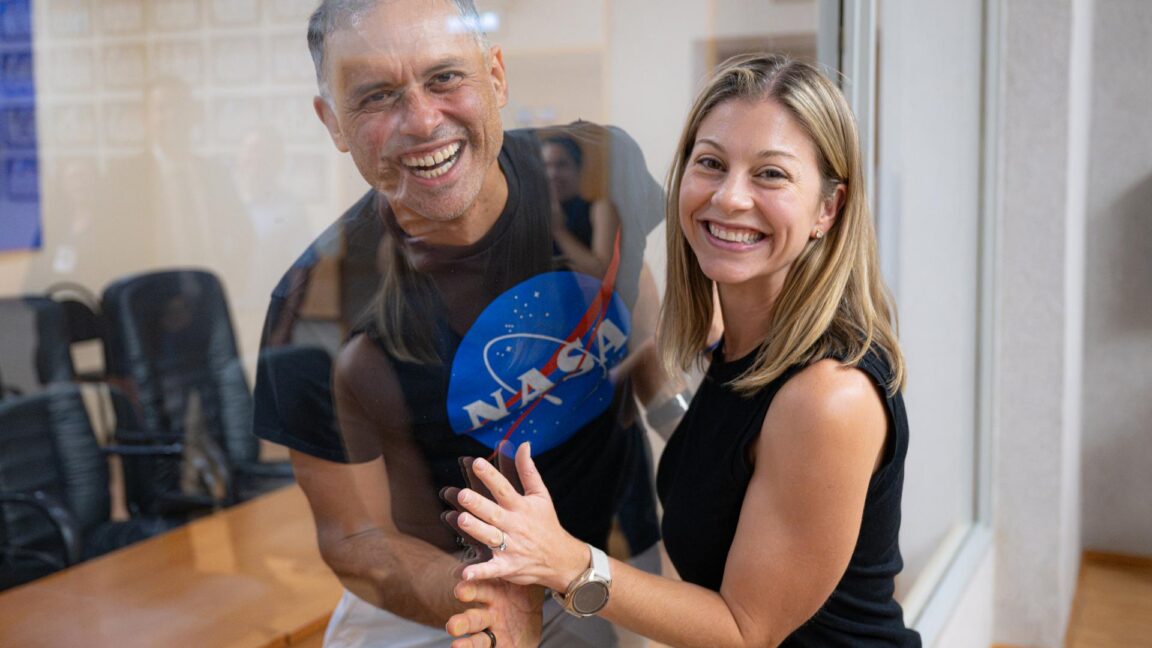
Anil Menon, a NASA flight surgeon, felt crushed nine years ago as his hopes and aspirations collapsed around him.

For the fourth time, he had diligently applied to become an astronaut at the US space agency, seeking to fulfill a lifelong dream. Although he made it to the final round, NASA had once again rejected his application at the end of the grueling process.

"I was so sad, and I admitted defeat," Menon said. "I just did not see a pathway forward. So I pretty much, at that point in time, gave up on being an astronaut. I thought there was a zero percent chance."

Read full article

Comments

© John Kraus/NASA

  •  

How hard is it to build orbital data centers, actually?

SpaceX has pinned the bulk of its future value on orbital data centers. Not rockets. Not spacecraft.

Instead, it envisions launching and maintaining a constellation of 1 million satellites capable of generating 120 GW to power tens of millions—and potentially up to 100 million—frontier-class GPUs for data center services.

The company's founder, Elon Musk, revealed plans for this massive constellation months ago, but until recently, the scope of the individual satellites was largely unknown. That changed in June, when Musk and Ian Dahl, director of satellite engineering for SpaceX, spoke in a promotional video about the company's plans to develop the first iteration of an orbital data center, called an AI1 satellite. The video finally provided the company's numbers about the satellite's size and power capabilities.

Read full article

Comments

© Aurich Lawson | Getty Images

  •  

Sotheby's big T. rex auction raises concerns hype and wealth are upending science

Forget the sale of the century. The auction house Sotheby’s has geared up for the sale of the epoch. On July 14 it opened live bidding on assorted fossils, but the pièce de résistance is lot 20, a rare 67-million-year-old Tyrannosaurus rex skeleton.

The specimen—dubbed Gus—is billed as one of the largest, most complete T. rexes ever found. Gus is expected to fetch up to $30 million and will go to the highest bidder, whether public museum or private collector. The latter have played an increasingly prominent role in buying fossils, with auction houses, according to paleontologists, contributing to the trend by building hype. But when private collectors swoop in and buy fossils at auction as luxury assets, those pieces of history are effectively lost to science.

By nearly all accounts, Gus is a big deal. In its description, Sotheby’s boasts that the specimen, which was discovered on a ranch in South Dakota, comprises “an incredible 183 fossil bone elements” making it “approximately 61% complete by bone count.” The fossil remains have been mounted in a custom steel armature along with replicas of the missing bones. The result is a reconstructed skeleton posed as if in hot pursuit, its mouth full of dagger teeth ready to tear into prey.

Read full article

Comments

© Courtesy of Matthew Sherman/Sotheby's

  •  

Microsoft’s Secure Boot has been broken for a decade and no one noticed until now

An industry-wide standard Microsoft invented to protect Windows, and later Linux, devices from firmware infections has been trivial to bypass for 13 of its 14 years of existence. The discovery was made by researchers at security firm ESET after identifying 11 firmware images, at least one from 2013, that were known to be defective but remained signed by the software company anyway.

The images are known as shims, which were invented to extend Secure Boot to Linux devices and utility software. Using a technique simple enough to be performed by novice hackers, these old, forgotten shims can be used to completely circumvent the protection, which is embedded into the UEFI (Unified Extensible Firmware Interface) of the device's motherboard. The gaffe is the result of the failure by Microsoft, which oversees the signing of shims, to revoke the publicly available images once vulnerabilities were found in them.

Threat extends to Windows and Linux users

The threat extends to Windows and Linux users alike, since the shim can be installed on devices running both operating systems. From there, an attacker can subvert the mandated chain of digitally signed firmware to install malicious firmware that loads early in the boot process and persists after either the OS is reinstalled or a hard drive is replaced.

Read full article

Comments

© Getty Images

  •  

Trump admin puts Americans in Congo on "do-not-board" list, barring return

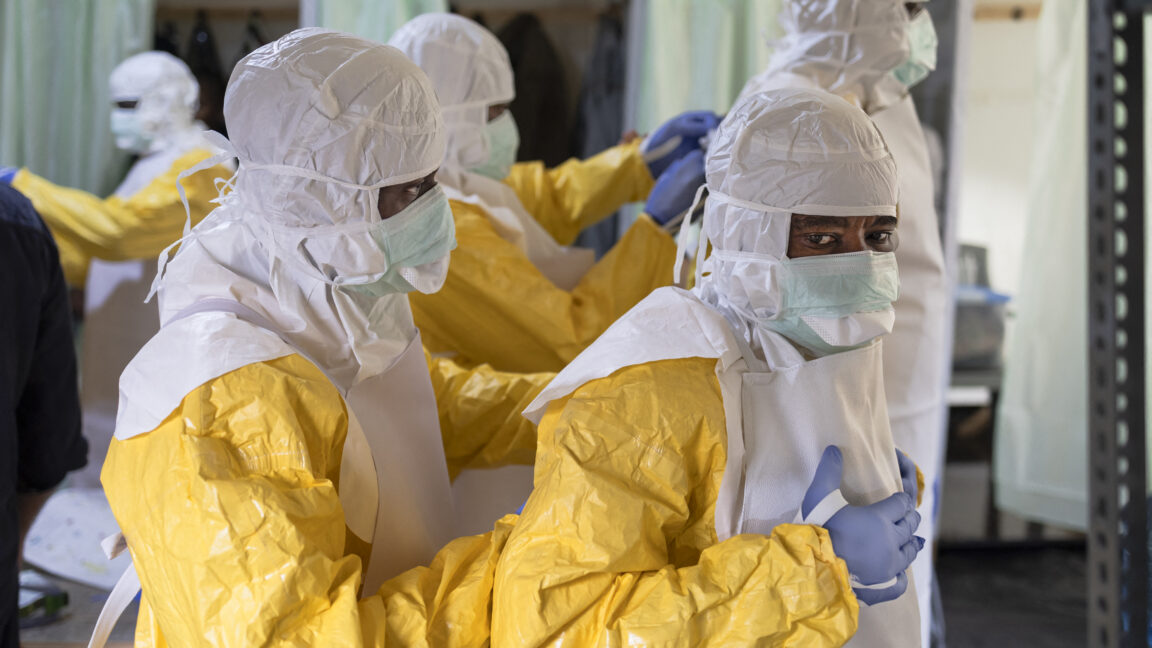
The Trump administration on Monday barred US citizens in the Democratic Republic of the Congo from returning home amid an Ebola outbreak that continues to outpace response efforts.

Reuters first reported late Monday that Americans currently in the DRC or those who have recently traveled to the Ebola-stricken country have been put on a "do-not-board" list. They cannot travel back to the US until they have spent 21 days in a third country. The order, taken under a transportation authority known as Title 49, was independently confirmed by Politico on Tuesday.

Both outlets noted that roughly two dozen Americans who had been set to board flights home on Tuesday have already been blocked by the new rule. It remains unclear if the bar also applies to government workers. The Centers for Disease Control and Prevention has at least two dozen employees working in the DRC.

Read full article

Comments

© Getty | GLODY MURHABAZI

  •  

Lawsuit claims Meta's layoff decisions were made by AI, not humans

Meta's AI-fueled layoffs of 8,000 employees targeted workers with disabilities and those who took protected medical or family leaves, alleged a lawsuit filed by 26 employees who were selected for termination. Meta used internal AI tools to select employees for layoffs, according to the complaint filed yesterday by 26 "Doe" plaintiffs in US District Court for the Northern District of California.

"Meta did not assemble the termination list through the considered judgment of managers who knew the work. Instead, Meta used a constellation of internal artificial-intelligence systems—including a system referred to internally as 'Metamate,' employee-trained 'second-brain' agents, keystroke- and activity-monitoring data, AI-token-usage dashboards, and algorithmically assisted performance ranking and calibration—to score, rank, and select employees for inclusion on the list," the lawsuit said.

Employees were allegedly graded, among other things, on how much they used Meta's AI tools. "Meta’s internal dashboards classified employees by their stage of adoption of its artificial-intelligence tools, using categories such as 'AI Native,' 'AI First,' and 'AI Enabled,'" the lawsuit said.


Read full article

Comments

© Getty Images | NurPhoto

  •  

US military sent explosive drone boats into combat for the first time

For the first time in its history, the US military sent explosive-laden drone boats into combat by attacking an Iranian midget submarine and naval port. The unprecedented use of such kamikaze sea drones by the United States comes nearly a decade after Iranian and Houthi forces first demonstrated such weapons.

The US military shared a video showing three “one-way attack surface drones” exploding after approaching an Iranian midget submarine and ship maintenance facility at Iran’s Bandar Abbas Naval Base on the night of July 12. US Central Command, the US military combat command responsible for Middle East operations, described the strikes in a social media post as the “first time American forces have employed sea drones in combat operations.”

The US drone boats were able to “make a low-speed, uncontested approach” to their targets before exploding, according to USNI News, a news service from the nonprofit US Naval Institute. USNI News also identified one of the targets as an Iranian Ghadir-class midget submarine that was out of the water while being suspended from a gantry.

Read full article

Comments

© US Central Command

  •  

These painted e-tattoos could be the future of wearable biosensors

Credit: Wanqing Zhang

Scientists at Pennsylvania State University have developed a novel conductive ink that can be painted directly onto the skin in colorful custom designs, turning into a functional electrode for biomonitoring after drying. They described their work in a new paper published in the Proceedings of the National Academy of Sciences (PNAS).

As previously reported, epidermal electronics attached to the skin via temporary tattoos (e-tattoos) have been around for more than a decade. So-called e-tattoos connect to skin without adhesives, are practically unnoticeable, and are typically attached via temporary tattoo, allowing electrical measurements (and other measurements, such as temperature and strain) using ultra-thin polymers with embedded circuit elements.

However, these e-tattoos have their limitations, most notably that they don’t function well on curved and/or hairy surfaces, as well as requiring personalized electrode placement design to cover larger areas, since biosignals are spatially distributed. So scientists have been getting creative. For instance, in 2024, researchers developed special polymer-based conductive inks that can be printed onto a person’s scalp to measure brain waves, even if they have hair. This could one day enable mobile EEG monitoring outside a clinical setting, among other potential applications.

Read full article

Comments

© Wanqing Zhang

  •  

Google revamps image search for its 25th anniversary with more images and more AI

Believe it or not, there was a time when searching the web for images was not possible. Twenty-five years ago, Google launched image search, and it's celebrating by looking back at its biggest visual milestones and refreshing the experience for today's searchers. The celebration also includes expanded AI because that's just how Google rolls in 2026.

Google claims the impetus for image search a quarter-century ago was the green Versace dress Jennifer Lopez wore to the 2000 Grammy Awards. If you were alive at the time, you probably remember the one. Google engineers understood that people searching for the dress didn't want to read about it—they just wanted to see it. The company got to work building image search, launching the first version in July 2001. Twenty-five years later, it's easy to take for granted that you can search for Lopez's green dress or whatever else strikes your fancy.

Currently, going to the Google image search site shows a plain search bar for finding images. It's a refreshingly minimalist interface for the modern web. Even Google's search homepage has a smattering of AI buttons and drop-down menus. That will change when the new Google Images rolls out.

Read full article

Comments

© Ryan Whitwam

  •  

New York bans data center construction for a year, rattling AI industry

New York became the first state to pause all construction of massive new data centers after Democratic Governor Kathy Hochul announced a one-year moratorium on Tuesday, Reuters reported.

The state-wide ban applies to data centers using 50 megawatts or more, officials told Reuters, and it won’t be lifted until the state figures out what "consistent standards" for responsible data center development in New York should look like.

Across the US, calls to halt data center construction have multiplied, as Americans grow increasingly concerned about risks of pollution, rising energy costs, and diminishing water supplies. At the federal level, Bernie Sanders (I-Vt.) and Alexandria Ocasio-Cortez (D-NY) have introduced legislation seeking a possible nationwide construction ban. But Republicans are seemingly unlikely to embrace that legislation, given Donald Trump's claim that such moratoriums would threaten America's lead in the AI race.

Read full article

Comments

© Albany Times Union/Hearst Newspapers / Contributor | Hearst Newspapers

  •  

Probe into explosive diarrheal cases points to Taco Bell and bad lettuce

Lettuce and salad greens have become the prime suspects in an explosive outbreak of the diarrheal parasite Cyclospora, which is surging nationwide but erupting to extraordinary heights in Michigan.

In recent years, Michigan has typically reported around 50 cases of cyclosporiasis, which causes urgent bouts of watery diarrhea, abdominal cramps, and nausea. But, this year, as of July 14, the state has reported 3,309 cases of the food-borne pathogen. Of those 44 have been hospitalized.

Based on interviews with more than 1,000 people sickened in Michigan, the latest data is pointing to leafy greens as the source, according to the Michigan Department of Health and Human Services (MDHHS).

Read full article

Comments

© Getty | Al Drago

  •  

Boomers, not Gen Z, are the generation cutting back most on alcohol

Baby boomers are the generation cutting back most on alcohol consumption, outstripping Gen Z’s abstinence, as moderation takes hold at every level of society.

Seventy-one percent of boomers, those born between 1946 and 1964, consumed alcohol in the past six months—the lowest drinking rate of any generation and down 2 percentage points from three years ago, according to IWSR, a market researcher for the global beverage industry.

By contrast, 74 percent of Gen Z who are at the legal drinking age reported drinking in the past six months, up from 66 percent three years ago, as young people in their late teens and 20s catch up with the total adult population drinking rate of 76 percent.

Read full article

Comments

© Patrick McMullan

  •  

SpaceX is gearing up for Starship's 13th test flight later this week

The next test flight of SpaceX's Starship spacecraft and Super Heavy booster could take off as soon as Thursday, and much of the hour-long mission will look a lot like the last Starship flight in May.

But there are a few key differences for this launch, set to occur during a launch window that opens at 5:45 pm CDT (22:45 UTC) on Thursday. The most notable change is the inclusion of real, functioning Starlink satellites inside Starship's cargo bay. SpaceX previously tested the ship's payload deployment mechanism using simulators mimicking the mass and dimensions of the company's next-generation Starlink Version 3 broadband satellites.

This time—Starship's 13th full-scale test flight and the second to use SpaceX's newest version of Starship—technicians have installed 20 Starlink V3 satellites into the ship's deployer, a system of pulleys and cables designed to eject a stack of satellites one at a time through an opening on the side of the spacecraft. The satellites will not be part of SpaceX's operational network, but engineers will attempt to briefly establish laser communication links between the Starlink V3s and other spacecraft flying in low-Earth orbit. If successful, these links will validate Starlink V3's interoperability with SpaceX's previous generation of Starlink satellites.

Read full article

Comments

© SpaceX

  •  

US continues to shun Ebola-infected citizens; second American sent to Germany

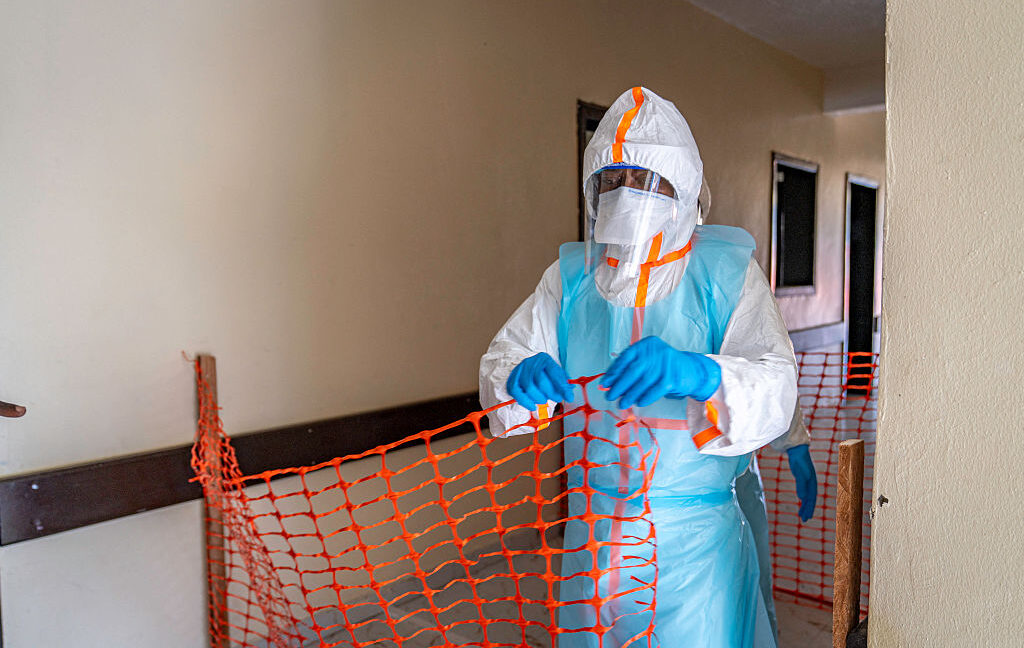
A US citizen doing humanitarian work in the Democratic Republic of the Congo has tested positive for Ebola, marking the second American infected amid the DRC's explosive Ebola outbreak—and the second to be sent for care in Germany rather than the US.

The Ebola outbreak, which was first declared on May 15, is already the third largest on record and still growing. As of July 12, the DRC has reported 1,926 cases and 702 deaths in the outbreak, which is caused by the lesser-known Bundibugyo strain of Ebolavirus.

Under the Trump administration, the US has adopted a seemingly isolationist approach, implementing stringent and controversial travel restrictions and blocking the repatriation of citizens exposed to or infected with the virus. That's despite the US having multiple facilities around the country designed to safely monitor and provide high-quality care for Ebola patients in these types of situations.

Read full article

Comments

© Getty | Tony KARUMBA

  •  

The US government warns that Russia state hackers are coming after your router

The federal government is warning users of home and small office routers to secure their devices as Russia state hackers continue to mass-compromise them for use in obscuring nefarious actions against sensitive organizations in the public and private sectors.

Both the Russian and Chinese governments have been compromising routers for years, sometimes in prolonged tugs-of-war to wrest control of devices the other has already commandeered. The US government has occasionally issued covert commands and taken other steps to disinfect routers. Google and other companies have also worked to disrupt the massive botnets that control compromised routers in lockstep. The actions to date are little more than whack-a-mole exercises as the operators simply replace their botnets with new ones.

Proxy networks: The go-to tool

“Russian Federal Security Service (FSB) Center 16 cyber actors continue to exploit poorly configured and vulnerable networking devices worldwide, opportunistically compromising multiple critical infrastructure sector networks,” the Cybersecurity and Infrastructure Security Agency said Monday. The hacking groups are tracked under various names, including Berserk Bear, Energetic Bear, Crouching Yeti, Dragonfly, Ghost Blizzard, and Static Tundra. The advisory was co-issued by governments from around the world, including Australia, Denmark, New Zealand, and the UK.

Read full article

Comments

© Getty Images | BernardaSv

  •  

Ukrainian drone strikes forced Russia to stop shipping in vital sea corridor

Ukrainian drone strikes have forced Russia to completely halt shipping in the Sea of Azov in less than a week, showing once again how a country without traditional naval power can still effectively blockade maritime corridors.

Ukraine’s Unmanned Systems Forces have flown one-way attack drones to target and strike more than 100 Russian tankers and other ships in total, along with posting video evidence showing such drone strikes occurring every night between July 6 and July 14. The campaign has forced Russia to completely shut down the shipping route that flows from Russia’s Don River into the Sea of Azov, and to halt all Kerch Strait shipping transits from the Sea of Azov into the Black Sea, according to Reuters reporting.

The shutdown of such maritime lanes has further isolated the Russian-occupied Crimean Peninsula by cutting off seaborne delivery of fuel in particular. Crimea had already been experiencing severe fuel rationing and power outages as Ukraine stepped up its mid- and long-range drone strike campaign on Russian energy infrastructure and supply lines, leaving behind damaged oil refineries with billowing black smoke and burned-out trucks littering highways.

Read full article

Comments

© Planet Labs PBC

  •  

California creates $3,500 rebate for new electric vehicle buyers

At the end of last September, electric vehicle adoption in the US began to crater. That followed the abolition of the IRS clean vehicle tax credit as part of a series of moves by President Trump and congressional Republicans to undermine energy efficiency and pollution control measures. Until then, buyers of some EVs could claim up to $7,500 from the purchase as part of the IRS Section 30D credit, assuming the EV was below the price cap and the buyer earned less than the income cap. Since then, EV sales have dried up, and automakers have canceled entire product lines as they face the reality of a US government that has soundly rejected moving past oil dependence.

But EV buyers in California aren't quite as unlucky as their peers in the other 49 states and the District of Columbia. Yesterday, California Governor Gavin Newsom signed a new EV rebate into law for residents of the Golden State.

As Newsom said in a statement:

Read full article

Comments

© Getty Images

  •  

Apple sues OpenAI after ex-engineer allegedly used bug to steal trade secrets

Apple is gunning for OpenAI, demanding steep penalties after stumbling on a “rare” bug that temporarily allowed a poached employee that joined OpenAI to maintain access to confidential information on Apple servers for weeks after his termination.

In a lawsuit filed Friday, Apple sought several injunctions blocking OpenAI from using confidential information allegedly stolen by former employees. According to Apple’s complaint, OpenAI conspired with former Apple employees as part of a grand scheme to “take an unlawful shortcut” and launch a line of AI-powered devices as marketable as Apple’s iPhone.

Apple explained that it found a bug while investigating internal messages between a then-current employee, Yu-Ting “Alyssa” Peng, and an engineer who spent eight years “working on some of Apple’s most sensitive product development programs,” Chang Liu.

Read full article

Comments

© NurPhoto / Contributor | NurPhoto

  •  

Solution to Feynman's reverse sprinkler puzzle also applies to "silly sprinklers"

Watering your lawn in the summer can be both pragmatic and fun with so-called "silly sprinklers," designed to create amusing loops and spirals of water jets. And there's some fascinating physics at work to boot. Researchers at New York University's Courant Institute conducted a series of experiments with different silly sprinkler designs to find the answer to a longstanding problem in fluid dynamics, according to a new paper published in the Proceedings of the National Academy of Sciences.

As previously reported, the reverse sprinkler problem is associated with physicist Richard Feynman because he popularized the concept, but it actually dates back to a chapter in Ernst Mach’s 1883 textbook The Science of Mechanics (Die Mechanik in Ihrer Entwicklung Historisch-Kritisch Dargerstellt). Mach’s thought experiment languished in relative obscurity until a group of Princeton University physicists began debating the issue in the 1940s.

Feynman was a graduate student there at the time and threw himself into the debate with gusto, even devising an experiment in the cyclotron laboratory to test his hypothesis. One might intuit that a reverse sprinkler would work just like a regular sprinkler, merely played backward, so to speak. But the physics turns out to be more complicated. “The answer is perfectly clear at first sight,” Feynman wrote in Surely You’re Joking, Mr. Feynman (1985). “The trouble was, some guy would think it was perfectly clear [that the rotation would be] one way, and another guy would think it was perfectly clear the other way.”

Read full article

Comments

© NYU's Applied Mathematics Laboratory

  •  

States sue to block Paramount/WBD merger that was approved by Trump admin

A group of 12 states led by California sued Paramount Skydance and Warner Bros. Discovery today in an attempt to block a $111 billion merger that was greenlit by the Trump administration last month.

"The unlawful merger of these two entertainment behemoths would lead to higher prices, lower quality, and less content for film and television, harming movie theaters, basic cable distributors, and ultimately, audiences on every sofa and movie theater seat in the US," California Attorney General Rob Bonta said.

The merger would combine two of the largest movie studios and merge streaming service Paramount+ with HBO Max. Netflix previously had a deal to buy WBD's streaming and movie studios businesses, but Paramount succeeded in a hostile takeover bid helped along by support from the Trump administration.

Read full article

Comments

© Getty Images | SOPA Images

  •  

Tom Cruise is utterly transformed in Digger trailer

When Warner Bros. showed new footage of its forthcoming satirical black comedy, Digger, at Cinemacon in April, industry insiders considered it a highlight of the event. The general public hasn't seen anything other than a title announcement and a teaser in May that largely provided a retrospective of star Tom Cruise's career, with just 30 seconds of footage from Digger tacked on at the end. But now we have the official trailer, and it certainly lives up to that earlier enthusiastic word of mouth. We're getting powerful Dr. Strangelove vibes, updated for our 21st-century times.

Digger is four-time Oscar-winning director Alejandro G. Iñárritu's (Birdman) first English-language film since 2015's The Revenant. The official logline is short and sweet: "The most powerful man in the world races to prove he's humanity's savior before the disaster he unleashed destroys everything." That disaster appears to be ecological in nature and involves a rapidly melting iceberg, as well as some nuclear waste.

Cruise is often at his best when he takes big creative swings and plays against type—the rage-fueled motivational speaker in Magnolia, for instance, or the over-the-top movie mogul in Tropic Thunder. He's almost unrecognizable in this new trailer as eccentric billionaire oil baron Digger Rockwell—wispy hair, potbelly, and all.

Read full article

Comments

© Warner Bros./Legendary Pictures

  •  

Apple and Samsung benefit as memory shortage pushes smartphone shipments to historic lows

Smartphone shipments started to plateau a few years back, ending the days of guaranteed double-digit growth for any company that wanted to make phones. Fewer smartphone manufacturers exist today, and they're facing new pressure in the age of AI. A new report claims that smartphone shipments cratered 11 percent in the last quarter. Some are weathering the storm better than others, though.

According to Counterpoint, this substantial drop brings smartphone shipments to their lowest second-quarter level since 2013. Analysts place the blame for this drop squarely on the increasing price of DRAM and NAND chips. Manufacturers have largely shifted to supporting the AI computing boom, which leaves fewer components for consumer devices like smartphones and PCs. As prices climb higher, fewer people are interested in buying new phones.

This problem has been particularly vexing for people who are happy to purchase budget devices. A recent report from market research firm Omdia noted that higher memory costs are particularly bad for phones priced at $500 or less. In these segments, memory can now easily account for half of the total manufacturing cost. These devices have seen quicker and larger price increases compared to flagship devices, for which memory is now more than a quarter of the cost. That's a significant increase in the past year, but there's still more profit to be had at the high end.

Read full article

Comments

© Ryan Whitwam

  •  

Colorado will decide whether a "right to natural gas" is added to state constitution

A ballot measure written by a conservative nonprofit could amend the Colorado Constitution to enshrine fossil fuel companies’ right to sell methane gas and possibly force communities that have tried to eliminate gas appliances from new construction to back away from those efforts.

Advance Colorado, which wrote the measure and led the effort to gather enough signatures to add the measure to the ballot, submitted its petition on June 25 to put Initiative 177, the “Right to Natural Gas,” to voters in November’s state election.

The broad language of the measure—only 60 words in total—makes it difficult to predict how state agencies would implement it if it passes, and many people worry the amendment would endanger Colorado’s ability to reach its climate goals.

Read full article

Comments

© Chet Strange/Bloomberg via Getty Images

  •  

Hackers quickly prove that Neo Geo Doom ports are not "impossible"

Last month, we passed along Modern Vintage Gamer's (MVG) confident assertion that Doom is functionally impossible to run on the Neo Geo, owing to the console's sprite-based display hardware and lack of a frame buffer. We all should have known better than to tell a dedicated group of hackers that something is "impossible," though, as two recent projects have made great progress toward functional Doom ports on stock Neo Geo hardware.

Both of these projects have significant graphical compromises that limit how viable they would have been for a marketable, '90s-era console port, as MVG lays out in a new video. Still, they stand as a testament to the surprising results that clever, determined coders can coax out of legacy hardware.

It looks like Doom if you squint

To create the Doom64KB project for the Neo Geo, coder FrenkelS adapted an earlier Doom port they designed to run on 16-bit PC processors like the 8088 and 286. Using that engine, the Neo Geo code then makes a kind of proto frame buffer out of the console's fix layer, an area of display memory that's usually used to display menus and HUD information on top of gameplay.

Read full article

Comments

© MVG / Doom-NG

  •  

A "disaster waiting to happen"? Industry officials worry about Crew Dragon availability.

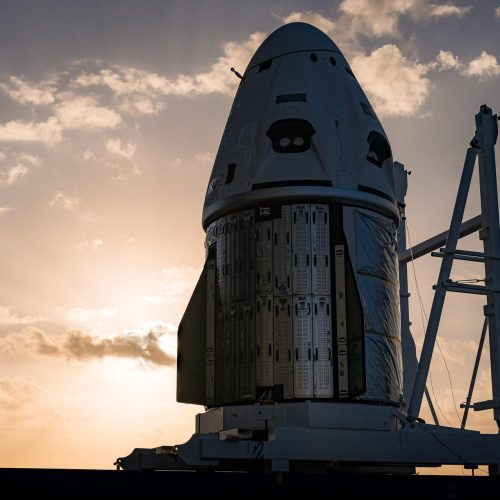
NASA breathed a deep sigh of relief six years ago when SpaceX launched two astronauts, Doug Hurley and Bob Behnken, on a successful mission to the International Space Station. With the safe landing of Crew Dragon, the US space agency broke a nearly decade-long gap in its ability to put humans into orbit.

Through its Commercial Crew program and multibillion-dollar contracts awarded in 2014, NASA had hoped to foster two providers of low-Earth orbit transportation, SpaceX and Boeing. However Boeing has yet to complete a successful crewed test flight—a perilous 2024 test flight by Boeing's Starliner was later declared a Type A mishap—and probably won't fly another crewed mission before 2028.

With the International Space Station slated for retirement in the early 2030s, NASA is partnering with several US companies to develop private space stations. As part of that effort, the private companies will have to work with NASA to determine how they will transport astronauts to and from their space stations, some of which could launch as soon as 2030.

Read full article

Comments

© SpaceX

  •  

Now, defenders are embracing the prompt injection, too

Prompt injections, the malicious commands attackers embed into content to entice large language models to follow them, have been attackers’ go-to tool for turning AI platforms against their users. A well-phrased command sneaked into an email or calendar invitation is often all it takes to cause the LLM to exfiltrate sensitive data or follow other harmful actions.

Now, defenders are embracing the prompt injection, too.

A strong, sharp effect

Researchers from Tracebit on Monday said they found that placing prompt injections alongside passwords, cryptographic keys, and other secrets stored on Amazon Web Services was often all that was needed to shut down attacks from AI hacking agents. The prompts direct the attacking LLM to perform an action forbidden by its guardrails, the safety barriers AI developers erect to prevent it from taking harmful actions. The LLM responds by shutting down.

Read full article

Comments

© Getty Images

  •  

Simulating everything, sort of: The promise and limits of world models

Over the past few years, many of us have gotten a crash course in what we now call artificial intelligence—but really, it has mostly been a crash course in large language models. Increasingly, however, LLMs are no longer the only category of AI drawing high expectations, massive funding rounds, and significant research and product development.

Over the past year, we've seen a plethora of new announcements in a category labeled "world models," and you'll likely see more movement there in the coming months and years.

Instead of or in addition to working with language, world models aim to lay the groundwork for AI systems that are capable of simulating the physical world, or at least a useful approximation of it.

Read full article

Comments

© Aurich Lawson | Getty Images

  •  

The real mystery behind Moana: After 1,700 years, why did Polynesians suddenly sail east?

The same question drives both the plot of Moana and decades of archaeological research: Why, after centuries of relative stability, did Polynesian voyagers suddenly begin settling islands thousands of kilometers away across the Pacific?

The latest Moana movie is a live-action adaptation of a Disney animated movie of the same name. While the films are fictional, they draw inspiration from the rich seafaring heritage of Polynesian peoples, whose ancestors undertook one of the greatest episodes of maritime exploration in human history.

New climate evidence may help us understand why they embarked on these voyages.

Read full article

Comments

© Rodin Eckenroth/Getty Images for Disney

  •  

A Jupiter-size planet that escaped its star's death

WD 1856 b is the only confirmed case of a planet that survived the death of a Sun-like star. It’s a Jupiter-size world orbiting a white dwarf—the burned-out remnant of a Sun-like star. Now, a team of astronomers has used the James Webb Space Telescope to take a closer look at this planet for the first time, and what they found makes an already strange system even stranger.

A feeding frenzy

WD 1856 b was an accidental discovery. Astronomers pointed the TESS observatory at a sample of roughly 2,000 white dwarfs in 2020. These stars are the remains of a Sun-like star that have already gone through a red-giant phase, leaving behind an Earth-size body that’s primarily composed of elements like carbon and oxygen. The TESS team was searching for small objects like comets or asteroids that might transit across the face of these dead stars.

What they found in the WD 1856 system was a gas giant. “As soon as they looked at it, they said, okay, that’s weird,” said Christopher O’Connor, a theoretical astrophysicist at Cornell University and co-author of the recent Nature study on WD 1856 b.

Read full article

Comments

© NASA, ESA, CSA, R. Crawford

  •  

Overhaul of public lands grazing regulations seeks to cut public involvement

The federal government is rewriting its rules governing ranching on public lands to increase the number of cattle, sheep, and other livestock grazing on 155 million acres in the West, an area twice the size of New Mexico.

Public lands grazing is overseen by a nearly century-old system that heavily subsidizes some of the wealthiest Americans while doing little to address its harms to the environment, ProPublica and High Country News found last year.

Even though rangeland management experts say overgrazing has degraded public lands, the new rules being drafted by the US Department of the Interior’s Bureau of Land Management—the first overhaul since 1995—would instead expand the practice.

Read full article

Comments

© Photo by William Campbell/Corbis via Getty Images

  •  

Quantum error correction can constantly recalibrate a processor

There are some obvious big picture issues that stand between us and useful quantum computing. Issues like whether we can make enough high-quality hardware qubits to connect into the error-corrected logical qubits we need, and how we generate the states needed to perform universal computation on those logical qubits. But there are also many less prominent challenges that will need to be solved before we can perform calculations.

One of those challenges, which only affects some types of hardware, is calibration. For devices we manufacture, like superconducting qubits, there are always subtle variations among individual qubits. (This is not true when we use something like an atom to hold the qubit, but the lasers that control them can drift.) As a result, this hardware is put through a process called calibration, where we test different frequencies and amplitudes of the microwave pulses that control them to find the combination that produces the lowest error rates, and then save those settings for use in calculations.

However, you can't perform the typical calibration process while you're doing calculations, which means drift becomes an issue for long and complicated algorithms. Google, though, has figured out that it's possible to do calibration using the same data that's used for error correction.

Read full article

Comments

© Google

  •  

Increased drone surveillance of illegal July 4th fireworks led to $100K fine

More cities and towns deployed drones to spot illegal fireworks during the Fourth of July celebrations commemorating America’s 250th anniversary—leading to a $100,000 fine in one instance and coming as part of a broader national trend of first responders turning to drone surveillance.

Police and fire departments have described using both increased drone surveillance and steep fines to deter people from shooting off illegal fireworks, with many departments publicizing their drone videos on social media and warning that their drones will be watching in the future. Incidents involving illegal fireworks have led to costly fires, injuries, and even multiple deaths each year, along with creating local air and noise pollution for residential neighborhoods.

This year, the $100,000 fine for illegal fireworks came from the Sacramento Fire Department in Northern California deploying its own drones for the first time on the Fourth of July, according to CBS News Sacramento. Sacramento Fire Captain Justin Sylvia described the fire department’s drones as being capable of recording scenes in high-resolution video to help investigators identify the house or closest location using Google Maps.

Read full article

Comments

© MediaNews Group/Orange County Register via Getty Images / Contributor

  •  

China recovered its first reusable rocket and showed a new way to do it

China's sprawling state-owned rocket developer, maker of the country's Long March rocket family, announced it recovered a reusable orbital-class booster for the first time Friday in the South China Sea.

The milestone mission began with the liftoff of a Long March 10B rocket from the Wenchang Commercial Space Launch Site on Hainan Island, China's southernmost province. Powered by seven kerosene-fueled engines, the approximately 209-foot-tall (63.6-meter) rocket took off at 12:15 am EDT (04:15 UTC), or 12:15 pm local time at the seaside spaceport at Wenchang.

About 10 minutes later, the Long March 10B booster descended from space and guided itself into a four-legged frame affixed to an offshore vessel. Tensioned cables stretched over the ship in a grid pattern captured the rocket as it shut down its landing engines, leaving the smoldering booster hanging in midair. The rocket's upper stage continued into orbit and deployed a payload known only as CX-26. Chinese officials hailed the flight as a "complete success."

Read full article

Comments

© Chinese Foreign Ministry via X

  •  

Check out the first images of Quest shipwreck

Back in 2024, we reported on the discovery of the Quest shipwreck, the polar exploration vessel that served Arctic explorer Sir Ernest Shackleton on his last voyage. Shackleton died before reaching their destination, and the ship sank in 1962. The Royal Canadian Geographic Society (RCGS) has now released the first images of the wreck more than 60 years after it sank, published in Canadian Geographic magazine.

Shackleton, of course, is most famous for his ill-fated voyage on the Endurance, which became trapped in sea ice in 1914 and sank. Shackleton and his crew defied the odds and survived. (The Endurance shipwreck was finally found in 2022.) By the time Shackleton returned to England, the country was embroiled in World War I, and many of his men enlisted. Shackleton was considered too old for active service. He was also deeply in debt from the Endurance expedition, earning a living on the lecture circuit. But he still dreamed of making another expedition to the Arctic Ocean north of Alaska to explore the Beaufort Sea. He got funding from an old school chum, John Quillier Rowett.

Shackleton purchased a wooden Norwegian whaler, Foca I, which his wife Emily renamed Quest. When the Canadian government withdrew its support, the mission shifted back to the Antarctic, and the Quest received an extensive retrofit. The improvements included a new deckhouse, a heated crow’s nest, a wireless set, and an odograph for tracing and charting the route automatically, as well as a Lucas deep-sea sounding machine, a large and pricey collection of cameras and photographic equipment, and even a small airplane.

Read full article

Comments

© YouTube/Canadian Geographic

  •  

Ransomware negotiator hired to represent victims was working for the attackers

A former ransomware negotiator was sentenced to 70 months in prison yesterday after colluding with BlackCat scammers to extort the victims he was hired to protect.

As a ransomware negotiator for the company DigitalMint, Florida resident Angelo Martino's job was "to negotiate with cybercriminals to mitigate the ransoms paid by [DigitalMint's] clients," the US government said in a sentencing memorandum on Tuesday. "Instead, Martino provided the cybercriminals with confidential negotiation information to maximize the ransoms in exchange for a portion of the ransom payments. Five of the victims whom Martino was supposed to help paid over $75 million to ransomware affiliates, including likely millions of dollars in ransom demands inflated as a result of the confidential information provided by Martino."

Martino, 41, pleaded guilty and asked for a 24-month sentence, noting that he "provided substantial assistance that contributed to the indictment and conviction of two co-defendants." As described in this November 2025 article, the co-defendants were Texas resident Kevin Martin, a ransomware negotiator for DigitalMint, and Georgia resident Ryan Goldberg, an incident manager at security firm Sygnia.

Read full article

Comments

© Getty Images | cokada

  •  

Study shows how toxic RFK Jr.’s change to measles vaccine is for US toddlers

With no new data or clear reasoning, a panel of advisors hand-selected by anti-vaccine Health Secretary Robert F. Kennedy Jr. voted last September to strip federal recommendations for a combination shot against measles, mumps, rubella, and varicella (chickenpox). An analysis published today by independent researchers does the work the advisors neglected to do before the vote and, in turn, shows how harmful the decision is to vulnerable US toddlers.

The decision last fall followed clumsy discussion by Kennedy's dubiously qualified advisors, who make up the Advisory Committee on Immunization Practices (ACIP) for the Centers for Disease Control and Prevention. Most noticeably, their unprompted review of the MMRV vaccine did not include a standard decision-making framework ACIP has historically used to comprehensively evaluate what the change would mean for US children in practice—including basic questions, such as which children would be affected.

Still, the decision meant that private health insurance providers would no longer be required to cover the vaccine, called MMRV. It also meant the shot would no longer be available through a federal program that provides vaccines to about half of American children, mostly from low-income families.

Read full article

Comments

© Getty | Leandro Lozada

  •  

Valve's new Steam Machine verification system is silent on these Steam Deck-busters

About a month ago, Valve announced that it would expand its long-standing Steam Deck Verified program to the now-shipping Steam Machine, offering a separate rating of Steam games' compatibility and playability for the fresh living room-focused hardware. Now that those ratings started appearing on Steam store pages last night (under a "Learn More" link next to Steam Deck Compatibility), we've found that Valve is frustratingly "still learning about" Steam Machine compatibility for dozens of games that the Steam Deck is too weak to run capably.

The Steam Machine compatibility for many Steam games is pretty simple to figure out, of course. If a game is already verified on Steam Deck, it is seemingly guaranteed to be verified on the Steam Machine, as far as we can tell. On the other side, games that have already been confirmed not to work with SteamOS (which can happen for various reasons) obviously won't work on the SteamOS-powered Steam Machine.

The messy middle is where a Steam Machine Verified badge could come in most handy. These are games that Valve has confirmed will load on SteamOS, but which the aging, portable Steam Deck can't handle at the 1200x800, 30 fps standard that Valve requires at default settings (for the Steam Machine, this requirement grows to 1080p and 30 fps). On the Steam Store, these games show up as "Unsupported" on Steam Deck because "the game's graphics settings cannot be configured to run well on Steam Deck" or "this game requires manual configuration of graphics settings to perform well on Steam Deck."

Read full article

Comments

© Valve

  •  

Firmware update bricks Hue Bridge Pro devices; Philips gives free replacements

A firmware update is behind recent reports that some Hue Bridge Pro smart hubs are no longer working, Ars Technica has confirmed.

In late June, there were reports of some Hue Bridge Pro devices not working properly after installing a firmware update. Philips released firmware version 2071353020 in early June, saying that it included “several small changes” to make Hue Bridge Pros work “better.” But some customers had a different experience: Their devices stopped responding and displayed a red LED.

A Reddit user going by the name statelymachine is one of the people online who reported that the update “bricked” their device.

Read full article

Comments

© Philips

  •  

An orbiting disco ball gave Einstein’s theory its most precise test yet

Albert Einstein’s general theory of relativity predicts that a rotating mass like the Earth pulls the fabric of space and time around with it in a perpetual swirl. This phenomenon is known as frame dragging or the Lense-Thirring effect, after the two physicists who modeled it back in 1918. Frame dragging becomes more significant with larger masses and faster rotation, so we’ve mainly observed it around huge black holes.

Measuring how much the Earth twists spacetime as it rotates has been much more challenging because our pale blue dot of a planet is millions of times lighter than a typical black hole and rotates rather slowly.

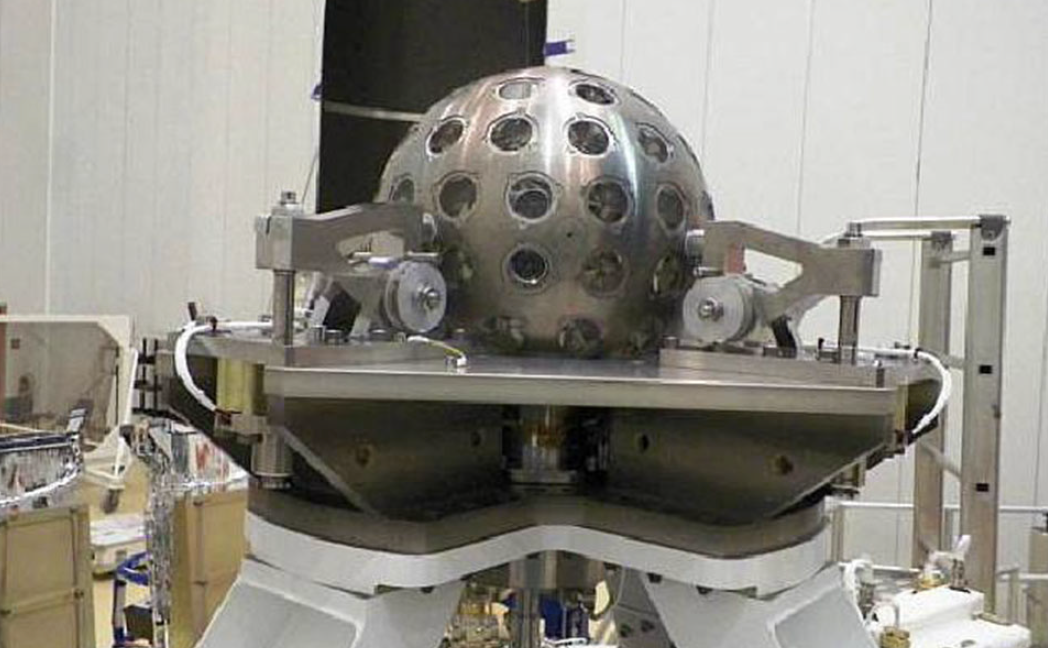
But now, a team of astronomers led by Ignazio Ciufolini, a physicist at the Wuhan Institute of Physics and Mathematics in China, reports the most accurate measurement of the terrestrial Lense-Thirring effect to date. Their work brings our uncertainty down from a few percentage points to just 0.2 percent. And they did it with a satellite that looks like a cross between a golf ball and a disco globe.

Read full article

Comments

© NASA

  •  

Disable autoplay and infinite scroll or risk massive fines, EU tells Meta

The European Union is ramping up pressure on Meta to make big changes to Facebook and Instagram after the European Commission preliminarily found that features like autoplay, infinite scroll, and highly personalized content recommendations were addictive.

On Thursday, the EC said its investigation indicated that “Meta did not adequately assess the risks of its addictive design on the physical and mental wellbeing of users, including minors and vulnerable adults.”

“These features fuel the user's urge to keep scrolling and shift the brain into ‘autopilot mode,' contributing to unhealthy habits and compulsive use,” the commission said.

Read full article

Comments

© NurPhoto / Contributor | NurPhoto

  •  

NASA sure seems to be asking an awful lot of private space stations

NASA this week released a much-anticipated document, known as a "draft Request for Proposals," that provides some clarity about what it expects from US companies attempting to build privately operated space stations in low-Earth orbit.

The stakes are high with this document, known as a draft RFP. The space agency, publicly, has set an end date for the International Space Station of 2030. Although there is likely to be a two-year extension, time is still running short to build, test, and fly a vehicle as complex as a space station. NASA officials and the US Congress have both said they want to avoid a gap in having a human presence in orbit, and this has created considerable urgency about what comes next.

Nearly five years ago the space agency took a concrete step toward filling this gap, awarding funding to three companies to develop space station concepts. Previously, NASA had also provided $140 million to another space station company, Axiom Space. These Space Act Agreements were intended as a prelude to a second phase of the program, which would award substantially more funding to one or two more companies to proceed into the construction and launch of their space stations. But phase two of the program kept getting delayed, in part because Congress dithered on funding.

Read full article

Comments

© NASA

  •  

Volkswagen Group tells its board how to fix it, unions disagree

Volkswagen Group is doing well with electric vehicle sales in its home region, but costly tariffs and eroding market share in China and North America have been hurting it badly. Europe's largest automaker, which also owns brands including Audi, Porsche, Skoda, and Lamborghini, has seen its profit margins evaporate, and yesterday the company's supervisory board was presented with a plan to ameliorate that. An expected call for factory closures and redundancies wasn't included—at least not in VW Group's public statement—but according to Reuters, the measure failed anyway in a 12-7 vote.

Unlike most automakers, worker unions are extremely powerful at the VW Group. Half of the 20 seats on the supervisory board are appointed by worker councils. Another two seats are spoken for thanks in part to the company's partial ownership by the German state of Lower Saxony—currently held by that state's minister of education and minister-president. So while profit has been important, it's not the only thing that matters to the decision-makers.

Over the years, there have been lengthy fights over any suggestion of redundancies. Lately, VW Group and its unions spent months in negotiations in 2024 before finally agreeing to a plan to cut 35,000 jobs by 2030.

Read full article

Comments

© Jens SCHLÜTER / AFP via Getty Images

  •  
❌