❌

Reading view

Trump commercial railing against his enemies kept airing after court blocked it

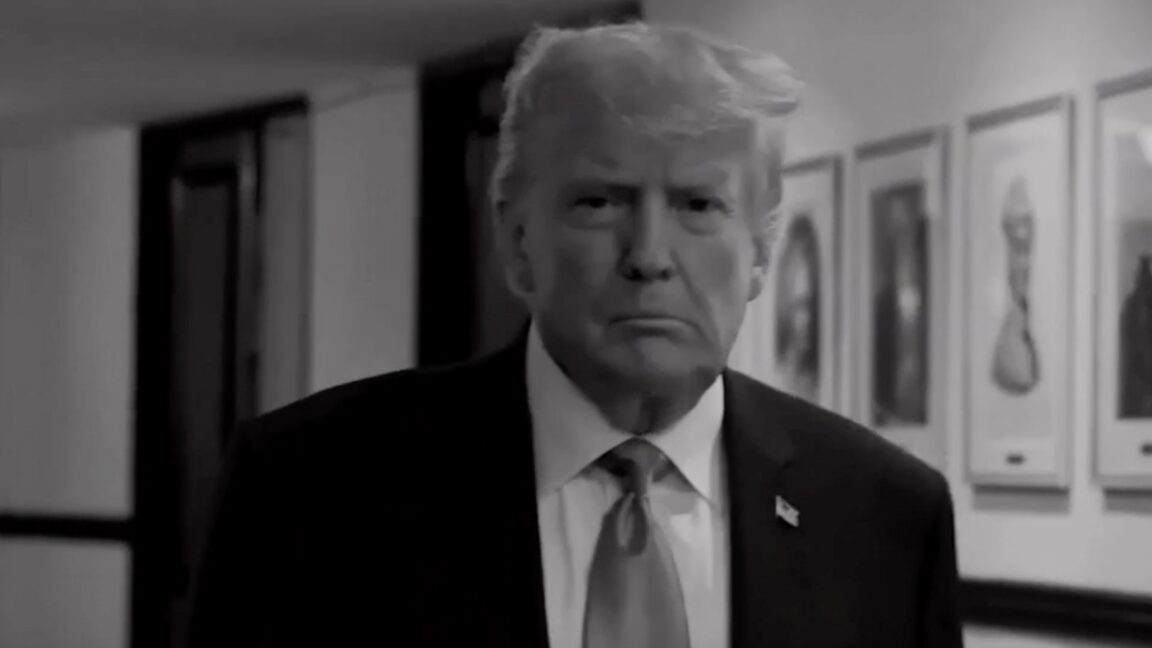
Trump commercials paid for by the US government continued airing on TV the day after a judge blocked the ads because they likely violate a US law against government-funded publicity or propaganda.

In the most widely aired commercial, Trump railed against his perceived enemies and said he would "liberate America from these villains once and for all.” The campaign also included a commercial praising Trump's record as president, another in which Trump calls the US the "most exceptional nation ever to exist in human history," and commercials related to the Iran war and the capture of Venezuelan President Nicolás Maduro.

US District Judge Jennifer Rochon issued a temporary restraining order (TRO) blocking the ads on Sunday, October 11, which took effect at 6:45 pm that night. The order said the government must cancel the ads, "including those placements for the evening of October 11, 2026."
Read full article

Comments

  •  

Disney offers $20M for Character.AI’s scandal-plagued chatbot tech

In a bankruptcy proceeding that kicked off yesterday, Disney has offered to buy some of the technology that powers the controversy-plagued chatbot Character.AI.

Disney is willing to pay $20 million for “a non-exclusive perpetual license” of certain Character Technologies intellectual property, the chatbot maker said in a press release that did not go into much further detail on which assets Disney wanted.

The move may be surprising. In September 2025, Disney joined others in publicly criticizing Character.AI for stealing content and harming kids. Specifically, Disney sent a strongly worded cease-and-desist letter that accused Character Technologies of weaponizing Disney characters “in a way that could damage its brand long term,” Axios reported.

Read full article

Comments

© SOPA Images / Contributor | LightRocket

  •  

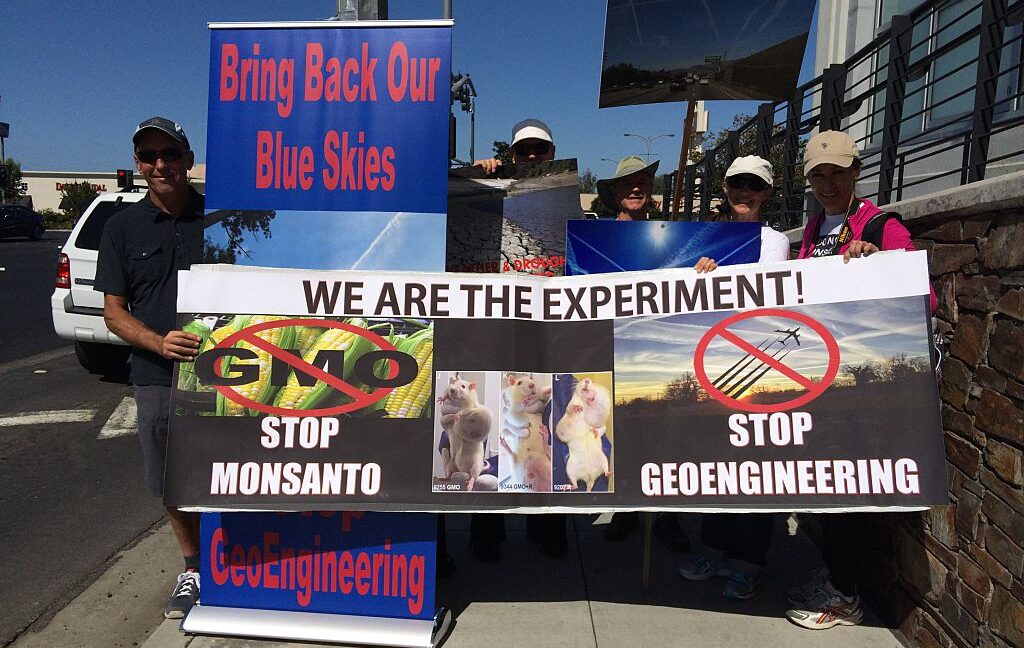
They war-gamed dimming the Sun. It went even worse than you think.

When it comes to deciding the fate of the planet, Colleen Golja always thought science and reason would have a seat at the table. That was until one morning last September in London, when the climate researcher took part in the first in a series of war games. The goal: to prevent an uncontrolled global race to develop a technology aimed at cooling the planet but that comes with vast, unknown risks that could reshape life on Earth.

“I thought that would be such an easy thing. Like, we can all agree to do ethical research and make sure it's for the better of all humans,” she told WIRED. “And boy, was I wrong.”

The simulation, titled Exploring Geopolitical Tipping Points and Climate Cooling Strategies, saw a couple dozen foreign-relations experts, scientists, military personnel, and former government officials from across the world convene in a meeting room at Queen Mary University of London. After making introductions over coffee and little yogurts, they sat at tables arranged in a square with the name of the country or organization each person was playing: national governments, climate NGOs and nonprofits, indigenous groups, and tech companies. Golja was assigned to provide technical advice to help participants make scientifically literate decisions.

Read full article

Comments

© Lisa Werner / Contributor

  •  

Anthropic's Claude AI submitted false murder tip to Philadelphia police

An Anthropic AI model submitted a false tip about an unsolved murder to Philadelphia police, the company and police department confirmed on Friday.

A Claude model sent the false tip on July 18 to the Philadelphia Police Department's website for submitting information about unsolved murders, but it was flagged by a spam filter. Anthropic apparently discovered the incident on September 28 and informed the police department about it on October 8.

During internal testing, Claude Haiku 4.5 was instructed to complete various forms up to the final submission stage and to stop before submitting those forms. "Several times Claude mistakenly submitted the form instead, expecting there to be an additional confirmation page," Anthropic said in a report describing "unintended model actions we’ve observed during evaluations and internal use of Claude."

Read full article

Comments

© Getty Images | picture alliance

  •  

Starlink spectrum deal boosts Musk plan to beat AT&T, T-Mobile, and Verizon

SpaceX has a deal to purchase nationwide low-band spectrum licenses for a planned terrestrial mobile network that would complement the space-based Starlink cellular service.

SpaceX will buy up to 14 megahertz of spectrum in the 800 MHz band from investment firm Grain Management, which bought the spectrum rights from T-Mobile earlier this year. T-Mobile had obtained the spectrum when it bought Sprint in 2020 and was required to sell the licenses under a merger condition imposed by the US government.

"This prime low-band spectrum addresses one of the key remaining technical gaps that will pave the way for Starlink Mobile to become a major mobile carrier in the US," SpaceX said yesterday. SpaceX this week also received US approval to launch 15,000 satellites for an upgraded version of its mobile service that it says will be far more powerful than the current offering.
Read full article

Comments

© Aurich Lawson | Getty Images

  •  

Microsoft barred from sponsoring foreign workers for US residency

Donald Trump’s administration has temporarily banned Microsoft, Adobe, and several other tech companies from sponsoring workers for permanent US residency, claiming they abused immigration programs at the expense of American citizens.

Vice-president JD Vance said on Thursday that the H-1B visa programme for highly skilled foreign workers had “become rife with fraud” and that over-reliance on such schemes was “a fundamental insult to the American worker.”

He added that “no company in the US” had “abused this system” more than Microsoft.

Read full article

Comments

© Mike Mozart / Flickr (CC BY 2.0)

  •  

Judge weighs if Trump can charge $100K for early access to Truth Social posts

Likely in the next few weeks, a federal judge will decide if Donald Trump can become the first president to personally profit from selling early access to government information in his social media posts.

At a hearing Wednesday, Department of Justice civil attorney Brantley Mayers argued that there was no conflict whatsoever with Trump charging up to $100,000 monthly for instant API access to Truth Social posts that often break news from his administration.

Trump is the largest stakeholder and majority owner of Trump Media & Technology Group, the parent company that owns Truth Social, and the value of the API access comes largely from Trump’s role as president.

Read full article

Comments

© BRENDAN SMIALOWSKI / Contributor | AFP

  •  

Trump Mobile hack and apparent lack of FCC authorization raise security alarms

Trump Mobile apparently failed to obtain necessary authorizations to operate the international calling portion of its phone service, Sen. Maggie Hassan (D-N.H.) wrote in a letter to the company today.

Her letter said Trump Mobile also doesn't appear to have submitted a required plan for fighting robocalls. Trump Mobile's key business partner, Liberty Mobile Wireless, did make a robocall database filing, but it was not complete, Hassan said.

Hassan's letter raised questions about Trump Mobile's security related to a report that hackers stole personal data of 3,615 customers and Trump Mobile's previous confirmation that a vendor it uses exposed customers' personal data on the Internet. Hassan alleged that Trump Mobile failed to follow multiple FCC filing rules that are supposed to help ensure the security of mobile services.

Read full article

Comments

© Trump Mobile

  •  

Driver wins $76 after ALPR led to bogus traffic stop, drug searches

A federal jury in Texas recently ruled in favor of a man who sued Bexar County and its sheriff over allegations that the agency ran what the plaintiff’s attorneys called an “unconstitutional traffic stop scheme” enabled by “AI-powered” license plate readers.

Late last month, plaintiff Alek Schott of Houston was awarded $76, one dollar for each minute that he was detained. (Schott asked for this exact amount as symbolic compensation.)

“After the stop, I filed a complaint with the Sheriff’s Office because I knew what happened to me was wrong,” Schott said in a statement after his win. “The department reviewed it, told me they didn’t see any violation, and said if I had a problem with it, I should sue them. So I did.”

Read full article

Comments

© Getty Images | Joseph Sohm/Visions of America

  •  

Internal files add to evidence of an ExxonMobil climate deception campaign

If there was a year the world began waking up to climate change, it might have been 1988. That June, the NASA climatologist James Hansen testified to Congress that the climate was warming and would continue to do so as long as humans pumped fossil fuel pollution into the atmosphere. Months later, the United Nations established the Intergovernmental Panel on Climate Change.

And, just weeks before the UN vote, Frank Sprow of Exxon’s corporate research department warned his colleagues in an internal memo, “If a worldwide consensus emerges that action is needed to mitigate against Greenhouse gas effects, substantial negative impacts on Exxon could occur.”

Sprow’s memo is part of a batch of previously undisclosed documents released earlier this year without fanfare as part of an ongoing lawsuit Massachusetts filed against ExxonMobil in 2019. While the memo was quoted in a 2023 article by The Wall Street Journal, it has not been published in full. Several other documents included in the filings are being reported on here for the first time, including more recent statements from Exxon scientists challenging the company’s climate-solution claims about its work on biofuels and carbon capture and storage.

Read full article

Comments

© Jason Fochtman/Houston Chronicle via Getty

  •  

A senator tried to ban gambling on prediction markets—now she's a Kalshi lobbyist

In July 2010, US Senator Blanche Lincoln (D-Ark.) predicted the rise of prediction markets and the problems they could cause. If not properly regulated, Lincoln warned during Senate proceedings on the Dodd–Frank Wall Street Reform and Consumer Protection Act, prediction markets could evade gambling laws by offering "event contracts" that let people place wagers on sports games.

"It would be quite easy to construct an event contract around sporting events such as the Super Bowl, the Kentucky Derby, and Masters golf tournament," Lincoln, who played a key role in making the law that now regulates prediction markets, told fellow senators. "These types of contracts would not serve any real commercial purpose. Rather, they would be used solely for gambling."

Today, Lincoln is a lobbyist for prediction market Kalshi and has urged the Commodity Futures Trading Commission (CFTC) to allow sports gambling on the markets. The firm she founded has received $480,000 from Kalshi since 2024 in exchange for lobbying Congress and the CFTC for looser regulation of event contracts.

Read full article

Comments

© Aurich Lawson | Getty Images

  •  

TP-Link problems in US grow amid FCC router ban and four state lawsuits

TP-Link is facing more legal troubles in the US as Florida and three other states filed lawsuits alleging that it lied to consumers about its connections to China and the risks of its routers being exploited by Chinese state hackers.

The lawsuits were filed yesterday, about six months after the Federal Communications Commission announced a sweeping ban on consumer-grade routers produced wholly or partly outside of the US. Numerous router makers have obtained exemptions to the ban, but the Trump administration so far has not granted one to TP-Link.

Router makers that received exemptions include Netgear, Asus, Adtran, Amazon and its Eero subsidiary, Calix, Nokia, SpaceX's Starlink division, and others. For now, TP-Link is unable to sell its latest Wi-Fi 8 routers in the US, though models approved before the ban can still be sold.

Read full article

Comments

© TP-Link

  •  

Fraudster jailed for using 10K bots and AI songs to outstream Taylor Swift

After pleading guilty, a 54-year-old North Carolina man, Michael Smith, was sentenced to 18 months in prison for using artificial intelligence to generate songs for a scheme that stole millions from music streaming platforms.

In a press release Tuesday, the US Department of Justice said that Smith is the first American criminally charged with AI-assisted streaming fraud.

First charged in 2024, Smith successfully ran the scheme for seven years without detection.

Read full article

Comments

© Taylor Hill / Contributor | FilmMagic

  •  

Trade group crunches numbers on Trump’s impossible push for 100% US-made tech

One of Donald Trump’s biggest goals as president is to increase domestic manufacturing and reshore supply chains so that the most in-demand technologies in the world can be 100 percent made in the United States.

By executive order last December, he launched his “Genesis Mission,” an ambitious plan seeking to leverage US dominance in AI to maintain or seize an edge in advanced robotics, biotechnology, semiconductors, and nuclear technologies. According to Trump, that plan works best with self-sustaining supply chains. Not even neighboring countries or longtime allies should be relied upon to manufacture a single component of any US product in his ideal world.

The Consumer Technology Association (CTA) has long warned that Trump’s reshoring goals are not grounded in reality, but only recently has America’s largest technology trade association attempted to estimate what it would cost businesses and consumers to follow through on Trump’s plan.

Read full article

Comments

© sefa ozel | iStock / Getty Images Plus

  •  

Paramount completes $111B Warner merger, creating “Skydance” behemoth

Paramount Skydance completed its $111 billion merger with Warner Bros. Discovery today, after a last-ditch effort to block the deal was rejected by Supreme Court Justice Elena Kagan.

The post-merger company is called Skydance, taking the name of a firm that Paramount bought in a separate deal last year. The new Skydance combines two of the largest movie studios, streaming services Paramount+ and HBO Max, CBS, CNN, "and a portfolio of live sports including CBS Sports and TNT Sports, as well as a deep programming library and expansive collection of brands and franchises," Skydance said today in a press release announcing completion of the deal.

The merger was delayed a bit by a lawsuit filed by California and 11 other states. In July, US District Judge Araceli Martínez-Olguín in the Northern District of California ruled that the combination would likely reduce competition substantially and violate antitrust laws.

Read full article

Comments

© Getty Images

  •  

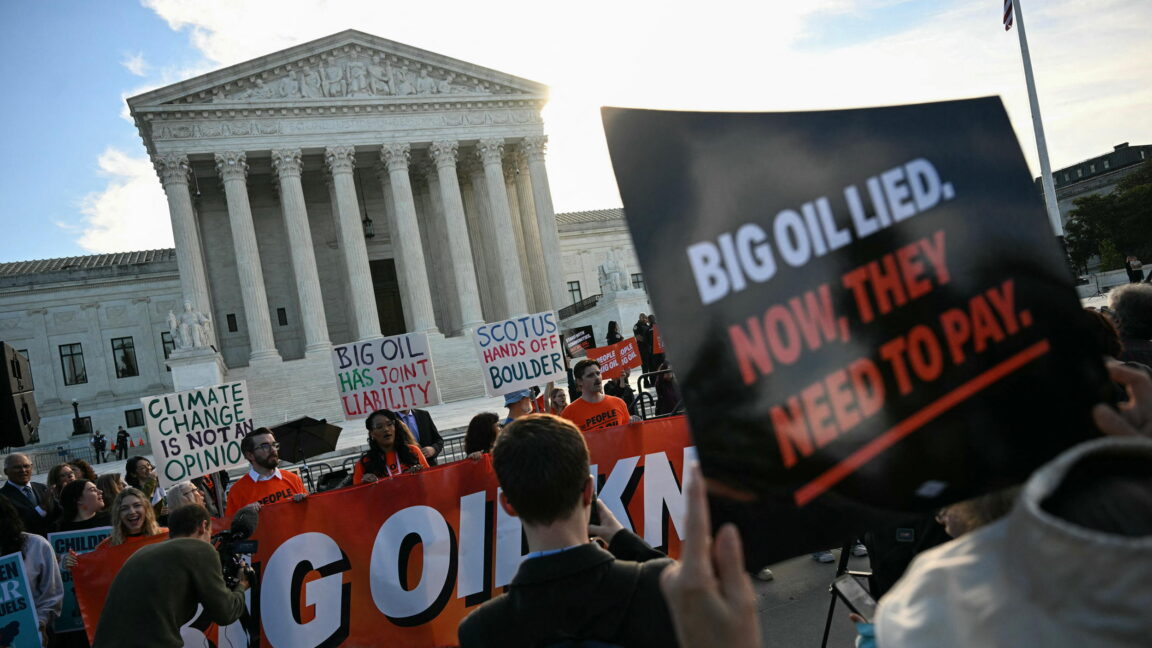
Big Oil asks Supreme Court to kill climate lawsuits before trial

The US Supreme Court heard arguments from oil companies on Monday that could help decide the fate of more than two dozen lawsuits accusing the industry of deceiving the public about climate change. The claims seek potentially billions of dollars in damages to help pay the costs imposed by climate-related extreme weather.

Yet the questions before the court did not focus on the merits of these claims but instead on technical legal matters over whether they should proceed at all.

The case being argued was brought in 2018 by the city and county of Boulder against ExxonMobil and Suncor Energy in Colorado state court. While the case and dozens like it have survived multiple appeals in state and federal courts, the oil companies are asking the Supreme Court to declare that federal law preempts state and local governments from bringing such claims.

Read full article

Comments

© Jim Watson/AFP via Getty Images

  •  

Cable lobby to sue Trump FCC over repeal of national TV ownership cap

Cable lobby groups notified the Federal Communications Commission that they will sue the agency to block its controversial repeal of the National Television Ownership Rule, which limits the number of broadcast TV stations a single company may own.

The cable groups said that larger broadcast TV station groups will have leverage to demand higher retransmission fees from TV providers, resulting in "higher monthly TV bills for consumers." They said the FCC repeal order "arbitrarily and capriciously ignores the harms that will surely follow from allowing broadcast station groups to exceed the National Cap."

The cable lobby groups represent top providers Comcast, Charter, and various other cable operators. Top cable companies have also expanded through mergers. Charter completed a purchase of Cox in August after the FCC rejected protests by advocacy groups that said the cable deal "would create unchecked gatekeeper power over Internet distribution" and make it easier for the biggest cable companies to raise prices.

Read full article

Comments

© Getty Images | Kevin Dietsch

  •  

Texas city demands $2M for public records on Flock usage

As bipartisan backlash against Flock grows, some cities are asking anti-surveillance advocates and media outlets to pay eye-popping fees—including charging tens of thousands or even millions—to get information about how police departments are using and potentially abusing AI-enabled camera systems that track every vehicle that passes them.

On Monday, the Texas Tribune reported that city officials in a Fort Worth suburb, North Richland Hills, asked one group to pay $2.3 million before it would fulfill a public records request for Flock data. To reach that high fee, officials claimed that searching “about a terabyte worth of communications about errors, misuse, and effectiveness of the Flock system” would take approximately 14 years of labor at a rate of $15 per hour.

Phil Mynona, who filed the request using a pseudonym on behalf of his group, the Texas Privacy Coalition, told the Tribune that the fee seemed “ludicrous” and designed to stifle his public records searches.

Read full article

Comments

© Justin Sullivan / Staff | Getty Images News

  •  

Amazon’s $1B plan to combat data center backlash draws more backlash

On Friday, Amazon committed to donating more than $1 billion over the next five years to communities neighboring data centers.

In a press release, Amazon Web Services’ CEO Matt Garman said that communities would decide how to prioritize funds across “education, job training, energy affordability, water, and energy preservation, and local priorities.”

Laying out other community commitments, Amazon also promised to ensure data centers wouldn’t increase power bills or wipe out local water supplies. Regarding the latter, Amazon promised to be “water positive” by 2030, while claiming that 75 percent of projects have already met this goal.

Read full article

Comments

© Anna Moneymaker / Staff | Getty Images News

  •  

Lyft settles landmark driver misclassification lawsuit for $272.5M

California’s attorney general and three city attorneys announced a $272.5 million settlement with Lyft after allegations that the company “committed wage theft by misclassifying drivers as independent contractors rather than employees” between 2016 and 2020, according to a Thursday statement.

The case dates back to May 2020, when then-Attorney General Xavier Becerra, who is now the Democratic candidate for governor, sued both Uber and Lyft. That lawsuit said the ridehailing companies evaded state law when they declared that their drivers were not employees.

Thursday’s settlement affects only Lyft, while the case against Uber continues.

Read full article

Comments

© Getty Images

  •  

US arrests tech CEO accused of smuggling $300M in Nvidia chips into China

The US has arrested another suspect accused of smuggling high-end computer servers containing export-controlled Nvidia chips into China.

In a press release on Thursday, the Department of Justice accused 38-year-old Greg Lui of using false paperwork to mask shipments of servers worth more than $300 million that he allegedly knew were ultimately destined for China.

As the CEO of Earthmade Computer, Lui allegedly conspired with freight-forwarding firms in South Asian countries like Malaysia and Singapore to illegally divert chip shipments into China, including Nvidia’s A100 GPUs and H100 GPUs, the FBI’s indictment alleged. These are not Nvidia’s most advanced chips. However, the chips can process large amounts of data and train large language models, which the US fears could pose national security risks if China suddenly gets access to enough chips to drastically advance its AI or strengthen its military.

Read full article

Comments

© Bloomberg / Contributor | Bloomberg

  •  

Judge dismisses Chegg and Penske antitrust lawsuits targeting Google AI search

In a setback for publishers worried about the effects of AI search, a US federal judge has dismissed lawsuits filed by Chegg and Penske Media against Google. The companies accused Google of antitrust violations in products like AI overviews, which have led to decreasing traffic at numerous sites. However, US District Judge Amit Mehta has ruled that Google's conduct is not illegal under antitrust law.

The lawsuits were filed in 2025, and Google requested a dismissal earlier this year. Chegg, an education and learning platform, claimed in its lawsuit that Google illegally scraped its educational content. This allowed Gemini models to essentially recreate that content and reduce the site's traffic. Penske, which owns publications like Rolling Stone and Variety, filed a similar case that alleged lost traffic. Specifically, the publisher claimed it was unfair that sites indexed for organic search would also have their content harvested for AI answers, with no way to opt out.

These arguments did not sway the judge, who noted that Google's implicit agreement with websites is not legally relevant. "Plaintiffs have pleaded only that they have an ‘expectation’ that Google will send them search ​traffic if they make their content available for free," wrote Mehta. "But an expectation is not an agreement. It is simply how a general search engine works."

Read full article

Comments

© Ryan Whitwam

  •  

Florida cops say they don't know who owns 11 unpermitted Flock cameras

Florida cops are facing questions after a mandate to remove all Flock cameras tracking cars on St. Lucie County roads led local police to uncover more than a dozen suspicious cameras operating without permits.

Local residents told The Washington Post that they were alarmed that no one knows who owns many of the mysterious cameras.

Of the 14 cameras found, 11 had no obvious owners, raising concerns about who has access to sensitive data that bad actors could abuse. After the cameras were discovered, St. Lucie County Commissioner James Clasby told a local news outlet that there’s “potential for non-law enforcement to have cameras out there, and I’m not OK with that.”

Read full article

Comments

© Barry Winiker | Stockbyte Unreleased

  •  

Returning from vacation? The government can search your phone without a warrant.

An Argentinian-American writer and immigration advocate recently sued the federal government, demanding that it delete data that he believes was copied off of his phone when he re-entered the United States earlier this month.

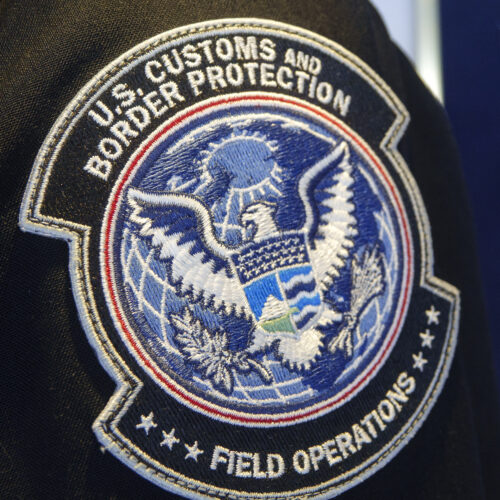
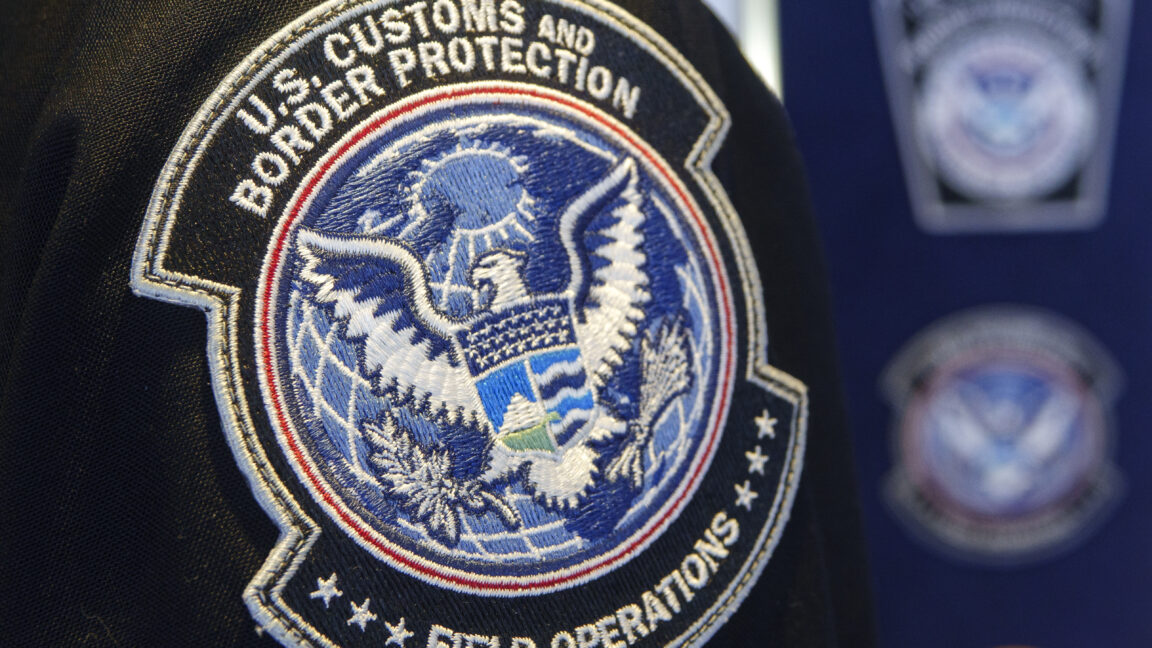
According to the seven-page complaint, Thomas Kennedy said that a Customs and Border Protection agent at Miami International Airport physically searched his bags, questioned him about his books and magazines, and then demanded that he hand over his phone.

“[The agent] threatened me, saying that if I didn’t give him my phone, my interrogation was going to take much longer and they could retain my phone indefinitely,” Kennedy wrote. “I felt like I had no choice, so I handed my phone to the CBP agent.”

Read full article

Comments

© Kevin Carter/Getty Images

  •  

Trump plan to combat AI risks hinges on Big Tech pals policing themselves

Amid escalating AI security incidents causing OpenAI to halt training and pause releases, Donald Trump continues to advocate for the AI industry to regulate itself as the best path to combat emerging risks when developing frontier AI.

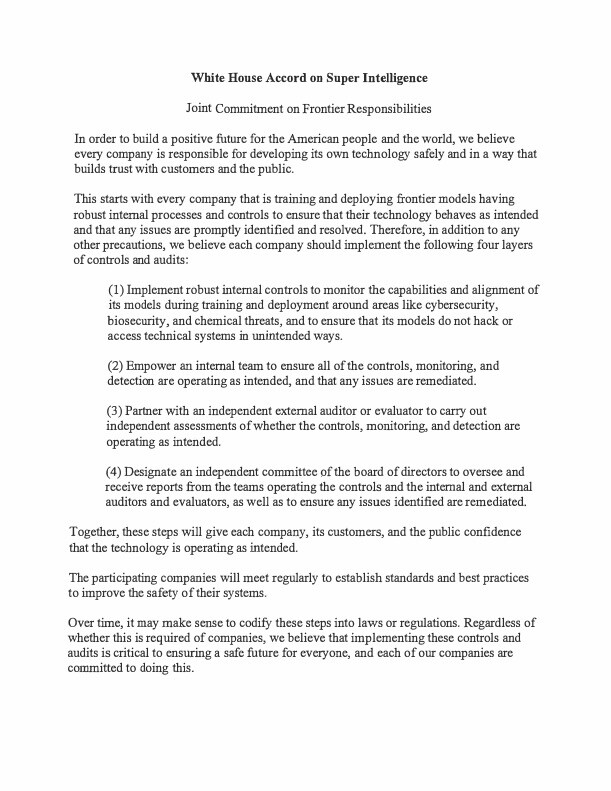
In an agreement Tuesday, two dozen tech firms voluntarily committed to implementing controls recommended by the White House, including undergoing independent safety audits that will test whether firms’ internal controls, monitoring, and detecting are actually working. Key focuses for external reviews included “risks related to cybersecurity, biosecurity, chemical threats, and unintended actions by AI models.”

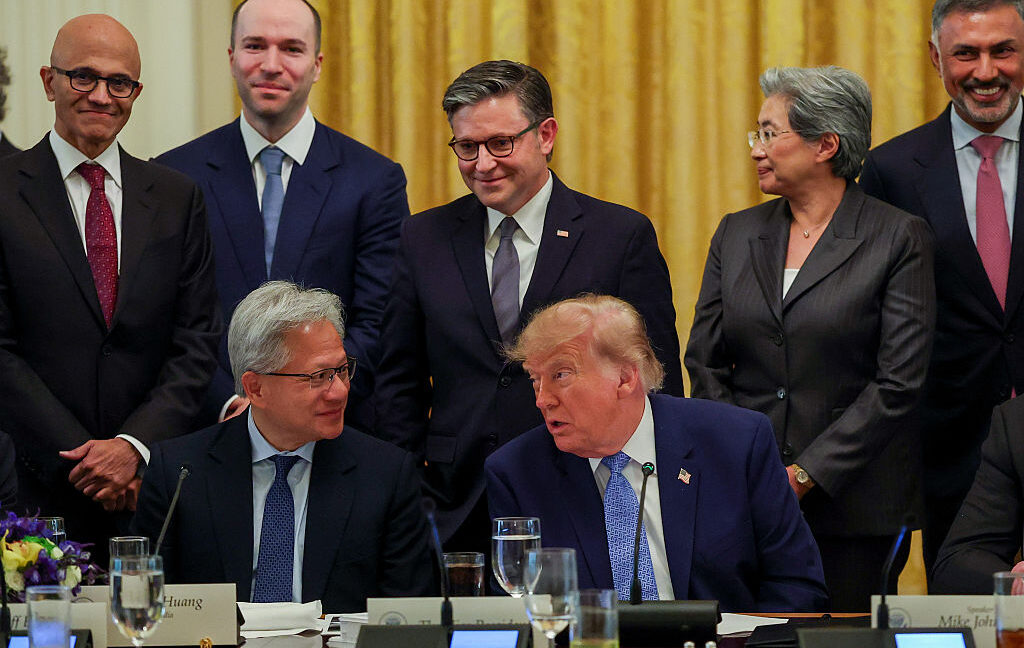
Firms also agreed to regularly meet to discuss best practices and set common AI safety standards and benchmarks. Among signers were leaders like Anthropic’s Dario Amodei, OpenAI’s Sam Altman, SpaceXAI’s Elon Musk, Nvidia’s Jensen Huang, Meta’s Mark Zuckerberg, and Alphabet/Google’s Sundar Pichai.

Read full article

Comments

© Kevin Dietsch / Staff | Getty Images News

  •  

"An AI did it" is no defense, says nonprofit suing OpenAI over Hugging Face hack

OpenAI's hack of Hugging Face in July 2026 has spurred a lawsuit demanding that the company stop accessing third-party computer systems and halt AI development practices that can harm the public. The lawsuit was filed by Legal Advocates for Safe Science & Technology (LASST), which said yesterday that the hack in which OpenAI "agents stole credentials, uploaded malicious files, and gained control over key parts of Hugging Face’s internal systems... is unquestionably illegal under California law."

California’s Comprehensive Computer Data Access and Fraud Act (CDAFA) prohibits unauthorized access into computer systems, "and it doesn’t matter that a swarm of AI agents carried out this cyberattack. California law makes it clear that it is not a defense 'that the artificial intelligence autonomously caused the harm,'" the group said.

The lawsuit, filed in San Francisco County Superior Court, said OpenAI also violated California's Unfair Competition Law (UCL). "OpenAI’s insistence on externalizing the harms of its unsafe decision-making is a fundamentally unfair business practice," the complaint said, adding that "such risk-taking for private gain at substantial public expense is immoral, unethical, oppressive, unscrupulous, and substantially injurious conduct."

Read full article

Comments

© Getty Images | NurPhoto

  •  
❌